
Translated material
Mishustin signed decisions to stabilize the situation in the food market
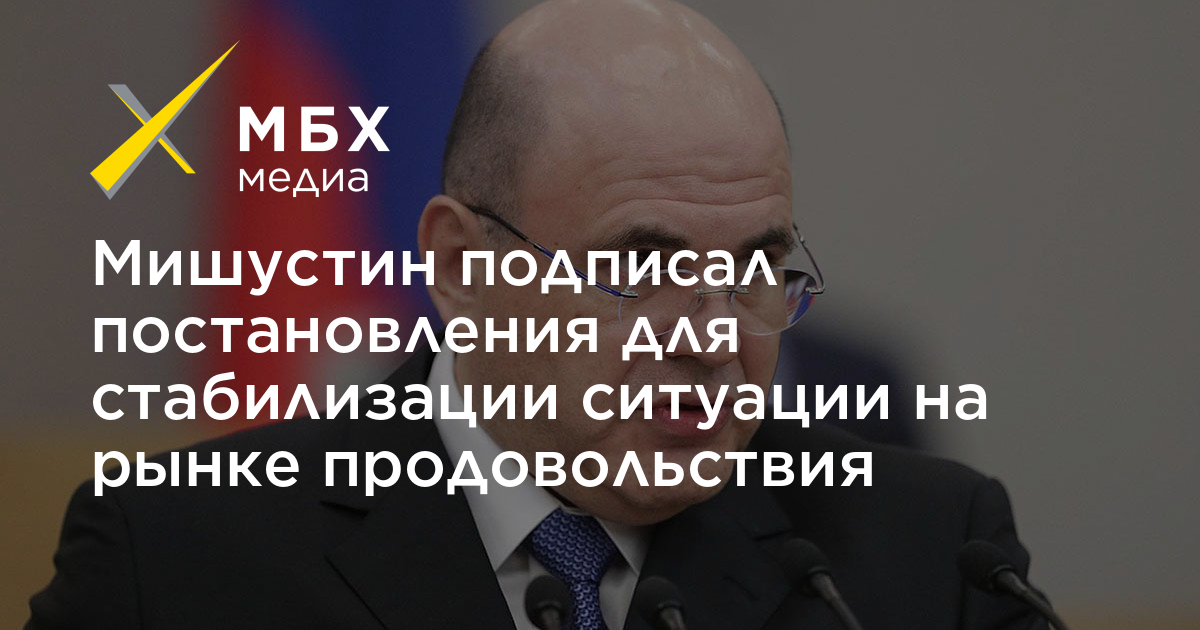
Prime Minister Mikhail Mishustin signed decisions aimed at stabilizing the situation in the Russian food market. This was reported by the press service of the government.
“Mishustin signed a number of decisions that consolidate the decisions made. One of the documents concerns special agreements. The Ministry of Agriculture, together with the Ministry of Industry and Trade and the Federal Antimonopoly Service, will conclude them with food producers and retail chains, ”the report said.
Agreements, as noted, will help reduce and maintain at a normal level the prices for certain types of the most popular goods. In particular, for sugar and sunflower oil.
The head of the Cabinet also signed a decision on the introduction of a quota for export of grain and duties on wheat export. “To stabilize the prices for flour and bread, for the export of wheat, rye, barley and corn, the government sets a tariff quota of 17.5 million tons. The export of grains in volumes exceeding it will be taxed 50% of the customs value of the exported products, but not less than € 100 per ton, ”the message said.
In addition, Mishustin signed a decision on the conclusion of agreements on sugar and sunflower prices and a resolution to support flour manufacturers, which provides for subsidies for reimbursing part of the cost of purchasing wheat. “To support flour manufacturers, subsidies are provided for compensation for part of the costs associated with the acquisition of wheat. Decree of the Government signed by Mikhail Mishustin, the rules for the distribution of such financial support are approved. As follows from the document, the municipal flies will be able to compensate for up to 50% of the difference between the current price for food wheat and its average monthly average price for the same periods of the previous three years according to Rosstat, adjusted taking into account inflation, ”the report said.
On December 9, Vladimir Putin, at a meeting on economic issues, said that the growth of the base foods of “Pandemia cannot explain”. He connected them with “an attempt to adjust internal prices for world, as well as use export opportunities” and emphasized that the government “has all the tools for holding up prices for prices”.
The next day, Prime Minister Mikhail Mishustin criticized officials for rising prices and asked the leaders of retail chains “not to get into cash in public”.