
Translated material
The road through chaos
Pavel Felgenhauer - about the new political situation after the Karabakh war
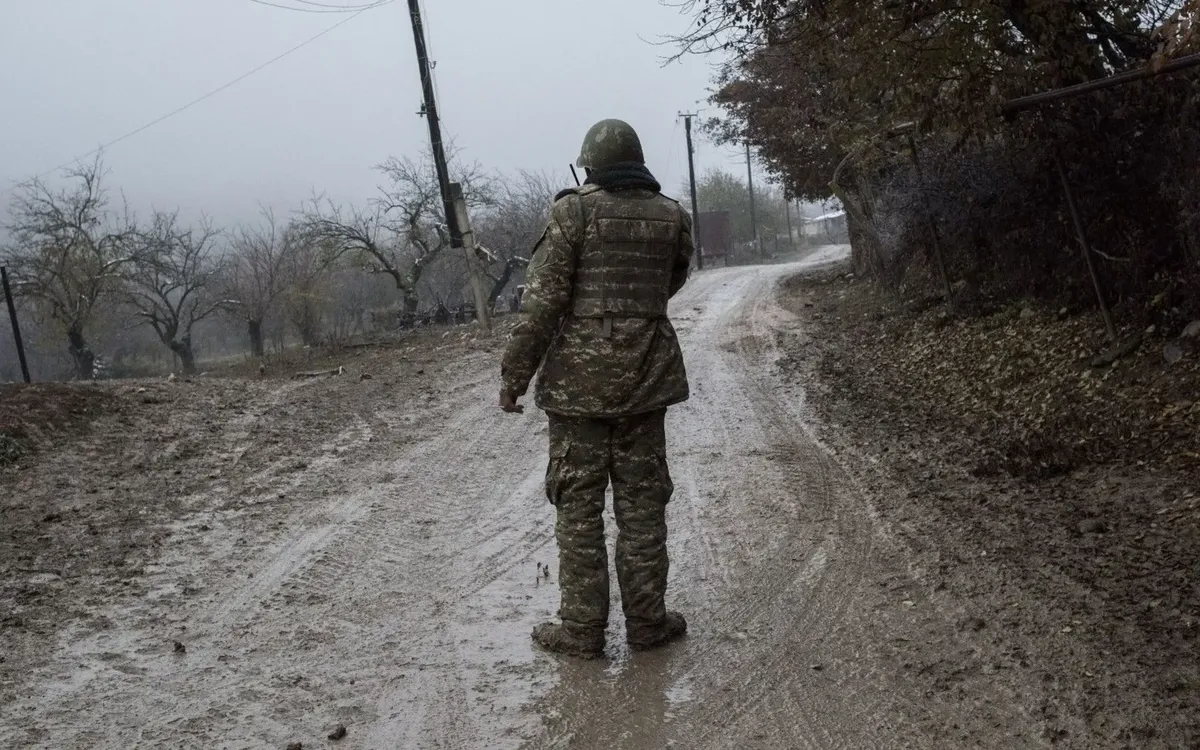
After the defeat in the Second Karabakh war, the tripartite agreement of November 9, the withdrawal of the Armenian troops and the civilian population from the former “security zone” around the Nagorno-Karabakh and the introduction of the Russian peacekeepers of the Republic of Armenia and the unrecognized Nagorno-Karabakh Republic (NKR) were at historical crossroads. Without any clear path or “roadmap” of further development, with a demoralized military-political leadership, ruined by the economy and a broken army.
When the people have so many problems at once, they involuntarily grab it to somehow solve everything at once-this only strengthens the general chaos and devastation. The warring Armenian political forces agree in one thing: the army defeated on the battlefield must urgently restore and rearm. But in a ruined country there is little money. Azerbaijan won, having purchased drones, high -precision missiles, communication systems, combat control and target designations in Turkey, Israel and South Korea. Armenia will be difficult to find similar suppliers, even if they find money. The chances of reducing the technological gap and even more so to achieve superiority on the battlefield in the foreseeable future look ghostly.
"Platform Six"
The Turkish President Erdogan proposed creating a regional organization of security and economic development in the Transcaucasia, or “Six Platform” as part of Azerbaijan, Georgia, Armenia, as well as Russia, Turkey and Iran - three powers, which have been impressing each other for several centuries with variable success in the region. Erdogan announced that he had discussed the idea with Vladimir Putin, who, they say, did not mind. Since Erdoganova “Platform” excludes the Western powers from the Transcaucasian affairs, in particular, the co -chairs of the Minsk OSCE Minsk group in Karabakh - the USA and France, the idea could really be found by the non -ethnic both in Moscow and Tehran.
Certainly,
Such a regional structure institutionalizes the influence and presence of Turkey in Transcaucasia, while Russia has been trying to shove it out of there for more than 200 years.
However, in the neighboring former Russian-Soviet Central Asia, Moscow agreed to create an SCO with Beijing and suffers an increasing Chinese influence in the region, obviously deciding that it was better than to endure the Americans.
Transport corridors
Erdogan proposes to open closed boundaries and build new transport corridors, which should turn the Transcaucasia into an economic prosperity zone. Oil and gas from the Caspian region will go west, and to meet them, to the east - Turkish goods. The Armenians also promised the opening of closed borders if they recognize the defeat and abandon any claims to historical lands, and also agree with the actual elimination of an unrecognized NKR.
By agreement of the ceasefire, the Armenians left the rear areas of the former “security zone” - Lachinsky and Kelbajarsky and handed over to the enemy the ruins of the Azerbaijani city of Agdam, and with it the main fortified positions on the central section of the front, which covered Stepanakert from the east for many years. From the NKR there was a territorial stub without a former “security zone” and without the southern part of the most pre -war autonomy up to Shushi, which was conquered by the Azerbaijanis.
The rest of the NKR is surrounded by posts of Russian peacekeepers. They control the road from Stepanakert to Armenian Goris - the so -called "Lachin Corridor", conquered by Armenians in 1992. But inside the cut-off NKR, everything is still: there is its own government, parliament, president, defense army, armed militias, and Armenian volunteers remain, who arrived in the war from different countries and actually from Armenia.
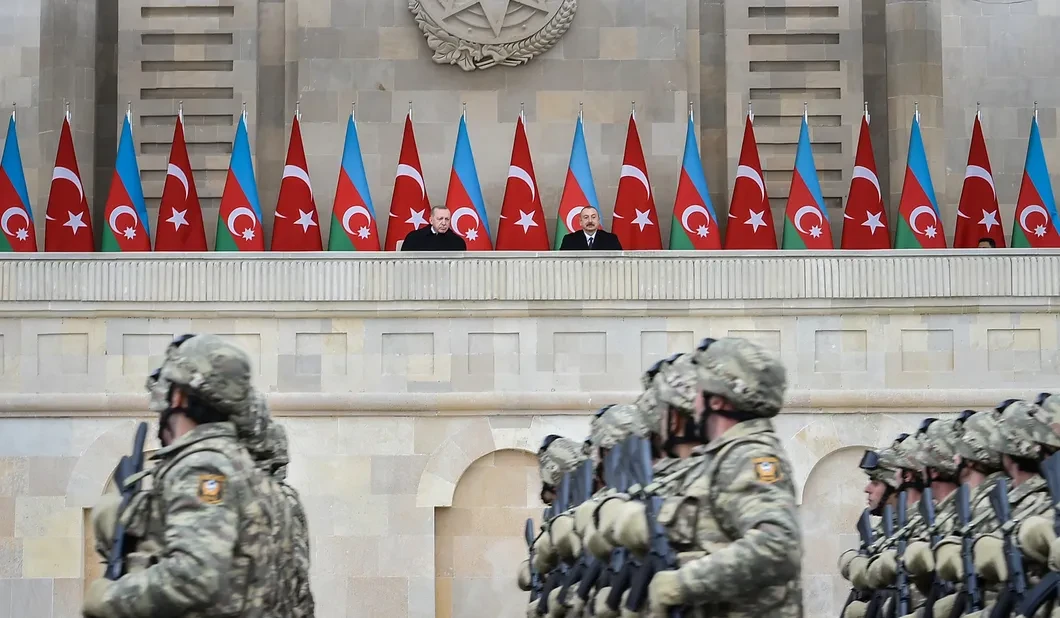
The further fate of the NKR is incomprehensible. President Ilham Aliyev claims that in the “multinational and multi -confessional Azerbaijan”, Armenians - natives of Karabakh, born before 1992, and their descendants will be able to work calmly and live by receiving Azerbaijani passports or residence permit. They may have a certain national-cultural autonomy, but without their own army, government, etc. The rest of the NKR is now, as before May 1992, separated from the rest of Armenia. Russian peacekeepers pass people and goods through the "Lachinsky corridor", but not weapons. In the interwar period, the Armenians built a northern road from Stepanakert through Kelbajar to Yerevan, but now it is under the control of Azerbaijanis. The arrest agreement stipulates that for three years a new road from Goris to Stepanakert will be built, bypassing Shushi and Lachini. The idea, obviously, is that Russian peacekeepers will control the new road, and the city of Lachin, inhabited before 1992, will go under the full control of Baku.
The armistice agreement also provides for the opening of the transport corridor between Nakhichevan (Azerbaijani enclave, bordering on Turkey, Armenia and Iran) and the main territory of Azerbaijan through the Zangezur district of Armenia. The FSB of the Russian Federation, which remained in Armenia after the collapse of the USSR, should control the movement along this road. Until now, the connection between Nakhichevan and the main territory of Azerbaijan has been through Iran. Baku and Ankara, however, insist that this Zangezur road should become precisely the extraterritorial transport “corridor” following the example of Lachinsky. Yerevan, with the support of Moscow, so far refuses to give Turkey a direct extraterritorial exit to the Caspian region.
Until now, the railway, as well as the modern road route and oil and gas pipelines rebuilt under Mikhail Saakashvili, went from Azerbaijan to the Black Sea, to Turkey and through it to the Mediterranean Sea through Georgia, which simultaneously gave Armenia a transit access to the sea and to Russia. The Tbilisi, on the move, rejected the Erdoganov “Platform of Six”, announcing that he would not enter into any regional alliances with Moscow, while Russian troops remain in Abkhazia and South Ossetia.
What to do Armenia?
You can continue the resistance: to partizes under the guise of Russian peacekeepers in Karabakh and along the border of the former “NKR security zone”, where the Armenian-Azerbaijani demarcation is now trying to conduct the old Soviet administrative maps. In the NKR and Armenia there are those who want to fight with the "Turks". There is no military meaning in such partisanism, but
If it is possible to draw into the skirmishes of the Russian military (peacekeepers), then the general balance of power can change dramatically and, say, suddenly it will turn out like in South Ossetia.
But while peacekeepers observe strict neutrality. For a month after the truce of November 10, the Armenian detachments (Karabakh militias and newcomers) held a couple of villages in the depths of Azerbaijani positions in the Gadrutsky district. In the course of a rapid attack on Shushu, the Azerbaijanis walked from the flank of the village of Hatsaberd and Hin-Tacher. The Armenians managed to establish some kind of supply of this advanced road. When the Azerbaijanis began an operation to displace the partisans, the Armenians requested the help of peacekeepers who entered Hatsaber and Hin-Tacher, stopped clashes, disconnecting the warring parties.
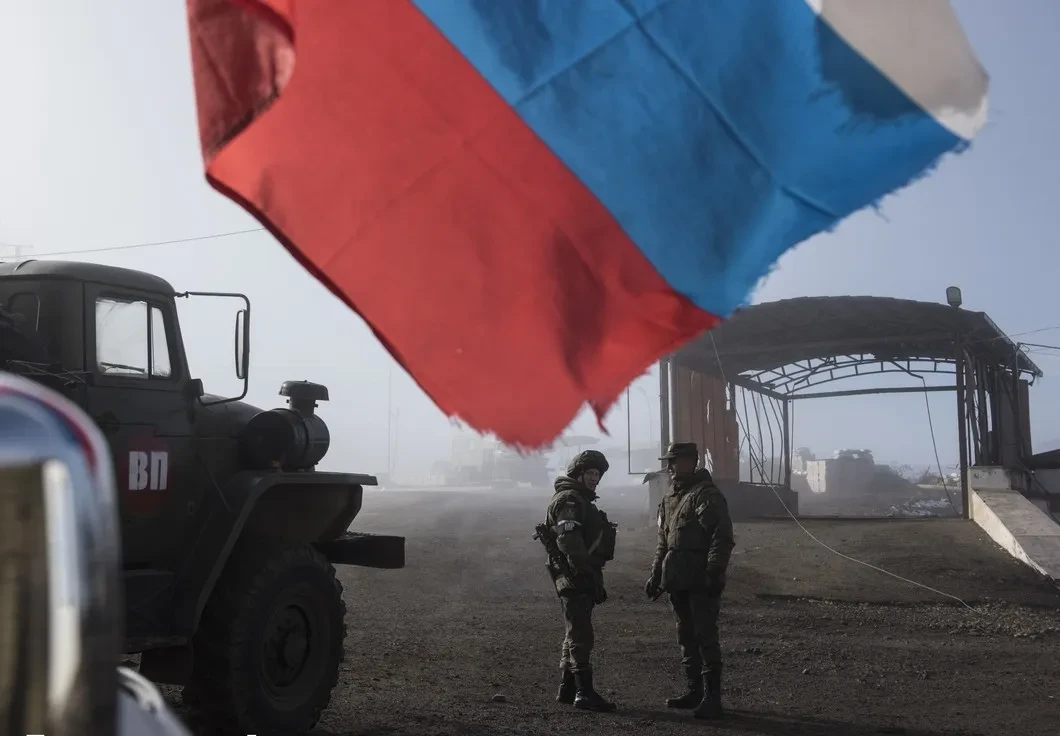
Then a political decision was made in Moscow: the peacekeepers disarmed and withdrew the Armenian fighters from this area and left themselves, which the Azerbaijanis, in fact, achieved. Now the mountain road to Hatsaberd and Khin-Tacher, which Prime Minister Nikol Pashinyan Sogoryach called “strategic”, is closed for Armenians.
The Russian military in Karabakh is up to two thousand, but they have a purely peacekeeping mandate - to observe and disconnect. Light small arms and Bether. You can use only for self -defense. Against the Azerbaijani army, and even with Turkish support, this is generally nothing - a purely symbolic army. However, Russia is not going to quarrel, and even more so to fight with Azerbaijan or Turkey, and it will be difficult for the Armenian partisans to draw it into a serious conflict. Therefore, the path of heroic armed resistance looks today for Armenia Deadkovo, like a mountain road to Hin-Tacher.
It is not very good to seek other ways to get out of the impasse. It is not yet visible in Armenia a national leader who is able to pull the country out of the deep pit of the defeat.