
Translated material
Here and always
Television made the sixth attempt to film the "dead souls." What happened?
Do you know in Russian a written thing more Russian than Dead Souls? No, you do not know such a thing. Because she is not.
The poem "Dead Souls" united the fantastic timeless and deeply absurd cosmism of the Russian soul - with the murderous satire on "here and now." And 180 years of its existence brilliantly proved that - "here and always."
This “here and always”, of course, attracted mainly Gogol’s interpreters from the border with the literature of the camp - cinema and theater. Well, of course, TV with his devilish opportunity to stretch and reduce time.
This year, television made the sixth attempt to film the "dead souls."
Three films-scenes (1960-Moscow Art Theater, the 1969th-BDT and the Moscow Art Theater again in 1979), strictly speaking, are not the products of TV-kino and are more likely to be of historical and theater interest. “Dead Souls” by Mikhail Schweitzer of 1984-a bona fide five-part (by the number of landowners) Illustration with brilliant acting work (Kalyagin, Bogatyrev, innocent, amazing Smoktunovsky-Plyushkin, etc.), despite the timid introduction of the figure, as it were, a reflecting author-declaimer (Alexander Trofimov), the method is not much different in the method From theatrical productions. This is all the same information of the “Russian Odyssey” to the frauds of Chichikov, jumping from the landowner to the landowner, where Smoktunovsky alone, due to his acting power, contributes to the poetic expansion of the viewer's consciousness.
All this is the school Gogol, the Gogol-satirist, who for many generations of Soviet schoolchildren embodied in the hated "three bird", pecking trophic ulcers of the long-suffering Russian society.
Finally, in 2005, the most interesting project of the television “Gogolian” appeared - the two -part “The case of the Dead Souls” by Pavel Lungin and Yuri Arabov.
Arabov, as a poet, understood the nature of Gogol’s fantasy: absurdity and word. Absurd as a method and frantic splendor, verbal fabric, making this sick author, in which all monstrous Russia sprouted with metastases, hopelessly non -transient. Including cinema. Therefore, the only way to create a text adequate by the off -road Gogol's prose, scolding by millions of paths, tributaries, sleeves, is to create a text. What they did as the Arabs as a screenwriter and Lungin as a director, composing their own poem - wonderful in absurdity, wildness and carnival. Not a satire, but a dream of madness, unsystematic, meaninglessness and morka of Russian being.
And here is the sixth film adaptation. Filmed on the IVI platform by Grigory of Constantinople for four and a small month mini-series of four episodes.
Once Yuri Arabov complained that "television inevitably gives everything to some indestructible raid of vulgarity." This conversation took place 15 years ago, since then the vulgarity on the “box” became a brand, a trend, discourse and a professional norm. But, on the other hand, this unfortunate box named after Pandora has a powerful partner in the person of network resources. Over the past three or four years, film platforms have pumped out an impressive muscles.
Single shots of domestic series turn into carpet bombing, and these bombs are quite competitive.
But the plaque, cursed by Arabov, has not gone anywhere. Like a scale on a kettle, it is really practically indestructible. What does not interfere with good expensive tea to make a drink not without nobility. Yes, and what immediately vulgarity! Negality, say, haste ... or now - ease in thoughts, like one immortal character. Another successful word is clip. All this is inherent in even very good series. Because television is always the deadlines. And often the shortest.
Grigory of Constantinople came up with a chic gaming move. An official of the Ministry of Culture of the Modern Russian Federation Chichikov (Evgeny Tsyganov) comes to the city of Bugorsk to vip Vypovsky places to, respectively, elite cemeteries in Moscow.
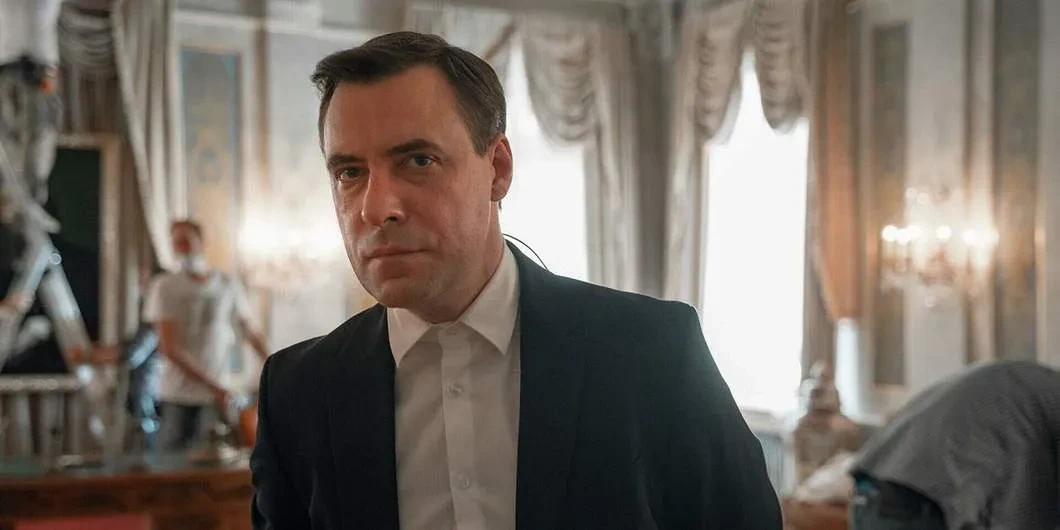
According to comedic productivity - no worse than the “house arrest” Semyon Slepakov, where the mayor is serving a sentence at the place of registration: in the communal apartment of his childhood.
But the plan is just a plan. “Home arrest” would not be so good if it were not for the excellent discharge of each scene, each plot turn, each line of relations, not to mention the characters.
On “Dead Souls”, the stamp “made it very quickly” stands, as in the library book, on every tenth or there the twelfth page.
True, the circumstances of the filming were so dramatic that it was surprising how the group generally brought the matter to the end.
The first terrible blow for everyone was the death of a heavily patient Sergei Koltakov, the performer of one of the main roles - the governor. How did he star and was able to get ahead? Literally - on one heroism and God's gift. Sergey left September 7, and on September 8, they announced the verdict to Efremov. Now you can only guess and dream, how he would play Plyushkin.
Of course, this story was reflected in Gregory, and in the entire film crew. Plyushkin was given to the beautiful Alexei Serebryakov and, by chance or not, turned into a tragic character. As a result, the entire episode with the librarian and the failed director Stepan Plyushkin is completely falling out, breaks out of the context.
Because he shot Constantinople definitely a comedy. And the comedy is unambiguously satirical. And Serebryakov himself, as already mentioned, is beautiful - a person is not from here. Not from this, he is not from the test (and text) of this film adaptation. The men Plyushkin how did they call?
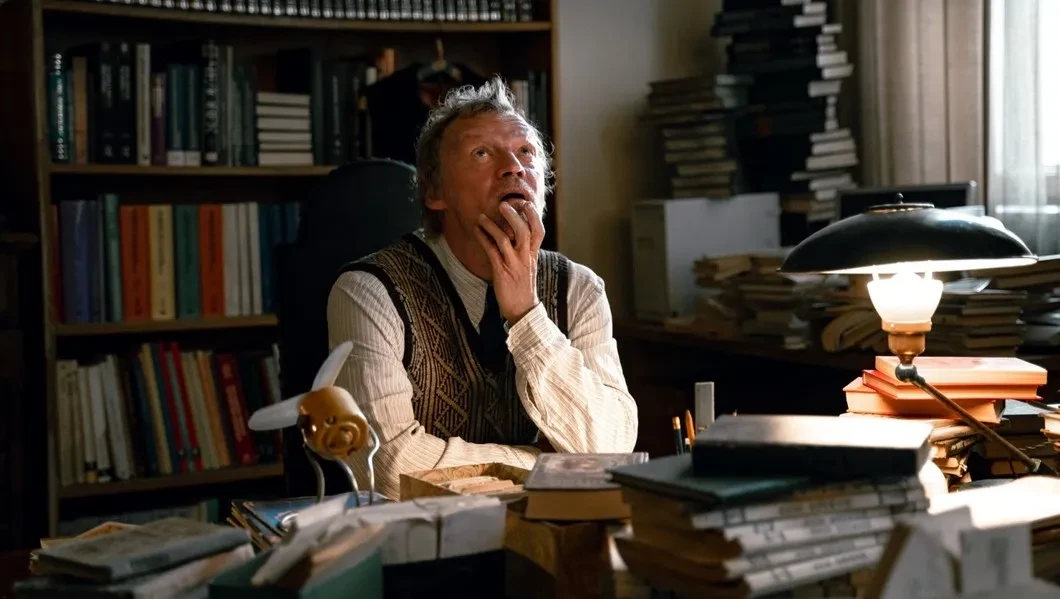
Yes, we remember: "Drying ...". He, so to speak, is sire and nag, because he is indestructibly stingy. And stinginess is a mortal sin. That is, according to Gogol, the author is unconditionally Orthodox, he is the largest sinner of all five landowners. Sobakevich is just rude and glutton, nostril is a player and a lie, Manilov is a dreamer and a spotlight, a box is just a fool. And this one is a stingy, he will be able to strangle in a penny. Great sinner!
The Constantinople, from the heart, pushing the entire parade of the freaks of Bugorsk in feathers, Pypyshkin poverted from ... honesty. He is the only one. He is among books. He dreams of making a movie and digging up to old age, “delaying any penny”, seven million, and three more lies - state money, for the needs of the libraries. That is, Plyushkin in this story who? Yes, Russian intellectual, forgive the Lord his mother! Yes, in addition, the dissident, as it covers power, will not seem enough for anyone. From what business? Why? Where did the author dug this? We remove Gogol, not Chekhov, gentlemen! And on hell, a place on the Novodevichy nearby surrendered to this Chekhovsky garlic-both-on! - With Bondarchuki? Ah, he studied with Fedya at VGIK, and where, they say, now Fedya, and where - he ...
Grigory of Constantinople can object: who spoke of absurdity and absurdity as the creative method of Gogol? Yes, but here is not absurd (which does not exist without crystal internal logic). This is not absurd, but porridge. And I know what ax was welded from.
It is clear that the director, although a comedian, but to a greater extent a romantic than a satirist, did not want to take off the goly satire, and correctly. From here, Efremov, and Serebryakov, and Tchaikovsky and Beethoven on the credits, and Captain Kopeikin, growling under Grebenshchikov ... In the third quarter of his “Road-Mui”, he, as it were, translates the shooters of satire to the artistically full-blooded and full path of the tragicomedy, which the drama Efremov and Koltakov’s death added black colors.
It’s not for me to teach the master, but who does this? The tragicomedy is not Lego, where one strong dramatic episode can be built up, such as some kind of Caryatid, and then return to the previous unpretentious construction. The tragicomedy is a complex living organism, where the laughter of the sides, and the bitterness of the comic. "Frantic ballerina" is a tragicomedy. "Drunk company" is a tragicomedy. And “Dead Souls”, as the same master took off, is a social satire with Cariathid approximately in the middle.
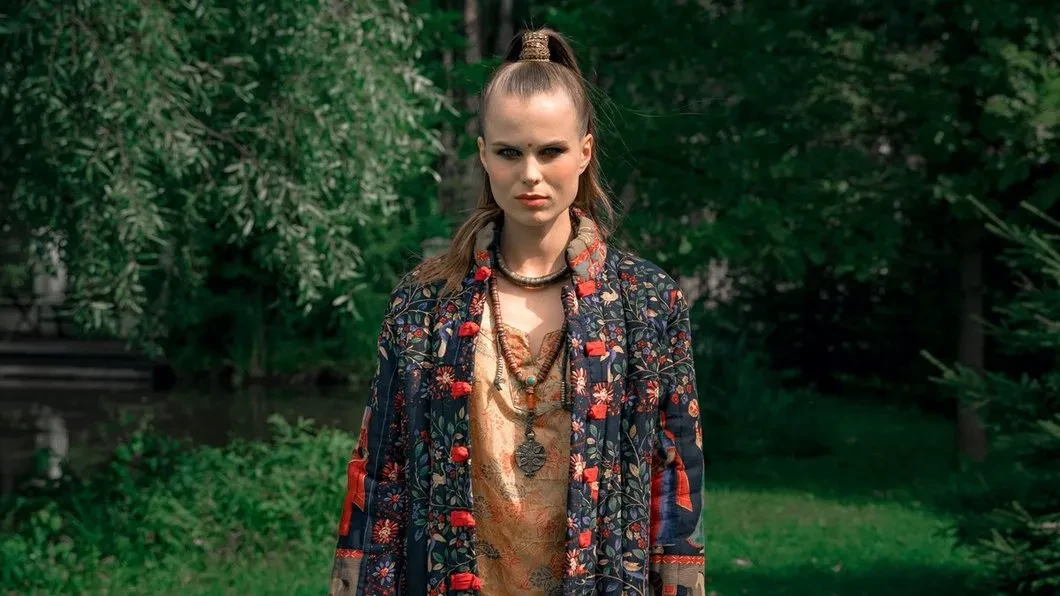
However, if we were not talking about Gogol, then there is nothing wrong with the social satire. Moreover, in the "dead souls" of Constantinople (although Gogol, too) there are a lot of funny and very evil. And when it comes to modern Russia, I’m all my hands for, and the angrier, the better.
No degree of mockery and whip will be “too” here.
It is great that the head of the Department of Culture is Sobakevich (and it is good that this dog is unchanging Alexander Robak, and it is good that this robak even speaks articulate this time). When Sobakevich is a landowner, he, although boor, but not a villain. And when he is the head of culture, he is a villain.
It is very ridiculous that Nozdrev is a Cossack chieftain of a provincial spill. And Timofey of the Tribune only for the time being sculpts perfectly for the tagged image of the Schuler and empty (although not as luxurious as Lupecaev). And do not immediately notice that he is dangerous. Not when he reports his dream to lie at the Kremlin wall next to the idols - Zakhar Prilepin and Stalin. This is a ridiculous scene and thereby distracting. But later - you can’t yawn: no, brother, though you're randomly drunk, you are a villain. And betray and kill, as you sneeze.
And the Buddhist Manilov (Dmitry Dyuzhev) with his Buddhist-Zhenya (Alexander Revenko) like a malacholny, obsessed with sex and dope is a sweet couple.
Of course, they are not villains when they are dancing under the lute idiotic dances and are ready to saddle each other every minute.
But Buddhist commands pharmacies, and in the city instead of normal drugs - one Ayurveda. Well, drugs, of course, are literally swirling in the air ...
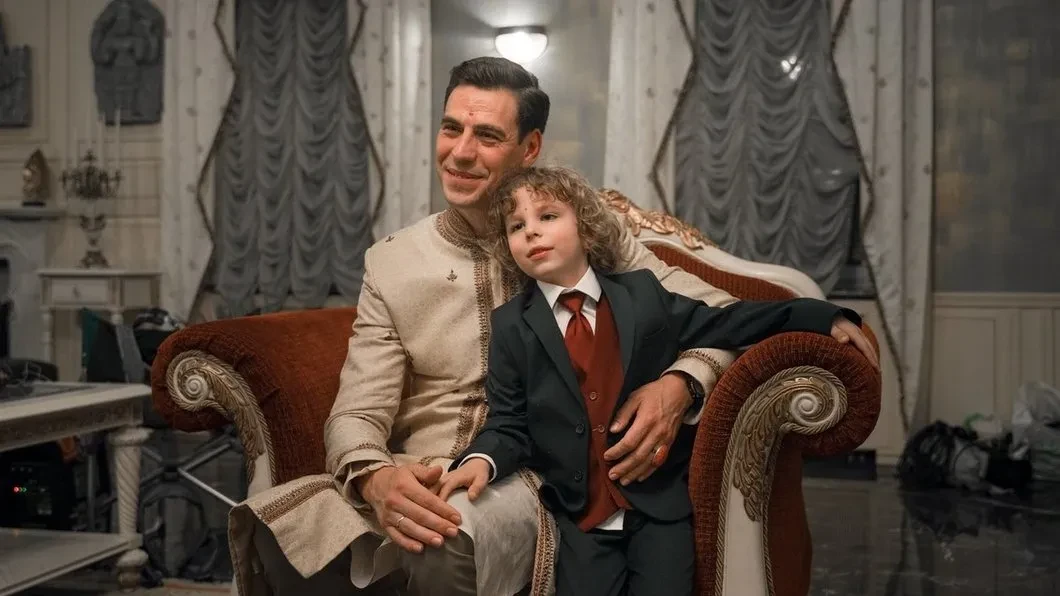
And a lovely box (Elena Koreneva), a fool from a fool. But she is the mayor of this unfortunate Bugorsk, although she doesn’t even know for sure, elected her or the position was inherited “by inheritance”, from her husband. And in this capacity, of course, she is a villain.
In general, as the governor rightly certifies his gang-lace, “gentlemen thieves, scammers, corruption” ...
That's who, without reservation, is a villain, smart, vile, insinuating, inexorable, terrible. The governor here is almost as important as Chichikov himself. Which, it should be noted, is the smallest villain of all. He is a crook, of course, and a thief. And his anamnesis is impressive. But in the performance of Tsyganov, this is the thieves that is “miles than a bloodsucker”. And to look at Tsyganov here is finally interesting.
Finally, this good artist does not die from longing, like in almost all films. He is worried, he is gambling, he deftly fights for his mythical (at first) millions ... like Ostap Bender. And as Ostap Bender, almost left for a broken trough - not very, however, killing. Easy Come Easy Go. Like 30 million Manilov - either they were money, or either a vision ... (they were, as it turned out).
Both of them are the heroes of the rogue novel. Gogol was the first to come up with a Russian swindler with a rather nasty biography. Unpleasant type. The hairs from the nose are plucking ... In essence, Chichikov is a Bender and Koreiko in one bottle. Constantinople with his reader background completely correctly divides him. In the dry residue-a charming master of hundreds of ways of “honest” money weaning and his sparring partner. And now all the nastiness and rubbish growing on the body of Russia are given to the director to this partner, a collective Koreiko, led by the governor.
I must say, Koltakov here is the only one who leads his role purely and strictly, piercing with ice cold on close -ups. Behind him is really the culture of the Moscow Art Theater.
The rest are bathed in the game - delicious and fat, plus them with might and main - from the crystal, indigenous to the toothy Dyuzhev, stuffed with testosterone. Which, in principle, is not bad for the comedy. Although it is this carnival that gives rise to the effect of clip -coat, cabbage and distracting with the main fun. And here the crutch (Kopeikina?) In the form of the movie Gogol with Petrov on TV, Chichikov VIP cameras is rather useless.
The main thing ... The main thing is what we started. From the immortal Russian "here and always." Not for the furniture in the office of the Big Mincents Chief, Kuvshinnoye, playing the Moon Sonata (Igor Vernik), there is a portrait of Saltykov-Shchedrin. And not for a red word, the defendant Chichikov pronounces a phrase that Gogol does not have:
"The robbers are not hiding in the forests now, they are sitting in costumes in offices ..."
For Grigory of Constantinople, who started his booth and parade-alla on Russian off-road (“Eh, Treshka, Baha Trushka!”-Maxim Emelianov, a crazy heap of the Selifan), the Last, fourth series-with a disabled person, is a meaningful judiciary and Divine judges of Bugorsk The metropolitan power structures, before which “all the peoples and states are fixed”, because they are ascended in the most, according to Bulgakov, “fatal heights”, namely ...
But this I will not tell you.
From today, all four episodes are laid out on the IVI platform. The installation is completed in the morning. I vouch, many will like it. Well, what I got here ... "This is a Russian person. Try it slightly the tops of some science, this will invent a wise decree that many will have a solo. ”
I just love Gogol very much.