
Translated material
Miracles at the lines
The Kremlin’s Eurasian foreign policy today is based on fear of strengthening Turkey in the south and Poland in the west
One of the events underestimated by many commentators was the speeches of deputies of the State Duma V. Nikonov and E. Fedorov, who clearly made it clear that they did not consider a significant part of the territory of Kazakhstan by rightly belonging to this post -Soviet republic. Passed exactly on the Day of Independence of Kazakhstan, these words caused a real storm of indignation in the country, which in social networks turned out to be even more powerful than in official statements that sounded on the air.
Meanwhile, is it possible to assume that all this will follow the appearance of “polite people” in Kazakhstan or the formation of Karaganda or Ural (from the name of the city of Uralsk, and not from the Urals, of course) people's republic? In my opinion, such a prospect is unlikely - as unlikely, Russia in the affairs of Kyrgyzstan, the protection of the few remaining representatives of the “Russian world” in Turkmenistan, and the revitalization of Moscow policy in Central Asia. This thought is not even an ambulance of the defendants in the recent incident, but the general situation in the post -Soviet space.
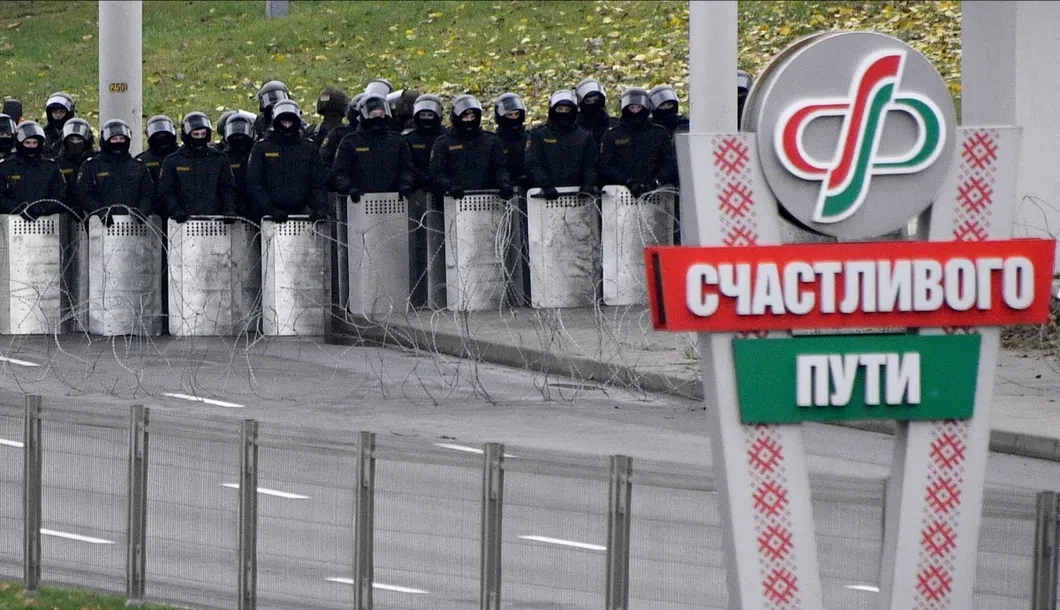
It is worth noting how different the reaction of Russia turned out to be, on the one hand, to A. Lukashenko, the elections in Belarus and the mass folk resistance or the defeat that Azerbaijan, which had begun, restored control over the most part of its territories, and, on the other hand, on a series of consistent government upheavals in Kyrgyzstan, which, probably not yet, have not yet entered the usual direction.
Belarus, Armenia and Kyrgyzstan are close allies of Russia, all countries enter the EAEU, but some of them Kremlin politicians pay attention to, but not for some. Why?
In my opinion, such differences are not accidental and can be explained when addressing history. And even quite distant.
At the turn of the 1980s and 1990s, when the Soviet Union was just starting to break up, the term “near abroad” spontaneously arose in Moscow, which was first designated by the Baltic countries, and then all the CIS states. Thus, at first, Russian publicists, and then politicians deliberately lowered the status of these countries to a kind of post -colonial and placed them in the undeniable “zone of influence” of Moscow. For many years, in the structure of the Russian government, in addition to the Ministry of Foreign Affairs, there was a separate Ministry of CIS Affairs (which were considered by a special angle of view), and deputies and pro -government experts openly called the former Soviet republics “sovereign but not independent”. Attempts by certain states of the former USSR “to cross to another camp” were considered a betrayal and caused a tough reaction of Moscow - up to military intervention, as in Georgia and Ukraine.
Meanwhile, it is difficult not to notice that all this rhetoric concerned only part of the post -Soviet space. Namely, territories from Belarus to Ukraine and Moldova, as well as spaces from Abkhazia to Karabakh.
Nobody and never in Russia aroused thoughts about the struggle for Tajikistan or Turkmenistan,
And only V. Zhirinovsky made claims to the Kazakh steppes (and, probably, only because they lay in the way to the Indian Ocean). No violating the rights of Russians in these countries, from where in the 1990s (unlike the Baltic countries or the same Ukraine) hundreds of thousands of “compatriots” who lost all, fled the Kremlin.
I recall Russia, arose and over the centuries developed as an empire - and, unlike European powers, it became it before the Russian national state formed (many historians even believe that this never existed at all).
During its formation, Muscovy (I use this term, because the very emergence of the word “Russia” in its modern meaning dates back to the middle of the 17th century) waged an active struggle with neighboring empires. And above all, with the Grand Duchy of Lithuania and the Commonwealth in the West, and with the Ottoman Empire - in the south. Both of these states were not only a source of military threat for Muscovy (the Vassal of the Ottoman Sultan of the Crimean Khan several times approached Moscow in the 16th century, and the Polish troops even held it at the beginning of the 17th century), but also existential opponents as representatives of Catholicism and Islam (almost until the collapse of the empire in 1917, “Orthodox” identity in Russia remained in Russia more significant than the "Russian").
This centuries -old struggle, in my opinion, imposed a much deeper imprint on the Russian political consciousness than is commonly believed.
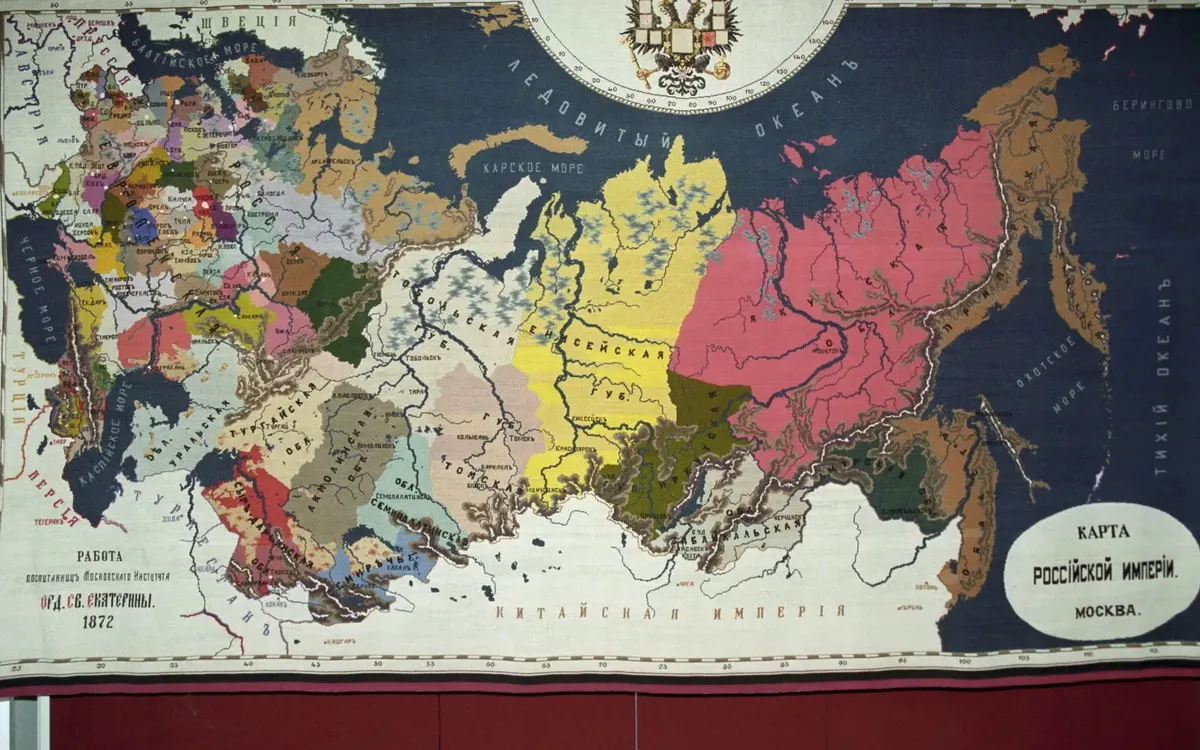
If you look at the map, it is easy to notice that the Western and southern territories of the Russian Empire/Soviet Union for a long time were controlled or directly part of:
The Commonwealth (Vilensky Territory, all modern Belarus, Smolensk, Chernigov, most of Ukraine)
The Ottoman Empire (Bessarabia, the northern coast of the Black Sea, Crimea, Abkhazia, parts of Georgia, Armenia and Azerbaijan).
With both empires, Russia in its long history spent almost 20 full -scale wars, as a result, turning Poland into its province and until 1945 without completely abandoning the idea of control over Istanbul and Turkish straits.
Today, all three empires who fought with each other have gone in history. However, imperial complexes remained, and in some places became instruments of domestic and foreign policy.
The geopolitical elevation of the same Turkey occurs in logic, which is extremely reminiscent of the one that is noticeable in the behavior of Russia (and it is still not clear who is the student and who is the teacher).
Back in the 1970s, under the pretext of “protecting the interests of the Turks” in Cyprus, who sought to reunite with Greece, an operation was carried out similar to the Crimean or Donbass in 2014, which resulted in the creation of the Turkish Republic of Northern Cyprus recognized only by Ankara;
In recent years, it constantly mentioned the “Turkic roots” and “Turkic solidarity” with Central Asia;
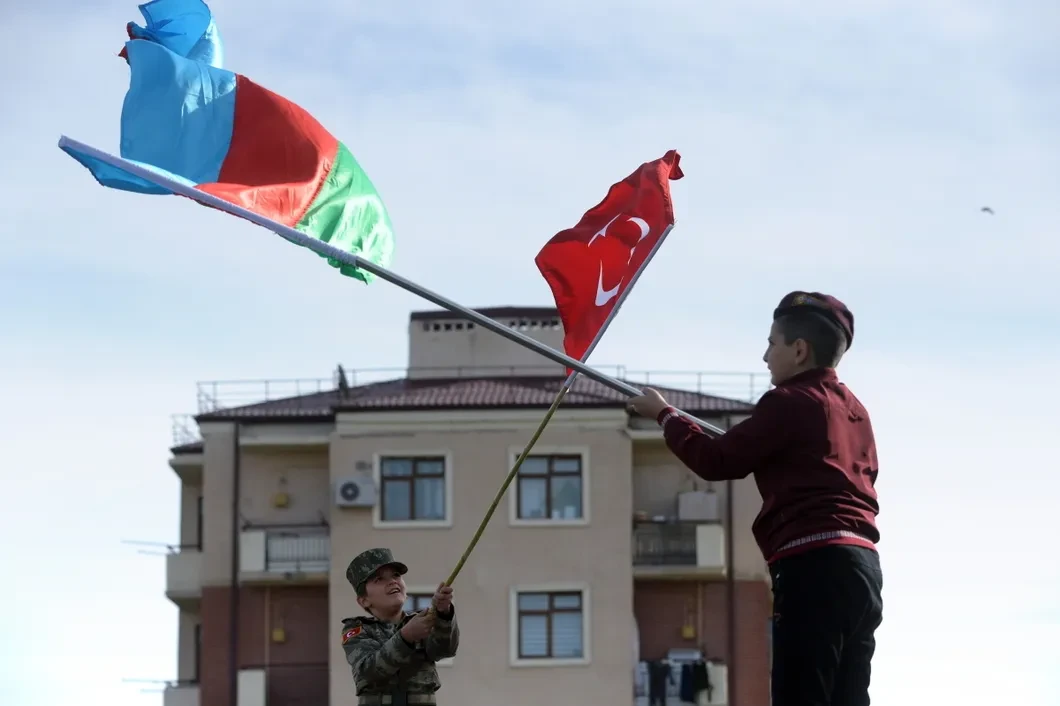
Türkiye announced Azerbaijan to a fraternal country in the same rhetorical context in which Russia speaks of Ukraine and Belarus;
Ankara, like Moscow, actively interferes with conflicts around the perimeter of its borders. The Turkish policy consists today in the revival of attention to the Turkish “neighboring abroad” (from Azerbaijan to Libya), the very existence of which was almost not remembered a couple of decades ago.
In my opinion, we can confidently say:
The tension between Russia and Turkey arises primarily precisely due to the fact that in the south of the borders of Russia the “neighboring abroad” of the former empires crossed.
Türkiye has repeatedly stated that she supports the autonomy of Gagauzia, was not going to recognize the “Russian occupation of Crimea”, and now she actively contributed to Azerbaijan in his victory over Armenia. In Moscow, this circumstance feels great, although they do not speak openly about it. But relations with Erdoganovskaya Turkey are spoiled forever.
As a matter of fact, this is exactly what - if not even to a greater extent - determines the position of Russia in relation to Poland.
It was not by chance that in the mid-2000s, V. Putin made a national holiday on November 4-the day of the mythical expulsion of “Polish intervention” from Moscow in 1612.
With manic persistence, he accuses Poland almost of ... unleashing the Second World War, mentioning in his recent article about the 75th anniversary of its completion the name of the Minister of Foreign Affairs Yu. Bek more often than all the heads of the state of the anti-Hitler coalition combined.
Hence the constant “investigations” of the roles of Warsaw in the current events in Belarus, and even “research of Russian historians”, which denied the guilt of the NKVD and Stalin in the inhuman destruction of the Polish officers in 1940 (about the open justification of the Soviet invasion of Poland in 1939, I don’t even remember).
As imperial sentiments are rapidly reviving in Russia (and they are unlikely to turn into a full -scale imperial policy, for the implementation of which Moscow now does not have resources), its attitude to other centers of former empires that extended their influence to parts of its own territories is becoming more and more jealous.
If you summarize the intermediate result, we can say that Moscow - even if it is not to mention this openly - perceives the post -Soviet periphery in the west and south as several intersecting “close abroad”, which Ankara and Warsaw also claim. And no matter how different the assistance of Turkey is the legitimate government of Azerbaijan from the operation in eastern Ukraine, and the design of the “Pole Cards” from the secret distribution of Russian passports in Abkhazia or Transnistria.
In Moscow, they are deeply fixated on the fact that Türkiye and Poland are supposedly intended to radically expand its presence in the space that Russia considers “its own”.
Of course, all large countries have their own interests, but it is still obvious that the program of “Eastern Partnership” was created not as an instrument of struggle against Russia, but as a response to the desire of the post-Soviet countries to approach social and economic relation to Europe, and Azerbaijan was conducted by Baku in its own territory and became a very belated answer to the inability of Russia and De facto by the Minsk group at least somehow To contribute to the solution of the existing almost thirty years of problem. But such “little things” do not have any significance for Russian politicians. In the Kremlin, apparently, two new enemies were determined with all his distinctness. They became Türkiye and Poland, and precisely as former imperial rivals of imperial Russia.
It seems to me that the logic of “intersecting neighboring abroad” is extremely important for understanding the actions of Moscow. In particular, in relation to its policy in relation to China. In this case, either the border between Russia and the PRC does not at all imply “noe” territories that (as Belarus, Ukraine, Moldova or Transcaucasia) could act as the subject of dispute; Either the countries between Russia and China (like the majority of the Central Asian states) were historically not the object of Russian-Chinese rivalry. And so now
The Kremlin does not belong to the growth of Chinese influence in the region, and even more so is not interested in violations of Russian -speaking citizens in the new sultanates who are building their national identity.
I have repeatedly tried to note that Russia is, first of all, not a non -European, but a non -modern country that today finds elements of its “self” in the past and is very afraid of everything new that is happening in the world (from the internationalization of the concept of human rights to modern information technologies). It is the excessive (and electoral) appeal of Moscow to its own history that is the cause of its growing aggressiveness, and the comprehension of the recent events as a continuation of the historical integrity struggle can only additionally strengthen the already unbroken revenge sentences in the Kremlin.
The events that began in Belarus on August 9 and in the Transcaucasia on September 27, are far from their end, and the closest neighbors of Russia should today analyze the visible and hidden motives of the Kremlin’s actions as much as possible - even if their reasons may seem irrational for a modern European. At the same time, it seems to me that for the above reasons in the capitals of Central Asian countries, it is still too early to worry about the security and independence of their states ...