
Translated material
We were not the first to start
Who is to blame for the new nuclear arms race. A look from Washington
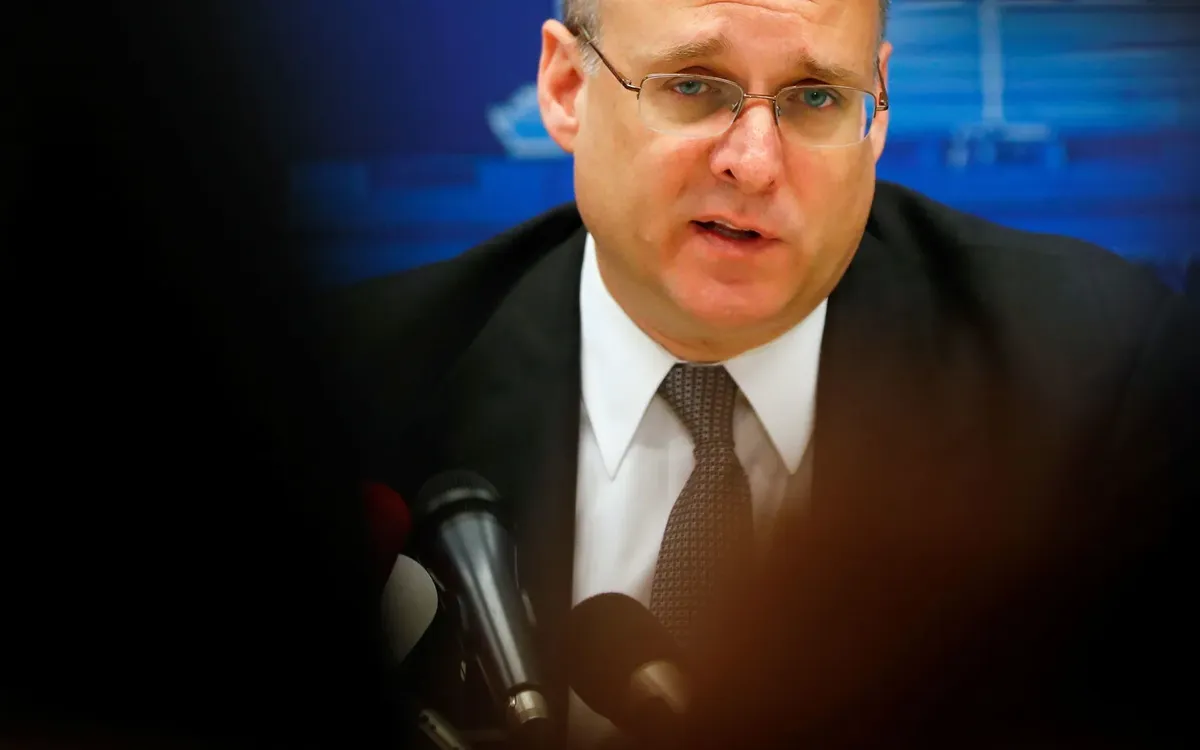
Marshall Billingley, the special representative of the current US President to control weapons, was the first to respond to the last press conference of Vladimir Putin in Washington. Not only the president’s statement that Russia is ready to conclude or extend the strategic offensive weapons agreement-the DSNV (it is called New Start, and we also have START-3), but also to accusations against the United States, that “due to the lack of a reverse reaction, the world goes to the new nuclear arms race”.
Billingley, who at the end of October said that the nuclear deal with Moscow was “very, very close to completion”, also responded to twitter messages from the accounts of the Kremlin and the Ministry of Foreign Affairs of the Russian Federation.
Here is the message that Reuters and other media agency called Putin's tweet, by analogy with Trump's Twitter calls:
“The validity of the DSNV expires in February. We are ready to continue the dialogue with the United States, but for this our partners must answer. ”
In a response, Billingley also wrote on Twitter both the addressee “Kremlin” and “Foreign Ministry”. “@Kremlinrussia_e, we have already answered, repeatedly. Five times, we proposed, including in writing, to meet in order to finally draw up a deal to freeze/extension, to which Putin agreed. @Russiamfa (i.e. the Ministry of Foreign Affairs of the Russian Federation) rejected all the meetings, - wrote the special Supervisor Trump. “All that we need to do is determine what we are frozen, the level of restriction and start negotiations on the verification.”
Trump needed this deal, but especially it was needed before the presidential election. This would be evidence of the effective foreign policy and, along with the Middle Eastern mediation of Washington, which led to the conclusion of the peace treaties of Israel with a number of Arab countries, a nuclear transaction with Russia would become the main diplomatic asset of the 45th president of the United States.
Against the backdrop of trading wars with China, zero results with the DPRK after two meetings with Kim Jong -un, the exit from the Iranian transaction, the Paris Climate Agreement and WHO, periodic demarchees regarding NATO, a ridiculous proposal of Denmark on Greenland, etc., even a simple extension of the contract with the Moscow strategic nuclear warheads and 700 Expanded strategic missiles and heavy bombers would be a real success and a certain turn against the backdrop of endless anti -Russian sanctions.
The agreement, signed in April 2010 in Prague B. Obama and D. Medvedev (entered into force on February 5, 2011), became a symbol of the “restart” of relations, which after 10 years none of the politicians in Washington and Moscow and recalls. We live in a new reality, and the START-3 document remained the last current bilateral agreement on nuclear weapons between the two countries (in 2019, the United States has left the agreement on the elimination of medium and lower-range missiles, accusing Russia of constant violations of obligations).
The termination of the DSNV on February 5 of next year will put an end to restrictions on the deployment of strategic nuclear warheads of the United States and Russia, as well as missiles, bombers and submarines that carry them, which will lead to a new nuclear weapons race, experts say.
Billingley actually accused Moscow of disrupting negotiations on START-3.
In June and August, in Vienna and October in Helsinki, a special settlement met with Russian impact - Deputy Minister of Foreign Affairs Sergei Ryabkov. At the end of July, additional consultations of the Russian Federation and the USA were held in the format of meetings of three working groups: in space safety, on doctrines and potentials, on transparency and verification.
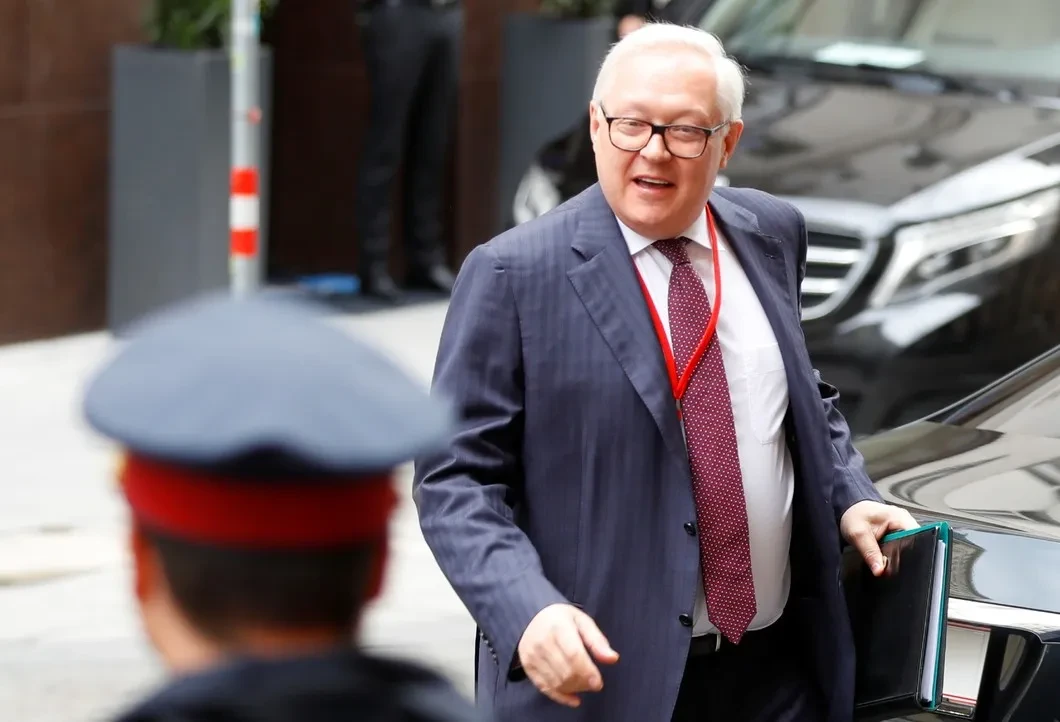
In October, Russia proposed a new extension of the START for one year and the freezing of strategic and tactical warheads for one year, but only if Washington does not seek further concessions from Moscow. American media noted that earlier Vladimir Putin wanted the new DSNV to extend for 5 years. At first, Trump stalled the negotiations, demanding the inclusion of China in any new agreement. Beijing resolutely refused and was no longer mentioned in the draft new agreement, noted by The Wall Street Journal.
Then, at the end of October, the press secretary of the State Department Morgan Ortagus said: “We highly appreciate the readiness of the Russian Federation to achieve progress in the issue of control over nuclear weapons.
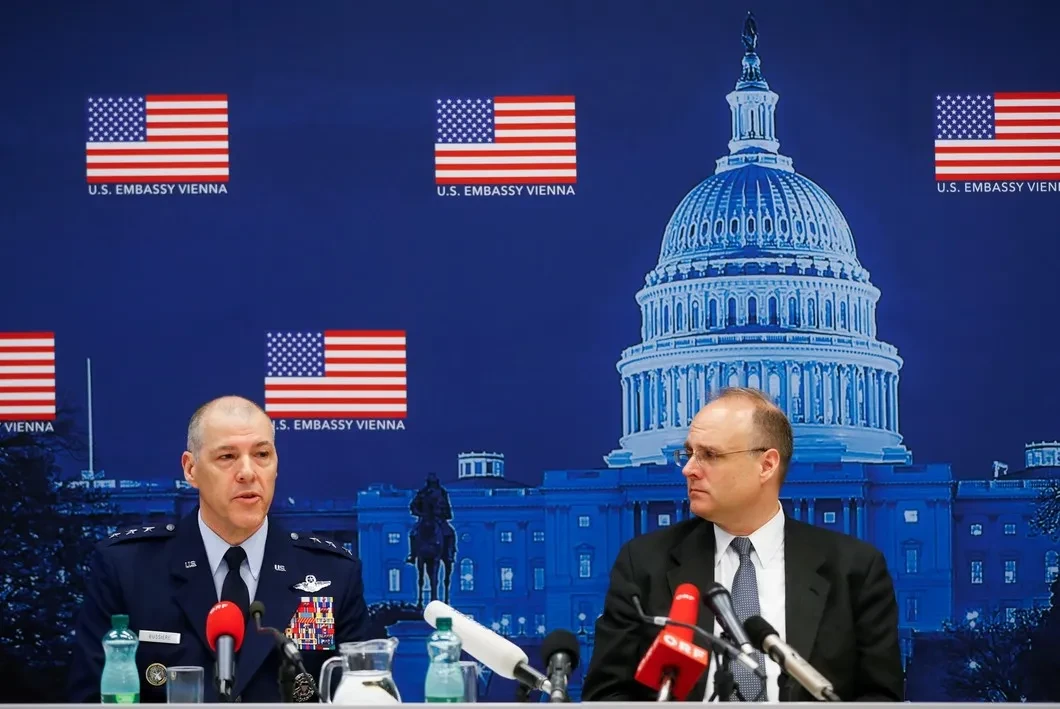
The United States is ready to immediately meet in order to complete the work on the verification of the agreement. We expect that Russia will enable its diplomats to do the same. ” As a high -ranking American diplomat told WSJ, the agreement could be concluded within a few days.
This is where everything became more complicated. Russia did not say anything that the agreement is to be verified.
Rather, this is: in Washington they say that the Russian side called the audit "additional conditions." Billingley in an interview with the American public TV PBS News Hour explained the problem that has arisen: “Russia stated that it would not agree to additional measures. But I would simply say that the audit is not an addition when it comes to control over weapons. This is an integral, fundamental part of any deal to control weapons, and so it was always. ” And yet. “The new START agreement limits 92% of the total American arsenal and covers only 45% of the Russian arsenal,” Billingley said in an interview with PBS, referring to the huge reserves of Russian “tactical” nuclear weapons of a smaller range that are not covered by a document. And, of course, "the new DSNV does not concern a single Chinese warhead."
Negotiations came to a standstill in October. Russia simply agreed to the “concept of freezing nuclear warheads - without additional appendages and requirements,” said Sergey Ryabkov about the breakdown of the transaction, so necessary Trump on the eve of the elections.
And now Ryabkov told reporters: “In Washington, they say that they suggested that we meet for the transaction five times, and we tell them that they proposed to agree on the scheme proposed by Russian President Vladimir Putin, and transmitted their proposals in writing. Instead of accepting this simple and understandable scheme, they furnish it all with additional conditions unacceptable to us. ”
In Washington, they are perplexed why the measures for checking the implementation of the agreement in the Kremlin are called "additional conditions." If we are talking about the prevention of Americans to the latest Russian developments, which the Russian president speaks with such pride and even warmth, then why cannot these fears officially be expressed by American "partners"? And so it turns out that “Russia, as a closed society, has always treated verification as a concession,” said political scientist Pranay Vaddy from the Carnegie Foundation. It seems that Reagan's favorite Russian proverb “trust, but check” in this case unacceptable for the Russian side.
Meanwhile, Daryl Kimball, the head of the Washington Human Rights Association for Arms Control, said that Billingley “did everything” so that there were no further negotiations with Moscow until Biden replaces Trump. Putin's tweet “was aimed at Biden,” he said. Biden advocates the expansion of the new START as "the foundations of new mechanisms of control over weapons." Sources close to his transition team reported that he had not yet decided on the deadline for the resumption of negotiations, although the new agreement appears among the pre -election promises of the new president of America.
As the former US ambassador to Moscow, Bill Burns, Biden, may “have to resist Russia because of interference in the elections and other aggressive behavior”, while negotiating the future control of weapons. After Sumbur and Trump's improvisations, we can talk about the return of the classic pragmatic approach of American diplomacy to the Empire of Evil.