
Translated material
Is it far to the end of the needle?
We check the president’s words about the country's withdrawal from dependence on oil and gas
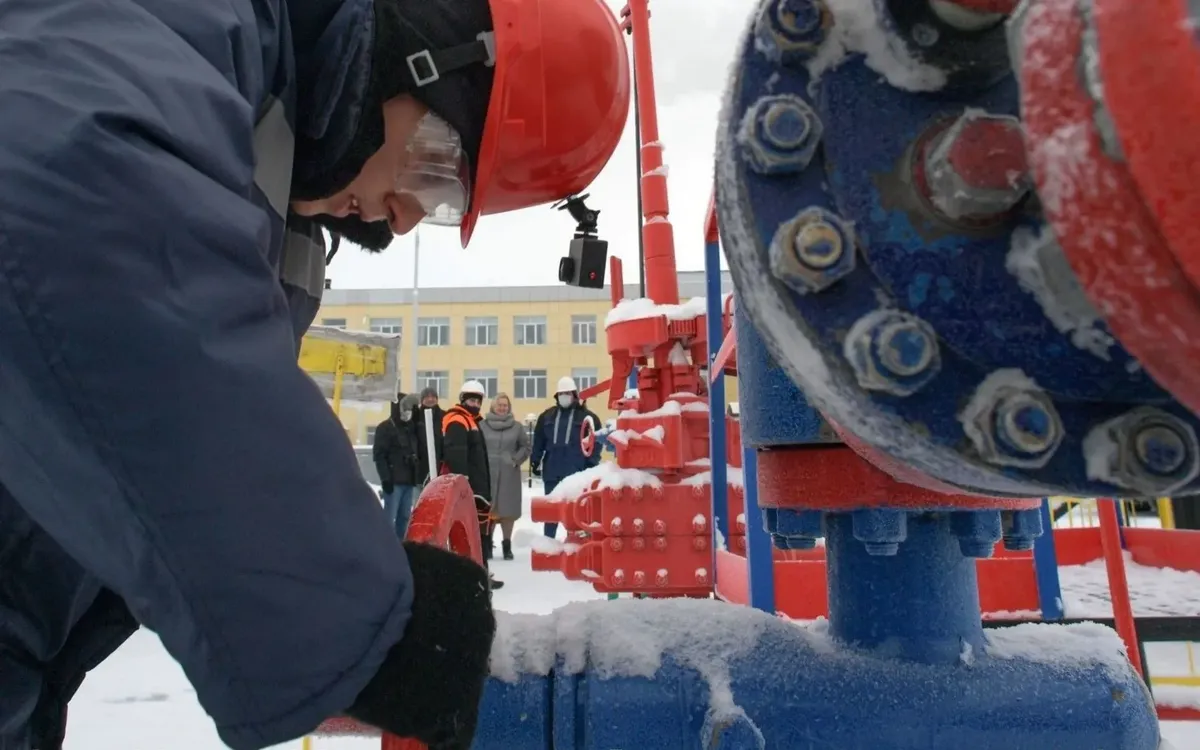
At the past press conference, President Vladimir Putin to the positive results of the development of the Russian economy attributed that we "are not fully, but nevertheless we begin to get off with the so-called oil and gas needle." This conclusion was made on the basis that 70% of the Russian budget is already formed not at the expense of oil and gas revenues. In general, we are no longer a gas stump, which was announced by the president.
Well, did it happen? Finally got off her, from the oil needle? To begin with, let's look at the state in which our country came to the beginning of the coronavirus crisis.
At the beginning of 2020, Rosstat announced new data on a change in the structure of industrial production: the share of manufacturing in the total industrial production decreased from 53.2% in 2010 to 50.7% in 2018. On the contrary, the share of mining increased from 34.1% to 38.9%, respectively. That is, we can make an unambiguous conclusion: the raw material dependence of the Russian economy has intensified in recent years.
If you operate with the indicators that the president spoke about at a press conference, then
Approximately 30%of the share of oil and gas revenues in the income of the federal budget. It only happened in 2020.
Prior to this, in 2005–2019. This indicator practically did not leave the corridor 40-50%. In the very beginning of the 2000s, when oil prices were still low, it was significantly lower than 30%.
And here is the coronavirus crisis with its powerful drop in oil demand. In April, the decline in global oil demand was generally about 25%. The deal with OPEC+, according to which Russia since May 2020 sharply reduced oil production, also played its important role. World oil prices in the spring of 2020 not only decreased, but simply collapsed (at the end of April 2020, oil prices fell below the $ 20 per barrel).
Today, as you know, they bounced up 2.5 times from their minimums. The drop in oil prices with a simultaneous reduction in export volumes could not but lead to a sharp decrease in oil and gas revenues in the country's budget, which immediately became scarce. We were forced to and will replace the falling oil revenues of the budget with borrowings. The oil dependence of the federal budget decreased, the debt - increased sharply. One dependence was changed to another. If in 2000 the volume of public debt to GDP in Russia was at the level of 6.5%, then in 2021 it will be more than 20%.
Is it possible to say on this basis that we got off the oil needle? Of course not. So cannot be said because this did not work out at all because of our targeted work to reduce the raw material dependence of our economy. All these cataclysms in the global oil market occurred due to the pandemic of coronavirus. Pandemia is Locksuns, it is a collapse of air transportation, it is the development of distance work formats and Internet services for the delivery of goods, etc. That is why the demand for oil fell, the world prices for it sharply decreased.
If there were no pandemia, then there would not be all this. So our some, I would say so, the exploring from the oil needle occurred in a great extent involuntarily.
Coronavirus makes Russia get off the oil needle. This characteristic of what is happening would be quite objective. By the way, this is also proved by the fact that in the spring of 2020 it was the Russian authorities that expressed the hope that the demand for oil in the world would be restored by the end of 2020. Then, however, they began to talk about the mid -2021.
However, global oil demand to previous levels is unlikely to recover in the foreseeable future.
By the end of 2020, the global oil demand was about 10% less compared to the level of year ago. Where is it - the restoration of demand to previous levels? He is not and will not be.
The postcoronavirus economy is a rejection of the “consumer society” model. Departure from unbridled consumption of resources, and above all hydrocarbons, occurs.
The problem of Russia is that the authorities, it seems, does not really understand this. They expect to restore oil demand, make decisions to save the economy, which are actually aimed at maintaining the existing production structure as much as possible (we take at least the same moratorium on bankruptcy). I do not say that this in one form or another does not need to be done. I'm only talking about what this testifies.
So it turns out: we ourselves could not get off the "oil needle". When this began to happen because of the coronavirus, we can’t understand and take into account this in economic policy again. We simply put this in a merit, without recognizing the problem of strengthening debt dependence and at the same time counting on factors that will again strengthen the raw materials dependence of the Russian economy.