
Translated material
State and dictatorship
On the peripheral troubles of one authoritarianism
By the 150th anniversary of the birth of P.B. Struve.
There are two ways to get out of the state of chaos, lack of discipline, revolution. This is a dictatorship and the state. The dictatorship does not know restrictions, legal regulation, “social engineering”. Power methods in it are voluntarism and violence. The state is a gradual, careful construction of an order based on law (primarily a constitution). The state is an understanding of the authorities as a combination of contract and violence. This is the evolution of power in the direction of increasingly more conventionalism.
The state as a process (i.e. in a change) is a self -restraint of power with the release - careful, unhurried, prepared - new areas of social space. The state is a legal and legitimate management system leading society to more and more self -government. Moreover, self-restraint of the state occurs not only in a socio-spatial dimension, but also in a socio-state. The possession of the authorities is strictly regulated and temporarily limited. This is the topic of changing the authorities. The most effective government is temporary. In this sense, the state is not a goal, but a means.
On the contrary, the law of dictatorship is the expansion of powers and the elimination of independent “centers”, “sectors” of society.
The dictatorship is the denial and annihilation of self -government in all its forms and at all its levels.
Modern dictatorships (including Russian) have learned to use legislation as a tool for violence. At the same time, laws lose their legal content. There is a rupture of law and law. The first is not canceled, as it was with the Bolsheviks, but - is not taken into account, they are neglected. Human rights that have grown from natural law (one of the most precious historical substances of mankind) no longer determine the application of laws.
In the early 20s of the last century and in the zero of this century, Russia tried (trying) to overcome chaos, a mess through dictatorships. In both cases, the state path is openly denied. The authorities abandon the slightest self-restraint and, constantly growing in socio-spatial and socio-trade, crosses the reasonable boundaries of external and internal interventionism. Repressions grow into terror, which is carried out in the name of some higher purposes, clothed in the form of laws. Bolshevism beat people, appealing to historical laws. The modern system forces the observance of “historical truth” using legal laws. The only real goal of the dictatorship is the extension of its existence, which implies expansion both inside its own society and beyond its external borders.
A fundamental question: What is the volume of violence and is ready (one or another) dictatorship? The Bolsheviks, repeatedly “washing” Russia with blood, stopped in the mid-50s. They abandoned mass terror (in any case, from its most odious forms), to some extent curbing state security, softened foreign policy. The dictators, which were half -naked jackets, changed into a particular dress adopted in the civilized world.
Where and when will today be stopped? Don't know. It seems that the modern Russian dictatorship still has the potentials of tightening and expansion. She did not even enter the stage of AKME. Let me remind you: the whole post -war decade (up to the XX Congress) of the Gulag empire shook from the uprisings of the prisoners. And the subsequent suspension of mass terror was not least prepared by the actions of these brave men (I would like all citizens of the Russian Federation to know about it and know their names).
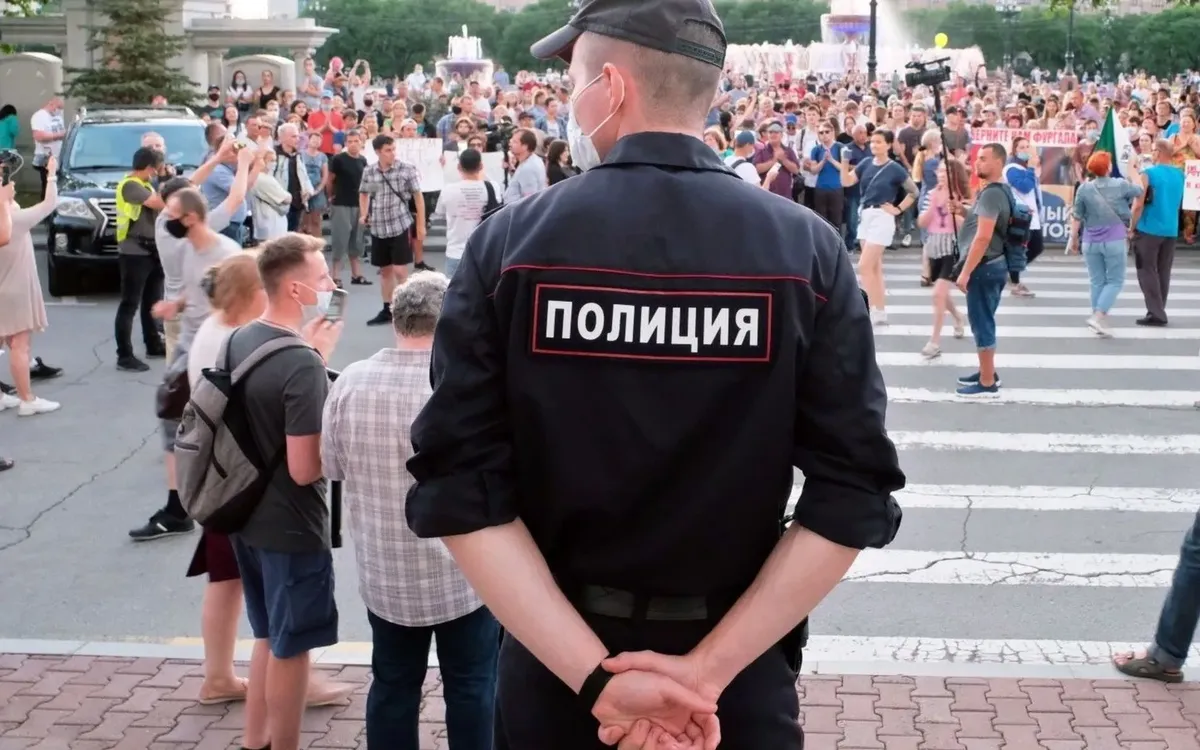
Are the Moscow protests of 2019 and the Khabarovsk 2020 to the harbingers of the general -system crisis of the dictatorship or its peripheral troubles? Rather, after all, the last.
Support for the zeroing of Putin’s presidential terms, no matter how much they say about the falsifications of the voting results on July 1, 2020, indicates a solid reserve of the strength of the regime.
Moreover, the abundance of constitutional amendments enshrined in the main law, in conjunction with a heap of constitutional amendments, is an anti -state coup. And all this is supplemented by “historical truth”, individuals as “foreign agents” and other human rights blows. The dictatorship finishes the remnants of the rule of law: the voice of the opposition is barely heard. Surprisingly, it is also heard that the word “opposition” itself is not declared outlawed.
When many years ago one of the then prominent functionaries of United Russia said that the best form of discussion is “interrogation”, it sounded like a parody. Today is realism, the post -socialist realism of our everyday life. But what naive (however, from this no less beautiful) the words of M.S. seem to be Gorbacheva about the primacy of universal values over class (i.e. universal over any group)! How "far" Mikhail Sergeyevich is from the people! How the Russian people have changed! How happy he is under a scepter of an irremovable supreme ruler! And Russia, under the leadership of its beloved leader, flies from victory to victory. And “foreign agents” interfering with this victorious flight will be identified and punished ...
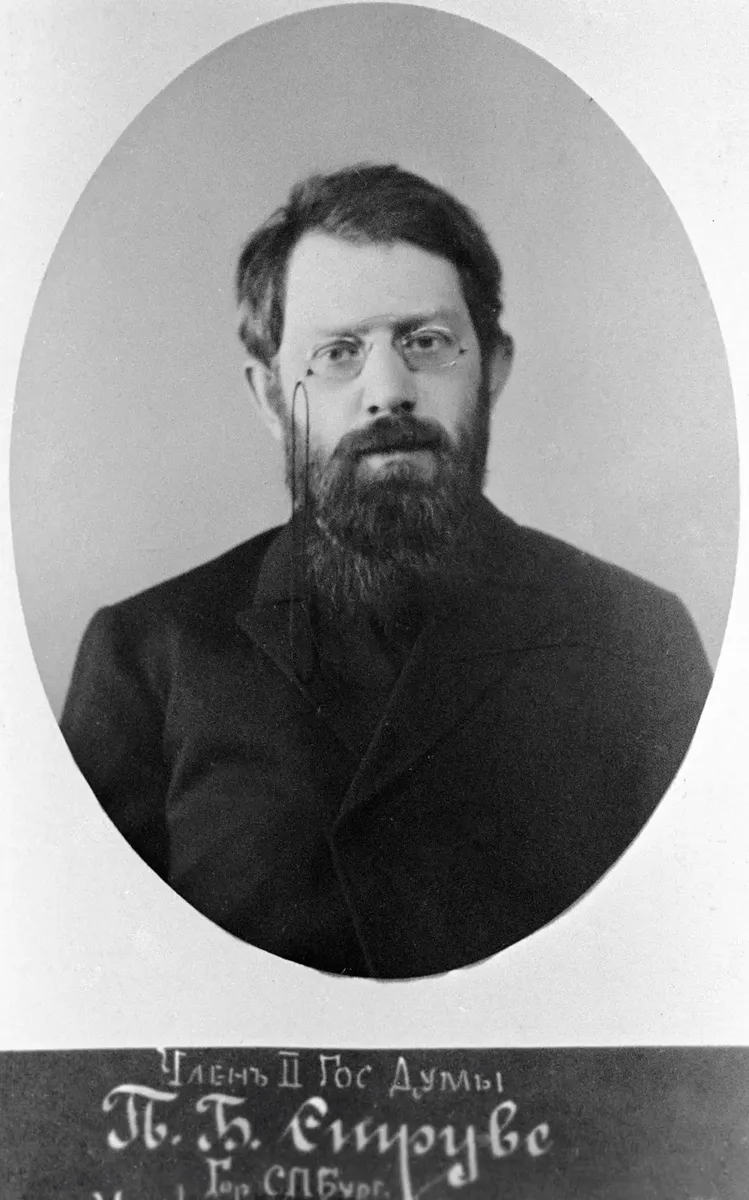
And also about the ratio of the state and dictatorship. At one time P.B. Struve claimed: carriers of state power cannot be mixed with the state itself. The largest French lawyer and political analyst Maurice Duverzhe speaks of the fundamental impersonality of modern state power, calls “rulers” - “servants”, “officials” persons. In his opinion, the state is more perfect (that is, the more it is the state), the more the state- “idea”/state is “abstraction” separately, more distant from specific carriers.
Another classic of French political science Georges Burdo writes: "People invented the state so as not to obey other people." At first, they did not know who had the right to command and who was not. And therefore, the authorities had to give the authorities a political form. “Instead of assuming that power is a personal prerogative of the person who exercises it, they developed a form of power that is independent of the rulers. This form is the state. ” According to Burdo, the state arises as an abstract and permanent carrier of power. As this process develops, the rulers are increasingly appearing in the eyes of the state -controlled agents, whose power is transient. A similar transformation (or evolution) of power was a huge step forward in the history of mankind. “In this sense, the idea of the state is one of those ideas that impressively demonstrate the intellectual and cultural progress of the controlled. After all, the branch of the ruler who commands, from the right to command, made it possible to subordinate the process of managing pre -agreed conditions. As a result, it became possible to protect the dignity of the managed, to whom the damage could be caused by direct subordination to any particular person ”(J. Burdo).
The dictatorship is when power is the personal prerogative of the person who exercises it. When the authorities, by their arbitrariness, can change "pre -agreed conditions." Including the Constitution.
Thus, the Russian dictatorship at the stage of its formation used the authoritarian, non -common potentials of the Basic Law of 1993. Having passed into a mature state, she “edited” the constitution that horns and legs remained from its liberal-democratic potential. In any case, now all these constitutional and legal institutions and provisions are much less interfering with the existence of the regime of "direct subordination to any particular person."
Dictatorship need ideologies legitimizing them. The Bolsheviks laid themselves in the Marxist-Leninist dogma-and in this they found Raison Dʼétre their dominance. Kings and other "autocrats" did not need anything like that. Their legitimacy was sacred in nature, was not subject to discussion (and doubt) and was self -sufficient. The state is to update the will of the people through the Institute of Elections. The legitimacy and sovereignty are handed to him by the people and described in the constitutions. It does not need ideology.
Accordingly, the modern Russian dictatorship is most seriously concerned about the development of its own ideology. However, it already exists, but the process of formation is not yet finished. And if historical selection was generally made, then offensive tools (technology) are still honed. The main features of ideology are known: eclecticism, omnivorousness, anti-fiction, anti-liberalism, militarism, self-love, moral relativism, a claim to historical and civilizational exclusivity, intolerance to dissent, rejection of human rights, aggressive denial of the European identity of Russia, etc.
During the Civil War, the idea of the state could not prevail over the idea of dictatorship. After the fall of the Council of State in the early 90s, it seemed: we went on a state path. But they could not resist it and fell into the dictatorship. Will it be possible to return to the construction of the state again? Will the story provide us with another third chance? Or did we hopelessly lost time for this? Its existence depends on what answer to these questions will choose.