
Translated material
A man without a boss
The memoirs of the diplomat and translator Pavel Palazhchenko entered the sales leaders
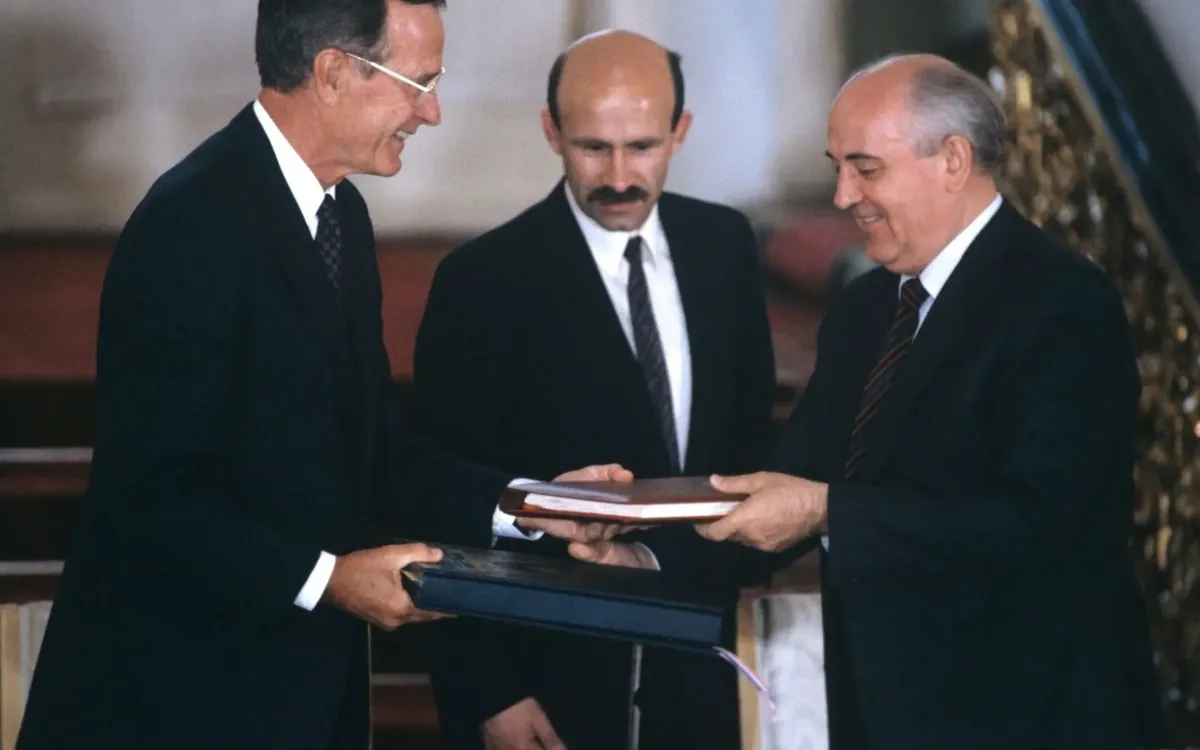
The memoirs of the diplomat and translator Pavel Polzhchenko “Profession and Time” (M .: New Gazeta Publishing House) are devoted to the events of 30 years ago-the years of world discharge and perestroika, but are read-as if about us, today. As if time had turned back, and we again found ourselves in the eternal, not passing 1984.
“I have such a profession that there were almost no bosses in life,” writes Pavel Palazhchenko. The profession of a translator in his own way is unique in the Soviet microcosm. On the one hand, he is part of the state car (Palazhchenko worked for several years at the UN, and then in the apparatus of the USSR Foreign Ministry). On the other hand, the translation is what is said, no more and no less: “party organs”, as they say, cannot influence it in any way. Usually, memoirs for a diplomat are an attempt to take scores with enemies and capture his name in history. You will not find this in the book; Moreover, at times - what is quite unexpected - the author seems to ask himself between the lines: "Who am I?" Palazhchenko describes his attitude without sentiments. For example, about the Soviet invasion of Czechoslovakia in 1968: "... propaganda inventions annoyed me, and impotence to change something oppressive." And now - while working at the UN: “Over the years, I began to look more carefully and more conservative for a lot. And on the other hand -
He felt that the country in which I was born and with the fate of which I felt an inextricable connection was at a dead end. ”
Finally, about the Gorbachev era: "We ourselves were part of the experiment."
Palazhchenko began a diplomatic career in the era of discharge. Now it is a forgotten and nothing meaningful word (the author recalls the slogans of that time: “there is no alternative”, “make the discharge of irreversible”, “supplement the political discharge of the military”). In foreign policy, the 1970s for the USSR were stomping on the spot. On the other hand, “discharge” - by the will of fate - turned out to be the predecessor of “new thinking”. Describing those times, Palazhchenko does not become neither in the position of obvious anti -Sovietism, nor - pro -Sovietism. As if he does not want to impose his current ideas - to himself, then. Thanks to this, it is easier for us to imagine the emotional state of the Soviet intellectual of the 1970s-and a whole social group, a layer on which Gorbachev bet, starting his reforms.
“Now Gorbachev is 89 years old, and all the last 34 years I have been staying with him.” Today everyone knows Palazhchenko as the closest assistant to Gorbachev, the head of the department of international relations of Gorbachev-Fund. Their first meeting occurred when Palazhchenko was invited to translate the conversation of the Secretary General with Rajiv Gandhi. “He was a realist in politics, but morality existed for him,” Palazhchenko describes his first impressions. - Gorbachev, I think, already thought about universal values. To introduce morality into politics is still not solved, but it seems to me that the former generation of politicians understood or guessed that such a task was. ” So morality invades purely practical matter. You understand that for such as Polzhchenko, Gorbachev became a guide, a guide. It sounds today, maybe strange - we are accustomed to the fact that the diplomats are more inherent in healthy cynicism; Moreover, the author himself from his youth was, as they say, on his mind. However, each of us is inherent in a desire to at least once in our lives to do something “truly”; Bring real benefits to society, country, if you like. Moreover, in words, the Soviet government declared the well -known idealism (involvement in the "big cause", etc.). It was a crack, a gap between what was said, and what was happening in reality, that gave rise to any thinking and feeling in the 1970s in the 1970s, a sense of moral emptiness, an existential hole. And you suddenly understand that perestroika was a project designed for idealists, for a social minority; Nevertheless, in a historical sense, she won - it was thanks to the then coverage of the desire of millions of Soviet people to "live, and not to exist."
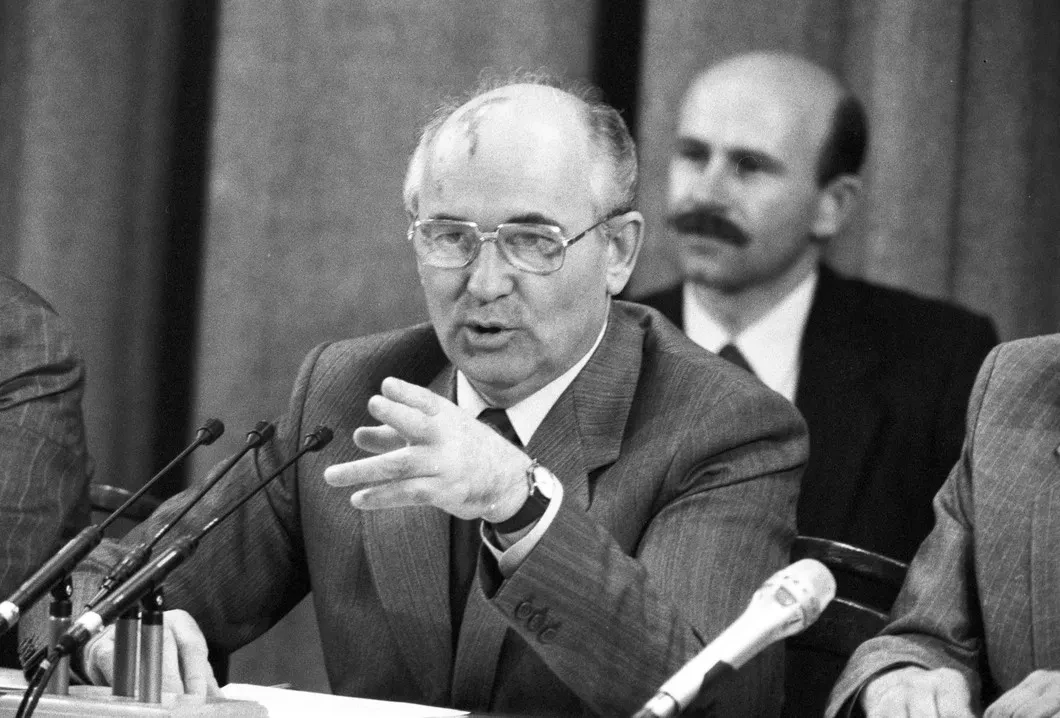
New thinking is impossible without a language. The author pays special attention to Gorbachev’s conversational manner. It is interesting to hear these estimates from a person who was closest to this “speech”. “Gorbachev <...> avoided ready -made formulations, spoke in the style of“ thoughts out loud ”. This manner of many then and especially then annoyed, people much more like clarity and certainty <...>. " However, the verbity of Gorbachev, the author makes it clear, was nothing more than an attempt by a Soviet man to get to the universal ethics “to the touch”, experimentally. The nebula of Gorbachev’s speech meant nothing more than the human component in its political discourse (and vice versa: often “practicality”, the rationality and accuracy of formulations mean inhumanity in our practice). Gorbachev tried to return to people a “suppressed”, for decades, driven into an unconscious self - with the help of the same speech, in fact - pronouncing himself. This process of “self -liberation” looked stylistic at first clumsily - but the content was more important than the form, more important than smooth accruing and smoothie. Western partners, Palazhchenko writes, oddly enough, understood it better than compatriots.
Palazhchenko considers participation in the work on the reduction of nuclear arsenals in the 1980s (the agreement on the elimination of medium and smaller range missiles) considers the main business of life and the main victory-as a diplomat and translator.
He describes the details of negotiations that were not previously mentioned. However, the translator is not a car. At the same about the same years, he went with his family to relax in Czechoslovakia - at that time, “velvet spring” just began there. Palazhchenko describes a typical local bar, table conversations - and suddenly: "I thought that we stole for these people for more than twenty years of life." Note: he writes “we” - thereby accepting part of the responsibility for mistakes made by the country. Today, of course, such moral scrupulousness for a diplomat seems to be something supernatural.
“If history were a rational process, then, probably, such negotiations would have begun. But the ways of history are crooked, with a broken track, like our Russian roads. ” “The German association was discussed first on the rolled rut. And the events have already overtaken those carefully "registered" in (...) offices arguments. " We feel that at some stage of perestroika (and most of the book is dedicated to it), the wheel of history spun itself. And her foreman could only state this. Yes, and how could it be different - if the perestroika was based on the energy of the liberation of the human spirit - the most powerful movement. All captured by this wind of changes-not only Gorbachev, but that and thatch, and Bush Sr. (about the confusion of Western leaders in the face of changes in the late 1980s, it will be useful to read to those who are sure that the perestroika was a well-thought-out plan of the West according to the “collapse of the USSR”).
And here is the main paradox of the book. On the one hand, Palazhchenko affirms the primacy of the concept of “political will” (in relation to Gorbachev: what would we all be if it were not for him); But at the same time, he doubts the ability of politicians to fully influence world social processes. This duality gives the book a philosophical and existential character. To the question “what was perestroika”, and at the same time, in absentia-the reproach “You ruined the country” now in other areas-Pavel Palazhchenko, despite all the restraint and even dry manner of presentation, answers quite in Tolstoy. At some stage of the change, the story itself intervened; More precisely, like this: history. Which commands even those who believe that there is no one above them. And even they are forced to reckon with this inexorable rock in other periods. This will be very instructive to recognize the leaders to the present; Moreover, this topic itself - the wind of history - seems to become relevant again.