
Translated material
Scientists: "British" version of coronavirus can be more dangerous for children
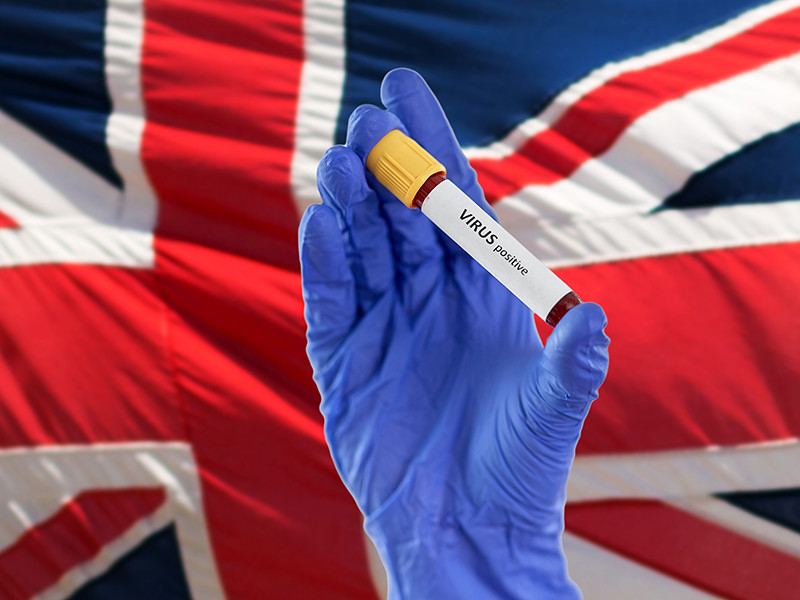
The new coronavirus strain found in the UK can be more contagious to children, said the professor of London Imperial College Nil Ferguson, quoted by Sky News .
The expert explained that so far scientists do not understand the mechanism of such a phenomenon, but this is evidenced by statistics. “There is a hint that the strain has a higher tendency to infect children. We have not established any causal relationship, but we can see this in statistics,” Ferguson said at the conference. According to him, recently doctors have been fixing a new coronavirus strain among children under the age of 15 more often than its predecessor.
Professor Wendy Barclay, in turn, called for caution when evaluating such data and noted that the great danger of a new strain for children has not yet been established. She recalled that the original version of the virus hit them less often.
"We do not say that this is a virus that struck specifically children. We know that SARS-COV-2 in the form in which it arose was less contagious for children in comparison with adults, and there are many hypotheses on this score," Barclay explained. According to her, the new strain differs from the old features of penetration into the cells of the human body and this may mean that now the children are "perhaps as susceptible to this virus, like adults."
The new version of the coronavirus, about which the British government first spoke on December 14, quickly becomes dominant - in London and in the southeast of England there are now about 60% of new cases of infection, which forces the authorities to take strict measures aimed at combating the infection. According to the expert, Maria Van Kerkhov, who mutated the option has already spread in Denmark, the Netherlands and Australia. After that, more than 20 countries, including Russia, announced the suspension of air traffic with the UK.
According to the epidemiologist, the head of the Diseases of the Ministry of Health of Italy Giovanni Rezz, the new variety of coronavirus has the same reaction to the vaccine as the "usual". “Although there are hypotheses that these mutations can increase the tolerance of the virus, they, apparently, do not change either its clinical aggressiveness or its response to the vaccine,” he said.