
Translated material
The ban on the publication of data on private life and the property of the security forces was final reading
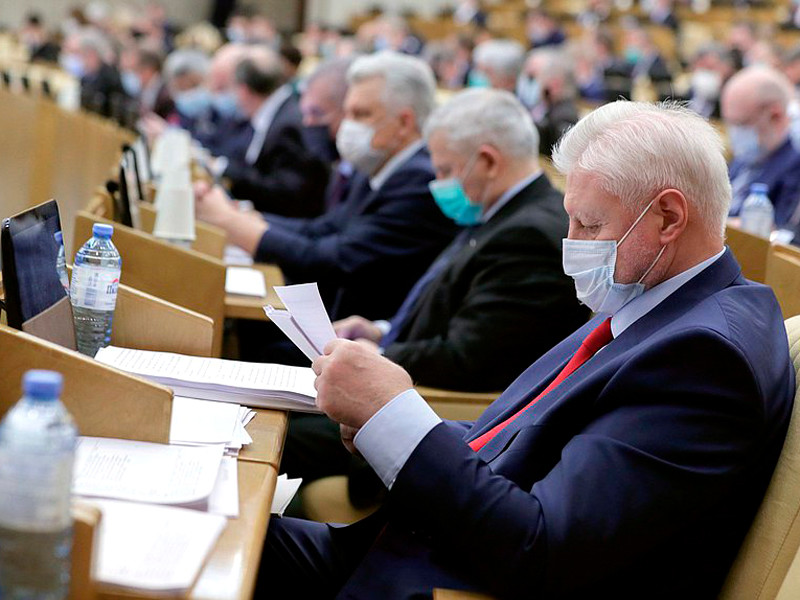
The State Duma adopted in the third reading a deputy bill on the possibility of a ban on issuing information (including property ) on judges, prosecutors, employees of the UK, the FSB and certain categories of the military, including without the immediate threat of their security. Earlier on the same day, the bill was supported in the second reading, writes TASS.
The authors of the bill indicate that the network "unauthorizedly publishes" information about the facts, events and circumstances of the private life of law enforcement officers, regulatory bodies, military personnel, which "negatively affects their exercise." "It is proposed to establish the possibility of introducing a ban on a decision of the body that ensures security to third parties to the operator of information about the defended persons, regardless of the presence of their direct threat of their security, with the exception of cases of the consent of the protected person to issue these information, identify them during the preliminary investigation in the criminal case or in the fulfillment of the requirements of anti -corruption legislation," the said in An explanatory note.
Amendments are made to the law "On state protection of judges, law enforcement and regulatory authorities." In accordance with this law, state protection measures apply to judges, prosecutors, investigators and investigators, operatives, employees of the FSB and IC, as well as internal affairs bodies that protect public order, execution of sentences and court decisions.
This list also includes military personnel of the internal troops of the Ministry of Internal Affairs, the military police and the Russian Guard who directly participated in the fight against crime, employees of the Russian Guard, ensuring public security, military personnel of the Russian Federation, who were directly involved in the fight against terrorism, military from foreign intelligence bodies, employees of the compulsion and enforcement agencies and enforcement agencies and enforcement agencies and enforcement agencies. institutions of the penal system. In addition, state protection is relied by the relatives of these persons.
At the same time, amendments to the inadmissibility of the disclosure of information contained in the requests sent to citizens and organizations in the process of implementing the ARD are introduced into the law on operational-search activities (ARD). The exception is provided only for the information announced in the open court session, set out in complaints of decisions and actions of the bodies engaged in the ARD, as well as the common authorized bodies.
Prior to the adoption of the law, the ban on disclosing information about work and private life concerned only those security forces whose life would be in danger with the general accessibility of such information. Now the consent to publish data about work and life should come from the security forces himself if we are not talking about verification in the framework of a criminal case or anti -corruption legislation.
One of the authors of the law, deputy Dmitry Vyatkin previously informed the Daily Storm , which data is not subject to disclosure. “This may be the information that is contained in the systems of the Pension Fund, Rosreestr, the Fund for compulsory medical insurance, the traffic police. Tax information, the Federal Bailiff Service - everywhere there are personal information about the indicated our fellow citizens, as well as about their families,” he listed.
As the lawyer of the Agora international human rights organization Stanislav Seleznev previously stated, so the lawmakers are trying to legitimize the practice of excluding information about some persons from official documents. According to him, after the adoption of such a law, journalists will lose the legal opportunity to conduct investigations regarding officials and security officials, and the initiation of criminal cases on corruption after such investigations will be impossible. Lawyer Damir Gainutdinov believes that the media will refuse to answer requests for any information regarding officials, and the prosecutor’s office will be able to apply to the court with a request to ban and block the relevant publications.