
Translated material
Unreasonable | Colta.ru
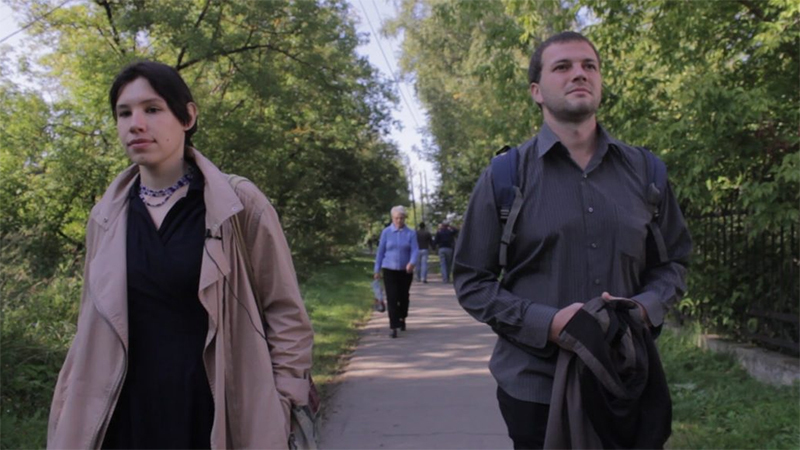
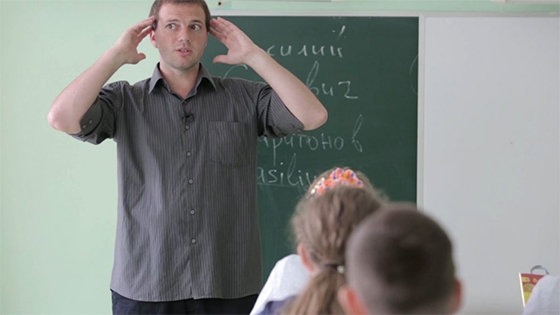
Katya and Vasya graduated from prestigious Moscow universities, they are not even thirty. In their specialty, they are not teachers, but they believe that the future is for children - and they want to make this future a little better. Therefore, they go to work in a provincial school somewhere near Tula. Young teachers-people are carefully preparing for every school week and try to move away from cloth Soviet traditions-and they are very alive at school, where the iconostasis from progressive writers in the literature office was replaced by real and initial military training was left unchanged. Katya, who studied at the screenwriter in VGIK, leads Russian and literature, and Vasya, a linguist and a lover of campaigns, is geography. During one academic year, Katya and Vasya strive to change both the education system and children, not to lose their youthful enthusiasm, to give children more freedom and at the same time maintain discipline in the smoke of class (rarely).
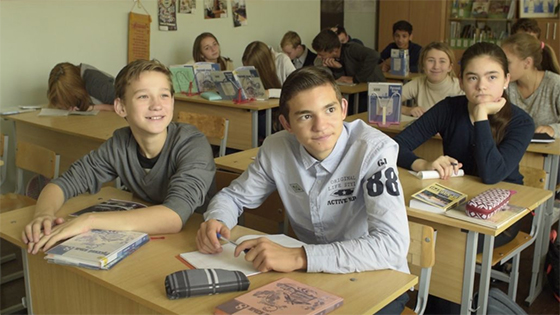
The eternal Russian plot about young idealists who dream of changing the world around and meeting the tight resistance of the Russian nature itself and the insufficiently progressive people. New teachers and students - like representatives of the two worlds (and there are still a third - teachers of the old hardening with enormous experience in the class): speak different languages and peer into strangers with anthropological interest. Their interaction at times resembles a meeting of missionaries with natives. Katya is trying to beat the students with the basics of tolerance and self-esteem-daring children cut each her awkward, in their own way of a condo argument: an unobtrusive rhyme to an improvised lesson of internationalism serves as a voluntary and accurate visit by the class of the Church, where an annoyed priest with grotesque, as if glued a beard, sprinkles with trolked out picolves: "Gad-you!" . Vasya is wiser: he collects around him a circle of clever-passionaries of left-wing views (another historical Russian constant). The call to the director from the FSB will soon follow.
 © Message to Man
The documentary of Yulia Vishnevetskaya has the structure of the feature cinema: two completely textbook heroes are placed in a few alien Wednesdays, the conflict cannot be avoided, and this conflict is predictable - the conflict of the old and new, which unfolds among the desk, has already been described repeatedly: here we will live up to Monday and the key without the right to transfer, and novel by American Bel Kaufman. On the stairs leading down ”(there is also its film adaptation). But Vishnevetskaya does not have any “good movie”: enthusiasm is breaking up about the system, teachers lose the battle for children's souls. The idealist Katya capitulates and leaves for Moscow, dismissed for poor results, Vasya goes into a counterattack.
The director was unlikely to admit that from the very beginning she knew how her picture would end, but the selected installation solutions persistently lead to a sad final.
 © Message to Man
School is only one of the social institutions, but its problems are easily extrapolated to the state of society as a whole. Like another important documentary of the year - “Pit” by Andrei Gryazev, “Katya and Vasya go to school” - a political movie, drawing the bipolar inner world of Russia. Only in the Vishnevetsky watershed does not vertically “president - people” vertically, but horizontally. The Soviet and Russian, yesterday and today's, traditional and new, old and young, conservative and liberal are opposed. Communication between these oppositions is actually possible: a teacher of Russian and literature operates with the same dogmas (only a different color) as elderly teachers, and is also totalitarian in imposing their progressive ideas. And a stubborn geographer, if it does not give up, may well turn into the current director of the school - a harsh, toned grandfather, perhaps in the past of a military commissar, whose sincerity is first shocking when he directly says that the school is a functionally close police and the FSB, but then causes a respect (when the director without Elasters asks to be more careful in social networks, giving it to social networks, giving it away. A tribute to their young passionarity).
In the Vishnevetskaya finale, in complete and unexpected accordance with the Hollywood tradition (although the very history of the moral transformation of the two heroes naturally refers to such dramaturgy) gives hope: the already almost fired from school, Vasya asks him to give him a class of censorship - gypsy children on whom everyone waved his hand. Waiting for a sequel to a pedagogical poem?