
Translated material
Art objectivation | Colta.ru
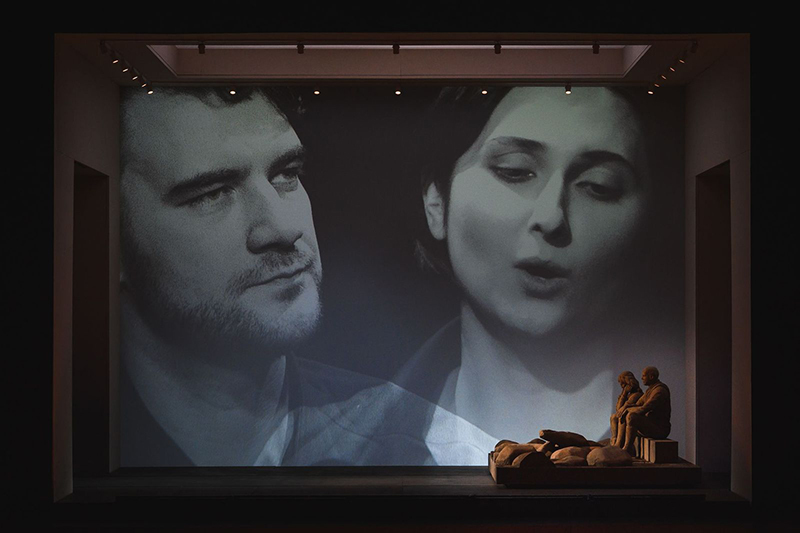
In the case of the new Perm “Don Zhuan”, when calculating the “first-second”, both-director and conductor-are the first to go out. Their concepts coincide, both call their task “to clear the opera of Mozart from stamps” - and in the booklet of the performance they explain why she was ahead of her time for more than a hundred years: for Abashev “Don Juan” approaches the era of modernism, for Gatsalov - anticipates postmodern.
Together with the chief conductor and chief director of the Perm opera, another co -author worked on Don Zhuan - the Latvian artist Monica Portmale, with whom Gatsalov made his debut three years ago on the music stage, putting Richard Strauss in Mariinka. Parmale turns the scene of the Perm Theater into the museum hall (gray walls, glass ceiling, high openings on the sides), where the hit parade of art objects of contemporary art unfolds: they all move along the stage on a small platform, if you look from the hall-from the right backstage to the left. And everyone is one way or another commenting on the main “exhibit”, which is almost not visible, but is always heard - the opera Mozart’s opera, perfectly played (on residential strings and modern winds) and in a hurry under the control of Maestro Abashev.
 © Andrey Chuntomov
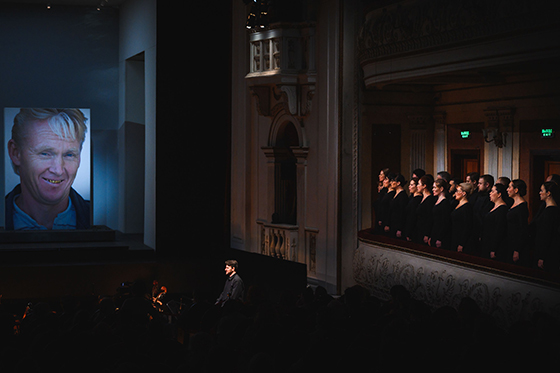
People on stage will only go on the final bow. The choir brings briefly in the boxes of Benoir, the soloists spend the whole performance in the orchestral pit, on the sides of the musicians - dressed in protrusion (black shirts with a strain collar), they quietly arise before the party starts and also quietly leave the field of vision. The Perm “Don Juan” was set according to the laws of covid time, when people, even being together, are still disconnected: in the pit, the performers of duets and ensembles stand from different sides, each other opposite each other - and interact through the camera. The image from them is projected onto the large screen of the posterior wall of the museum hall: Live -Video Asi Mukhina combines the picture so that the faces of the heroes are nearby and sometimes even float at each other.
The owner of several “gold masks” in the drama - and in the “New Drama”, where the actors exist with the same reliability as in the close -up of the cinema - in “Don Zhuan” Gatsalov remains faithful to himself. Artists do not play here in the usual opera sense - otherwise the first close -up would have caused laughter in the hall. Similar close -ups were in Chernyakov’s performances - say, in Ruslan and Lyudmila and in the recent “Sadko”, which began with the pseudo -documentary recording of the conversations of the heroes of the performance with a psychologist. But Gatsalov complicates the task: to sing closely, preserving naturalness is much harder than to speak.
The main “exhibit” of the performance of Gatsalov and Abashev, who is almost not visible, but is always heard - this is the opera of Mozart.
Here on the screen there is a completely everyday hope of Pavlova - only the Witch's shine in her eyes gives out an intrigue: of course, from the prey of Donna, Anna suddenly turned into a hunter and now he herself pursues Don Juan. In Andrei Bondarenko, the protagonist looks like a simple -minded adventurer - it was not possible with the sophisticated Anna, it will succeed with the naive Terlin (Utarid Mirzamova in the first act and urgently replacing the singer Daria Pichugina in the second). The amazing Askar Abdrazakov, Leporello in both compositions, does not at all seek to emphasize the similarity of the Mozart Servant with the Lord. His hero is older and more impudent than his owner, and always directed sideways, past the camera, the look of Leporello from under strict glasses suggests: does he “modify” all this damn thing, pulling Don Juan to hell? The final prank of Abdrazakov, who is jokingly repeating the cry of the Don Juan, which fails in Hell, only strengthens this suspicion.
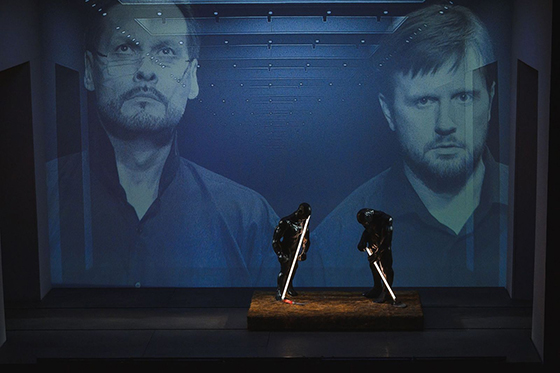
The scene, meanwhile, lives its life - the life of objects, almost directly commenting on the action of the opera. It all starts with the “black square”: when the curtain opens, even before the first sounds of the overture, the picture falls with a roar from one of the mounts, turning into a black rhombus - a sign of lost order, harmony. Behind him should “no”, Anatoly Osmolovsky - a large canvas with a strong handshake refers to the first meeting of the commander (Harry Agadzhanyan) and Don Zhuan. Under the tragic duo of Donna Anna and Don Ottavio, the space photo -intensities of Atis Jacobons (“Dark Matter”, “Amour Puis” ) are floating through the stage - the pictures captured how the soul leaves the body of the newly murdered commander. The peasant holiday on the occasion of the wedding of Cerlina and Mazetto illustrates the huge portraits of the inhabitants of the village of Smostks, borrowed by Monika Portmale “from another opera”-from the Shukshin’s stories she made in the production of Alvis Hermanis.
 © Andrey Chuntomov
At first, all this not only does not interfere with perceiving Mozart - even vice versa: an ascetic empty scene, the purity of the “museum” space (albeit overlapped by the not always necessary objects) and the faces of the performers on the screen allow perceiving music more fully. One of the creators of the project has already called him "an experiment that helps to figure out how we perceive music." In the first act of the Perm “Don Juan”, we hear her and see her performers on the screen, and on the stage there are objects illustrating the plot. By the beginning of the second action, the picture, music and the plot are filled: on the screen in Slow Motion , three heroines appear in turn, languidly sitting on the sofa. On the stage is the Czech of art objects : having managed to notice the “Kolybelgrob” Rudolfs Baltinsha, passing under the seductive serenade Don Juan, part of the hall laughs. For the time being, the faces of the singers are not projected onto the screen, but, looking at the pit, the curious viewer will notice that now the participants of the ensembles are not opposite each other, but nearby - and communicate not through the camera, but directly with each other. It does not have time to talk about what this means, the public does not have time - as the creators of the performance themselves do not have time.
It seems that all this Susinchron is an attempt to cope with the slurry that is present in the dramaturgy of the Don Juan himself. As you know, in the second act, the score of Mozart - yes Ponte turns into a set of episodes not very tightly connected with each other, and the action sags significantly, returning to the intensity of the first action only closer to the stage in the cemetery and in the final of the opera.
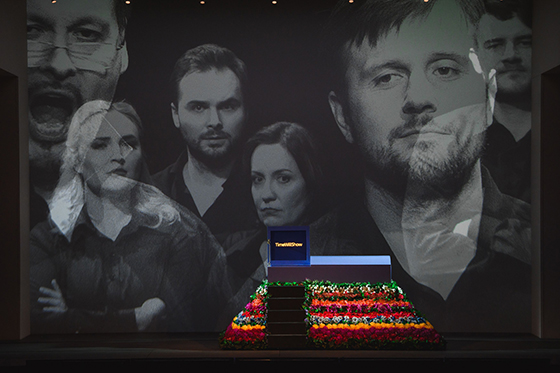
The culmination and foresight of the interchanges are in the play for the final of the first act-when Don Juan, who nevertheless borrowed Cerlin into the bedroom, is caught in vibrant, but manages to get out. Under the threatening quintet of heroes on the stage, a flowering grave mound arises, the cross on which the monitor with the inscription “Time Will Show” replaces. The installation of League Martsinkevich seems to be a quote from the famous “requiem of metamorphoses” by Jan Fabra - and not only the first act, but also a intelligible theater plot.
 © Andrey Chuntomov
The performance will return to it only closer to the end of the second action, with the appearance of the commander on the stage-then the flickering of art objects will slow down, and the faces of the singers will again appear on the screen. Soon they will be blocked by the neon “Baltic square” of Andrisa Brezhe: we will not immediately notice that the rear wall of the “museum” is, as it were, the space becomes the same comprehensive and rusty as the bass of the commander, Don Juan will dissolve in this echo.
The last on the stage will “come out” with ownerless musical instruments: in the video Nevin Aladag will appear a violin tied to a carousel, a tambourine rolling along the wet asphalt and a pipe jumping due to a balloon added to it. Sad personnel will completely block the final brave sextet from the Prague of the opera, where the heroes celebrate the victory over the punished vice.