
Translated material
Depending on the Ministry of Justice
The Ministry of Justice recognized the Petersburg Fund, which has been helping drug addicts and people with HIV for 20 years
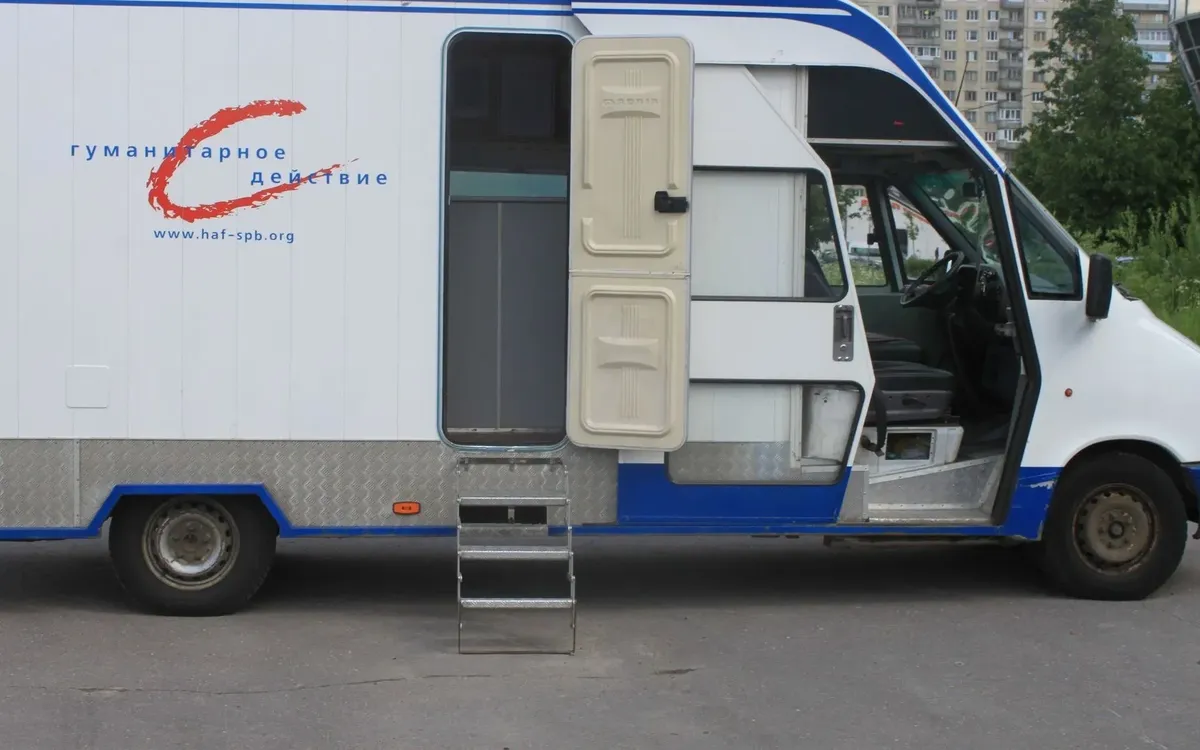
On December 21, the Ministry of Justice of Russia introduced the Humanitarian Action Charity Fund, which helps drug addicts and people with HIV in St. Petersburg, in the register of “foreign agents”. The reason was foreign financing and allegedly the participation of the organization in “political activity”. As examples of such activities, the Ministry of Justice cited several publications in the media, which contained constructive comments on the measures taken by the state to combat drug addiction and HIV. The claims of officials, among other things, were an interview with an employee of the Novaya Gazeta Foundation.
The Petersburg Charity Fund "Humanitarian Action" has been helping drug addicts for more than 20 years. The organization has mobile points - converted buses that travel to different areas of the city. There, drug addicts can consult a psychologist or lawyer and undergo a physical examination.
Employees of the fund exchange used syringes for new ones, test people for syphilis, hepatitis B and C and HIV. If the result of the express test is positive, social workers help the patient take a diagnosis, register in the AIDS center and begin antiretroviral therapy. In addition, the fund sends drug addicts to rehabilitation to trusted centers.
“Not every client of our client is ready to change his life by clicking his fingers. We help a person learn to bear responsibility for his health and change gradually, moving from one small victory to another, the fund’s website says. “Our many years of experience, as well as international studies, show that such work is most effective when it is“ in the field ”, that is, in the maximum approximation to places of residence or collecting drug addicts.”
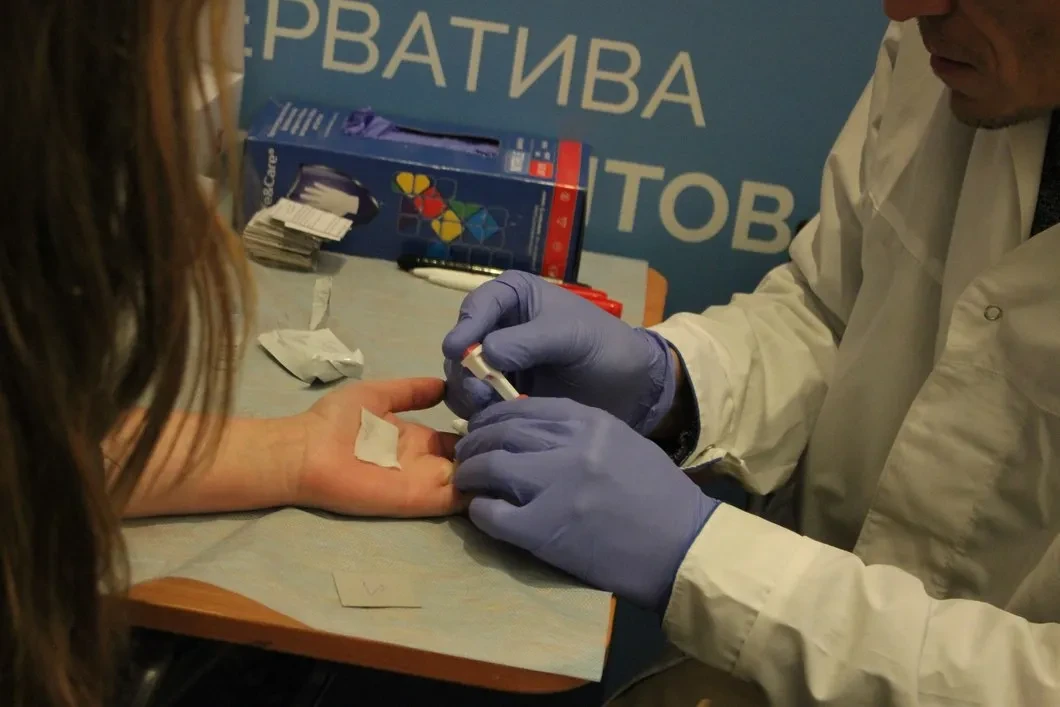
According to the fund itself, annually it provides assistance to almost five thousand drug addicts.
Last year, employees conducted more than 10 thousand tests for HIV, hepatitis and syphilis, over 1,500 psychological and 800 medical consultations.
More than two thousand people were taken to escort in connection with HIV infection.
“Humanitarian action” does not hide the sources of its financing. Organizations are helped by large international funds, such as the Elton John Foundation for the fight against AIDS and the Global Fund for Combating AIDS, Tuberculosis and Malaria. Support for “humanitarian action” is also provided by the Russian Fund of Presidential Grants and the Government of St. Petersburg.
***
“Humanitarian action” is engaged in the prevention of HIV infection among drug users according to standards developed by the World Health Organization (WHO), the UN Drugs and Crime management management, as well as the United UN/AIDS program. But not all of them can be implemented in Russia.
Among the measures proposed by the international community are access to replacement therapy. It implies the replacement of opioid drugs, most often heroin, other substances acting in a similar way (for example, methadone). Experts claim that this helps to cope with dependence on street drugs and abandon the criminal lifestyle. Subsequently, an addicted person may be offered to refuse replacement therapy.
In Russia, this type of treatment for drug addiction is prohibited. The Deputy Minister of Foreign Affairs Oleg Syromolotov explained this decision with the risk of “increasing the scale of narcotization of the population”, “increasing mortality related to drug use”, “corruption risks in the healthcare system” and “destruction of demographic, intellectual, creative potential of the country”.
WHO, on the contrary, calls the replacement therapy “the best of existing” measures to combat the consequences of drug use. According to the UN estimates, such a technique reduces the level of drug trafficking and crime in general and contributes to the socialization of dependent. Experts not the first year say that Russia needs to reconsider their views on replacement therapy, but they have no illusions.
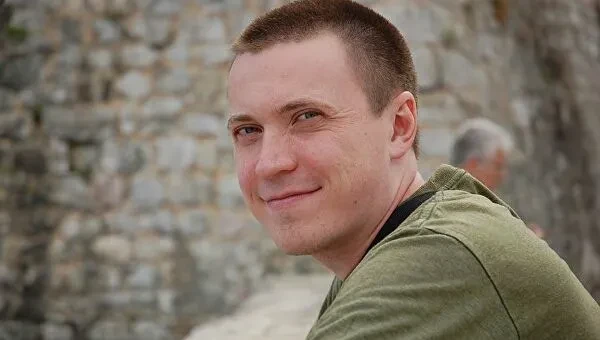
“Until 2030, the anti -drug strategy clearly says that you can forget about replacement therapy in the next ten years,” Alexei Lakhov, deputy general director of the Humanitarian Action Foundation, said in an interview with Novaya Gazeta. His words were discontented by the representatives of the Ministry of Justice. The act of an unscheduled audit of November 16 (the editorial office is at the disposal of the editorial office) says that in this way the fund “influences state policy” on the issue of replacement therapy.
***
A similar situation has developed around Noxson - a drug that is used as an antidote for an overdose of opioids. It is officially registered in Russia and is released by recipe. Its use is recommended by WHO. But in 2018, the medicine disappeared from pharmacies
and ambulance. The only Russian manufacturer of the drug, the Moscow Endocrine Plant, explained this to the termination of supplies from the Netherlands of one of the substances necessary for Naloxson. Now the release of the drug has resumed, but in pharmacies it is still not enough.
Activists (the “Forum of People using Drugs”) turned to Dmitry Medvedev, at that time-the Prime Minister, with a request to “introduce a consistent strategy to reduce the level of overdose”, which involves the expansion of the access of drug users to Nadoxon without a recipe. “In Russia, 8-10 thousand people die annually from drug overdoses, the number of these deaths from year to year remains critically high,” the activists noted. - One of the causes of high mortality is the lack of mild access to people suffering from opioid dependence to Nadoxon. <...> This medicine cannot be the subject of abuse. "
Their proposals supported the “humanitarian action”, publishing on their website the theses of the strategy and the link to the appeal.

Later, the fund also posted on social networks a link to Alexei Lakhov’s personal story about his life with hepatitis, which contained a call to sign a petition to create another strategy - to combat viral hepatitis. In all this, the Ministry of Justice saw the "implementation of political activity through public appeals to state bodies that affect the activities of these bodies."
***
The Ministry of Justice used the same arguments in relation to the comments of Alexei Lakhov about bills regarding anti -drug policy.
In July, deputies proposed toughening the punishment for drug propaganda up to 15 years in prison and introduce criminal liability for a similar crime committed on the Internet. Last week, the State Duma approved the bill in the first reading.
Commenting on this initiative on the OTR, Lakhov paid attention to the lack of a clear understanding of what information could be equated with drug promotion.
“We only expressed fears that this could affect our information work regarding the maintenance of the health of drug addicts,” says Lakhov Novaya Gazeta. - We are not talking about which drug is better or where to buy it. But we explain: "Friends, if you use, then you may have such and such problems." And we help to solve them. Will it be regarded as propaganda and will not the criminal prosecution entail? This is what we asked the lawmakers. "

Another claim of the Ministry of Justice was caused by Lakhov’s speech on the “rain” about the bill, which would allow to reveal the medical secret about convicts treated from drug addiction without their consent. In April, this law was signed by Russian President Vladimir Putin.
“As for the disclosure of medical secrets, it makes sense in this - people with HIV and drug addiction will not fall out of the field of vision of doctors after liberation from the colonies,” explains Lakhov. - But we had fears that this measure, among other things, would be associated with the forced direction of drug addicts for rehabilitation. And this is not our fiction, but the opinion of leading experts: it is difficult to work with a person who gets to treatment. He includes psychological protection mechanisms. This gives the therapeutic effect in rare cases. "
***
Foreign financing and conducting “political activity”, namely the “dissemination of opinions” about the decisions made by state bodies, public appeals and the “formation of socio-political views and beliefs”, all this served as the basis for introducing “humanitarian action” in the register of NPOs that perform the functions of a “foreign agent”.
According to Federal Law No. 121, the activities in the field of healthcare, prevention and protection of citizens' health, social support and protection of citizens, charitable activities, as well as activities in the field of promoting charity and volunteering do not include.
Alexei Lakhov emphasizes that it is such work - exclusively in the field of healthcare - and is engaged in “humanitarian action”:
- We have many employees in our fund who used drugs in the past, but managed to overcome their dependence. I also. That is why I want people who suffer from addiction to receive competent, high -quality and effective medical and social assistance. And so that this help does not turn into pressure.
Our low -end approach to working with drug addicts - open and flexible - has encountered a more stringent approach of the law enforcement system. Personally, everything is clear to me here.
Who am I from the point of view of this system? The drug addict, who was given a microphone, the opportunity to speak out in the newspaper that law enforcement officers are working with drug addicts.
As experts recommend - Russian and international.
This decision of the Ministry of Justice should be expected. At first there was one unscheduled check, then the second. It was clear that everything was not just happening. What we write on the site, and how we try to work with drug addicts, probably causes a rejection in the system.
Perhaps now, after entering this register, we will be asked to leave various commissions and will not want to see anymore in state committees. But the "field" work will continue. With regard to our wards, nothing will change. In any case, we will sue and hope to challenge the decision of the Ministry of Justice.