
Translated material
Funds of the welfare of bosses
In Russia alone, during the epidemic, the state fabulously got rich at the expense of the people

The quarantine year showed: the interests of the Russian authorities and people were opposite. But the power defends its interests much more effective - especially in "these difficult times."
False temptation
There is a temptation to criticize the Russian authorities for managing the economy in the conditions of a quarantine crisis. Reasons as much as you like. The main one is growing poverty. According to the Federal State Statistics Service, the fall of real disposable income in the II quarter amounted to 8.4% compared to the same period in 2019, and in the III quarter - 4.8%. As experts of the Center for the HSE, according to the results of 2020, in real terms, people will receive 10% less than in 2013. (For comparison: in the USA, with which our bosses forever measure, the “anti -crisis” actions of the government enriched people - in the II quarter, the income of Americans increased by 11.7% compared to the II quarter of 2019, and in the III quarter - by 6.3%, respectively.)
But such criticism will be a mistake. The Russian authorities acted effectively. Only this effectiveness has nothing to do with your interests. Just the authorities set themselves other tasks.
Speaking during the Russian Economic Congress at the round table “Budget Policy at the time of the Pandemia” Oleg Buklevshev, the head of the Center for Research on the Economic Policy of the Economic Department of Moscow State University, made a remarkable recognition: “If someone asked me at the beginning of the pandemic, with what volume of the National Welfare Fund (FNB), I would never meet: the volume that the Federal Tax Service reached reached the Federal Tax Service With the deepest crisis, this, of course, is a fantastic picture. ”
Indeed, the picture is impressive. From January 1 to December 1, 2020, the Federal Antimonopoly Service increased from 7.77 trillion rubles. up to 13.46 trillion rubles. Almost doubled.
Or from $ 125.6 billion to $ 177.4 billion. And in the “Percentage of GDP” the fund grew from 6.8% to 11.8% of GDP. Here, however, the reduction of GDP itself also helped - according to preliminary estimates, according to the results of the year, the economy will lose from 4 to 5%.
People have no money
Unlike the leading funds "Funds of Personal Welfare", people were noticeably reduced.
First of all, people largely owed to banks. Over the year, the expired obligations of Russians for all types of loans increased by more than 100 billion rubles - to 935–940 billion rubles (according to the National Association of Professional Collection Agencies (Napka) and the Equifax credit bureau).
Most delay among “cash loans” is 560 billion rubles. A delay in car loans increased on a record 22% (up to 58 billion rubles). On credit cards, “physicists” clients overdue payments for 153 billion rubles, which is 16% higher than the indicator at the beginning of the year.
Note that the growth of the delay occurred during the “credit holidays” prescribed by bankers during the quarantine. Already in January 2021, when the “holidays” end, bankers and collectors will begin to knock out money from debtors.
I must say that people do not experience any illusions about their situation. In the November analytical report “Measurement of inflation expectations and consumer sentiments based on population surveys”, prepared by order of the Central Bank of the Russian Federation, it was concluded that the confidence of Russians in the prospects of the economy and personal welfare has decreased to a minimum in more than a ten -year period.
For the “bottom”, for the entire time of the research, indexes of social moods in unemployment and standard of living fell.

The index of “assessing the prospects for the development of the country in the coming year” has fallen to the minimum, and the index of “prospects for the development of the country in the next 5 years” also dropped to the values that the Central Bank analysts have never recorded: 91 points in November against 99 points in January and 120 points in early 2018.
Before the maximum, over 4 years, the pessimism of citizens has increased in relation to its own income. Employers agree with this: according to the Center for Strategic Development (CSR) in the December monitoring of a business climate, entrepreneurs predict that employees' salaries will decrease by 10.9% next year compared to 2019.
It will not work to go “to your business” - the share of income from entrepreneurial activity, which has been kept at a minimum of 6–7%for many years, in the II quarter decreased, according to Rosstat, to 4%. In the III quarter, when many enterprises of the services and small businesses earned, this indicator increased to 5.6%.
In general, with the beginning of the quarantine, the proportion of the poor in Russia increased from 12.3% to 13.2% (data for the II quarter).
With a reduction in GDP in 2020, poverty can increase by 4% to 14.2%, the World Bank predicts. True, experts suggest, support measures can reduce poverty level to 11.6%.
Support measures provided by the Russian authorities of the economy, according to the Minister of Finance of the Russian Federation Anton Siluanov, amounted to 4.5% of GDP (taking into account not only “living money”, but also benefits and delayed taxes). The last announced package of payments of 5,000 rubles “for children under 7 years” is, according to the Ministry of Finance, 73.5 billion rubles, or about a billion dollars. This is still 0.07% of GDP. (For comparison: taking into account the second package of incorporated economy to $ 900 billion, the US federal budget approved by the US Congress, will be 14.5% of the GDP. And then President Trump demanded its increase.)
Not (strong) state
So what happens, the Government of the Russian Federation in a crisis could act better? No, it acted very effectively.
Only the effectiveness of the authorities has nothing to do with human ideas about effectiveness. Just people and bosses pursue different goals.
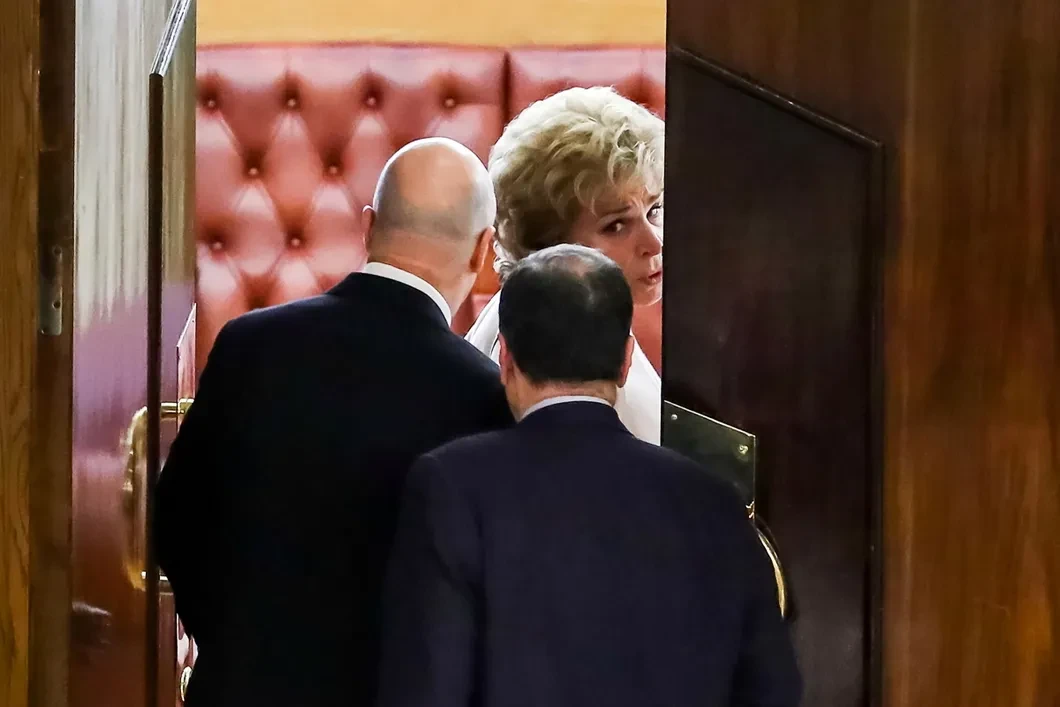
And the bosses do it completely ruthlessly. As the hero of “Tales about Hodge Nasruddin” used to say, “the rulers are not arranged like other people, they have no heart at all, and with your tears you will rather become a roadside stone than our ruler”
Political scientists and economists have come up with many methods to evaluate the effectiveness of state institutions. There is, for example, Fragile States Index, which reflects the degree of “vulnerability” of the state before various threats. This index consists of The Fund for Peace evaluating the “degree of weakness” of state institutions in twelve political, economic, social and organizational indicators. The higher these indicators, the worse for the state and its citizens. A high place in the ranking in this case means the low quality of the institutions of power.
The “state vulnerability index” is not about the ability to turn someone into a radioactive ash and not about the ability of the state to become a source of enrichment for members of the government. And not even about the size of GDP.
Fragile States Index is about the ability of the “state” to solve the problems of people, their citizens in a situation of internal and external shocks. Well, for example, organize healthcare or a good education. Or make the premiere did not have to personally set prices for pasta and sugar and order to deal with the rise in price of apartments.
So, in the Fragile States Index 2020 rating, placing the state in terms of “vulnerability”, Yemen is in the first place, Somalia in the second, in the third - Southern Sudan. (Let me remind you: the higher the "fragility", the weaker the "state")
The most “sustainable” states (as an institution) are Finland, Norway and Switzerland (178, 177 and 176th place, respectively.)
The first thirty “sustainable states” in the ranking is closed by Estonia (148th place), a step below which is the USA (147th) and Britain (146th).
The thirty "sustainable states" include almost all EU countries, as well as Canada, Japan and South Korea, Singapore, as well as Australia with New Zealand.
In the rating of “vulnerability”, the Russian “state”, so strong and evil, is in the 76th place between Brazil (75th) and Benin (76th).
Nearby are Algeria, Senegal, Bolivia, Morocco, Azerbaijan, Uzbekistan, Micronesia. Once again - Fragile States Index - this is not about the size of the state and not about the income of officials, but about the quality and stability of state institutions.
No, something is wrong here. Well, Brazil. But a comparison of the state of the Russian Federation with its “digitalization”, Moscow megalopolis, machine propaganda, “special operations forces”, a hundred official dollar billionaires, the satellite vaccine and the fleet of luxury yachts with fairly poor countries of Africa and Latin America? Something is wrong here. These are wrong specialists and incorrect indices.
Alternative stability
And what is “wrong”, political scientists object? Just Fragile States Index evaluates the ability (and motivation) to protect people's interests. From the point of view of the ability of bosses to protect their interests, the picture may look completely different.
Commenting on the “Ulibilities Index”, Russian political analyst Alexander Sherstobitov, author of the political scientist, makes extremely interesting observation.
“The logic of the index leads us to the usual conclusions about the contribution of the quality and stability of institutions to the state of state. It is generally accepted that weak and poor -quality institutions form unstable networks, and, therefore, sooner or later “everything will fall apart”. But in some conditions, the dominance of informal and extractive institutions (i.e., focused on the ruthless removal of a public resource in favor of the authorities), on the contrary, increases the stability of the state. In this sense, the 76th place of Russia in the ranking does not mean at all that it is more “fragile” than the leader of the index-Finland.
Only this other "stability". This is not about the ability of state institutions and authorities to solve the problems facing society, but about the ability of people in the power to use these institutions in their personal interests. In this logic, the actions of the authorities in a crisis look completely different.
Throwing a change - a penny from the ruble - the authorities actually say: you could not give anything, and you will not do anything to us.
Five thousand rubles, ten thousand rubles - better than the lack of money in general.
Society, I must say, completely accepts these rules of the game, demonstrating complete loyalty, if not - humility. According to Alexander Sherstobitov, “the extracted rent in different proportions is distributed from the top to the lowest link. If on the upper floors the cohesion factor is the size of the rent, then the lower, the significant other dependencies become. For example, the rationality of [behavior] of state employees is due not so much by the size of rents as the stability and regularity of its receipt. ”

The goals are real and imaginary
Thus, assuming that self -enrichment of power is its actual goal, we will see that the state of the Russian Federation does not demonstrate any “vulnerability”. It successfully achieves all the intended goals.
They wanted to increase the FNB in a crisis - increased. At times!
They wanted to enrich the state oligarchs - enriched. If someone seriously thinks that, increasing the personal income tax, the authorities decided to take money from the rich and give the poor, then keep in mind that the Ministry of Finance has introduced to the Government the amendments to the Tax Code, which provide Russian citizens with the opportunity to pay taxes in a fixed amount of 5 million rubles ($ 62500) from income in the form of controlled foreign companies (KIC) without them without them. declarations. That is, receiving a million dollars a year (5% from capital of $ 20 million), you can pay not 130 and 150 thousand dollars, but only $ 62,500. And if you get $ 10 million, then still $ 62,500. And no problems with personal income tax.
They wanted to “increase productivity” - and now the Minister of Industry and Trade, in a conversation with Bloomberg reporters, calls the fall of the AWESOME ruble. Awesome is a jargon, emotional word that is transmitted in terms of meaning as “cool” or “cool”. That is, for the boss, this is not a protocol approval of “growth in the competitiveness of a domestic manufacturer”, but an occasion for sincere joy. And what is the rejoice at the industry? After all, there are no exporters in Russia who would have exclusively “internal” cost. Wherever you throw it - everywhere in the added value chain there is import.
The only internal component of the chain of creating the cost that really has fallen in price is work. The cost of the working hour of the Russian has become cheaper in dollars. And “cheap work is good” is a long -standing idea of the Minister of Industry. Five years ago, in an interview with Vedomosti, the minister said that "with such a ruble we first ahead of the United States in labor productivity."
The boss had in mind that by dividing the cost of export products produced for man, the low cost of this man-hour, we can say that "productivity has grown." Suppose a person produced a product at $ 20, and received $ 5. Now it produces the same $ 20, and receives $ 4. Here is the "performance" and increased. So,
Reducing the cost of labor in the costs of Russian exporters is a policy. This is a real KPI, for which the minister is asked. So he rejoices that the work has become sick.
They wanted to support the construction sector at the expense of the money of citizens, having shifted all the risks of the crisis of non -payments to them, they supported. The heads of the Central Bank of the Russian Federation, commenting on the results of the “preferential mortgage”, say that the increase in housing prices “leveled” the effect of this very preferential mortgage.
That is, housing has gone more accessible. But the program “supported the demand for new housing”, and there is a “positive effect” in this. And the deputy prime minister “on construction sites” even clarified which: “from each ruble” of a preferential loan, 16-17 kopecks of taxes are received, “that is, from 631 billion rubles. About 100 billion rubles will be received. additional taxes. " At the same time, only 2 billion rubles were spent from the budget for compensation for the rate. (Because the financing of the rate is stretched over the entire term of the mortgage contract - on average about 10 years.)
This is also a story about the goal -setting of power. “Make sure people can buy apartments of an outrageous tension of forces” and “Make sure that the owners of the construction industry do not lose their businesses” are different goals. The second goal was achieved, and the first, apparently, was seriously not set.
Poor and loyal

Economist Andre Weideman called this situation Rent-scraping-manipulating economic policy in the interests of privileged groups.
Rent-scraping is a more difficult policy than you might think. This is not only about the enrichment of capitals ministers. Here everyone can get their share, another thing is that at the top of the powerful vertical this share will be colossal, and below - insignificant. But the government in this situation leaves no choice for people: either a small share, or no. Well, how is the predator in the savannah throw the remnants of food, which then pick up the predators are weaker.
The essential features of the “predator state” were formulated by the Australian political scientist Alex Bavister Gawland back in 2011 in the study “Predatory authorities, predatory rulers, predatory states”. In this case, power is used to control economic resources, accompanied by broad powers in their use and distribution. And the legitimation of “predatory government” is based not so much on tradition or ideology, but on fear and perspective of reward, entering the network of client-patronage exchange. Simply put,
Refusing power to support or even simple loyalty, a person may lose its existence -
And the volume of the “independent economy” is too small for a person to find a lesson without contacting the bosses of predators.
The authorities have learned the lessons of 2011-12 well - the only period in the recent history of the Russian Federation, when Puchushva GDP exceeded $ 11,000 per year. And she does not intend to let people out of the "average income" trap. Well, or from the "Poverty trap" - so more true.
The growth of your well -being is not included in the authorities of the authorities. But the conditional “fund of bossy well -being” will be replenished at all costs in all circumstances. In the best case, the authorities can share with you the remnants of the extracted annuity - subject to unconditional humility. Which, in fact, showed a quarantine year. And, we must give the authorities to the authorities, she no longer hides this at all.