
Translated material
Andrey Zvyagintsev: "Who are you to rebel against the imperfection of a person?"
The famous director is about his new book Leviathan. Analysis by bones ”, relationships with time and the dangers of the attitude of“ what are you deigned? ”
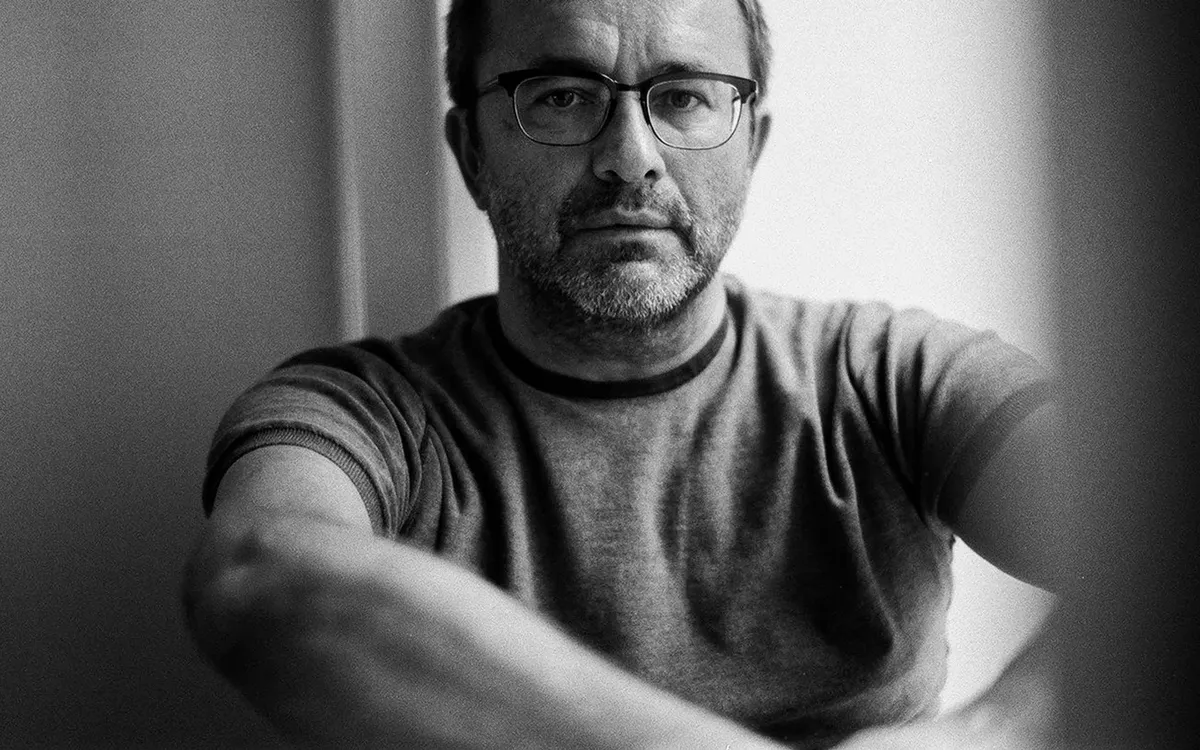
Look who
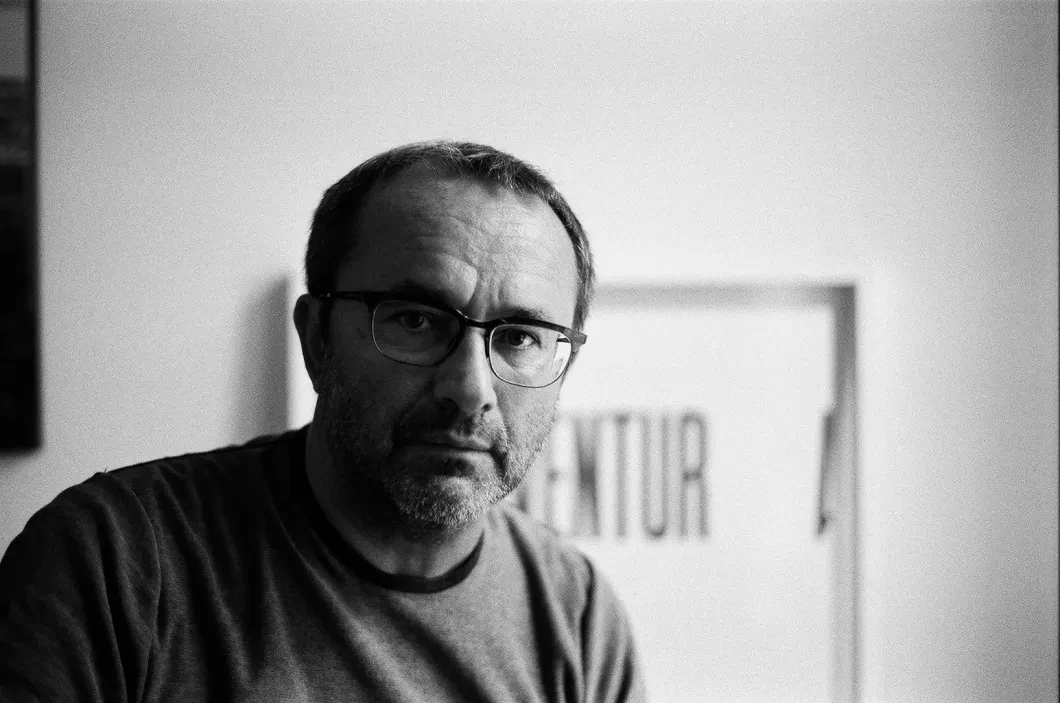
Andrey Zvyagintsev, film director, screenwriter
Born in 1964 in Novosibirsk. He graduated from a theater school in Novosibirsk and GITIS.
Laureate of Cannes and Venetian festivals. It is twice nominated for the Oscar, twice - for the British Academy Award. The holder of the Golden Globe Award for the film Leviathan in 2015. In 2018, his painting “Dislike” was awarded the award of the French Cinema Academy “Cesar” for the best foreign film. Laureate of the main Russian awards in the field of cinema "Golden Eagle" and "Nika". Member of the American and European film academies.
A lot of books in different languages, including the collection of “New Literary Ferry”, “Breath of the Stone”, this year “Alpina Non-Fikshn” published scenarios to his ribbons “Return”, “Expulsion”, “Elena”, “Leviathan” and “Nelyubes”.
Now working on a new film, details have not been disclosed.
- The reason for the meeting was your book ...
- We are only working on her!
-Excuse me, the scripts have already been released in Alpine Non-Fix. Are you publishing another book?
- Yes. Kinocchritik Maxim Markov and I are completing work on a detailed commentary to Leviathan. The book at 600 lanes-the result of six-day conversations in May 2015-will be called “Leviathan. Analysis on bones. " Maxim asked questions literally for every frame, interested in technical solutions, but in the end we talked about everything that was a fabric of the film and even wider - the spirit of the time that created this fabric. The other day we will see the final layout.
- Easily decided to publish scripts?
- I am against publishing unrealized scenarios. And those that the viewer already saw on the screen, why not? We discussed the idea with my permanent co -author, Oleg Negin, and decided to print. Oleg is demanding, it is not easy for him to find allies in his work, he does not know how to work to order, for him only what the soul lies for. For our time - rare resistance! They thought about whether it was necessary to turn the scripts. We always considered them as a work record. Make them comfortable for reading, turn them into literature? We decided to publish in the form in which they were in the hands of the crew.
- Did you learn to write scripts or remained self -taught?
- I never read scripts to learn how to write them. And I did not read a single textbook on scenario art.
- Enough scripts of Shpalikov to understand the difference between them and prose.
- Shpalikov is an incredibly gifted person. Unfortunately, unrealized to the fullest, early departed. His only directorial work - among my loved ones - wonderful, insightful, from the flesh and blood of the Soviet thaw "Long Happy Life." There is obvious the influence of not only Jean Vigo, to whom Shpalikov himself referred, but also the rhythms of Antonioni, they are there like radiation of the waves of the atomic reactor, as in the "Andrei Rublev" Tarkovsky.
Where did I study script art? I have an acting education. At the age of 15, I decided that I had to escape from school, and after the ninth grade I entered the theater school. For four years we studied drama from Fonvizin to Helman, from Sophocles to Tennesi Williams. In the play, the main thing is a dialogue with an insignificant number of remarks, he accustoms to the letter, where the support is only on his own imagination. That's my whole school. Now
Before samples, I often ask the assistant to remove all the remarks - “skeptically grinned”, “after a pause” or “frowning eyebrows”,
- So that the actor himself was turned on, he himself was looking for an expression.
I have not such a significant role in creating texts, this task of Oleg Negina; We understand with him that there is enough fixation of verb forms and dialogue. Everything else - ideas, atmosphere, meanings and their tension - we have already discussed at the table; I do not need a cut or raising of a literary form, I already know how the scene will look.
- In your interview, some pathos is felt.
- Maybe. But should I fight this with this?
- Do you want?
- Do you need it? I would like to treat a lot easier; In the end, who are you to rebel against the imperfection of a person? But how to learn this? .. Yesterday I looked at Netflix documentary The Social Dilemma, a wonderful and scary movie about social networks. At the very beginning - a quote from Sophocles: "A curse always comes into the world of a person along with the great." The ability to connect with one click with the whole world is a miracle and the poison of a curse at the same time. The film without pathos speaks of the tragic consequences of the development of corporations that turned us into a product, manipulating our desires. How to learn to talk about tragic things so ironic? Don't know. I'll think about it.
- In your films, such a danger comes from the TV and smartphone, the heroes are glued to the screens, they are a symbol of stunning, alienation and delimiting. Do you have a phobia on modern means of communication?
- It is possible. But watch the movie! There are speakers - not lovers of conspiracy theories, there is CEO from Facebook, Instagram and other products of this industry; There is only Zuckerberg and those who turned the dream of a new era into a clean bait. In addition to wonderful ideas, there are alarming statistics: growth over the past decade of depression in children, youth suicides, low self -esteem ...
- Do you have accounts in social networks?
- No and was not. The wife has, his son does not. It’s too early for him to get them, a guy 11 years old. But when the creators of all these miracles-intelligence say that they forbid their children to have social networks up to at least 16 years, it is involuntarily determined to be firm.
- Do you have enough irony in your films?
- Judge others.
It seems to me that if the string of drama is weakened, it will touch. If you take the drama, the string needs to be kept in good shape.
Do not pull so that she does not burst like a Chekhov string, but also not to let go, so that she does not turn the drama into a bourgeois household with jokes on each second page. In the drama you need to keep a high tone, and not hide behind a fig leaf like “This is just a movie”, “Do not worry, this is cranberry juice, not blood”, “Think, all life is a theater”: such an ironic squint of the author immediately removes the heartbeat from the viewer. But in Leviathan or in Elena there are some funny moments. Isn't it?

- The preface to the collection tells how 750 pages of your personal archive were shot - records “On napkins, notes, sketches, pictures, paper scraps”, of which notes on the scenarios. This is a rare case in the era of digitalization, when it is unclear what, in principle, to hand over to the archive and the State Film Fund?
-Before the collection of source materials, their inventory was engaged in assistants, some special people, archives workers, and now to whom? I put everything in the boxes that is connected with the work of the films - is unsystematic, there is no time to do this. And only in pauses, when there is no way to work on a new film, books such as “Scenarios” are born.
Now the project of the new book has appeared-about the short film "Apocryth" from the almanac "New York, I love you." Semyon Lyashenko decided to make a plot about how the film was created. He found those involved in his creation: a photographer on the site, an editor, producers, my assistant and translator Inna Brauda, collected all the materials that he found, even three additional scenarios - not options, but different scenario ideas for short filming, I was sure of their loss. The result was a voluminous story with the plot about the battle in 40 seconds of images. For me, this was a surprise, I was delighted, remembering the boxes, where the sketchbook also lies. So the book was born, Semyon called it "Black Box". This is also a kind of work with an archive.
- Painting plays an important role in your scenarios and films - the Hopper is mentioned in the comments (it is obvious in the frame), and Vera’s hair in “Exile” quotes the “world of Christina” Andrew Wayet. There is a good museum in Novosibirsk; Did you love art there?
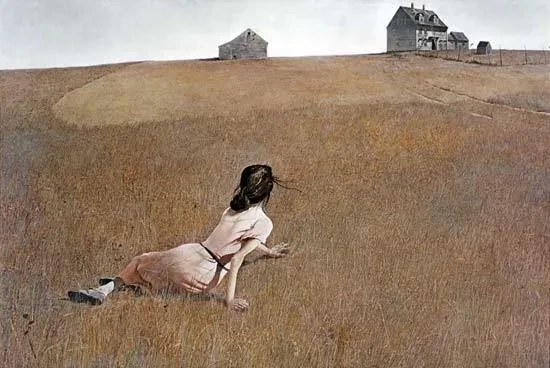
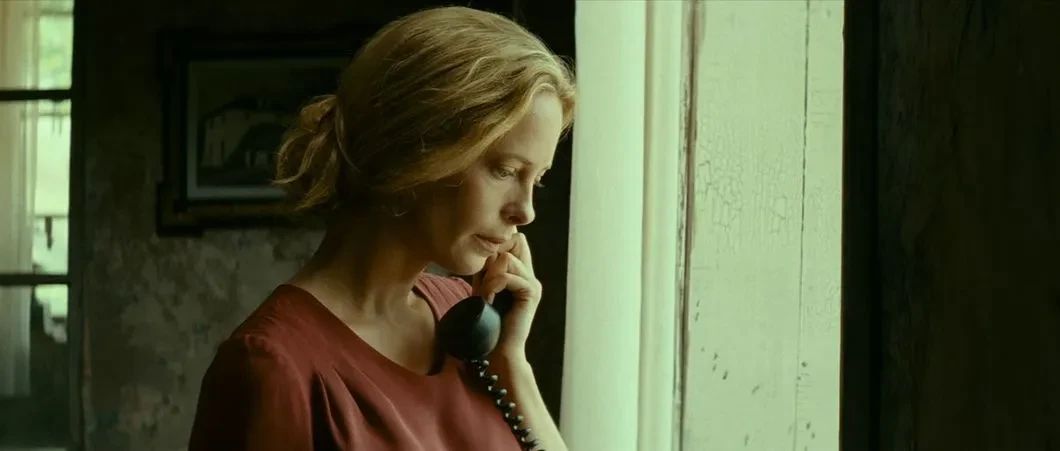
- At the school, once a week we had such a discipline - from art: from sculpture to painting, from Egypt to the Renaissance and further. At 16, such an injection is useful to be healthy. Even now, after 40 years, I remember the name of the teacher - Alexander Antonovich; He tightly laid the windows in the audience and showed high -quality slides on the snow -white wall, talked about the composition, color or reasons for the appeal of painters to religious plots. Academic training was not expected from us, the exams did not need more than, say, to distinguish Falk from Rembrandt, but later I have repeatedly discovered this “sudden memory” in myself. And then, at 16, I thought: why do they show all this to me?
- The feeling that you have general artistic tastes with your operator Mikhail Krichman. You don't go to museums together?
- Well, no, of course. Although one day in New York it was so-they went to MOMA, and the first thing that they buried their eyes was, the “Christina's world” Andrew Wayet. It was a year after the premiere of “exile”, where we were inspired by his painting. In the process of preparing for the film, we exchange albums, including by photography. As impressions or references to the upcoming work. So, at the beginning of preparation for the filming of “Exile”, Misha brought the album of Hopper, and he completely shocked me. His traces are in the film, but later Whayet took his own, his work is our main reference in the picture.
“I wonder that Vim Wenders is also a fan of Hopper, and you crossed with him?”
- I heard, he took off the tape about Hopper, but has not yet seen her. I love his films, although we have some strange relationships, he seemed to shun me, as if he had learned about the stupidity that I once committed: listing the names of important directors for me, called “black and white Wenders”. About colleagues - as about the deceased: only good or be silent like a fish. I just forgot about this. I don’t know, maybe some other reasons. Maybe he doesn't like my movie. One way or another, communication did not ask us.
“You yourself could approach him?”
- For what? I do not want to approach anyone, put in an awkward position the need for communication. At cocktails and parties, everyone will bring each other with someone. I am uncomfortable in such an environment. When producers get acquainted with potential partners, this is still clear, in the future the common cause looms, but
Judge for yourself: what to talk about with another about one director?
- Do you regret the publication in Kommersant in 2016 - you wrote that the state gives the artists not their own, but taxpayers and therefore should not require ideological devotion from the art?
- Why should I regret it if everything is?
- Maybe unwanted consequences have come?
- Even if you have come, what do you order to do with this? Someone was offended to read these words?! And it is annoyed to someone that the “Berlin patient” is not called by name stubbornly. I did not reason whether it would offend someone or not, I only expressed what I think correctly. The situation is unhealthy, when a civil servant believes that he blessed a citizen of the Russian Federation, allocating the director money from the state budget. This is a false state of affairs. We declare freedom of speech and expressions of our views, and since we use this rhetoric, should it be embodied in practice? I'm afraid to part with pathos, it allows you to keep such ideas intact.
- Sometimes this allows you to make irony.
- Everyone has his own language. The form is important, but why say that this is the only way, and not otherwise you can express yourself? And then, while not such a situation to be saved by irony.
Aesopov language, kitchen conversations-ha ha, laughed at Brezhnev, Haha, and the Andropov, and we ourselves write something on the table ... But the cinema cannot be written on the table.
Shpalikov hanged himself at 37, because he could not realize his scenarios. Do not turn the people who form the attitude of the viewer, the time, the people themselves, in the end, in the performers of the numbers “What do you deign?”, Do not take the opportunity to say true, sharp things, do not censor them! This is necessary for the health of the state itself - the resistance of the material, criticism and problematic posing of the issues of our general being. This was the meaning of my statement.
I work with producers who understand what it means to enter an “elephant into the dishwashing shop” - take it off, then change it - and that this cannot be done. When in December last year, after nine months of intensive work on the film, I was offered to change the final of Jupiter - of course, I refused. Another finale in this story is impossible. Just impossible - that's all. This is not a matter of money.
If someone comes with money and says: you need to shoot like this, we are not on the way.
- Is there any idealism?
- They are. Or maximalism, I will not entrust the accuracy of usage.
- Is it not dangerous?
- In what sense?
- The money will stop giving.
- What to do?! So, we will look for others. We have an intensive conversation, I sometimes condens the colors, in another conversation everything would be easier, there may have been no place for maximalism. But when we are talking about the plan, where fundamentally important things should sound, it is impossible to change the ending. Imagine - leave a living Hamlet with Claudius?! Or do not shoot Treplev? This is a completely different play! The thing was created like this. This arc - like a bow with a bowstring, the arrow in the finale should fly, otherwise the bow is lying idle. And here is an uncompromising.
- Is this the tradition of Alexei German?
- For me, he is the standard of a fundamental view of art, this man is total uncompromising. I am striking in the stamina of German: his films are methodically, one after another, put on the shelf! But he put all the forces in them, the juice of his life, he loves them as his children, and realizing that they can be buried in this shelistic dust, he goes to the site again and again and makes his uncompromising movie ...
-You grew up in Siberia, where, it seems, a different type of people less aimed at a career, a different type of moral and ethical deviations, a different degree of goodwill than in Moscow-is it not difficult for you?
“You formulated it that I involuntarily thought.” Do you think it's a matter of soil? The first desire is to say that it does not matter where you were born: in the Urals, in Vladivostok or in Teriberka. I am sure that there are many people aimed at a career in Vladivostok. They formed me not so much my hometown with its cultural environment and theatrical traditions as our course, my friends, teachers, some classicism with its dilemma of honor and duty, Pushkin with “do not value the people's love”, Dostoevsky issues ... culture, not Siberian magnetic meridian.
- Did not think to return to the theater as a director?
- The theater has changed a lot since it was clear to me how everything was arranged. The theater that I studied and where I feel confident is traditional, psychological. For me, this texture finds itself in the cinema. Cinema by definition should be reliable; Everything that happens on the screen, I must unconditionally believe. So if I came to the theater, it would be traditional. Not conservative, I hope, but psychologically reliable. Or you need to catch some new sense of theatrical reality.
- Thought to return and refused?
- I did not have such thoughts. There were invitations to this day.
It began with Oleg Pavlovich Tabakov. He said several times: "Come on, decide, Andrey!"
And I in response: “Give me time to fall in love with something so that it was impossible not to do this. That's when this happens, the first one I will call, you will be. ” But the point is not even the theater address. First, an idea should be born.
- Have you ever regretted that they did not receive professional movie education?
- I do not feel the shortage of specialized directorial education. Studying installation? Composition? Interaction with the group? What else can I learn? I feel my imperfection, but I don’t know who to take a course so that one day it retreats. And is it necessary?
- You have a coordinated team that does not change from the project to the project. Is there any danger, feelings of excessive comfort?
- Maybe. We want to “change your hand” now. What does this mean - so far I myself can not express, but I like the image. Imagine a tennis player of three sets in a row plays the right, goes to a break and shifts the racket into the left. The opponent may be completely discouraged! But we want to do this not for the sake of shocking the audience, but for the sake of ourselves. I don’t know yet what it will affect: on the form of works or on the form of our relations with reality. Let's see.