
Translated material
The FSIN accused Alexei Navalny as a conditionally convicted of control
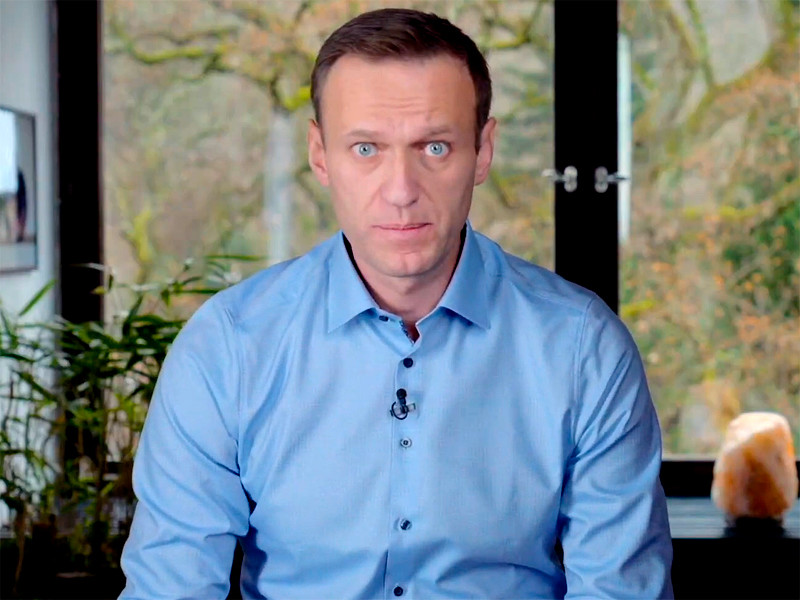
The Moscow Administration of the Federal Penitentiary Service (FSIN) regards the non -appeal of the conditionally convicted leader of the opposition Alexei Navalny as intentional evasion of compulsory control. The message about this is posted on Monday on the website of the department.
The agency recalls that on December 22, an article was published in the medical journal The Lancet based on the materials of the German Charite clinic collected according to the results of Navalny's treatment. Based on the publication, which is referred by the FSIN, Navalny after the poisoning of the Novikich family was discharged from the clinic on September 20. And by October 12, "he had all the consequences of his illness," the Russian penitentiary department emphasizes.
Thus, they believe in the FSIN, "conditionally convicted does not fulfill his obligation assigned by the court and deviates from the control of the penitentiary inspection." "In accordance with the court verdict, obligations are assigned to the conditionally convicted person, for the failure of which he is liable provided for by the legislation of the Russian Federation," the FSIN Office recalled.
It was noted that in case of confirmation of the fact of evasion of a conditionally convicted of control of the penal inspection, "measures provided for by part 4 of Article 190 of the Criminal Executive Code of the Russian Federation (responsibility of conditionally convicted) will be taken." The article provides, inter alia, a petition to the court to cancel the conditional conviction and execution of the punishment appointed by the court verdict.
The press release reports that on December 28, Navalny sent a notification of the turnout to the Criminal Executive Inspection (UII). Information about the need for turnout is also sent to his lawyer and press secretary.
In turn, the opposition lawyer Vadim Kobzev published a message from the head of the branch N 15 UII of the Moscow Federal Penitentiary Service, according to which Navalny was invited for registration by 9:00 on December 29.
Alexei Navalny himself regarded the FSIN press release as the long-awaited recognition by the Russian authorities of the fact of his poisoning by combat poison. "AAAAAAAAAA FSIN, referring to an article in" Lanzet "demands to put me. But, sorry, an article that I was poisoned by a" newcomer. "So, at the official level, the state recognized poisoning. Where is the criminal case?" - wrote the opposition in the Twitter microblog.
According to the press secretary of Alexei Navalny Kira Yarmysh, the FSIN press release indicates that the Kremlin is changing tactics. “That is, they first try to poison Navalny, and when it doesn’t work out, they decide to plant. They remembered about the probationary period in the case of Yves Rocher and on the last day they decided to change it for real,” she wrote on Twitter. The fact is that on December 30, the test term of Navalny in the criminal case "Yves Rocher" expires. Thus, if he does not appear in the Federal Penitentiary Service on December 29, the security forces will petition for replacing a conditional term with a real one.
On December 30, 2014, the Zamoskvoretsky District Court of Moscow found Alexei Navalny and his brother Oleg guilty in particularly large and large fraud in the field of entrepreneurial activity, as well as the legalization of funds received by criminal means. The court and the investigation came to the conclusion that the brothers stole 26.8 million rubles from the IVES Rocher cosmetic company and 4.5 million rubles from a multidisciplinary processing company (MPC) through the Main Subscribe Agency (Glav Subscy). Judge Elena Korobchenko sentenced Alexei Navalny to 3.5 years in prison and 5 years of the trial period, his brother Oleg - to the 3.5 years of the colony of general regime.
Aleksey Navalny himself, in the course of the court, filed an application with the RF Criminal Code of the Roman Nesterov’s crimes under Articles 285 (abuse of official powers), 286 (exceeding official powers), 292 (official forgery) 303 (falsification of evidence in the criminal case), 307 (obviously false testimony in court) of the Criminal Code of the Russian Federation.
According to Navalny, in the seventh volume of the criminal case, which contains a note by the representative of Yves Rocher about the absence of the company's damage, the number of sheets has declined, their numbering has changed and the content was corrected. On one of the sheets, Navalny discovered traces of a white stationery putting on. According to the opposition, corrections to the case file were made after the accused familiarized themselves with these materials. The court did not take into account all these arguments of the defense.
In August 2017, by decision of the court, the assigned trial period on the proposal of the Federal Penitentiary Service was extended until the end of December 2020.
The FSIN also repeatedly appealed to the court with requests to replace Navalny with conditional imprisonment with real, but unsuccessfully.
In October 2017, the European Court of Human Rights (ECHR) at the request of Navalny awarded them compensation in more than 80 thousand euros. The ECHR admitted that the Russian authorities violated a number of articles of the European Human Rights Convention in the proceedings in the proceedings "Yves Rocher".
On April 25, 2018, the Supreme Court of Russia, on the proposal of the Chairman of the Court, resumed the proceedings in relation to Navalny in connection with the decision of the ECHR, but left the verdict unchanged.
The founder of the Corruption Foundation (FBK) Alexei Navalny fell into the plane on board and was hospitalized on August 20 in Omsk. Two days later, the associates and relatives of the opposition achieved his transportation to the Berlin clinic, where he underwent further treatment. Experts of several foreign laboratories found that the opposition was poisoned by the novelty of the Novikich family, which Russian special services are suspected of repeatedly. Navalny himself is sure that the FSB officers tried to kill him on the orders of Vladimir Putin. The opposition even called one of the alleged poisoners Konstantin Kudryavtsev and he admitted in the conversation that he destroyed the evidence after the assassination of Navalny's underwear.
After that, the Russian authorities nevertheless opened a criminal case, but not in connection with the poisoning of Navalny, but in connection with the attempt of a lawyer FBK Lyubov Sobol to contact Konstantin Kudryavtsev.
In the Kremlin, the very fact of Navalny’s poisoning has been denied for more than four months. At the same time, officials and medical functionaries put forward oncoming versions that the opposition was allegedly tortured by starving in an attempt to lose weight that he had pancreatitis or diabetes and generally undermined health.