
Translated material
"I will go into custody right with suitcases"
Ten years ago, Oksana led her own company and devoted herself to business. Now she is the mother of six foster boys with serious health features. She cured the first from cancer in Germany, for the sixth - with the last stage of HIV - she achieved antiretroviral therapy. “Such things” tell the story of a woman who created a happy large family (and also doubted, broke and allowed herself the idea to return the children “with suitcases” to the guardianship authorities)
Where do the children come from
"Do you know that your mother did not give birth to you, but brought you from the orphanage?" - asked classmates to Vitya and Lesha (at the request of the heroine, all the names are changed) before the New Year holidays at the gymnasium.
The reason for talking about the acceptance in the second “A” - for the first time in a year and a half - was a tin box with sweets. The school prepared sweets for children who are brought up in foster families, and the class teacher handed gift sets on that day only to two boys in the classroom.
On a tin box was Santa Claus. “Look, this is Santa Claus came to the orphanage. He gives gifts to children who have no parents. You are not your native brothers, so you have different patterns, ”the guys said vying. Vitya and Lesha did not know what to answer.
At home, they talked about this mother. Oksana called the class teacher and asked to appoint an urgent parent meeting. On the way to school, she went to the bookstore and bought the Constitution of Russia, and in the classroom went to the board and read the 23rd article on the inviolability of private life.
“Dear parents, if you want to ask me where my children came from, if you have questions about their appearance, about their different surnames, I am ready to answer right now,” Oksana continued. - Why are my children forced to endure tactlessness? Please ask me better. But I leave the right to ask you oncoming questions. Where did your child come from? You gave birth to him yourself, used the services of a surrogate mother, or maybe it was eco? Do your children raise your native fathers? "
 Photo from the family archive
Parents listened to the tirade silently and parted. The next seven years, classmates no longer asked the brothers how exactly they got into the family.
To pass is unsportsmanlike
Oksana and Sasha Danilov did not plan to become foster parents. Just at the age of 40, when the income was stable and sufficient, and the daughter studied at the university and became independent, they wanted something that I need to devote yourself to-"you are engaged in everyday business, you work, and for which it is not clear."
On a normal day, returning from work, Oksana unexpectedly invited her husband to take a child from the orphanage. And Sasha suddenly agreed. Two months later, they had already filed documents in custody. How to proceed - where to come for a child and how to choose their own from a dozen other children, they did not understand. Schools of adoptive parents became obligatory only after three years, and then, in 2009, in the custody they were simply given contact of volunteers who visited children in orphanages.
Volunteers turned out to be assistants to the fund for children with cancer. They suggested Oksana to get acquainted with the five -year -old Lesha in the Tula orphanage, from which a cancer was accidentally discovered when they took an X -ray about the inhabited bronchitis: the picture showed a tumor between the left lung and heart.
“I thought that it was unsportsively to give up a child with a serious, but cured disease. I am an adult aunt that has achieved everything in life. And I will pass before oncology with a boy whom no one will take and protect? " - reasoned Oksana.
 Photo from the family archive
They quickly found a common language - Lesha was one of those children in an orphanage who are always looking for a mother and ask every adults: “Are you my parents?” Oksana and Sasha already had a package of documents necessary for becoming adoptive parents, and a week after meeting with the boy, the wife issued custody.
The first year in the family for Lesha was not the year of adaptation, but a year of hospital examinations and tests: the tumor grew, increasing every month by a centimeter. It was a ganglioneum. Doctors predicted that the tumor could begin to germinate in the heart or lung after three to four months, so it was necessary to remove it as soon as possible. With great difficulty, Oksana managed to reach the Moscow Scientific and Practical Center for Specialized Assistance to Children, where Leshe was immediately set by the date of operation, but honestly warned: the child after removing the tumor with a probability of 90 percent will be paralyzed to the left body.
“I went out, scratched my head and thought: of course, it’s great to get rid of the tumor, but the child should somehow continue to live. Why do an operation, which will result in disability? " - recalls Oksana.
Read also Sasha and the lost childhood as a mistake of the psychological-medical and pedagogical commission deprived Rostov’s orphan Sasha, family, and her brother
Then she learned that in Munich there is a surgeon who specializes in the ganglionuries and knows how to operate them without consequences for the patient, but for a trip to Germany it was urgent to collect 18 thousand euros. About half the amount was paid by the Life Foundation, Oksana and Sasha got the remaining money themselves: they collected donations from colleagues at work, sold the car.
The boy did not understand that a serious operation was ahead, he perceived the trip to Germany as the first trip abroad with his mother - also on an airplane - and was happy. “And my mother was in coma,” Oksana admits. The operation was done without opening the chest, laser equipment through the cuts - the tumor was almost completely removed. And for half a year in the Moscow Medical Center “Microsurgery of the Eye”, Leshe was removed by the cataract, which developed due to the tumor. His hand, paralyzed after surgery in Munich, was completely restored.
"Vitya, you are a fool." - "The fool itself"
The first year in the role of the adoptive parent turned out to be so difficult and terrible that Oksana began to think to herself: “Oh, I can not a fig!” And in October 2010, he and her husband decided to take the second child: they talked about the seven -year -old Vita with health problems with health and health problems who did not receive any treatment. In the photo, the boy was no different from other children. “Well, it’s like that, but in the photo everyone was not an ice,” Oksana concluded.
 Photo from the family archive
When the Danilovs arrived, the pupils of the orphanage rehearsed in the assembly hall of autumn - the performance that was supposed to show in one of the schools of the district. At the entrance to the institution, the family encountered a doctor. He, having learned to whom Oksana and Sasha came to, suddenly sympathized: "Oh, this is our most difficult child." - "In what sense?" - "And the most difficult in health, and in behavior - in every sense!"
The couple rose to the assembly hall. The musical worker began to play on the piano entering the song, the children - go to the stage with a goose and line up in a row. Cute girls appeared one after another. Vitya did not appear.
“And here I see-one child is barely the last, thin, legs in knees, the knees stick out. The sandals, which are apparently great to him, fall all the time. He stops, puts his leg into the sandalion and catch up with the rest. The child stands and - I will never forget this feeling - as if he would die now. Barely tossing the tongue, ”said Oksana. - Vitya looked like an old man whose relatives already died, and he alone was left. Absolutely glass, hopeless look. I looked and thought: this was lucky. "
She went out into the corridor and cried for two hours. The husband suggested taking a closer look at another child. But to the question of Oksana: " If we do not take this boy now, someone else will ever take him home?" - Honestly answered: " No, no one."
The director of the orphanage released the boy on a receipt that contradicted the law, but gave a chance to get into the family of the child’s most difficult in every sense. They agreed that in two weeks they will prepare all the documents for the registration of guardianship. Oksana asked Viti's medical card - A4 sheet was painted with diagnoses. Seeing the first eight, the woman closed the folder so as not to change her mind.
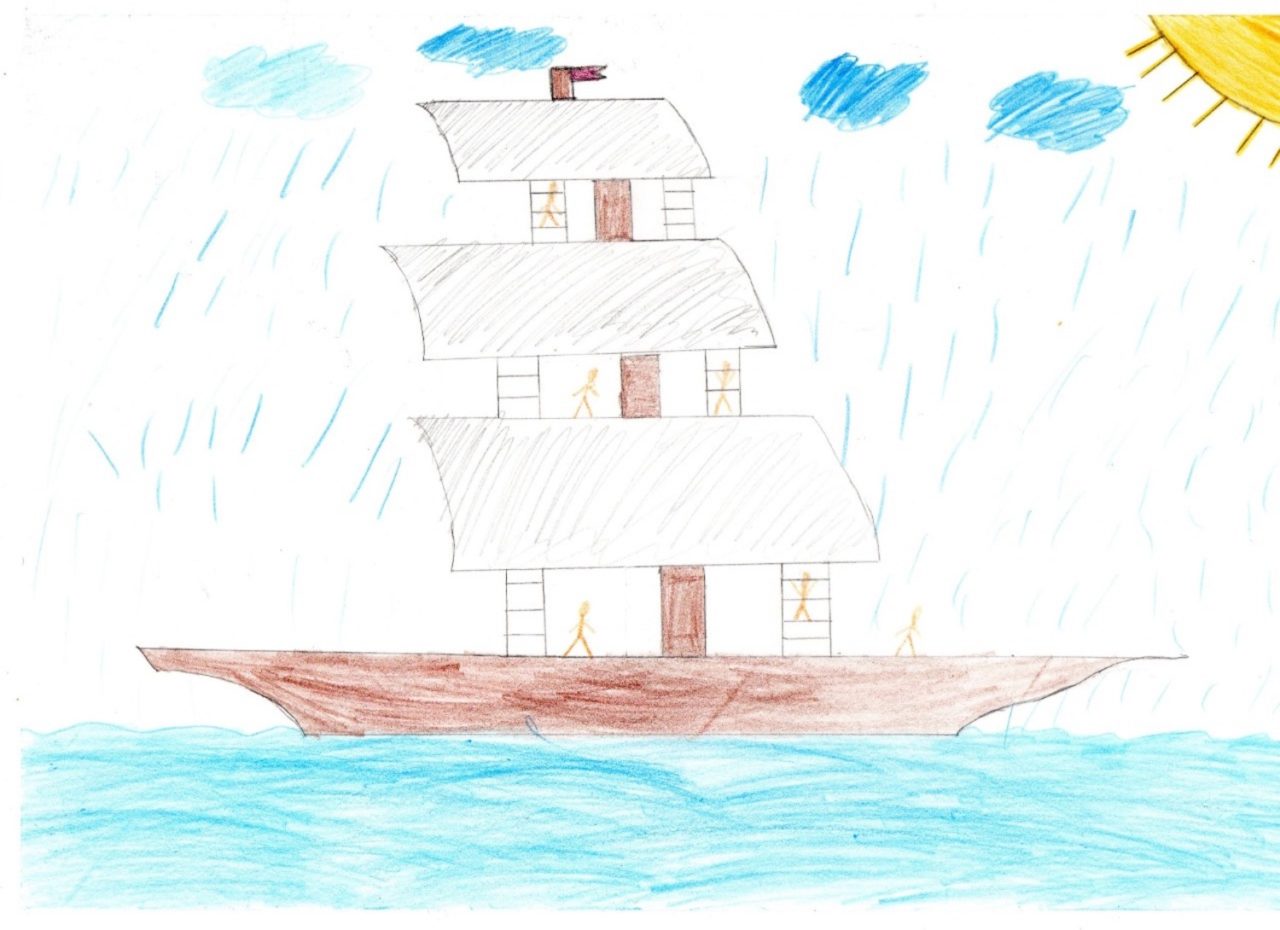 Nikita's drawing
Viti's houses began strange attacks, which nothing was said in the medical record. It turned out that this is an epilepsy with a non -standard picture. In addition, the child had practically no kidneys - later Oksana found out that Viti's mother was very drinking and did not stop drinking alcohol during pregnancy, which could lead to a serious pathology of the genitourinary system in the child.
Vitya did not make friends with Lesha - the boys did not let each other to his mother, called themselves and fought. But this faded into the background, while the treatment was selected for Viti. Oksana was afraid that at any moment he would die, slept next to him and constantly approached the pulse.
In parallel, she taught Vitya to read. It turned out to be not easy: he could not concentrate for nothing longer than five minutes. For example, when I watched the TV, I changed cartoons every three minutes, sorted out dozens at a time. The only thing that carried him really was computer games. And then Oksana went on a trick: she turned on the most primitive computer game, where some inscriptions were constantly displayed on the screen, for example: “What does Nyusha want to do now?” If you want to play, sit and read. “All red, stained with anger, sat and disassembled the letters,” she recalls.
Then, so that the children learn to read and write faster, the spouses installed ICQ. This also worked: the children were sitting next to different monitors and sent a friend to a friend of the message: "Vitya, you are a fool." - "The fool itself."
Vitya, older than Lesha for a year, lagged behind development, so Oksana decided to send boys to first grade together. In addition, it would be easier for them to experience conflicts with classmates, she reasoned. Oksana at home engaged in lessons with them daily, and at school she laid a straw from all sides: she issued children who did not miss class lessons, home schooling, so that teachers work with them out of school time for additional payments, made good gifts to the school - printer, projector, and demonstration board. For this, teachers showed patience, gave the boys with the features as much attention as they needed. Now Lesha and Vitya, who had a diagnosis of “mental retardation”, study in a gymnasium without triples, mother is proud of.
"I will go into custody right with suitcases"
Oksana and Sasha went to work in shifts. In those days when none of them could stay with the children, a nanny came home. At eight in the evening, she handed over the boys Oksana - exhausted after work, and a few hours before the end of Lesha and Vitya could not leave alone for a minute. Oksana even went to the toilet with an open door so as not to miss a spontaneous fight out of the blue.
 Photo from the family archive
At 22:30, Sasha was returning from work, and at midnight, when the children fell asleep, the parents began to cook soup together. Sasha cleaned the potato above the sink, and Oksana doused herself with tears: “Sasha, forgive me, please. I ruined your life, ruined my life, what to do now? " Sasha continued to silently clean the potatoes, listened, and then quite calmly suggested: "Well, then let's return it."
“I immediately shut up,” recalls Oksana. - And then she said: “How will we return? Nobody will take them again!” She lived with this inner contradiction and could not share with anyone. I thought that if the guardianship finds out that it is morally difficult for me, that I can’t cope, then my children would be taken away from me. ”
In 2010, there were no psychological assistance programs for foster parents in Russia, which were in crisis situations. Over the first two years of life with her sons, Oksana re -read all Lyudmila Petranovskaya and forums for foster families released by that time. Gradually, she found a way that helped to cope with the hardships of the foster parenthood: she allowed herself to think that children could be returned at any time. And in the days when the hand reached for the phone to call the custody, artificially postponed this moment.
“The end of December, at the work of kapets, the tower was demolished in children,” she recalls one of such periods. - I think: I will finalize before the New Year, and after the holidays I will come to the guardianship, put an application on the table, turn around and run away, laughing. Happiness will be! For the New Year, my husband remains with the boys at home, I am leaving for my mother, it becomes easier for me. Some time passes-again kapets. I think: until February 23, I will reach, and after the application to the custody of the table. Then March 8, then my daughter’s birthday ... I think: I’ll reach the May, so as not to shock anyone, but then! I’ll go into custody right with my suitcases, I won’t even go. ”
 Photo from the family archive
But, promising to certainly throw off the load of responsibility for children at the first opportunity, she continued to treat, teach, play, talk, go to parent meetings, earn - do everything so that the boys feel loved in their place.
Now charitable foundations are engaged in the prevention of repeated orphans. In 2019, the Federal Remote Support Service appeared - a joint project of funds “In the answer for the future” and “Find a family”. Parents who are faced with emotional exhaustion, an exacerbation of relations with children, with the problems of adaptation of a child in school and family, with conflicts with guardianship authorities turn to the service. For the year, 613 families turned to help for help.
Conversation on the fingers
Soon the family sold its three -room Khrushchev and Koroshka, which went to Sasha in the inheritance from parents. The money was invested in a new building at an early stage of construction. In the new house it was possible to combine two apartments with a total area of almost 150 square meters. In the meantime, the house was being built, Oksana and Sasha temporarily rented odnushka, in which the four of them first lived. And then five.
Oksana does not remember how it turned out, but at the height of the working day she accidentally crossed the link that led to the website of the Far Eastern project “Mom, I'm here” with photographs of orphans. On one of them, she saw a boy who looked like one of her sons. And I thought: I have to go.
After making sure that her husband did not mind, Oksana flew in nine thousand kilometers. The day before her arrival, this boy was adopted. She was given a direction to a child of the same age without health problems, obedient, bright, blue -eyed. But he did not cause her any emotions. Oksana chose another: six -year -old Yegor, who, as it turned out, was recently returned from the foster family. He weighed only 12 kilograms, spoke with gestures and interjections and was constantly shaking. The guardianship authorities found a boy in a dugout: his biological mother, a graduate of the orphanage, constantly left him there alone, and the neighbors fed him.
“At the same time, he was extremely cheerful. Snot flowing on the chin, hanging to the navel, and he smiles. It goes, shows something with a finger, says “y” and cheerful, cheerful, ”recalls Oksana. - I looked at him and thought: “Yes, this was not there, I have to take it.” I spent a little more than a week with him, and we flew together. ”
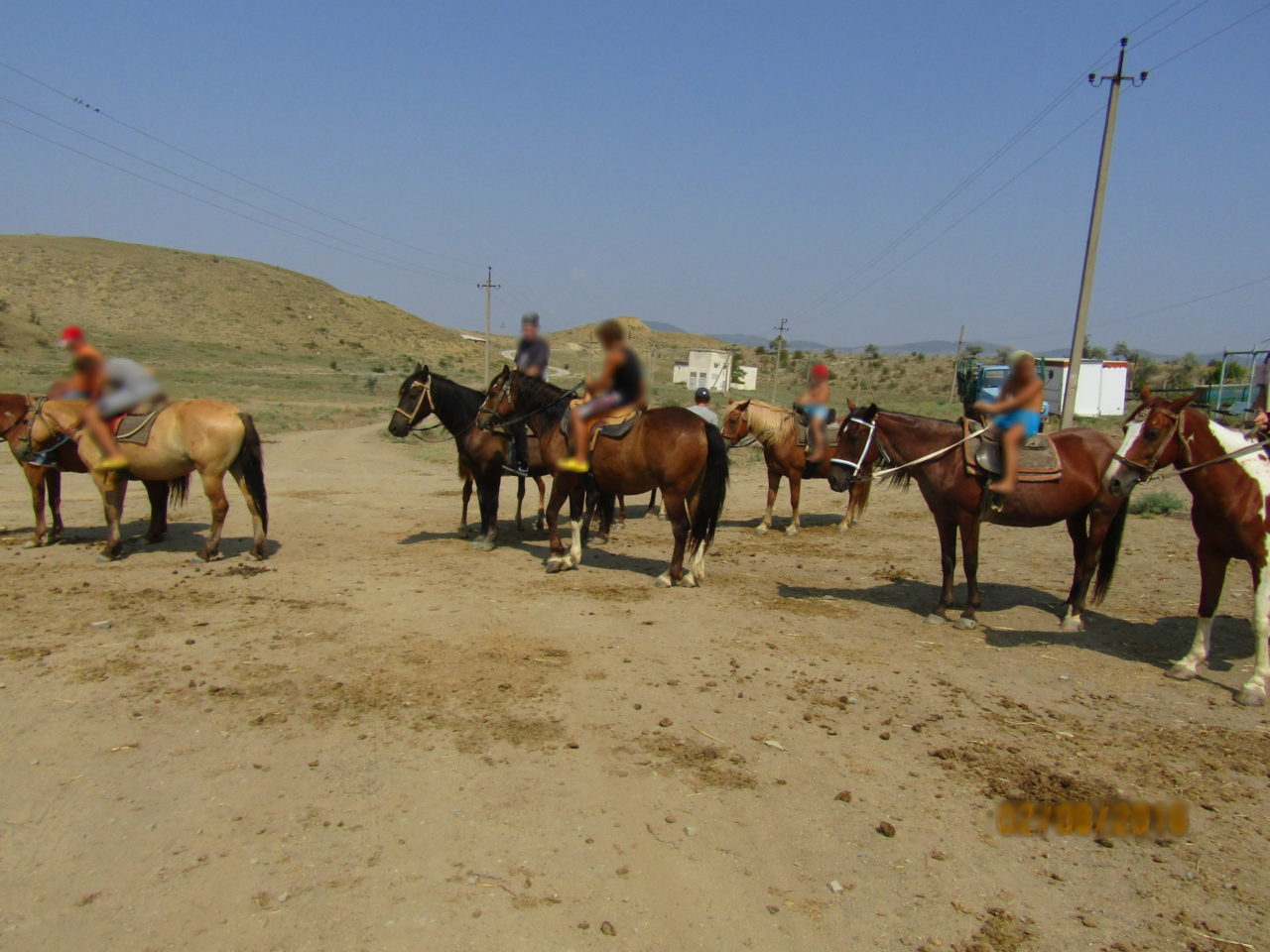 Photo from the family archive
Now, a large family was difficult to place in Odushka, where two written tables, two bunk beds, a sofa and a large closet stood back to the end. But, despite the tightness, with the advent of the younger brother Lesha and Vitya began to swear less. “Egor was so small, dead and so“ not a competitor ”that there was no jealousy from the elders,” Oksana explains. - True, besides me, Yegor for a long time no one in the family understood. Older children came for translation. We gradually developed his speech, and he began to pronounce the words, but at first he did not bow anything and did not hide. ”
Yegor went to school at almost nine years old, but also in a gymnasium class. Mental work for him is hard labor: after a test written on four, he sleeps half a day from overstrain. And now, in the fifth grade, he reads so slowly that he is forced to master the material on audio schools.
Oksana believes that Yegor will be compensated for the first six years of life spent in the dugout. The boy has dysgraphia and dyslexia: he may hear a sentence and not understand half of the words in him. But then the Lego designer for children from 14 years old with an annotation with the thickness of the book, he first gathered in the first grade - was so carried away that there is and his parents washed him by force.
" Do not treat love, treated with medicines"
In December 2014, the Danilovs received keys to new apartments. And in March 2015, two more children appeared in the family: free rooms in the apartment could not be empty.
Oksana jokes that she took two at once, so as not to ride twice. She saw a video about orphans who made the Far Eastern journalists, and again flew for nine thousand kilometers-for the brothers: five-year-old artem and seven-year-old Nikita. “It was clear that everything was fine with the younger: stubborn, with character - I saw it from the look, by the way I bit my lip, how I looked into the camera,” recalls Oksana. “And the elder had some deviations, he did not move very confidently.”
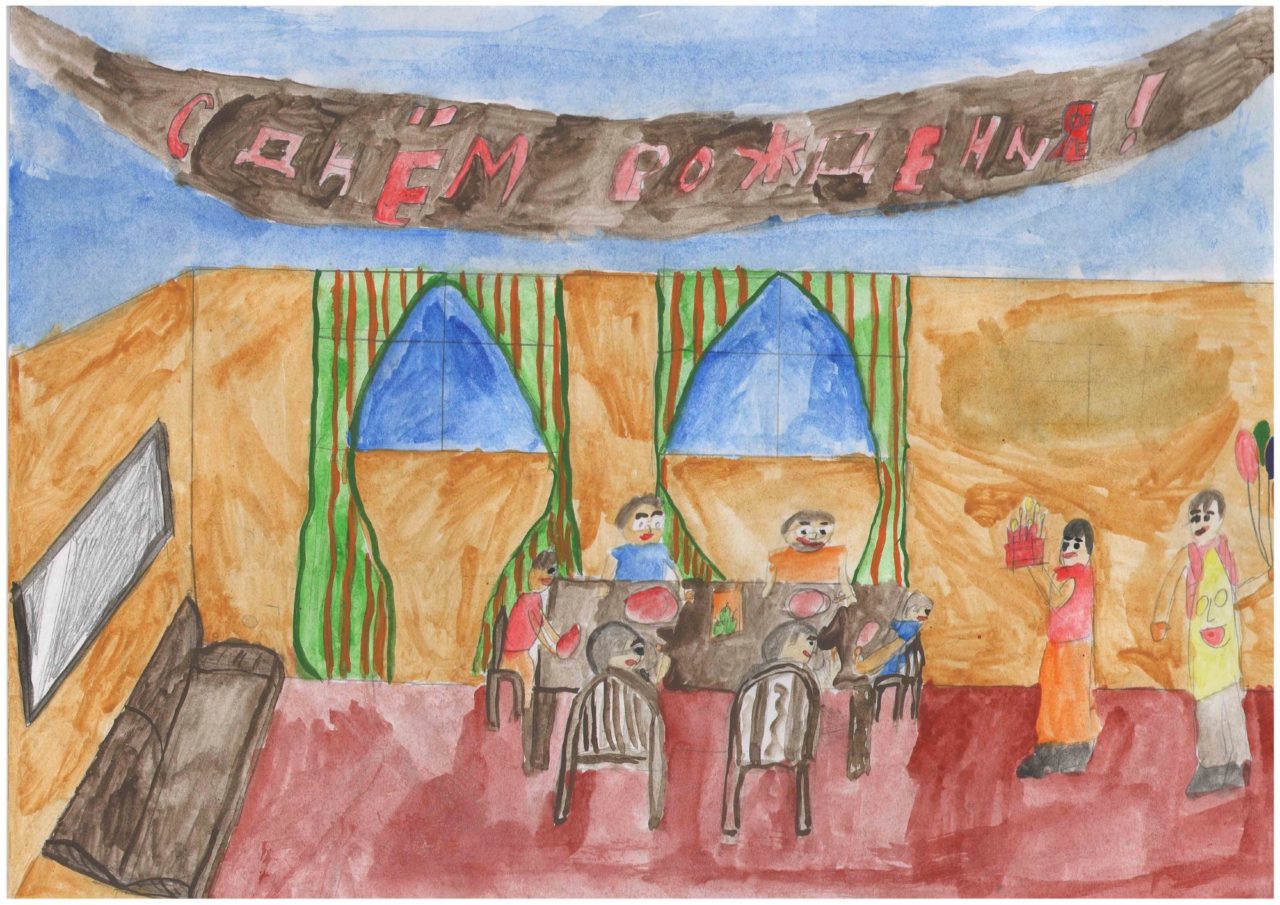 Nikita's drawing
По внутреннему распоряжению органов опеки региона, прежде чем написать согласие на ребенка, будущий приемный родитель должен был посетить его десять раз. Оксана приехала на Дальний Восток на неделю и, чтобы выполнить требование, каждый день посещала детей дважды: приходила к ним после завтрака, была с ними в игровой комнате до обеда, а потом возвращалась после их дневного сна.
Когда Артем и Никита приехали домой, они сразу легли в больницу на обследование. У простуженных детей нашли бронхит и гайморит. У Артема косил один глаз, из-за несуразной походки он иногда натыкался на мебель. Когда специалисты исключили ДЦП и эпилепсию, Оксане посоветовали сделать мальчику МРТ. Снимок показал аномалию Арнольда Киари в легкой стадии — это врожденная патология из-за недоразвитого мозжечкового отдела, которая вызывает проблемы со зрением, с речью, координацией движения, иногда умственную отсталость.
«Любовью не лечат, лечат лекарствами, — говорит Оксана. — Детям с задержкой развития, помимо занятий с психологом, нужны регулярно ноотропы. Но денег не хватает, поэтому в детском доме все априори “здоровые”. И вечно простуженные».
Мальчики также пошли в один класс. Оксане было важно, чтобы они тоже попали к хорошему учителю, который сможет вовремя уберечь детей от пересудов. Она верит, что отношения между одноклассниками на 99 процентов зависят от педагога, а неудобные вопросы о приемности всегда возникают именно в головах взрослых и, если первоклашка задает вопрос «А ваша мама вас не рожала?» — скорее всего, он просто подслушал разговор своих родителей.
« Знаете, сколько этому ребенку осталось? "
Среди детей, за которыми не стояла очередь, Оксана была готова забрать не каждого — у нее есть и страхи. Но она боялась онкологического заболевания — попался мальчик с опухолью, боялась проблем с почками — попался ребенок с почечной недостаточностью. И на очереди была другая неизлечимая болезнь.
 Фотография из семейного архива
В сентябре 2017 года в подмосковном городе, где живут Даниловы, полиция накрыла наркопритон. Опека изъяла девочку и мальчика без документов: не было ясно ни сколько им лет, ни кто их родители. Дети попали в приют. Девочку почти сразу забрали в семью, а у мальчика оказались проблемы с иммунитетом: каждый раз после выписки из больницы он снова заболевал. В результате его поселили в изолированном инфекционном боксе детского отделения поликлиники.
Оксана узнала о нем из городской опеки. В больнице она увидела, что худой мальчик цыганской внешности, запертый в боксе, целыми днями стоял у двери и выглядывал в щель. Никто, кроме медсестер, которые три раза в день приносили еду и делали уколы, к нему не приходил. В четыре года он не говорил, не ходил на горшок, не умел есть с ложки, спускаться и подниматься по ступенькам. Охотнее всего он ел черный хлеб, и в больнице сделали вывод, что только хлебом его и кормили.
У Артура — так назвали ребенка — была последняя стадия ВИЧ. Но он не получал лечение, потому что поставить его на учет без документов было невозможно. Тогда Оксана связалась с фондом «Дети +» и добилась, чтобы ребенка осмотрел врач из СПИД-центра и выписал антиретровирусную терапию.
Заведующая инфекционным отделением пыталась отговорить Оксану от усыновления. «Вы знаете, сколько этому ребенку осталось? Полгода!» She said. Оксана колебалась. Она вспоминала, как смалодушничала уже однажды: к огда у Даниловых были уже двое старших сыновей, они очень хотели забрать одну девочку из тульского детского дома, но отказались, поскольку у нее была вторая стадия ВИЧ-инфекции, — боялись, что другие дети случайно заразятся, что об этом « узнают люди ».
Но этот раз Оксана решила, что в семье Артур проживет дольше, чем в детском доме. В феврале 2018 года она пришла к мужу и сказала, что заберет ребенка. Она допускала, что Саша не захочет в этом принимать участие, и была согласна оформить опеку только на себя. Саша сказал: « Как только ты влилась в эту историю, было ясно, чем все закончится! » Они усыновили шестого ребенка по-прежнему вместе, получив на это разрешение от специальной комиссии. Но, так как за ребенком не стояло очереди, им дали добро.
Возраст мальчика устанавливали в Институте судебной медицинской экспертизы. Ему сочинили красивую дату рождения — 7 января 2014 года. С антиретровирусной терапией он уже два года чувствует себя хорошо.
 Фотография из семейного архива
Сейчас Артуру по документам шесть лет. Это шустрый худощавый ребенок, который отлично говорит и много шутит. Он научился сначала спускаться по ступенькам, а потом — ездить на велосипеде, плавать и нырять. Но черный хлеб по-прежнему его любимая еда. Когда он пойдет в школу, Оксана не будет раскрывать его статус. О нем знают только близкие друзья.
Nothing supernatural
У Оксаны есть логистическая тетрадка, в которой расписано, кто из детей куда и во сколько идет, какой кому нужен врач в ближайшее время, кому какие документы надо оформлять. Таблица составлена на несколько недель вперед. Когда Оксана уезжает куда-то по работе, муж открывает эту тетрадку и действует согласно плану.
Read also «Семья — это единственная правильная форма жизнеустройства ребенка» Необходима срочная реформа закрытых институций: детских домов-интернатов и ПНИ
Подвиг приемной семьи состоит из мелких задач, которые Оксана и Саша уже десять лет ежедневно решают: ведут переговоры с учителями, записываются на приемы к врачам, ищут деньги на операции, часами проверяют домашние задания, разнимают дерущихся. И позволяют себе делать это не идеально.
«Вокруг все твердят: “Да вам памятник надо поставить, вы таки-и-их тяжелых детей вытащили!” - laughs Oksana. — И вот ты слушаешь эти слова и начинаешь убеждать себя в том, что теперь ты не можешь ошибаться. Но это разрушающие мысли. Я знаю, что при всех моих стараниях я имею право на злость, гнев и усталость. Я могу орать, дать по заднице — я живой человек в первую очередь, а не офигенный приемный родитель, совершивший подвиг».
Оксана продала свою долю в фирме по ремонту офисного оборудования и теперь получает деньги за воспитание мальчиков от государства. Как многодетным приемным родителям шести детей, трое из которых — с инвалидностью, Оксане и Саше положена зарплата — 130 тысяч рублей. Суммарно детских пособий — около 90 тысяч. По словам Оксаны, этих денег хватает, чтобы обеспечить детей питанием, одеждой, организовать им летний отдых и лечить, когда они заболевают. Но этого бюджета недостаточно, если ребенку нужны дорогостоящие препараты или операции.
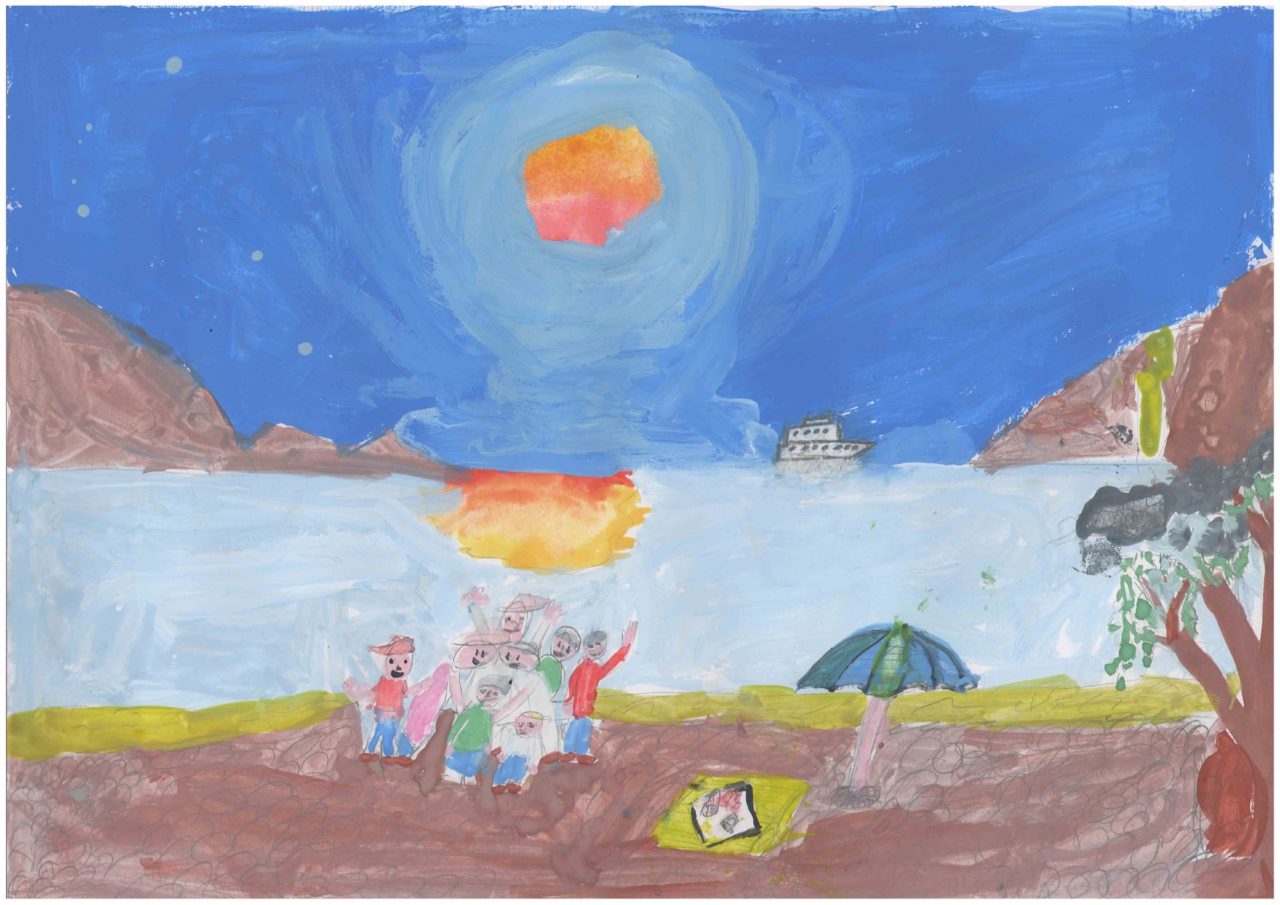 Рисунок Егора
Для приемных родителей в городе Оксана — тот человек, которому можно рассказать о кризисе, истощении, о мыслях вернуть ребенка с чемоданами в опеку — и не бояться, что за эмоции осудят.
«Я повторяю одну и ту же фразу будущим приемным родителям: никогда ничего не бойтесь, — говорит Оксана. — Стоит вам хоть немного засомневаться в своих силах и силах своих детей, это сразу же считают недоброжелательно настроенные люди. У меня была своя фирма, и я же не эмоционировала, когда кто-то из поставщиков мне не вовремя привозил товар, — это работа. Конечно, ты расстраиваешься из-за болезней детей, из-за своих косяков, но со всем всегда можно справиться! Ничего сверхъестественного делать не приходится, кстати говоря. За эти десять лет мне ни разу не пришлось доставать звезду с неба».
благотворительность дети дети-сироты детский дом женщины образование приемная семья