
Translated material
5 excellent books in the non-fiction genre-the most for the holidays
Why are writers drinking? How does our brain change without reading? And what are the diets harmful?
In 2020, due to Pandemia of Coronavirus, an important literary event did not take place-the Non/Fiction Fair, which usually presents the best representatives of the genre in a year. At the request of Medusa, the literary critic Galina Yuzefovich chose five non-fiction-book in Russian, which should pay attention to.
Elena Motova. Food for joy. Notes of a nutritionist. M.: AST, Corpus, 2021
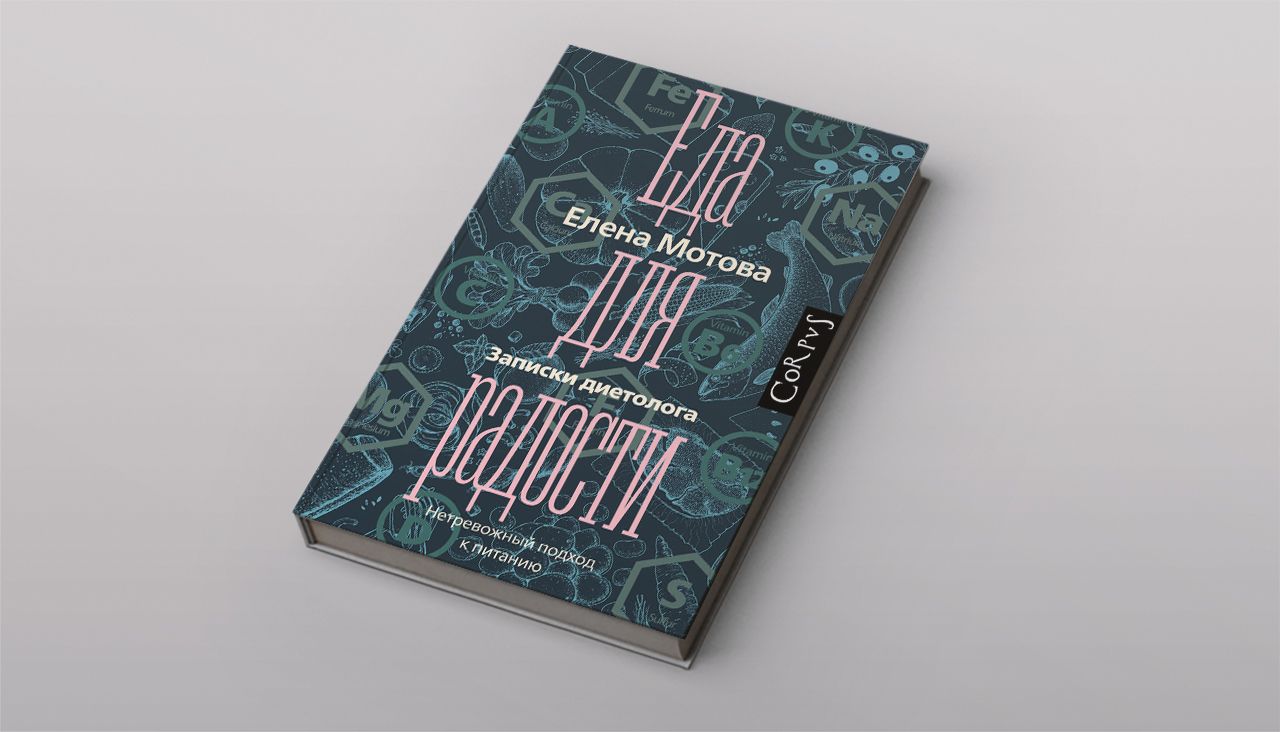
The ideological message of the book of nutritionist Elena Motova cannot be called especially original. In the most general form, it boils down to a rather obvious thesis: nutrition is such an area where there is nothing unambiguous, objective and universal, which means that any strict prescriptions and prohibitions can only give rise to anxiety, but not contribute to health and longevity. Eating varied and balanced, avoiding extremes and maintaining the proper measure of openness to the new, we will achieve the optimal result without excessive efforts.
However, if the very main idea of “food for joy” looks boring and predictable, then you can’t say this about the argument that the author involves it for justification. Elena Motova convincingly explains where the ideas about the exceptional utility of green tea or, say, fat (in short, from incorrectly read and one -sidedly interpreted studies) tells how eating disorders are formed (first of all, Orthorexia is painful insanity on healthy nutrition), carefully casts doubt on the fashionable concept of “superfuds” ,, Gluten rehabilitates (whose intolerance, of course, is found, but rarely) and incendiary praises legumes. Not so much starting from the common stereotypes as using them as a starting point, Motova confidently forms his own view of food, which he herself characterizes as “non -combustible” and based on an unbearable attitude to the body.
However, you should not think that non -rulousness involves joyful permissiveness and total legitimization of fast food, deep processing products or, say, alcohol - neither one nor the other or the third will never be useful or completely safe (and the author in detail, attracting the latest scientific data will tell you why this is how it is, and not otherwise). However, abandoning a hard, prescriptive approach in favor of a soft, descriptive and explanatory, Elena Motova allows you to see the sphere of food as a space is much more sunny, comfortable and friendly to a person than we used to think.
Max Histings. Vietnam. The history of the tragedy. M.: Alpina Non-Fix, 2020. Translation by I. Evstigneeva
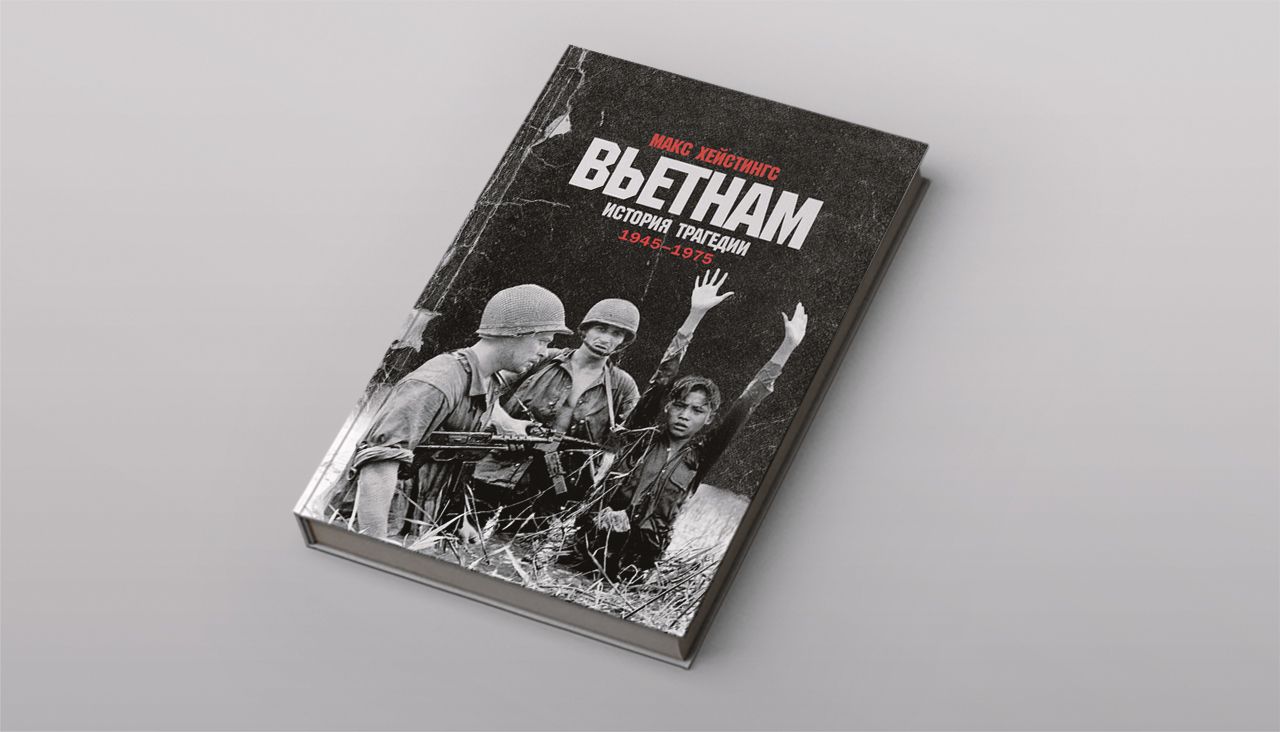
The work of the British journalist Max Histings, the author of many books on the history of the war of the twentieth century, is amazing at once with two things: firstly, a scale, and secondly, an amazing external conservatism in today's times. With a truly Mommzen thoroughness, Histings begin to present the history of Vietnam from the end of World War II in 1945 and until the fall of Saigon under the blows of the Severovetnamian troops in 1975 so that the monumental holistic picture has developed from many scattered details, which ultimately developed. Without resorting to assumptions, not abusing a direct speech, not trying to climb into the head of his heroes, without idealizing anyone and generally trying to maintain objectivity and reliability by all means, Histings clearly sets himself the task of closing the theme of Vietnamese wars for a wide reader - and in general it copes well with it.
But do not give the restraint and apparent detachment of Histings to mislead you: his book is deliberately built in such a way that, among other things, calls a powerful emotional reaction in the reader. Avoiding the deliberate “artistry” and other cheap tricks, the author of “Vietnam” achieves the desired effect differently - mainly due to verified compositional solutions. So, for example, telling the history of the catastrophic defeat of the French in Dyenbienf, Hestings so masterfully alternates the bloody battal episodes with scenes of negotiations in Geneva, where the further fate of Vietnam is being decided, which occasionally seems to be a bewitching musical rhythm through the text. And consistently refusing to choose “favorites” (with genuine warmth, Haystings responds, perhaps, only about Winston Churchill - all the other historical characters, that the military, that civilians, do not cause him much enthusiasm), the author, nevertheless, manages to create a strikingly bright gallery of heroes that cause sympathy and, if not sympathy, then, in any case, understanding.
Olivia Lang. Travel to the source of the echo. Why are writers drinking? M.: Ad marginem, 2020. Translation by E. Berezina
If you are really interested in a short and simple answer to the question, put in the title of the expanded essay of the Englishwoman Olivia Lang (the Russian reader knows her from the books “Lone City” and “Under the surface”), then be prepared for disappointment: you will not receive it. All the heroes of Lang (in the focus of her attention, six of the most important American writers of the twentieth century) drink for various reasons.
Tennessee Williams burdens painful shyness and torment children's injuries, Hemingway turns out to be deceived by his high tolerance to alcohol, Francis Scott Fitzgerald flies by Gina, John Chiver, hidden homosexuality and painful insecurity in tomorrow. One of them reproduces the parental pattern of behavior, someone becomes the first drinking person in the family. Someone fights with his ailment (for example, Chiver managed to free himself from dependence at the end of his life), and someone, on the contrary, collapses into the abyss of alcoholism with a sense of peculiar relief. Someone rushes from unbearable insomnia (the most terrible and powerful pages of Fitzgerald are devoted to her), and someone falls into the most severe psychosis.
However, through many differences in all the subjects of the writer's drunkenness that Olivia Lang, something in common appears before the reader of Olivia Lang. The biography of each of the heroes is always the history of human vulnerability, which, according to Lang, is inseparable from literary talent and is implicitly present even in such brutal figures as Ernest Hemingway or Racond Carver. It is this fragility hidden from an external glance that opens the loophole with alcohol, which first supports, comforts and inspires, but later turns into a uniform curse. By applying fragments of writing biographies on the experience of drunkenness in his own family and scientific data on the causes and consequences of alcohol dependence, Olivia Lang, in fact, goes beyond the stated topic: her book, chamber and quiet at first, closer to the final, is transformed into a large -scale study of the nature of dependence and its dark, mysterious connection with human giftedness.
Marianna Wolf. Proust and squid. Neurobiology of reading. M.: Hummingbird, ABC-Atticus, 2020. Translation by E. Softkova
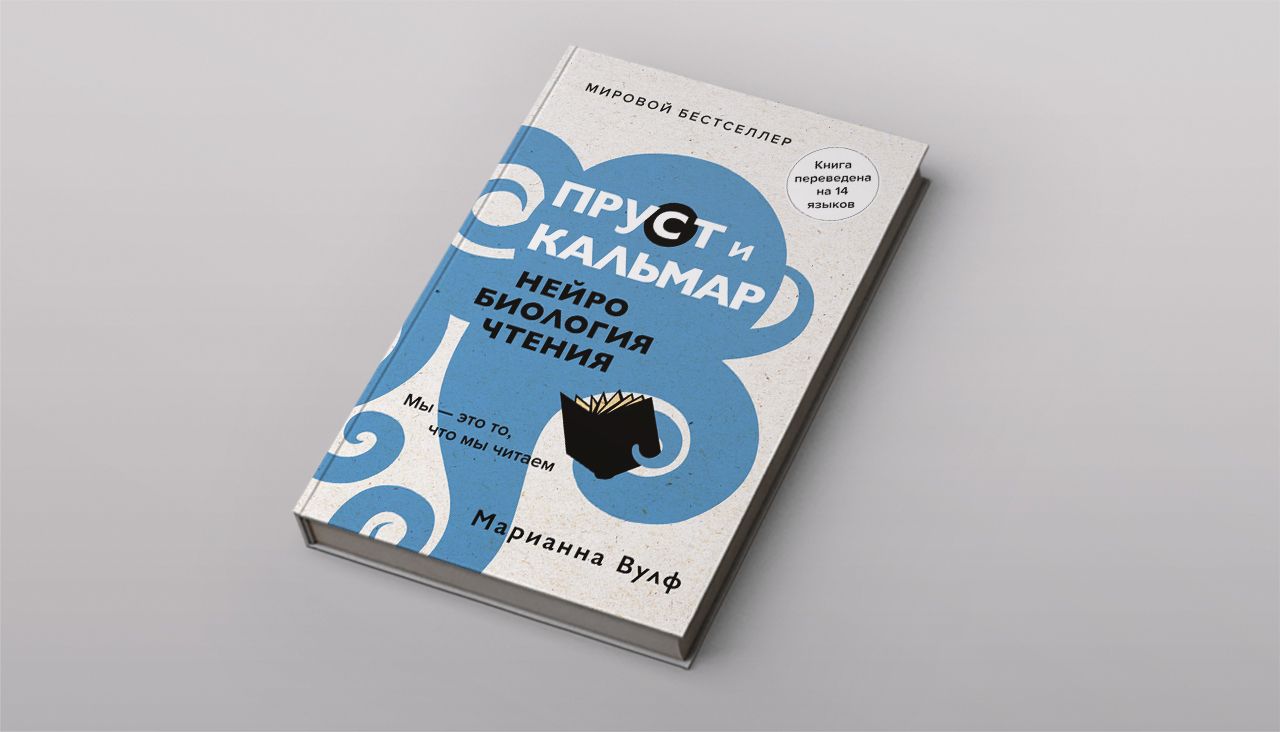
The ancient Greek philosopher Socrates was a convinced opponent of writing, believing that the alphabet would become a killer of human memory, and the widespread spread of literacy will lead to irreversible changes in the human psyche. Paradoxically, the author of the charming and deep book “Proust and Kalmar”, an American researcher, a well -known neurophysiologist Marianne Wolf in many ways agree with Socrates - the difference in their positions, perhaps, concerns only the sign. The letter really significantly changes the human brain, however, according to Wolf, these changes are beautiful, amazing and, importantly, now they are in danger.
Proust and squid, a key to the author, metaphor. Proust personifies the intellectual and cultural aspect of reading for her, while the squid is the underlying neurophysiological processes, and Marianne Wolf tries to look at his subject at once on both sides.
From the point of view of “Proust”, the story of reading and writing is a history of victories, breakthroughs and achievements. Organically, we are not created to read, and nevertheless, in some two thousand years, having traveled from primitive tokens to the most effective alphabet, humanity has opened the space of endless plasticity of its own brain, released a tremendous resource-and directed it to achieve the most ambitious goals. In a sense, all modern civilization is based on the ability of a person to read.
From the point of view of Kalmara, the situation looks more complicated. We already know something: for example, a Chinese who grew up in a hieroglyphic written tradition, and a European who is familiar to phonetic alphabet, during reading different areas of the brain work. Reading, we construct the most difficult neural connections, so the same text will be differently understood by people with different reader experience. However, many areas still remain a mystery to us: in particular, we still do not understand the nature of dyslexia-and, accordingly, we cannot evaluate that the brain acquires (and whether it acquires), losing the opportunity to read.
It is this last circumstance that leads us to an important conclusion for Marianne Wolf. In today's world, which is rapidly moving from the “letter” content to the visual, we are on the verge of a new global change, which will affect not only the “Proust”, but also the “squid”. And in this situation, it is especially important to understand how, in the process of this great (and, like inevitable) transition, to preserve everything valuable that the “reading brain” has developed.
Lucy Warley. Purely British murder. An amazing story of national obsession. M.: Sinbad, 2020. Translation by E. Autumn
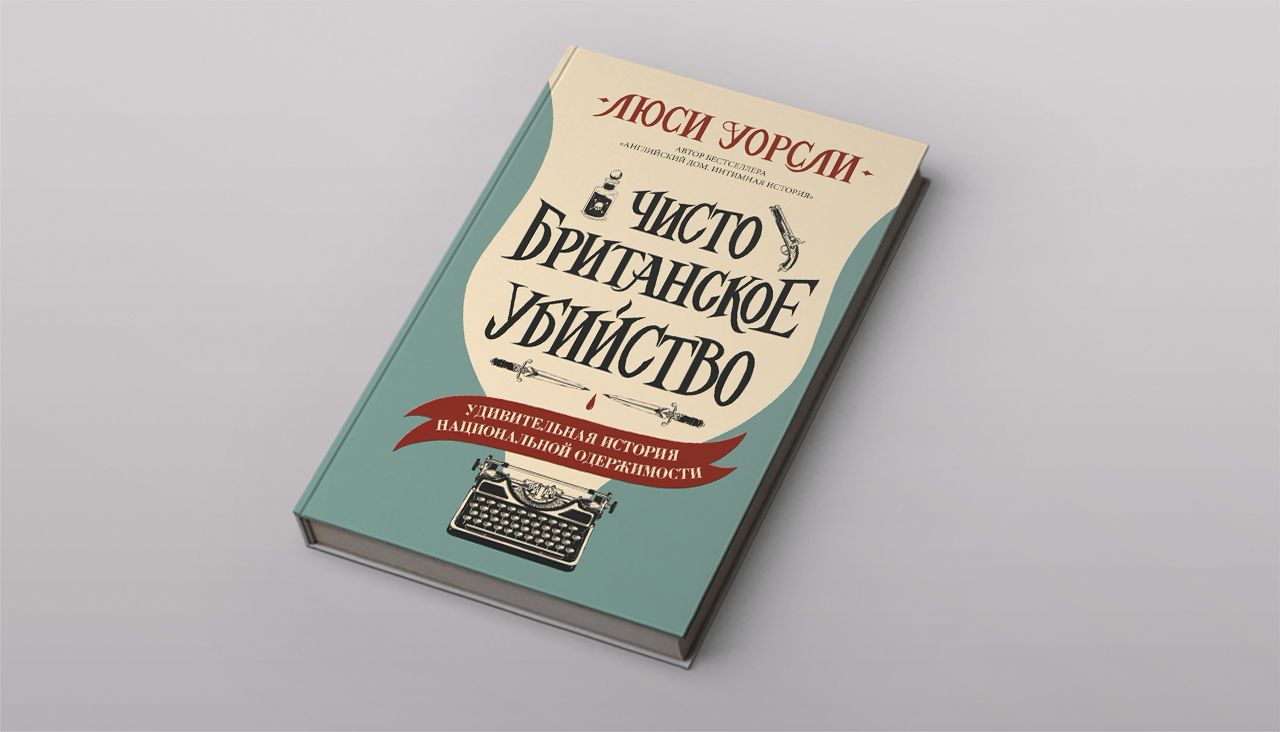
Lucy Warley is known to the Russian reader with his book about the structure of the English house , as well as the charming biography of Jane Austin, built as a mental trip to the homes in which the life of the writer took place. This time, Warsley turns to another most important English cultural universal - to the great national hobby of murders and, indirectly, a detective genre.
According to Warley, the origin of this mania, which captured all the layers of society at the turn of the XVIII -XIX centuries and almost exhausted by the middle of the century, is associated with two events: the rapid growth of cities and the spread of the ideas of romanticism. The first entailed an increase in social tension, an increase in crime, and after this-the creation of a professional police designed to monitor the order (today it is difficult to believe, but until 1829 in England there was nothing at all like some kind of police in the modern sense, and no one was engaged in the investigation of crimes as such until 1842). The second forced the audience with painful and hot interest to peer into the mysterious abysses lurking in the human soul, and turned criminals into a rock star of its time, and trade in “criminal” souvenirs-into a profitable business. So, the famous “Red Ambar”, where in 1827 a loud murder of a young woman took place, was pulled into pieces and sold to onlooks in just a few months.
Lucy Warley's book is primarily a collection of fascinating stories and observations, and not a serious attempt to comprehend and analyze the roots of British insanity on criminal dramas from a social or psychological point of view. And this is her indisputable dignity: to offer any consistent concept that describes a phenomenon of this scale is hardly possible. But to read about the early attempts to create anti -criminal structures, which are initially almost indistinguishable from the gangs of street racketeers, about the most high -profile crimes of the Victorian era, about the role of Charles Dickens in the "rebranding" of the London police and about the hidden elitism and xenophobia in the novels of the Golden Age Detective (Agatha Christie, Doroti Sejers and others) is a continuous pleasure.
Galina Yuzefovich