
Translated material
"Fireverker"
The mysterious fate of the most unknown marshal is not a single feat, not a single victory, tragic death. Part I
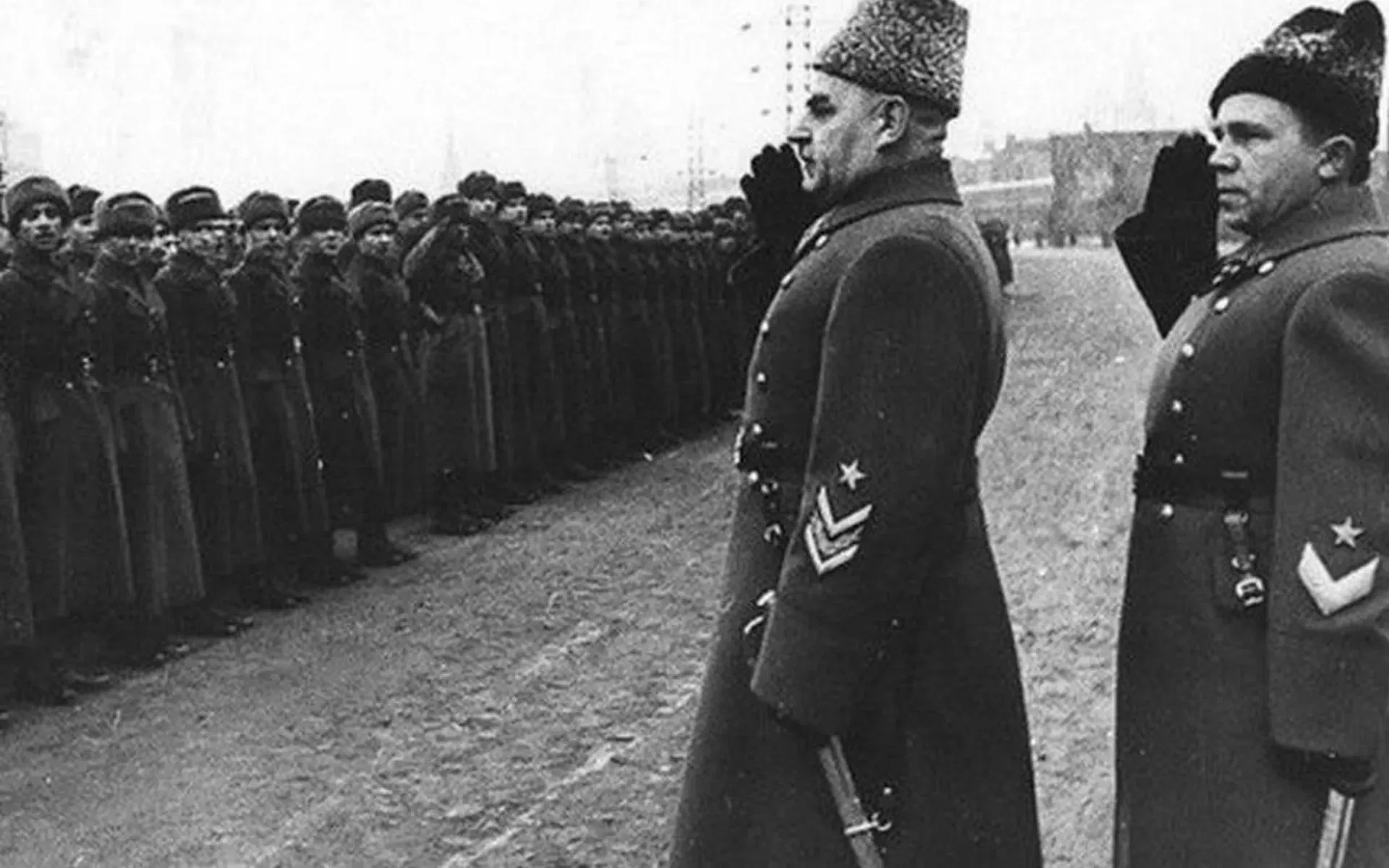
On June 23, 1941, in Moscow, no one understood what was happening on the borders of the country, and the General Staff issued directives that ordered the troops to destroy the invaders, but in any case, Stalin made an act of state wisdom to the neighboring territory: he sent three marshals, Shaposhnikov and Kulik to the Western Front at once. For the leadership on the spot.
Everyone soon had to withdraw due to complete meaninglessness and even the harmfulness of their stay there. Rather, two: the third, deputy. People's Commissar of Defense Kulik - disappeared.
The front headquarters knew that Grigory Ivanovich arrived in the location of the Office of the 10th Army. The stream of obscene curses, collapsed by the cakes on staff generals and colonels,, of course, stunned them, however, they most likely well deserved it; So the knowledgeable people write. Then Kulik left for the troops and since then has not served any news of himself. Finally, at 6 o’clock 45 minutes on June 30, the head of the General Staff Zhukov, in a conversation on Bodo, ordered the commander of the front to immediately find out and report where the marshal was. Pavlov sent a group with a radio station to the wanted list. Unsuccessfully…
Running far ahead, during the first court, the famous judge Ulrich began to be inquired at Kulik:
Ulrich: You have no criminal connection with the German command?
Kulik: categorically not. There was only one thing - in intelligence there was evidence that the Germans were looking for me, because they believed that I was surrounded and began to command a partisan detachment.
I also recall-in one village one of the local intelligentsia recognized me, probably a rural teacher. He asked me: "Are you Kulik?" I replied: "No!" After that, we immediately flew out of the village.
Ulrich: In what kind of village, the area was it?
Kulik: Somewhere in Belarus. I don't know for sure.
Ulrich: Have you met with German soldiers?
Kulik: In one place they came across German tanks. Immediately back. And they escaped. I did not meet with any German soldier surrounded, I did not talk to any of the Germans.
Ulrich: How much did you stay in the environment?
Kulik: Twelve days.
Ulrich: Were there dressed up?
Kulik: Yes, changed into peasant clothes.
Ulrich: Partyer, other documents, were the orders with you?
Kulik: No, there were no documents with me. I also flew out of Moscow without documents. It was difficult to go out. Dear, I rubbed my legs so -so that I could not go. I even wanted to shoot myself ...
But the marshal still got out of the environment. Pavlov breathed a sigh of relief, although his personal fate, the happy salvation of Kulik, alas, did not make it easier.
In November 1957, Khrushchev at the assembly of the asset of the Moscow Regional Partyerganization said, I quote on the transcript: “The Belarusian Front fell apart, the commander was shot. True, now he was rehabilitated, he is not a traitor, but the fact that he was a fool and a drunkard could not be in doubt. (“Who, name the last name?” - voices from the hall were heard.) This is the commander of the Belarusian Front Pavlov, who was convicted and executed for the collapse of the front in the early days of the war. I knew little Pavlov. I once met him in Kharkov at T-34 tests. He was then commander of armored troops. I then told Stalin that such a commander makes a very disadvantage. I look, he is appointed to Belarus. ”
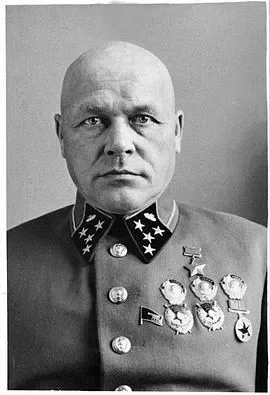
In fact, after a business trip to Spain, Pavlov was considered a very promising commander and really made a stunning career. But let's leave the assessments on Khrushchev's conscience. Whether the army general Pavlov was to blame for the collapse of the district (and later the front), I will not dare to say. Whether more other military leaders drank - I also doubt it.
But the fact remains. In July 1941, he was convicted and shot, having previously said to himself and those around him everything that the investigator was able to come up with. Including Kulik (with which he contacted Spain) spoke. But then everything worked out for the kulik. I suspect that then the biography still helped him much: the first equestrian remained for a long time a “lifting stick” and an inexhaustible reserve for the highest military personnel. Budyonny, Voroshilov, Tymoshenko, Schadenko, Tyulev, Kulik is the same ... During the war, they, however, did not show themselves (softly), but the former proximity to Stalin clearly compensated for a certain lack of military talents. Until it became burdensome even for the leader.
(Khrushchev: “We also shot Marshal Kulik. It was an honest man, but, of course, it was impossible to entrust him with artillery. I know how he commanded the army, and Stalin sent him to our front. I immediately told Stalin why he was sent to us. He was then released and shot why Stalin nominated him? Because when Staling was in the first days of the revolution Then the Kulik was commanded by artillery, but at that time there were three guns in this artillery, and he had the mind to command the whole artillery of the Soviet Union, for this great business he said to Stalin about this: “No, you don’t know, he is brave. The soldier, and the commander also needs the mind, because the life of thousands of people depends on it.
He can show courage and die, but what fool his brave death needs when he puts thousands of people with his courage. ”)
... In general, Kulik was also shot. But when it will be!
From the transcript of the meeting of the Military Council in the People's Commissar of Defense of the USSR. June 1–4, 1937. They just exposed the “Tukhachevsky group”, so the situation, of course, was nervous. We must understand that everyone was related to everyone and all therefore were part of a “group of special risk”. Having begun to read a thick volume of the transcript, you understand that this is a long and bitter play by Shakespeare's intensity, and even to cut it off on someone’s replica is physically difficult.
Stalin: for example, Efimov ( the head of the main artillery department arrested on the eve, was executed; rehabilitated. - P. G. ) called Kulik. We asked: "He called him correctly?" He said he was mistaken. "Why?" - “It seemed to me that it could be recruited” ...
Kulik: Comrades, I'll start with myself. For some reason, Efimov mentioned my last name in his testimony, but you, comrades, know that, starting since 1918, I fought against Trotsky under the direct leadership of Clement Efremovich and comrade. Stalin. And as Trotsky shot Clement Efremovich, I instantly flew. At that time I wore a beard, and Trotsky said: "It is necessary to remove this beard." When I was wounded near Tsaritsyn, - I will tell you, - I was afraid to go through Moscow, I thought that they would shoot me. And now Efimov mentioned my last name, and when they asked me, I did not believe it right away. I think this is a provocation. Efimov’s testimony, what we read, and what I find is no-no-no. He takes the wrong way.
Comrade Stalin, you do not understand my situation. When Belov came ( then - the commander of the Moscow Military District. - P. G. ), I sighed with relief. Comrade Stalin, had to work underground. I can lead, and they say to me: "Sorry." They have favorites. I am 16 years old in the same category. Tell me, the comrades, frankly, are sitting here: one army commander, another army commander, the third army commander. Why was they grinning me? How did I finish the academy, did you, Clement Efremovich, reported? And this is because Gamarnik reported ... And when the question was raised regarding all this, I wrote you an official report, comrade. People's Commissioner. How did people put forward? Here is the same Turovsky, cigarette - this is the insignificance in military affairs. What are they, at least the same cigarette?
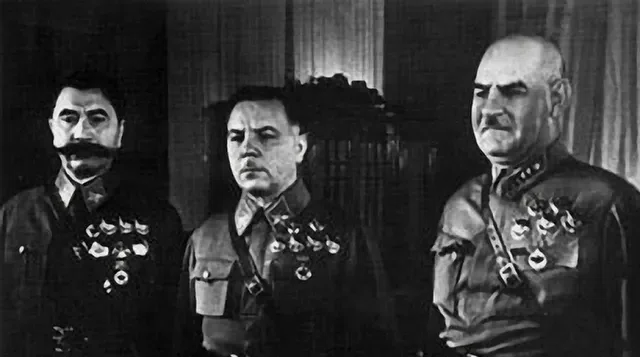
Stalin: There is nothing but a mustache.
Kulik: And is Turovsky? And whoever defends Zhelevich here, let him say what a coward it is: I have been to him in battle, this is a coward.
Voices: That's right.
Kulik: And they cannot command cowards in the army. I remember when I was from Budyonny, when Trotsky took me off, and the arrived Ordzhonikidze restored when I commanded the army under the corner ... (so in the transcript), so he escaped. This is such a jerk.
Voice: That's right. He is a large coward.
Kulik: And Yakir? This is such a bastard ... Look how the forces were set up. I never went to the gamarmary. Then, when they called Govorukhin, how did they want to present the case? I drank wine and brought the woman, so they wanted to compromise me (laughter) ... not in that sense. They said that I am a mediocre person. Well, there is some kind of UNITERIK, Feuerweicer! Clansevich called me so firewall. And the "leader" Ukrainian Yakir never gave his hands. When Belov conducted the teachings last year in the fall, how they ran everything to compromise this teaching.
Voice from the place: And how they howled!
Kulik: I want to ask such a question, comrade Stalin. What did these bastards hoped for? After all, I would hang it with my own hands, I would not allow them. We are all - Efim ( apparently, Schadenko. - P. G. ), Semen Mikhailovich ( Budyonny, P. G. ), Dybenko, Lewandovsky - we knew, and I personally considered the most bastard the gamarmary. I considered him an enemy, he could not look in my eyes. Kork ( commander of the 2nd rank, shot along with Tukhachevsky, rehabilitated. - P.G. )-generally a fool in military affairs.
Voice from the place: Put, he is not a fool.
Kulik : No, Cork in military affairs is an illiterate person, he does not know technology.
Budyonny: He only knew how to ask questions.
Kulik: When I arrived from Spain, I was offered to go to the bomber to Zabievich. I said: "It’s better to go to command a company, but I won’t go to Ubhevich." I then came to you, Comrade. Voroshilov, and almost cried. The only where I wanted to go is to Comrade. Belov ( however, he was also shot soon. - P. G. ) ... I was at your dinner, comrade Voroshilov ... They probably did not allow me to the Moscow district because they knew that I would hang them. And when I said at dinner that the first bastard is a gamaric, you told me: "You are mistaken, Yakir is a bastard." What Bolshevik-Commander can hate the Bolshevik? He hated me and considered it your agent, Clement Efremovich. It would seem that the case pulled up, everything is in order; And then they beat, but for what they beat - I don't know ...
Egorov ( Marshal of the Soviet Union, head of the General Staff of the Red Army . - P. G. ): And I must say, comrade Grigory Ivanovich Kulik, that on the last military council on the sidelines, after Tukhachevsky’s speech about combat training, you said: “Brilliant speech!” ( General laughter ). And then you are silent about it. You need to have the courage of the Bolshevik, Grigory Ivanovich, to call a spade a spade. Here Schadenko sits ( judging by all the responses, a patented bastard, early management of the Red Army. - P. G. ), he can confirm ... I also want to tell Tyulenev. You are sitting and shaking your head when someone talks about what happened. And I ask you: "Why did you say the same?" We met three or four times with Tukhachevsky, drank ...
Tyulenev: Once only.
Egorov: What once there! Didn't you talk about the brilliant guide to the repayment of the Tambov uprising? ( General laughter ) That's right, after all, I'm not saying in vain. These individual points created a halo around Tukhachevsky.
And Meretskov! ..
We will rest. Brief certificate:
Belov Ivan, commander of the 1st rank. He was a member of the judicial presence on the Tukhachevsky process. Shot on July 29, 1938. Rehabilitated.
Gamarnik Yang, Army Commissioner of the 1st rank , deputy. People's Commissar of Defense, Head of Glavpur. He shot himself before arrest.
Dybenko Pavel, the first People's Commissar for Naval Affairs, the commander of the 2nd rank. On September 10, 1937, Dybenko was removed from the post of commander of the Leningrad Military District, but then restored. In January 1938, he was re-displaced from the post and dismissed from the army, accused of moral decomposition and drunkenness. After that, “in the order of the last test” he was appointed deputy commissar of the forest industry of the USSR. He was arrested on February 6, 1938, underwent fierce torture, wrote repentant letters to Stalin. Shot in six months. Rehabilitated.
Uritsky Semyon, commander, deputy. commander of the Kharkov military district, member of the CEC of the USSR. Shot. Rehabilitated.
GARKAVA Ilya, commander, commander of the Ural Military District. Shot. Rehabilitated.
Kuzhevich Jerome, the commander of the 1st rank, commander of the Belarusian military district, was shot with Tukhachevsky. Rehabilitated.
Yakir Iona, commander of the 1st rank, commander of the Kyiv military district, was shot with Tukhachevsky. Rehabilitated.
Egorov Alexander, Marshal of the Soviet Union, head of the General Staff of the Red Army. Shot on February 23, 1938. Rehabilitated.
Lewandovsky Mikhail, commander of the 2nd rank. Shot on July 29, 1938. Rehabilitated.
Meretskov Kirill, the future marshal of the Soviet Union, in 1937, deputy. Head of the General Staff. In June - September 1941 - under the investigation, he was tortured, damaged by the spine; They say was the only one to whom Stalin allowed him to report to him - sitting. He died in 1968.
Over the years of World War II, a total of 423 generals and admiral died on all fronts in total, in total. We will deduct those who died from diseases, 20 died as a result of an accident, three committed suicide under circumstances not related to hostilities, 18 were shot and subsequently rehabilitated ... directly “at the hands of the enemy” 357 generals and admirals died.
It is difficult to imagine, but only in two years the great terror of the “decline” of the highest leadership of the Armed Forces was more than two times more!
Moreover, even surviving the 37th year two colonel general, three lieutenant general, 11 major generals and one Rear Admiral were arrested before the war itself. Soon after its beginning, 15 of them were shot without trial, and two died during the investigation. Given these data for the five -year period, “losses from their own” amounted to 943 people or 85% of the total number of the general on the eve of the Great Patriotic War. All of them suffered innocently and subsequently officially rehabilitated.
We will be fair, efforts to eradicate the enemies of the people in the army were attached long before 1937. But in the 37th, the concentration of these enemies and the increased qualifications of the investigating authorities reached an unprecedented scope and led to discouraging results.
N. Kuibyshev, commander of the troops of the Transcaucasian Military District, at a meeting of the Main Military Council on November 21, 1937, said:
- Today, the captains command three divisions ... But this is not only the case, one before that he did not command not only a regiment, but also a battalion, he commanded only a battery.
To the question from the place: "Where did the commanders go?" Kuibyshev with gloomy humor replied: "Everyone else was transferred to the NKVD department without training certain posts."
Two months later, Kuibyshev was arrested and shot another six months later. The places of exposed and executed enemies were occupied by trusted people.
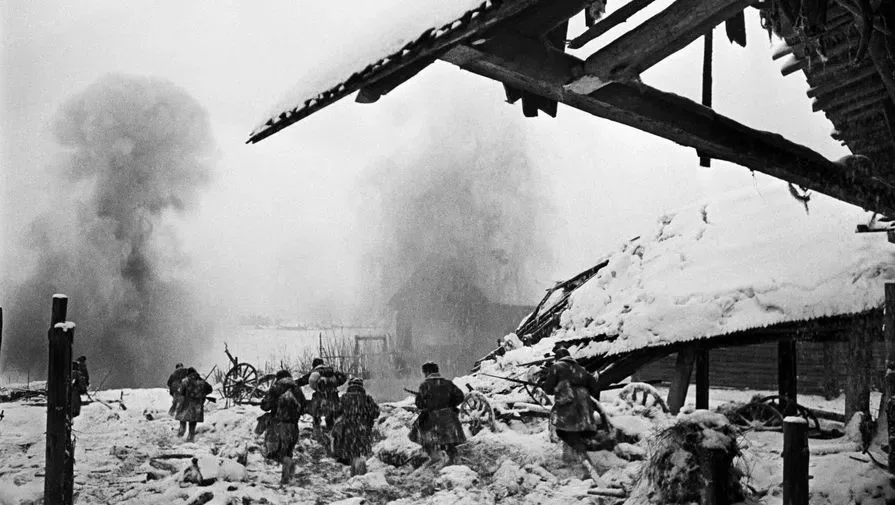
After the death of the future main marshal of the artillery, N. Voronov will find his notes: “The ridiculous reorganization of GAU, the idea of G.I. With a kulik, when all the "artillery farm" decided to concentrate in his hands. I was appointed first deputy, G.K. Savchenko - second, and V.D. Grendal - the third. In the new structure, we had to make a kind of opposition, “triumvirate” on important and fundamental issues, as opposed to the early, ill-conceived “strong-willed” decisions of our leader ... G.I. Kulik was a little man, who imagined a lot about himself, who considered all his actions infallible. It was often difficult to understand what he wants, what he achieves. He considered to keep his subordinates the best method of his work. His favorite saying when setting tasks and instructions was: "Prison or Order." In the morning he usually called many performers, very vaguely set the tasks, and threateningly asking “understandable?”, Ordered to leave the office. ”
The subordinates, after listening to the confused instructions of the kulik, respectfully trumped, went to Voronov or Savchenko, and they tried to somehow translate instructions into Russian. Most often they succeeded.
By the way, Savchenko at a meeting of the commission on the issue of military ideology on May 13, 1940 dropped: “... I must directly say that we have not been customary to talk about the positive qualities of the enemy. If I collect my assistants and respond to the forms of work of foreign armies positively, I know in advance that out of ten present nine will write a report. ”
Mehlis: You exaggerated here, but they will write 2-3 people.
Even if the head of the Political Administration of Mehlis and rights, two or three “reports” were enough. A year later, with a small (the war was already going on), Comcor Savchenko was arrested and on October 16, 1941, without a trial, he was shot in Kuibyshev. Rehabilitated.
The ending follows.