
Translated material
Pick up a person from the street
Why saved people help you become happier
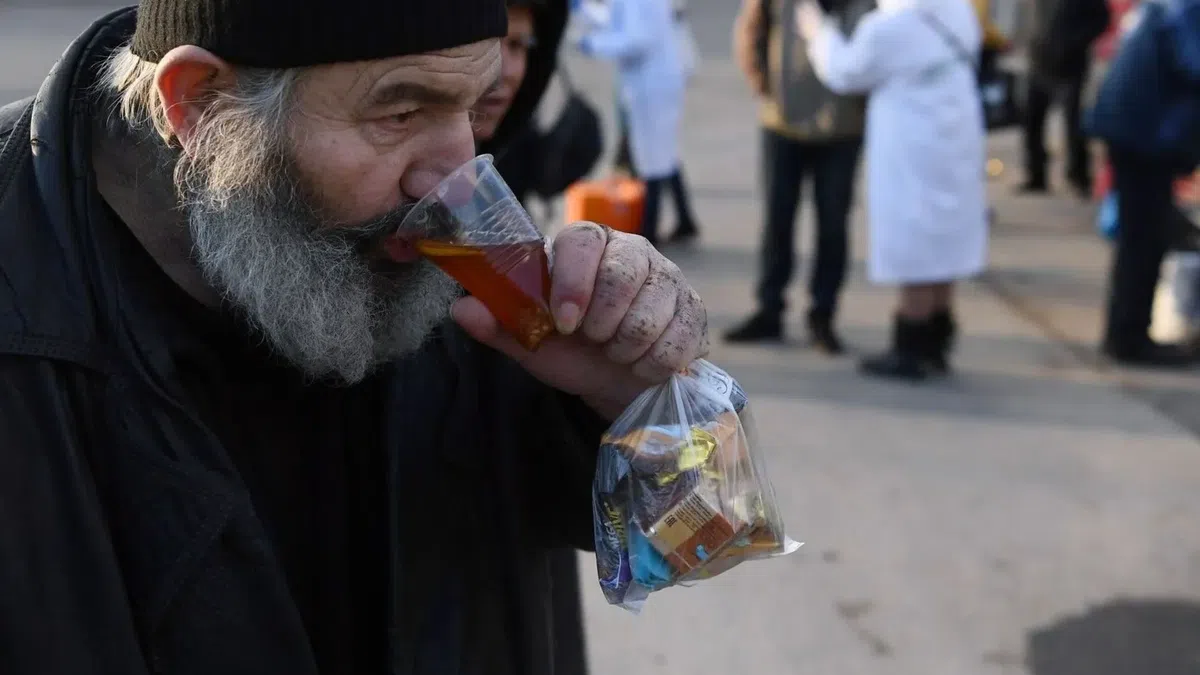
... What is common between silver earrings with coins of Terrible and verses of Moscow poets read by authors, modern painting and musical numbers of famous performers? Only one thing is the Christmas Trinity Auction and the concert that go on-line in favor of the shelter for the homeless “warm welcome”. For the sake of saving those who do not have shelter and bread in winter, the long -standing tradition of the Trinity Church in Hokhlah, introduced into the parish life of the rector, Archpriest Alexei Uminsky.
“On Christmas, everyone is a little wise ...”, which means - donors. Why it is worth helping this particular shelter of "New" was told by its founder Ilya Kuskov.
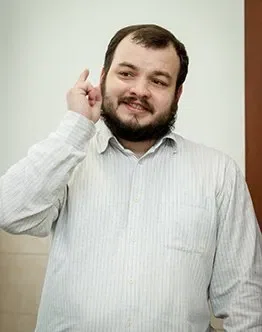
- This year, the shelter is especially difficult. What happened?
-When the coronavirus happened, many people were in a very serious condition: the part-time jobs disappeared, the work stopped, the homeless, who used to rent at least some area, went to the street. The crisis also touched our philanthropists - their business began to crumble. So our main source of financing disappeared. But now to close a shelter for many homeless people will be a tragedy.
- At first you organized a winter bus for the homeless, then there was an “Angar of salvation”, now a “warm welcome”, what is the internal logic behind these projects, what led you?
- You know, this is the logical development of the same chain. At first we began to work in hospitals, where the homeless entered serious condition, frostbitten, with the threat of amputation. While the person was treated, we tried to arrange it socially: find relatives or a good shelter. It was the start of our work. And then we began to think: why are so many people acting? How to do not bring them to such a serious state? The mercy bus appeared, which traveled and gathered freezing people from the street. The bus began to attract a lot of people, it was impossible to help everyone. To solve this problem, the Angar of Salvation was opened. We received invaluable experience and knowledge, and then finally opened a shelter. If we had no previous experience, then it would be difficult to make the work of the shelter effective.
- What knowledge came in handy?
- First of all, an understanding of the problems of homeless people, their lives and characteristics of character.
- Historians of people who are now in the shelter can be classified?
- Everyone can be on the street. We recently came to us from the hospital. He received a traumatic brain injury and stopped navigating in space. He is absolutely normal, adequate, contact, but does not understand, neither where he is, nor nothing with him. He has no documents. Now we have ended with a quarantine in coronavirus, and we will go to the UFMS, we very much hope, by the last name that we have, we will be able to restore his passport and find relatives, his house.
And & if we talk about the typical ways of hiding, the main reason is & systematic deception in the labor market.
In construction, where there is a continuous deception, in the housing and communal services system, where there are also a lot of unscrupulous attitude towards people: they take to work without registration, they are fed with promises, and as a result - they do not pay salaries. From the point of view of business - saving resources, and in fact - the production of homeless people. It is according to such a scheme, faced with regular deception, a normal working man from the hinterland rolls out into the street and becomes homeless: he cannot find normal work, loses the opportunity to pay for the hostel, begins to drink, gives up, stops washing and becomes typical homeless. It was at this moment that society begins to identify him as a homeless, although he became much earlier, just then he tried to break free, find a solution.
- What is happening to him in the "warm reception"?
- We have three main rehabilitation programs. The first for healthy people is the process of restoring documents, assistance in the search for work, then - the transition to independent rent while maintaining work. The second is for people who require medical care. come with diseases. We treat, if necessary, pay for consultations of narrow specialists and tests. Then the translation into the first or third program.
And the third is nursing, weak, disabled people. We make them in boarding houses. This is a very long process.
Which is very important, all our services are free. Everything is due to philanthropists, so the loss of even one of them is very significant for us. The main paradigm of the work “Warm Admission” is primarily a human attitude. After all, the man was suffering on the street, just tired, dropped his hands. He needs to relax, distract from his problems, feel like a person who is needed by society. Therefore, we try to support a person first of all, to warm, so that he, at least while the passport is restored, come to his senses. And after that, the search for work begins. And when you treat a person in a friendly manner, with love, he begins to believe in himself. We noticed that it is human attitude that is 50% of success in rehabilitation.
- Is this the main goal of “warm welcome” - rehabilitation?
- Yes, our program, first of all, is useful for motivated people, for those who can answer the question - what are your plans in the future? One says: "Now I’ll make a passport and go to work." So, the motivation is soon leaving the street so far is small. And the second: "I don’t know, it will be visible there." We are trying first to take people from the first group. Those who see a clear perspective in which all success depends only on his personal efforts, internal motive. In all other respects, we will support, substitute the shoulder. And besides, people understand: everything that they will earn will remain with them as a “airbag” to which they can rent a room or apartment when leaving the shelter. This is an additional incentive to the successful passage of the program.
The shelter has a social worker, a specialist in assistance in employment, a group of sobriety, which is led by an Orthodox priest. And we have a spiritual nourishment. All these are additional incentives for a person to make a jerk to return to a normal working life. We are betting on long-term rehabilitation for those people who at first have no internal strength to fix anything.
There are statistics: since January 2017, 483 people have passed since our opening through the shelter. 296 of them left, completely recovering, found a job. The negative result is 142. Someone returned to his former life, someone left the quarantine.
- Do you take everyone into the shelter - and with a residence permit, and without registration?
- Yes, the registration here does not matter. And this is the difference between public organizations and state: everything is focused there on the homeless, who had previously had a residence permit of this region. And we try to help everyone.
- You have been engaged in the help of homeless for no first decade. Has society change during this time?
- A lot has changed. When we arrived in 2003 as a project of the mercy bus, there were only a couple of canteens for homeless people, and that’s all. And now, these are 17 large organizations in Moscow, which conduct separate statistics, separate reporting and help people. There is medical care, social assistance, nutrition assistance, assistance in the device. And this suggests that society is humanized.
- Ilya, what exactly prompted you to do this?
- When I still studied at Moscow University at the Faculty of Chemistry, I became a believers. Our temple, Elijah of the Prophet in Nydensky Lane, had a lot of homeless people. It gradually became clear that these are absolutely normal people, they simply fell into a difficult situation. We began to help. There was a hitherto not expressed sense of the meaning of life, the feeling that we are really needed here and now. I was a teacher at the university, a scientist, wrote a candidate, but from whether I was present there or not, nothing changed. And here it was immediately clear: if you stop working, everything would stop and people will suffer, you need you.
- What is the story over these years has touched you the most?
- Well, there is such a prize of the Russian Orthodox Church named after Nadezhda Monetova. It is awarded for achieving the homeless assistance. I knew hope well. She was at my place, my wife is familiar with her, and I communicate with her now grown up. When we met, she was in a very difficult situation, she had no housing, she was a child, and she was pregnant with the second. And the church helped her, she bought a small house in the Ryazan region, began to sew linen for the homeless, which we bought, then began to work in one public organization helping homeless. The mother, who drank everything before they found themselves on the street, stopped drinking, returned, they began a normal life. Even in Ryazan, she managed to help the homeless. And now one of them thought that it was not just help from the heart, not just a desire to help a person. And there is some kind of intimate component. And for the refusal, he killed hope. Such a martyrine turned out to be her path. This is probably one of the most piercing stories: it was homeless, burst out, began a new life, began to help the same. And the tragedy broke everything.
- Why help the homeless?
- To live joyfully!
To feel necessary, you must help someone. It doesn’t matter to someone - homeless, poor, & patient - must be helped.
And then all your problems will also be solved. This formula works very effectively. This is such a joyful thing, but it is possible only when you serve someone. Fill your life with meaning, become useful to the rest. And if this turns out, you will be happy.
PS
You can help here.