
Translated material
Julian Assange (so far) will not be given the United States. According to the British court, Americans may not protect him from suicide
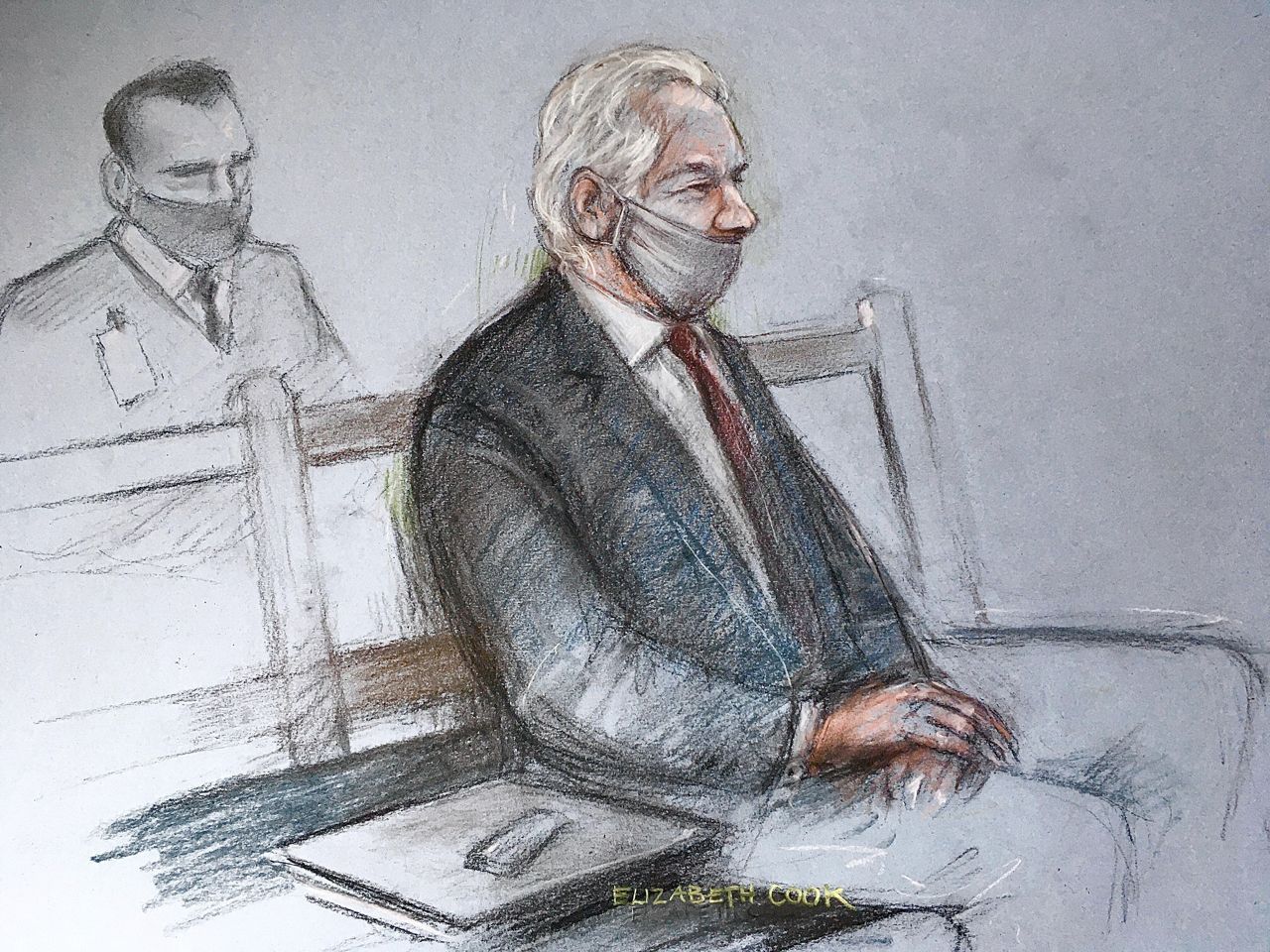
The British court refused the US authorities to extradite the founder of Wikileaks Julian Assange. The American authorities accuse Assange of illegal publication of secret documents, and in total, he faces 175 years in prison for all accusations. However, judge Vanessa Baraitzer considered that in an American prison Assange could commit suicide. At the same time, supporters of the investigator believe that his persecution from the very beginning was politically motivated.
In the United States, Assange threatens 175 years in prison. His supporters consider this a persecution for journalistic activities
The Central Criminal Court of England and Wales, better known as Old-Bely, refused the American authorities to issue the founder of WikiLeaks Julian Assange. Motivating his decision, Judge Vanessa Baraitzer said that Assange "leaves the impression of a person in a state of depression, and sometimes despair, which is afraid for his own future." In her opinion, US law enforcement agencies did not provide sufficiently convincing guarantees that after extradition, Assange could not commit suicide.
In the United States, Assange threatens up to 175 years in prison. He is accused of illegally obtaining the publication of secret data (17 points, up to 10 years in prison for each), as well as in conspiracy for computer hacking (up to 5 years in prison). The accusations are related to the publication of the secret documents of American intelligence and the armed forces, the access to which Assange was provided by the former CIA employee Chelsea Manning (Bradley Manning was named after transgender transition). These papers concerned military operations in Afghanistan and Iraq, including the killings of civilians and torture over prisoners committed by the American military. In addition, an extensive diplomatic correspondence turned out to be in the public domain.
All these documents were published on the WikiLeaks website in 2010-2011. From the point of view of Assange and his supporters, he acted as a journalist-investigator who received socially significant information from the source. Witnesses of defense in court said that WikiLeaks publications allowed them to find out the truth about their loved ones and, in some cases, bring guilty of crimes accountable. The bride of Assange Stella Morris on the eve of the announcement of the sentence wrote that his issuance of the United States would sharply complicate any talk about abuse by the government.
In turn, the US authorities believe that he was involved directly with the organization of leakage and grossly violated many laws. Despite the fact that Judge Baraitzer refused to extradite Assange, she supported American prosecutors that the defendant’s actions were far from journalistic standards. Informant Assange Chelsea Manning was convicted in the United States in 2013, but pardoned by Barack Obama on the eve of his departure from the post of president in 2017. She was again detained for refusing to testify against Assange in March 2019, but a year later they released.
Assange has been in prison for more than a year and a half. The UN Special Power Player for torture accused the British authorities of inhumanity
The criminal prosecution of Assange for various occasions continues more than ten children. The first thing against the founder of Wikileaks was initiated by the Sweden prosecutor’s office in December 2010, in the midst of publications on the site. He was accused of rape during a trip to Stockholm a few months before. The Assange surrendered to the British police, was released on bail, but shortly after the court decided to extradite him to Sweden, took refuge at Ecuador's embassy in London. Assange himself claimed that the Swedish authorities intend to give it to the United States. Soon in this country the first cases were initiated against him. In 2017, the Sweden prosecutor’s office suspended the investigation, saying that he could not finish it without receiving Assange himself, and this is almost impossible while he remains at Ecuador's Embassy.
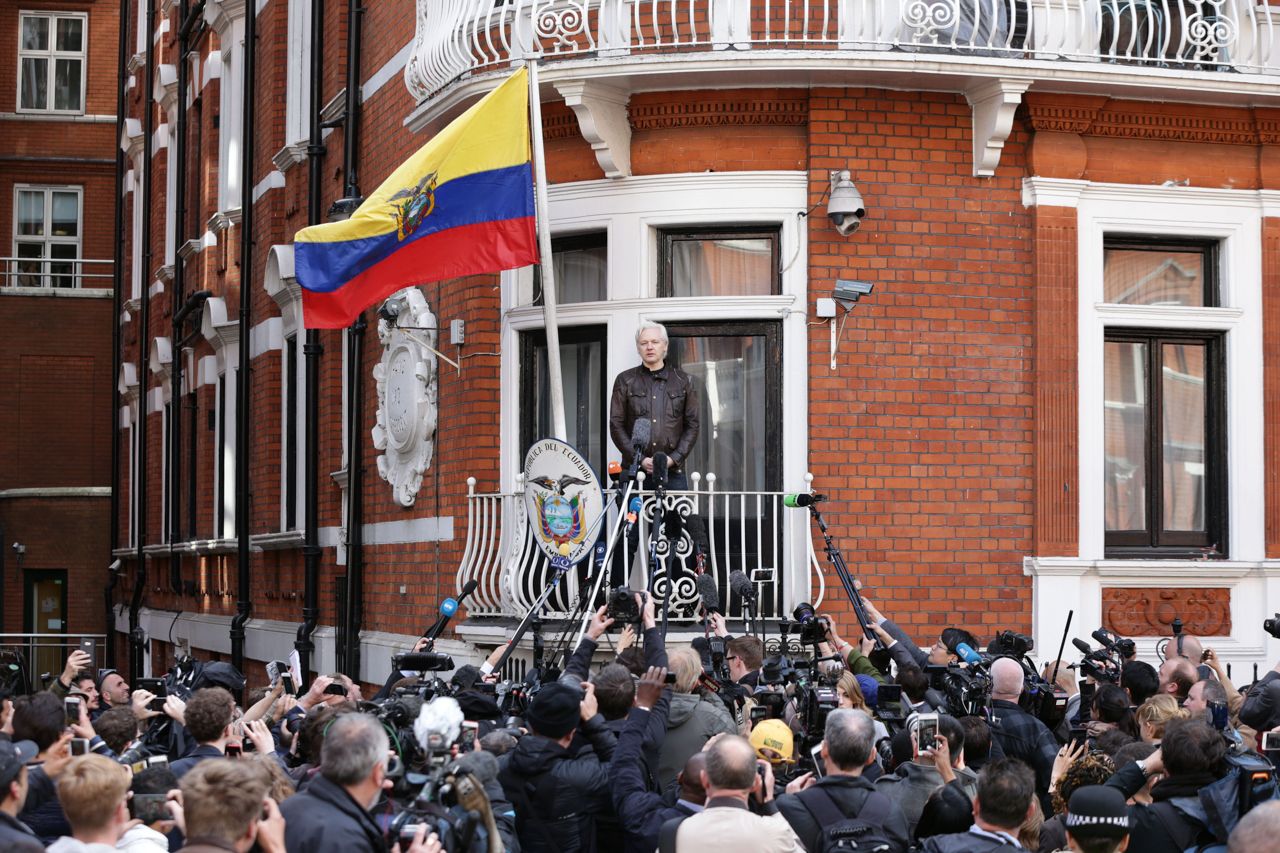
The investigation of the CNN television channel claims that in 2016, during a campaign in the United States, Assange personally led the publication of the stolen letters of representatives of the Democratic Party. We are talking about letters stolen as a result of a hacker attack, which, according to the special prosecutor Robert Muller, was conducted by Russian GRU employees. It is believed that this publication has compromised the opponent of Donald Trump Hillary Clinton. During this work, Assange allegedly met with representatives of the RT television company, where in 2012 he was the host of the World Tomorrow program.
In April 2019, the authorities of Ecuador accused Assange of violating the conditions of political asylum, after which he was forced to leave the building and was immediately arrested by the British police. The court sentenced him to 50 weeks of imprisonment for flight to the Embassy of Ecuador. Soon after, the UN specialist on the problem of torture Niels Meltser accused the British authorities of inhuman handling with Assange and the conspiracy with the US leadership.
The health of the health of the founder of WikiLeaks was also expressed by many doctors who created the Assange Association and, through the authoritative medical publication, The Lancet required his release. Similar requirements were put forward by the journalistic organization "Reporters without borders." The case was carried out by just the judge of Vanessa Baraitzer-and she several times refused the Assangeus to release from the insulator, including when his lawyers said that the risk of infection Covid-19 in prison. Each time she referred to the fact that after the first exit on security, Assange escaped.
Meanwhile, the Swedish prosecutor's office resumed an investigation into rape, but soon finally closed the case, citing a lack of evidence, which cannot be compensated for by the prescription of the alleged crime. But in May 2020, hearings on Assange's extradition in the United States began, at this time his stay in the isolator was extended.
The meetings were repeatedly postponed due to the pandemic of coronavirus, many witnesses were forced to perform in the video, in some cases personal testimonies were replaced by written, some human rights activists did not gain access to the process of broadcasting-according to Judge Baraitzer, due to technical problems. Representatives of "reporters without borders" called the conditions in which the court took place "shocking."
The decision to refuse extradition is very unexpected. But not final
Against this background, few who believed that the court would eventually refuse the US authorities to their requirements, despite the fact that the campaign for the liberation of Assange acquired an international character. She, in particular, was supported by many German politicians. On the eve of the announcement of the sentence, the pickets for the liberation of Assange took place in London, Berlin and other European cities. There were rumors that in the last days of his reign, Donald Trump could have mercy in the last days of his reign (in particular, the UN specialist Niels Meltser addressed him before the New Year), but so far no hints of confirmation from the White House came.
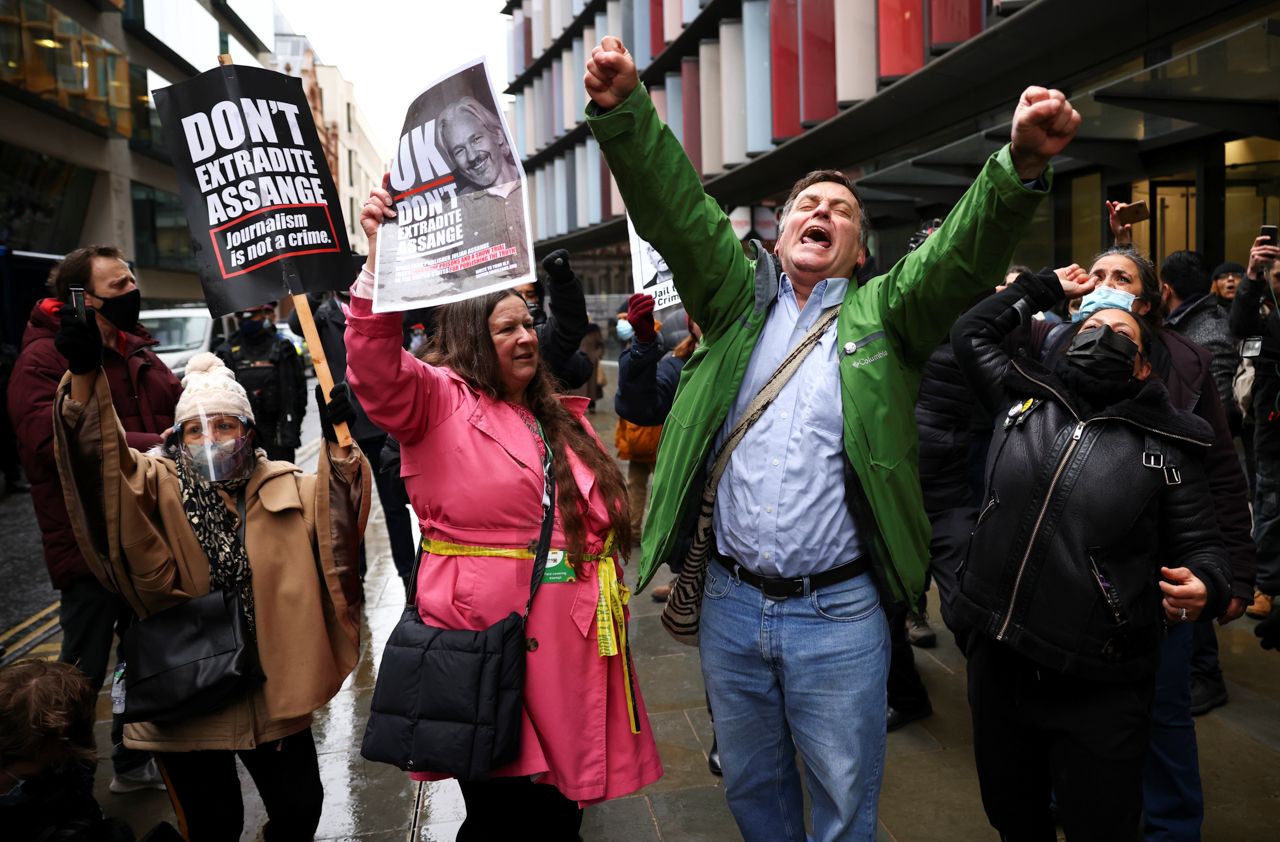
Supporters of Assange, gathered around the court building, met the news about the refusal of extradition with applause. He was also supported by many British politicians, including representatives of the ruling conservative party, who believe that Assange could become a victim of politically motivated persecution. At the same time, “reporters without borders” remained unhappy that Judge Baraitzer agreed with the arguments of the American side about the nature of Assange’s actions. The lawyers of this organization continue to insist that he is being persecuted for journalistic activities, and demand that the authorities recognize this.
Now the US prosecutor’s office has 14 days to appeal the decision. Assange's mother called for abandoning the appeal, calling ten -year trials “sufficient punishment”, but the American authorities have already stated that they would apply for appeal. On January 6, the court must decide whether to let Assange let go on bail at the time of appeal.
Dmitry Kartsev