
Translated material
"Available Environment" goes into the pocket
How Russian officials support themselves at the expense of disabled people: research
In the first part of this material, we told the story of two Yekaterinburg families, where there are children with autism. Both faced the lack of real help in the adaptation of children at an early stage of development. “We have a huge country, we have such resources! When we are listed, the owners of what we are as citizens, I think - where is I all? If we are all so rich, why is one person so poor? " - argues the head of the Fund for Assistance to Children with Autism "I am Special" Alexandrina Khaitova.
Read earlier
Why are Russian cities not more accessible to the disabled?
The New Gazeta presents a fundamental study of the life of families with special children and the “Available Environment” program, which is designed to help them.
In the first part, we said:
-how underestimated the data on the number of children with disabilities in Russia;
- how special children are “survived” from schools;
- As parents themselves try to rehabilitate them (and sometimes achieve success).
Distribution of money
Russia takes 1st place in the world in the area of forests and gas reserves, 2nd place in the world in terms of fresh water and coal reserves, 6th or 8th place in oil reserves. At the same time, according to Rosstat, in 2020, 20 million Russians remain beyond the poverty. A significant part of modern poor people are people with disabilities. Moreover, in some families, not one disabled person lives, but several at once, and this further worsens their financial situation. In addition, most heavy disabled children are brought up by single mothers.
According to Alexandrina Khaitova, “more than enough” is sent to the social sphere from the budget, but bureaucracy “sucks” them.
In 2016, the state adopted for special children the "concept of early assistance." Funds for the implementation of this concept were to be allocated within the framework of the federal program "Available Environment".
“In 2020, the whole program received 59 billion rubles,” says social entrepreneur, economist Leonid Belousov. - We are watching reports on its financing. Here is the subprogram “Improving the system of complex rehabilitation of the disabled”, more than 38 billion rubles are allocated to it. Of these, 35.5 billion is the manufacture and repair of technical rehabilitation tools. A slight share of financing was transferred to the regions, and actually
Less percent of the funds was spent on measures to rehabilitate the disabled, including the “Early Assistance Concept”.
“( Continues ), according to another subprogram, more than 19 billion are sent to“ improve the state system of medical and social examination ”. That is, a significant part of the money, which, as we thought, are additionally allocated to help people, in fact, went on the maintenance of budget organizations and for payment of officials who issue or do not give disability to people. Over the previous years, the structure of expenses is about the same.
The New Gazeta appealed to the Ministry of Labor and Social Policy of the Russian Federation with the question in what volume and for what articles the “concept of early assistance” was financed over the past four years and what results have been achieved.
OFFICIALLY
From the response of the Ministry of Labor - "Novaya Gazeta"
“Since 2019, the regions have been provided with a subsidy for the implementation of measures for the formation of a system of complex rehabilitation and abbreviation of disabled people (disabled children), including early assistance <...> inclusion in regional programs for early assistance-one of the prerequisite for obtaining a subsidy. These funds can be directed to the acquisition in organizations providing early assistance services, rehabilitation and abbreviations, equipment, training of specialists. For these purposes, 554.2 million rubles were laid for 2020–2023. annually"
“In my opinion, the officials again left a specific answer,” says economist Leonid Belousov. - 554 million rubles is the amount of transfers for all regions, including events for all disabled people, and not just children. The problem is that the Ministry of Labor and Social Policy does not lead to specific figures of financial costs for the “concept of early assistance” for all past years, because it simply does not have such statistics, ”he summarizes.
By the internal conviction of the commission
19 billion per year is allocated under the federal program “Available Environment” to ensure the work of the commissions of medical and social examination (ITU). At the same time, parents of disabled children complain about the poor work of these commissions and the lack of confidence in them. Sometimes disability is given at all not to those people who are really laid, and it is impossible to explain it with anything other than corruption, the interlocutors of Novaya Gazeta say. But people often have to “tear their teeth” often their legal benefits.
- You come to the ITU and sit in line. You can an hour, two, you can sit for eight hours.
"Parents roar the roar - do not get disability!"
- says Alexandrina Khaitova. - Personally, we fought for three years to arrange a disability in clearly sick children. Some people die without waiting for disability.
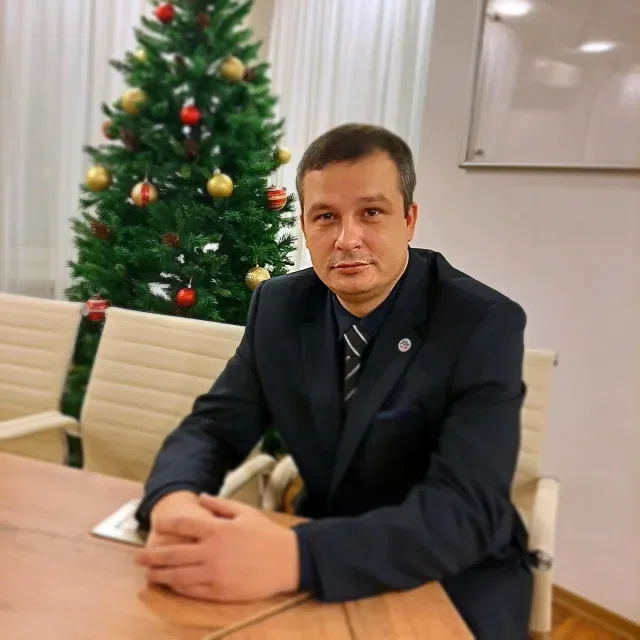
Denis Zhurybed manages the Yekaterinburg organization of disabled people and parents of disabled children “Heart in the Palds”. Denis's daughter is 13 years old, she has a severe form of cerebral palsy. The girl spends most of her life in a wheelchair.

Denis is not satisfied with the quality of ITU. For each person recognized by a disabled person, when passing the commission, an individual development and adaptation program (IPRA) is compiled. All technical means and rehabilitation measures should be included here in which a person needs. Then he has the right to receive them at the expense of the budget. However, according to Zhurybeda, members of the commissions often do not include even the most necessary in this program. And if some needs of the disabled person are not reflected in IPRA, this means that people will have to pay for the necessary things and services on their own.
“Members of the ITU commission work approximately as our judges: they rely on their“ internal belief ”and their own ideas about what our children are required,” says Zhurybeda. - For example, my child needs special orthopedic shoes for walking.
"Why do you need shoes if you do not get up from the stroller?" - They ask me to ITU. And they delete her! And the shoes are needed, elementary, so that the legs in the winter do not freeze.
- (continues) It is necessary that representatives of public organizations who are associated with the disabled participate in these ITU commissions. This would really improve the quality of the work of these commissions, ”he said.
Where does the money dissolve?
OFFICIALLY
From the response of the Ministry of Labor - "Novaya Gazeta"
“Financing medical and social examination is carried out according to the software principle. That is, all funds for ensuring the activities of medical and social examination are laid down in the state program "Available Environment". There are no other sources of financing. <...> In total, more than 1.8 thousand bureau operates in the country, in which about 17 thousand people work. ”
Economist Leonid Belousov believes that the ITU commission and before the adoption of this federal program provided public services, and therefore, of course, their work has always been financed from the federal budget. Why did you need to transfer these expenses to the "Available Environment" program?
“The“ image ”side of the budget won,” says Belousov. - The Available Environment program is filled with money by several tens of billions of rubles. Reports about this are heard from the stands and visible in the media. And in fact - more than 90% of the money laid down in the program are provided for financing organizations established by federal executive authorities. Thus,
Money allocated to the aid of disabled people dissolve in the bowels of government agencies.
Maybe now, thanks to a change in the financing scheme, the long-awaited breakthrough has been outlined in the activities of medical and social examination, the exhausting lines have disappeared in front of the commissions, and they themselves began to work better?
In response to these and other issues of Novaya Gazeta, the Ministry of Labor and Social Policy of the Russian Federation sent a detailed list of changes in regulatory legal acts developed by the department over the past 10 years. Most changes relate to the rules of recognition of a person with a disabled person. The specific information, how much these measures helped (or not?) To reduce the queues in front of the doors of the medical committee and whether in practice it was possible to reduce the deadline for disability for a particular person, the ministry’s response, unfortunately, contains.
From the response of the Ministry of Labor - "Novaya Gazeta"
“Within the framework of the program, work is underway to improve applicable standards, procedures, regulations and the level of security by the necessary technical means of rehabilitation.”
Such an answer gives rise to even more questions among the expert, because these are precisely those events that officials must carry out without a special program.
“It may seem that for the decisions and issued regulatory legal acts, public servants received additional funding from the“ Available Environment ”program,” Leonid Belousov is perplexed. -If so, how does the issue of regulatory acts refer to billions of rubles spent on the program? Why financing came from the Available Environment program is completely incomprehensible! If the works listed by the ministry were not financed from the Available Wednesday program, then why are these works indicated in the answer?
Technical approach
According to the reports, thirty -five billion rubles a year under the Available Environment program are used to repair and production of technical rehabilitation equipment (TSR). Experts believe that these are very decent amounts. However, according to recipients, the quality of the technical means provided to people with disabilities also leaves much to be desired.
“Low level rehabilitation and medical care, if everything was fine with us, people would not go abroad and did not treat their children there,” says Denis Zhurybed.
- The state provides us with technical rehabilitation means produced exclusively in Russia. But 90% of these TCR do not meet quality requirements!
- (continues) You yourself sit in this stroller, travel. Well, or, for example, take tutors - orthopedic devices for the legs. After these tours, the child may need treatment in Germany, because they turn the hips for children.
Due to low-quality TSR, many Russians buy imported rehabilitation means for their own money. According to the law, in this case, the state is obliged to compensate for the costs.
-First we collect our personal funds, buy this stroller from a company. An imported stroller with a manual drive for a child of 12-13 years old costs about 120–160 thousand rubles. Then we carry documents to the Social Insurance Fund (FSS), ”says Denis.
The social insurance fund itself decides whether the purchase was necessary, and in what amount to compensate for its cost.
-Each region pays differently. Moscow usually pays completely, in the Sverdlovsk region they return 70 percent.
I don't understand how our children are worse than others? As if there is no Moscow and life further, ”says Zhurybed.
The response of the ministry reports that on December 22, the State Duma adopted a bill on an electronic certificate on TSR.
From the response of the Ministry of Labor - "Novaya Gazeta"
“With the help of such certificates, a citizen will be able to acquire the necessary technical means of rehabilitation with the functionality suitable for him, immediately using budget funds,” officials write.
Perhaps this measure will really make life easier for the disabled, because the electronic certificate will save them from the need to get into debt. Economist Leonid Belousov explains that from the point of view of the state approach, a one -time purchase of TCR with a disabled person - even for a certificate, at least for his money with the subsequent receipt of a subsidy is not the best solution.
“The mechanism when every disabled person buys a stroller for himself, works to increase the price of technical means of rehabilitation,” he says. - Imagine - a person buys a stroller for 150 thousand rubles. Naturally, at the retail price, that is, at the highest. Strollers bring wholesalers-intermediarys to the regions. Of course, they are doing a good job, but this involves the presence of an extra charge. The wholesale price is below retail, the manufacturer’s price is even lower. The stroller needs to be changed as it is wear. If in the regions, based on the number of people with disabilities and their preferences, a state order was formed in advance for the most popular models, including the goods of not only Russian, but also Western manufacturers, this would significantly reduce the procurement price and provide people with what they need.
Then, according to the expert, the domestic enterprises would have an incentive to fight for this order, improve manufactured products and reduce their cost
“Officials simply do not want to seriously engage in wholesale purchases that imply collecting and analyzing proposals, consumer surveys and identifying their preferences,” the expert believes. - Because the money is not the very officials themselves, but the state.
“It’s easier for them to do nothing, but simply pay for the product bought by a disabled person with a significant overpayment. And sometimes not even in full. ”
In his opinion, the formation of the state order on TSR can be organized by analogy with the mechanisms that are today contained in the new Federal Law of July 13, 2020 No. 189-ФЗ “On State (Municipal) Social Order for the provision of state (municipal) services in the social sphere”.
- This law can significantly improve the quality of services and the effectiveness of spending budget money in the social sphere. Unless, of course, its implementation does not “block” in the regions, ”the expert believes.

Prophets in his fatherland
From the stories of the interlocutors of Novaya Gazeta, it suggests that in Russia everything is not very good with means of technical rehabilitation. It is noteworthy that, for example, the Yekaterinburg branch of the Federal State Unitary Enterprise of the Moscow Prosthetic-Orthopedic Enterprise , designed to provide for free to residents of Yekaterinburg with prostheses, since November 2020 temporarily stopped receiving orders because this year has already exhausted the funding limit. Disabled people who need prosthetics are invited to wait "at least until March 2021." It turns out that all these months the production of prostheses in Yekaterinburg will be idle.
However, an entrepreneur from Volgograd Evgeny Zozul is optimistic. He believes that we can produce high -quality TCR, and there are no large factories for this. The main thing is to remove administrative barriers to creative and initiative people.
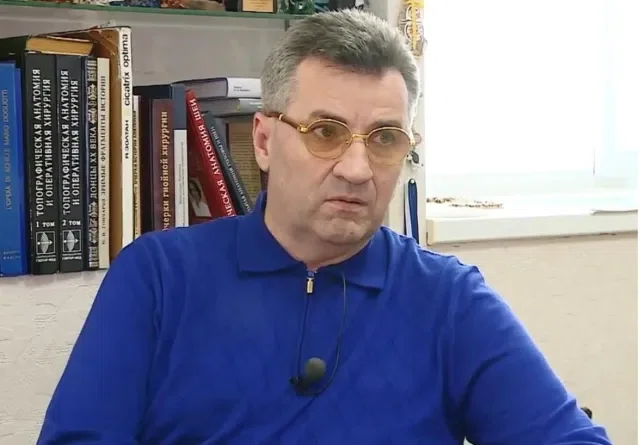
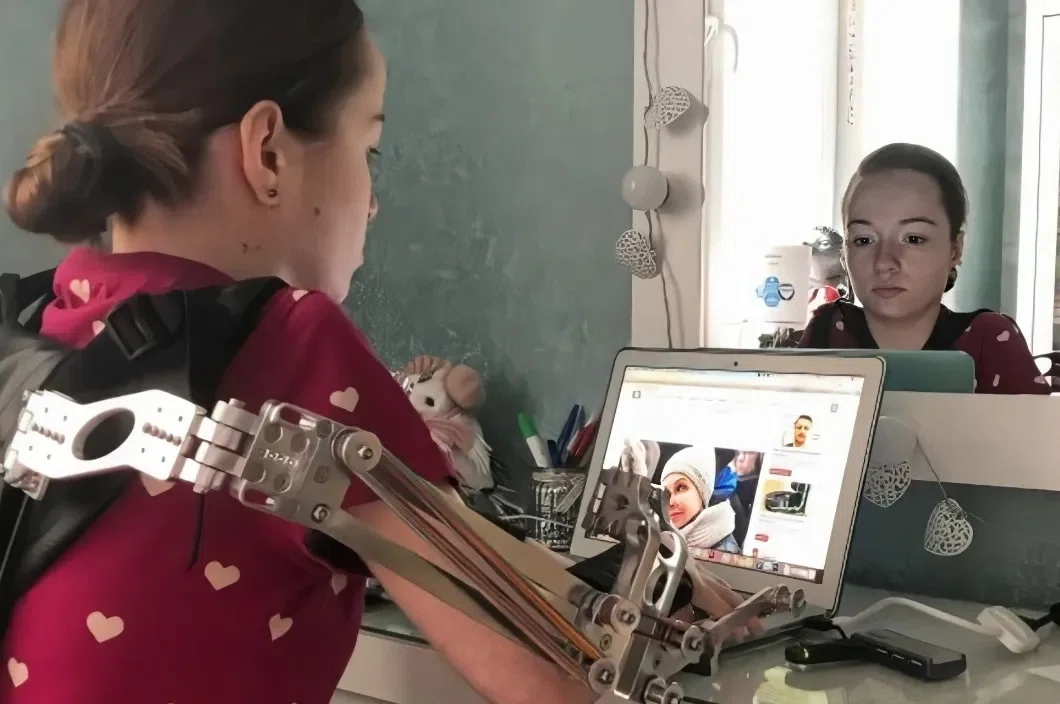
Evgeny Zozul himself is the candidate of economic sciences, the founder of the Planet Exand Innovation Medicine Support Fund, which finances the development and manufacture of a new exoskeleton for the rehabilitation and abbreviations of the upper limbs “exar”. The product was developed by Volgograd scientists, Doctor of Medical Sciences Alexander Vorobyov and candidate of medical sciences Fedor Andryushchenko.
Exoskeleton is an “external skeleton” that repeats the human biomechanics, increasing his strength. We see exoskeletons in cinema on characters like “Robocop” or “Green Goblin”. In industry, they are used, for example, in automobile plants, when the master needs a lot of time working with his hands raised above his head.
“People with certain congenital diseases or after severe injury sometimes cannot raise their hands,” says Evgeny Zozul. - The brain gives the team, and the muscles are too weak, or even atrophied. "Exar" allows a person to raise his hands to a vertical position, without making efforts.
According to the developers, the “exar” not only increases the strength of the hands and facilitates life. In some cases, with its help it is possible to completely restore the impaired performance of the upper extremities.
“The bulk of the exoskeletons produced in the world implies to increase the power of external energy drives: either batteries and batteries, or electric wires, or pneumatics,” Eugene explains. - This very limits the use of products. But we decided the issue of autonomy - without any batteries, without pneumatics. You can laugh, we use ... bank gum as energy drives! Several dozen bank gum connect technical nodes to each other. In the process of rehabilitation of a disabled person, we begin to cut one rubber band, and gradually increase the load on the muscles of the hands. And the muscles are slowly increasing. If a person turned to us on time, then he will completely restore them during the year. We have already managed to rehabilitate several children.
According to Evgeny Zozul, the production of exoskeletons does not require the construction of any serious industrial capacities.
— У меня на сегодняшний день в сарае стоит станок, на котором пилят металлические запчасти, там же пресс для подшипников. Мы изготавливаем по факту: сколько к нам людей обращается, столько и делаем.
Каждое изделие готовится по персональному чертежу. Иногда производство оплачивает наш благотворительный фонд, в других случаях люди сами покупают. Стоимость от 200 до 250 тысяч рублей. На сегодняшний день мы в состоянии производить 50 штук в месяц, — говорит он.
Однако, чтобы «Экзар» могли заполучить все нуждающиеся, нужно добиться его включения в официальный перечень технических средств реабилитации, которые государство готово оплачивать за счет бюджета. И вот тут у разработчиков возникли препятствия, в основном — бюрократические.
— Нам надо, чтобы в перечне технических средств реабилитации, а именно — в разделе о верхних конечностях, был официально прописан «экзоскелет верхних конечностей», — говорит Евгений. — Тогда он станет доступным для людей из любого социального слоя. Вот уже на протяжении двух с лишним лет мы не можем получить нужные документы. Раз в год при Минтруда собирается комиссия, где должны рассматривать расширение списка ТСР. Мы писали везде, чтобы представить наше изделие на эту комиссию, включая администрацию президента. Нас перенаправляют из одного ведомства в другое по кругу. Это — бюрократическая машина, которую очень трудно преодолеть. Между тем нашими разработками уже заинтересовались в Германии и Израиле.
Министерство труда и социальной политики подтвердило «Новой газете», что для того, чтобы изделие включили в список ТСР, разработчикам нужно направить в Минтруда обоснование и статистические данные. Однако, как выяснилось, статистика людей, у которых не работают руки, Росстатом не предоставляется. Таким образом, перед изобретателями встает масштабная и трудновыполнимая задача — самостоятельно посчитать количество нуждающихся в экзоскелетах верхних конечностей в России.
Из ответа Минтруда — «Новой газете»
«Пока заявок с полным пакетом сведений в адрес комиссии не представлено. Отметим, что уже сейчас центры реабилитации закупают схожие изделия отечественных разработчиков, которые используются при локомоторных нарушениях, но под контролем медиков», — говорится в ответе ведомства.
Складывается впечатление, что, несмотря на почти 39 миллиардов в год, выделяемых по программе «Доступная среда» на подпрограмму «Совершенствование системы комплексной реабилитации инвалидов», государственные чиновники мониторингом изобретений, равно как и сбором статистики по заболеваниям, просто не занимаются.
По словам Евгения Зозули, содержание человека с нерабочими верхними конечностями в доме инвалида обходится государству примерно в 86 000 рублей в месяц. Тратить деньги — тем более не свои — на содержание, конечно, проще, чем организовать полноценную реабилитацию.