
Translated material
Amendments to the wind
As a new “social state” saved 2 trillion rubles for working pensioners
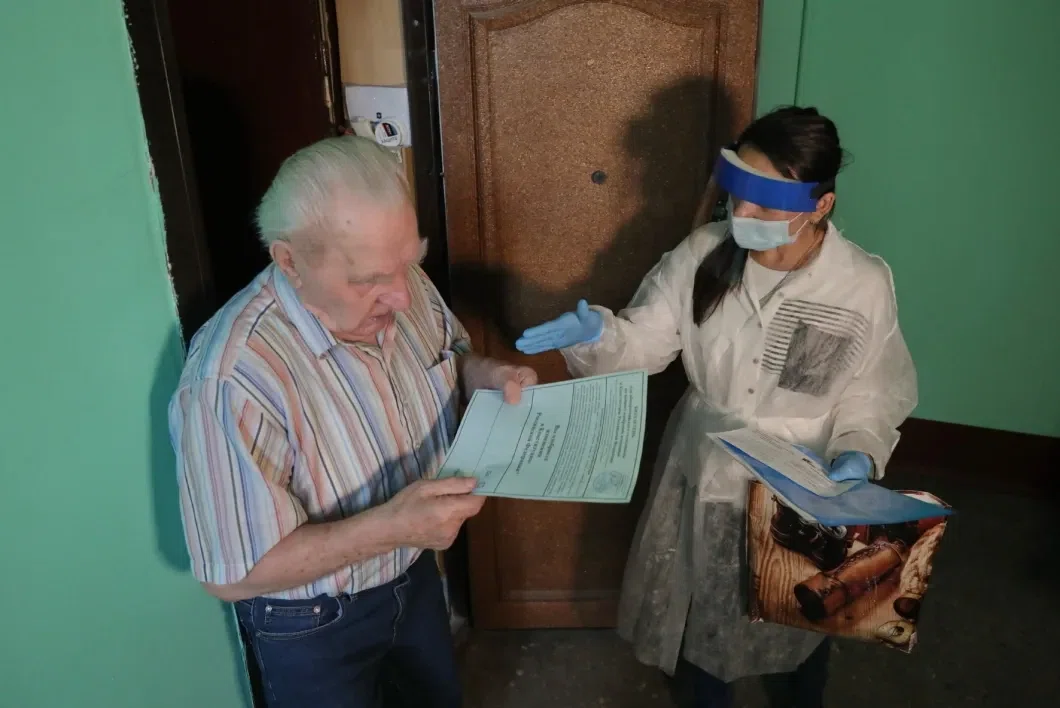
2021 came, working pensioners again remained without indexing their pensions. There has been no indexation since 2016, this story continued in the coming year.
This is not to say that people are accustomed to this: it is impossible to get used to it, especially to those who are directly concerned. People rightfully believe that they have earned their pensions, and
If these pensions are depreciated annually due to inflation, then the state is obliged to compensate for these inflationary losses.
It is the authorities that are responsible for the economic policy in the country, the result of which is inflation.
It is impossible for people to get used to the lack of indexation of pensions also because it is only for them working, pensions are not indexed, and non -working pensioners are fine. It turns out that people are punished with the “non -indexation” for the fact that they continue to work.
But 2021 is not just the next year, when pensions to working pensioners were again not indexed. The fact is that right now the regular indexation of pensions has become a constitutional norm: after voting for amendments to the Constitution, the authorities are required to constantly recount to the increase in the level of inflation of the pension to everyone.
The updated Constitution of the Russian Federation (Article 75) provides that the country "is indexed by pensions at least once a year in the manner prescribed by federal law." I specifically quoted this norm completely - including about the “federal law” - because it will be necessary to specifically stop on this again.
The fundamentally important provision of the constitutional norm is that there is no distinction between pensions for working and non -working pensioners. That is why initially, in January 2020, when the draft amendments to the Constitution was only released, the announced position of the authorities was as follows: this amendment to the Constitution on the indexation of the pension applies to both working and non -working pensioners.
This was clearly stated by the co -chair of the profile working group to amend the Constitution, the director of the Institute of Legislation and Comparative Law under the Government of the Russian Federation, Talia Khabrieva. Here is her then answer: “The rule itself is formulated without exemptions, and only specification of order in federal law is possible” (January 2020).
However, Mrs. Khabrieva was quickly corrected, and the position of the authorities on the issue of indexing pensions to working pensioners changed to the opposite. The trick was found: since the indexation should be carried out "in the manner prescribed by federal law", and the federal law just suspenses indexation for the period of paid work of the pensioner, the indexation is not laid.
How do you like this explanation? In my opinion, it does not withstand any criticism.
The federal law should only determine the procedure for indexation, and an increase in the level of inflation is already provided for by the Constitution for both working and non -working pensioners. Moreover, it is obvious that this should not be some correspondence, “paper” indexation, but a real increase in the paid pensions.
Of course, it was necessary to hear more serious justifications of why the size of the pension does not change for working pensioners. Thus, President Vladimir Putin at the December press conference at the end of last year called budgetary security as a condition for a full indexation for working pensioners. Well, let's evaluate this argument.
Is there money in the country to restore indexing insurance pensions to working pensioners? How much money does it take in this case?
At the beginning of 2020, the Russian government, in its negative conclusion on the bill, which provided for the abolition of the moratorium on indexing pensions to working pensioners (introduced a member of the Council of Council Vasily Ikonnikov), noted that the restoration of indexation of insurance pensioners will increase the costs of the Pension Fund
In 2020, 368.5 billion rubles,
in 2021 - 426.4 billion rubles,
In 2022 - for 524 billion rubles.
Big money. Maybe there really is nowhere to get them?
But in Russia there is a national welfare fund (FNB), which was just created to ensure the stability of the pension system. This means that the money of this fund is directly intended, including to ensure indexing pensions. And what about money in the FNB? Everything is fine there: 13.5 trillion rubles for December 1, 2020.
Conclusion: the state has money for indexing pensions of working pensioners, and even with excess.
Let's return to government estimates for money: more than 1.3 trillion rubles would have been required for 2020–2022 - it would be so much to increase the costs of the Pension Fund if the indexation of pensions for working pensioners had been restored. Now let's look at this figure on the other side: over 1.3 trillion rubles will not receive working pensioners in Russia due to the fact that they are deprived of the constitutional right to index pensions.
Well, the price of the issue for pensioners is clear. And if you calculate from 2016, when working pensioners have been deprived of the right to index their pensions, then the money received will amount to more than two trillion rubles for 2016–2022. So much so saved on working pensioners.
Here you have the “social state” (Article 7 of the Constitution), which, it turns out, can pursue an antisocial policy, depriving pensioners of trillion rubles.
In general, the situation with these amendments to the Constitution turned out to be indicative: they promised, people voted for indexation, and received nothing. What are these amendments then? Even so: what is the Constitution then, which can not be carried out so easily? Or are there some amendments, for which everyone, apparently, was started, will be fulfilled "reinforced concrete", while others are not necessary? Ugly story.