
Translated material
Your guide for sars-Cov-2 mutations
Biologists talk about how coronavirus changes
From the editorial office
This material was first published in the Kazakhstani edition of Vlast. "New Gazeta" reprints it on a partnership. &
Three weeks ago, British Prime Minister Boris Johnson scared everyone with a message about the new mutation of coronavirus. Are you also afraid of new mutations? Or maybe you think that this is a new way of the world government to close everyone for quarantine? Let's figure it out. My colleagues will help my colleagues: Dr. Bolat Sultankulov, working on the creation of a diagnostic system for Kovid-19 on the basis of the nanotel and researcher of the University of Kaust in Saudi Arabia, Medicine Mukhtar Sadykov, who, within the framework of his PhD project, is directly studying the mutations of coronavirus. In this material, we, biologists, will show you how to monitor sars-COV-2 mutations using the original sources.
What are mutations? From the school biology course, you remember that evolution is essentially the accumulation of adaptations to the environment. So, mutations are a way to adapt. Viruses are nothing more than genetic information in a protein package (and sometimes lipids). Because of their simplicity (and tricks, of course) they mutate constantly (an average of 1 million times faster than a person), this is their way of existence. Coronavirus SARS-COV-2 this year made a huge breakthrough in development, he jumped onto the new owner-to man. This exit from the comfort zone was not easy for him, and he still gets used to us. Therefore, there is nothing surprising in mutations. Another thing is that the usual cold coronaviruses we meet every season, we do not follow so carefully. We compare SARS-COV-2, usually with the atypical pneumonia virus of 2003-2004. And already how the SARS-COV-2 develops, now thoroughly thorough control is happening. By viral standards, coronavirus is not so changed. It was estimated that in one HIV-infected patient the difference between the two HIV viruses will be greater than between the Ulyan and British strain of coronavirus! Actually, this is one of the reasons why it has not yet been able to create a vaccine against a constantly “running away” from the immune system and mutating HIV.
How can you follow mutations?
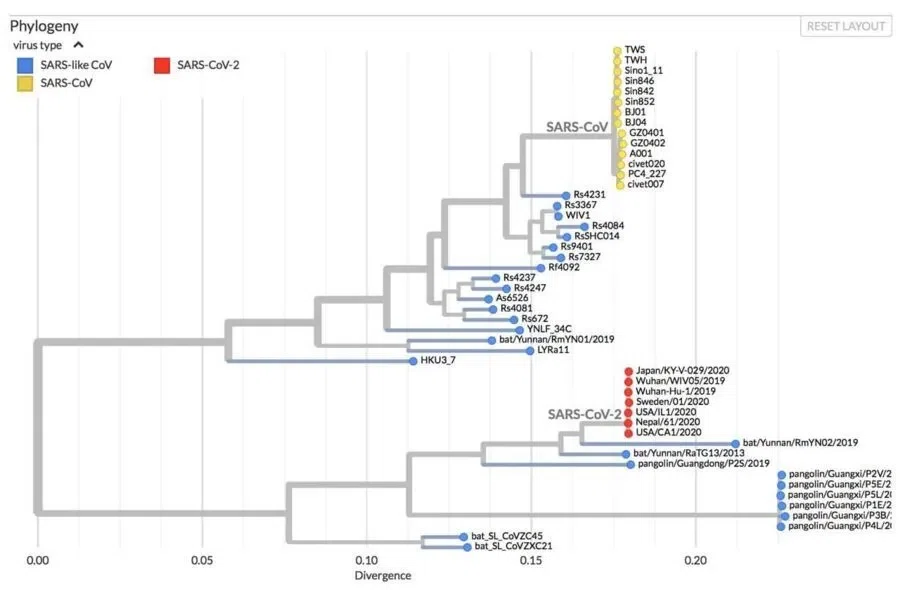
Evolutionary biologists love to draw trees, but not ordinary, but phylogenetic. Each leaf is a genetic sequence (for example, DNA of some type of animals or plants, RNA or DNA virus or even an amino acid chain of protein). The most convenient site containing information about coronavirus RNA around the world is Nechtstrain.org . Information on it is updated in real time. The site was created long before the pandemic, and contains information about the spread and evolution of many infections, such as Zika, measles and tuberculosis virus. During the pandemic, this resource has become one of the most important tools for combating misinformation and fakes, as this is a great example of data openness. It allows you to understand in real time how quickly the viruses can change and how the virus was able to jump on the new owner. In this material, we will talk about how to use this resource and what we currently know about SARS-COV-2 mutations.
What are mutations and what do all these letters and numbers mean in loud headlines mean?
A genetic code consisting of four letters is perhaps the most beautiful mechanism in nature. Four letters (A, T, G, C in DNA and A, U, G, C in RNA) denote four nitrogenous bases, the sequence of which is a genetic code. In the case of SARS-COV-2, genetic information is a RNA molecule, in which about 30,000 nitrogenous bases. The collection of data used to analyze Nechtstrain is engaged in GISAID (the first letters from Global Initiative on Sharing Avian Influenza Data). This organization appeared in 2006 to join the efforts during an epidemic of bird flu, and became a successful example of openness and the fight against the concealment of data on outbreaks of infectious diseases. At the moment, almost 300,000 sequences of SARS-COV-2 genomes (genome = Genes set) can be found in the public domain, which are placed in a phylogenetic tree from January 5, 2020 to date.
So, we have a genetic code in the form of RNA - a coronavirus recipe, thanks to which our cell “prepares” this very virus. During this process, errors constantly occur, and thus, mutations appear. Three letters of RNA turn into one amino acid, of which proteins consist. Changes in this genetic code are different: deletion - when part of the code is lost, the inspection - (or insert) and replacing one letter with another without changing the number of letters in the code. There are dot mutations when one letter of the genetic code changes, and there are complex mutations, when the replacement, insert or removal of the whole area occurs. Point mutations can pass completely imperceptibly for the body, these are the so -called neutral mutations, when the change in the letter in the genetic code does not change the amino acid that will be produced. But there are more significant changes when the composition and even the shape of the produced protein changes. Sometimes, with the loss of nucleotide, the code is shifted by part of the protein, and sometimes the entire protein, is completely lost. Amino acids are also designated by letters . To designate mutations, we most often use Latin letters denoting the amino acid and its serial number in the protein molecule. For example, the sensational “British” mutation N501Y means that one amino acid of Aspargin (N) was replaced by position 501 to another - Tyrosin (Y). And, for example, a mutation that is often found with it, ΔH69/V70 means that the deletion (loss) of two amino acids occurred (h - histidine, vin) at positions 69 and 70.
Now about how the virus “decides” what mutations he needs. Selective pressure is a termine that describes the degree of exposure to natural selection, which affects the rate of genetic changes. At the beginning of the epidemic, it was believed that coronavirus would mutate, which means “weaken” in order not to kill the owner. But in fact,
SARS-SOV-2 does not change towards a decrease or increased mortality, since there is no particular evolutionary pressure for this-mortality is not too high.
It is important to repeat that most mutations are unnoticed and are not preserved in the population. If the mutation very strongly interferes with the virus (for example, completely turning off the very important gene), then most likely it will not be preserved simply because the virus will be too bad from it. And the won for the virus will be a mutation (or a group of mutations), which will help to gain a foothold in the owner as long as possible, without killing it too quickly to have time to spread. This is an increase in “contagiousness” (that is, more effective penetration into the cage and a long asymptomatic course), and mutations that help “hide” from the immune system (namely, from immune memory cells and antibodies).
Mukhtar Sadykov and his colleagues in their recent publication noted the importance of studying both positive (that is, when mutations are necessary for the adaptation virus) and negative selection pressure (when the genome areas are important for the functioning of the virus, the frequency of mutations is below the average).
“Among the proteins that have changed little during the pandemic time, the enzymes are found - NSP12 and NSP8, which are necessary to play the virus. Remesivir blocks the functioning of enzymes protein data. We also noticed a number of proteins that are more susceptible to mutations, among them are spike and nucleocapside proteins. ” And also in this study, they proposed a system of a genetic barcode, which will accelerate the determination of the variant/strain of coronavirus and is an accessible alternative to the full sequenication of the virus.
The largest number of changes is already more than 4,000 mutations-occurs in the famous Squirrel-Ship. The spikes on the surface, because of which the virus received its name (similarity with the crown of the sun), is important in order to attach to the receptor on the surface of the owner’s cell and infect it. This process can be imagined as follows: you are a virus, and your palm is a protein-chip. To open the door (the receptor on the surface of the ASE2 cells) and go into the room (into the cage), you, the virus, hold your hand (protein-chip) by the handle (area on ASE2, which is associated with the spike). In this video you can see how exactly this meeting takes place.
Briefly about four main mutations
Now let's trace how the coronavirus has changed. You should start, perhaps, from its origin. And although we still do not have the exact answer, a phylogenetic analysis tells us that SARS-SOV-2 is closer to coronavirus on bats and pangolins (or Javanese dinosaurs) than to the 2003-2004 virus of SARS-SOV. The main difference between two human viruses is that SARS-SOV-2 “opens the door” to the cage, changing the same protein-chip. And if in the genome of coronaviruses of the bats of this “update” there have been not yet discovered, then in the coronaviruses of Pangolin, a similar advantage is already present. There are two main hypotheses of the origin of SARS-SOV-2 : it either mutated in the body of the animal (bat or Pangolin), or has changed to recognition already in the human body. Analyzing the available data, scientists come to the conclusion that the artificial creation of a coronavirus in the laboratory is an interesting version, but at the moment baseless. Dr. Mukhtar Sadykov, on the example of coronavirus, also recalls the importance of monitoring animal viruses:
“According to & research , a virus, very similar to SARS-SOV-2, began to circulate in bats several decades ago. This is an important reminder of the need to monitor various animal viruses to prevent the occurrence of epidemics. ”
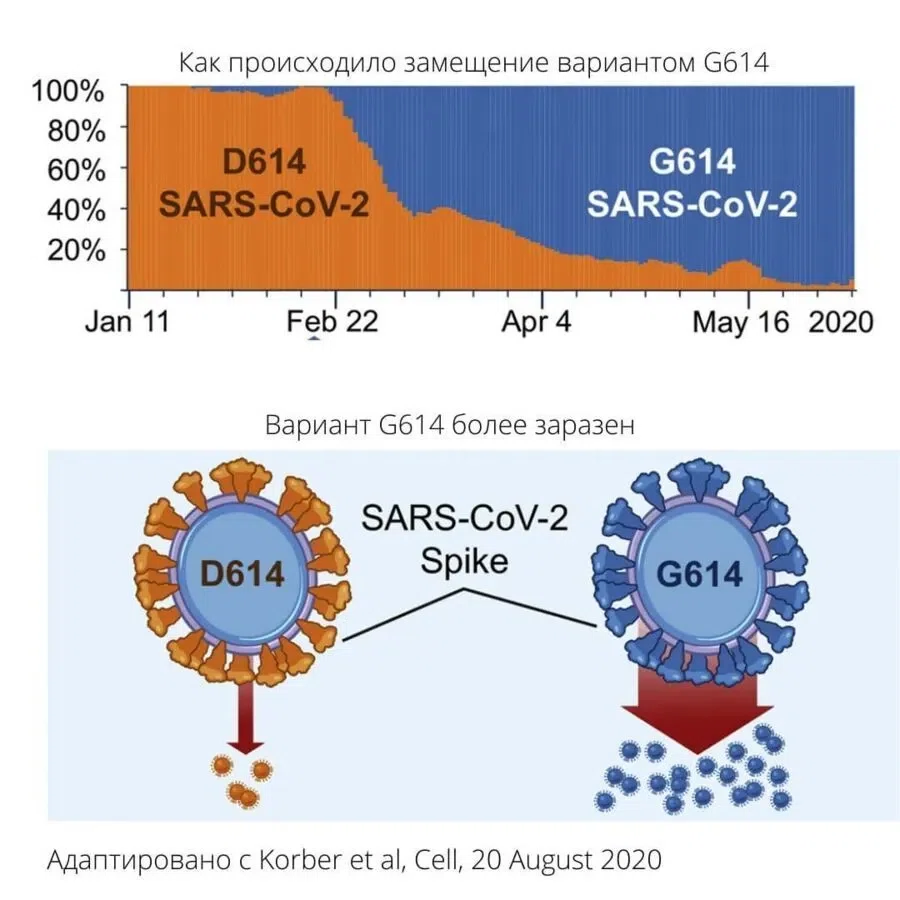
So, a new coronavirus appeared a year ago. The genetic sequence, which is used as the initial sample of the coronavirus genome, was taken from the patient from Jun in December 2019. The virus immediately began to mutate, and scientists immediately began to carefully monitor this. Already in January, perhaps the main mutation was noticed-D614G-replacing the aspartate with glycine at 614 positions in a protein chip. The mutation has become so important and convenient for the virus that by June it began to dominate the whole world. These two amino acids differ greatly in their properties and it was expected that such a change can significantly affect the behavior of the virus. How exactly? Based on studies on cells, on laboratory animals, as well as according to epidemiological data, we can conclude that this variant of the virus infects more effectively, and also multiplies better (Hou et al Science, 18 Dec 2020) in the upper respiratory tracts. But it was also previously shown that this mutation does not affect the severity of the disease, on sensitivity to neutralizing antibodies and the effectiveness of vaccines.
The next sensational version of the virus is called “Cluster 5” , it was discovered in June 2020 in Denmark in people working with minks. It is important to note that minks are an important and long -known reservoir for infections, they contribute to an accelerated change in the virus and therefore control over them is very important. This variant of the virus contains a combination of mutations all the same in the Squirrel Squirrel: Deletion (loss) of amino acids in positions 69-70; replacement of Y453F inside the site that binds to ACE2; Replacement I692V and M1229I. The Danish authorities, and with them all of us, were frightened in earnest. To limit the further spread of this variant of the virus, about 14 million minks were destroyed. And some countries, for example, the Netherlands, will completely ban mink farms by 2024. But according to preliminary data, this mutation does not affect the severity and degree of transmission of infection. However, this option has slightly reduced sensitivity to neutralizing antibodies, which causes some fears due to repeated infection. But Denmark showed an example of the fastest response as possible, so this option can be kept under control.
The third important mutation, which became the reason for writing this material, is part of the so -called British version of the coronavirus - VOC 202012/01 (aka VUI - 202012/01, he is b.1.1.7). It was discovered in October 2020, at the beginning of January it is present in more than 30 countries. It contains 23 mutations, most of them are in the protein-chip. One of the mutations is similar to Danish minks, this is a deletion in positions 69-70. And the main mutation-N501Y-is the replacement of the amino acid in the small area of the protein-chip, which is associated with ASE2. The combination of these two mutations probably explains the increased contagence of this variant of the virus. How did we learn about this? The fact is that one of the most popular PCR tests in the UK is TAQPATHCOVID-19 Thermo Fisher. It determines the presence of 3 sections of the RNA of the virus. One of them, which is in the Squirrel Squirrel in the right in the place of deletion of 69-70, suddenly ceased to be detected, while the other two were in place. This prompted the British just in case to determine the full sequence of the genome and detect a new version of the virus! This PCR Test gave us a lot of information about the spread of this strain in a short time (it was easier to monitor - the DVA of the site instead of three), and the reaction of the authorities and the possibility of mass sequencing quickly allowed us to determine the exact genetic changes. But this also suggests that perhaps in other countries we simply did not notice the appearance of this option, which once again emphasizes the importance of sequencing.
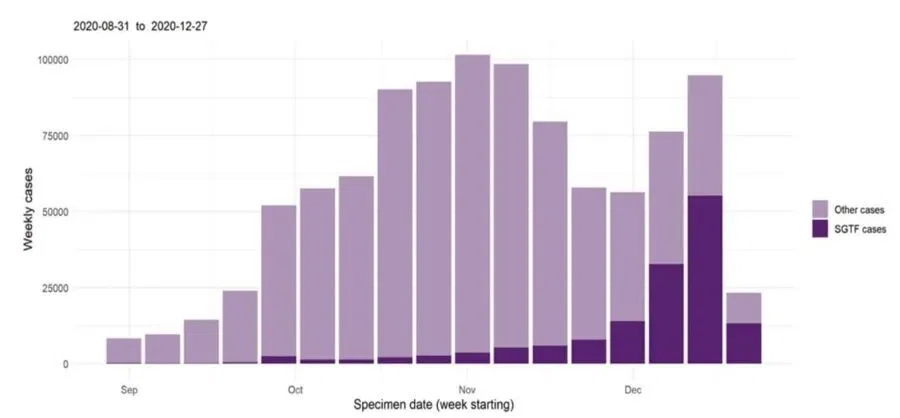
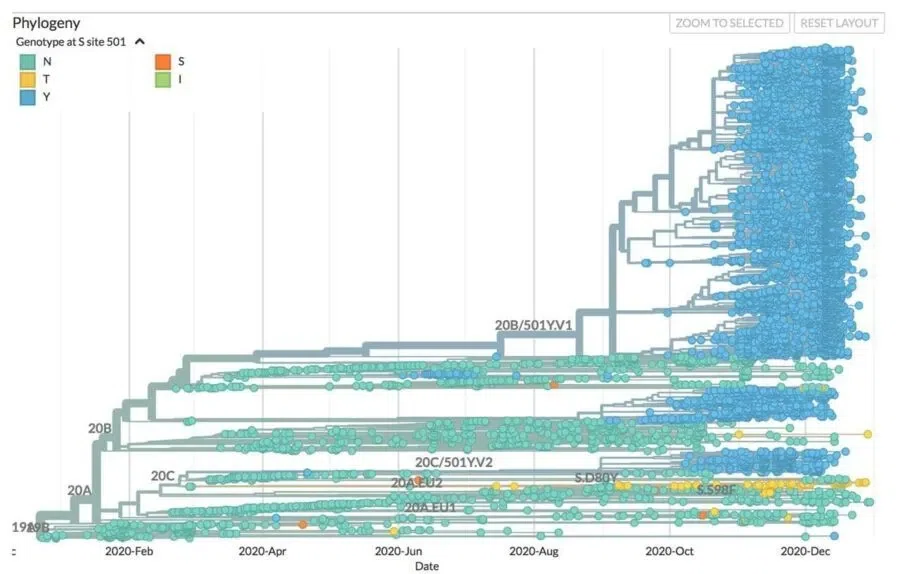
What does this change in the virus affect? The key factor here is, apparently, a combination of mutations, which perhaps changes not only the composition, but also the shape of the spike and other proteins, which is a kind of attempt to escape from the “handcuffs” of neutralizing (skillful, high -quality) antibodies, which should ideally be formed in our country as the result of acquaintance with the virus or (attention!) With a vaccine. We have some data on how these mutations can separately affect the behavior of the virus. So, the loss of two amino acids in positions 69-70 not only reduces the effectiveness of some diagnostic tests, as described above, but it also may have arisen as a result of the use of therapy with plasma of ill patients.
That is, it is possible that the use of antibodies as therapy in some patients can create an environment for selective pressure and a similar & change in the structure of the virus .
Therefore, this mutation can lead to the fact that the virus can avoid an immune response with antibodies. Also in this version there are 6 mutations in the Orf1ab gene, but they are still little studied. Another interesting mutation is P681H, which affects the merger of the cell membrane and the virus membrane, which may help the virus penetrate the cells of the respiratory epithelium, and also facilitates the transfer of the virus on animal models. Another important change: the ORF8 protein, which is very variable and significantly differs with similar SARS-COV protein (atypical pneumonia virus). The mutation that changed the code 27 amino acids to the “Stop” sign makes its sequence four times less (26 amino acids instead of 121). What does it affect? It is not yet clear, but we know that this protein confuses our immune system, turning off Interferon, and is directly related to the cytokine storm . Perhaps the loss of the function of this protein will affect the course of the disease, but this must be established experimentally. Well, the most famous mutation of the N501Y (replacement of the amino acid at position 501) is in the key contact area of the protein-chip, consisting of 6 amino acids. It is assumed that this change can significantly affect the degree of binding to the ASE2 receptor.
What information we have about the distribution of this option? The quality of data depends on the country (resources for sequencing and the organization of testing). An example here, perhaps, is Denmark, which seques up to 2000 genomes per week. 86 cases of VOC 202012/01 have already been registered (11% of all new cases), and they develop in a separate branch, which means that there was a local distribution of the option. The situation in the UK is very worried, the country had to declare new strict quarantine measures. But the point here is most likely not only in the new version of the virus, but also in the epidemiological situation to return from the holidays. In general, it is important not to make hasty solutions regarding new versions of coronavirus. Panic is generated by aloud assumptions. So, some British experts spoke out that the new option is more dangerous for children, but in fact, most likely, this is due to the opening of schools.
Previously, according to epidemiological data, due to the obvious exponential growth, we see that this option is more viability. But is it so dangerous in terms of the severity of the disease? Last week, the British Government Commission published the results of a study that suggests that the VOC 202012/01 option is not more dangerous in the severity of the disease. В этом когортном исследовании участвовали 1769 пациентов, зараженных новым вариантом коронавируса, и их данные сравнили с таким же числом пациентов, зараженных старым вариантом.
Итак, было показано, что нет статистической разницы в продолжительности и тяжести заболевания, в показателях смертности и в вероятности повторного заражения.
Поэтому основной вывод: без паники, новый вариант не так опасен, как его представляет Борис Джонсон!
И четвертый вариант вируса, который следует упомянуть — из Южной Африки под кодовым названием 501Y.V2 . Он похож на британский, так как содержит ключевую мутацию N501Y, но появился он независимо от него. Этот вариант доминирует в южно-африканском регионе с ноября 2020 года, на сегодня обнаружен в четырех странах. Было показано, что такое изменение вируса повышает вирусную нагрузку, следовательно, возможно, более эффективно заражает клетки. А в остальном нужно больше данных. Кстати, количество данных напрямую зависит от доходов страны, ведь секвенирование в таком количестве, как в Европе, африканским странам не доступно. А нехорошо от этого нам всем, так как в случае с мутациями «Предупрежден — значит вооружен»! Будем надеяться, что пандемия заставит пересмотреть взгляд на технологическое неравенство.
Будут ли работать вакцины?
Пожалуй, самый обсуждаемый и сложный на сегодня вопрос. Мутации коронавируса обнажают недостатки и преимущества разных подходов к разработке вакцин. Традиционные цельновирионные (содержащие живой или убитый вирус) вакцины, возможно, менее подвержены кардинальному изменению эффективности из-за мутаций. Тогда как новые подходы, использующие часть вируса (белок или РНК), рискуют не сработать, так как изменения в вирусе могут быть слишком значимы. Безусловно, настораживает тот факт, что мутации, укрепившиеся в белке-шипе, могут сделать его неузнаваемым для антител, сформировавшихся после вакцинации. Мутации затронули участки, которые входят в состав самых успешных РНК вакцин от Pfizer/Biontech и Moderna. Основатель компании Biontech Угур Шахин успокаивает : «Да, мы знаем, что некоторые участки мутировали. Но там еще много участков, которые остались нетронутыми и пока нет оснований считать, что вакцина не сработает». К слову, компания Biontech уже проверила более 20 установившихся вариантов вируса, и сейчас проверяет «британский» вариант. Также ученый отметил, что в случае необходимости поменять РНК последовательность, они готовы это сделать за две недели, в короткий срок обеспечив миллионы новых доз. В этом главное преимущество РНК вакцин.
У Мухтара Садыкова есть интересные предположения относительно мутаций на белке-шипе:
«На данный момент есть уже с десяток установившихся мутаций на белке-шипе, которые отличаются от первого Уханьского вируса. А также есть множество других мутаций, которые помогают вирусу избежать распознавания иммунной системой. Сейчас, после массовой вакцинации, у вируса может появиться сильное эволюционное давление, особенно на белок-шип. Это может привести еще ко многим мутациям, что в итоге заставит нас пойти по сценарию ежегодной вакцинации, как с вирусом гриппа».
Доктор Болат Султанкулов, работающий над проектом по использованию нанотел для диагностики коронавирусной инфекции, чуть более оптимистичен: «Я предполагаю, что существующие вакцины все-таки будут работать против нового штамма. Дело в том, в ответ на вакцину формируются поликлональные антитела, а это значит, что если нет кардинальных изменений в форме белка-шипа, антитела, вырабатывающиеся на вакцину, должны физически перекрывать доступ к участку, который связывается с АСЕ2. Однако, это лишь мое предположение и нам нужны экспериментальные данные от производителей вакцин. Единственное, чего мы еще не получили, так это данных о том что вирус слабеет, становится менее агрессивным по симптоматике, переходит в разряд «простудных», так как снижение смертности в основном связано с тем, что мир чуть-чуть научился лечить Ковид-19. После массовой вакцинации мы увидим насколько вирус приспосабливается, так как в популяции есть пул генотипа супер-распространителей, они, в свою очередь, и являются генераторами новых мутаций. Дело в том, что иммунная система супер-распространителей работает по-другому, они своего «летучие мыши». Будет очень интересно, как именно они реагируют на вакцинацию, так как предположительно они вырабатывают меньше антител и дают вирусу возможность мутировать, чтобы избежать иммунного ответа.
А как мы знаем из эпидемиологии, всегда есть «пациент 0» и одного человека достаточно, чтобы все началось заново. Возможно, это будет не в этом году, а через полгода или 10 лет.
Вирус, скорее всего никуда не исчезнет, нам остается лишь наблюдать и быть готовыми к быстрому реагированию. А предположение о том, что он никуда не уйдет и после вакцинации связано с его родичами, вызывающими обычную простуду. Остается надеяться на то, чтобы вирус пошел по их пути и просто ослаб».
Есть некоторые опасения по тому, как происходит сейчас вакцинация от Ковид-19. Дело в том, что она происходит двумя инъекциями. Первая — знакомство с антигеном и появление специфического иммунитета, а вторая — закрепление иммунитета в адекватной для защиты дозе. Существуют опасения, что вакцинация в низкой дозе (например, проведение первой инъекции и задержка второй) будет создавать селективное давление на вирус и даст рост еще большим изменениям. А поэтому не совсем уместно изменение графика вакцинации или вакцинация мизерной доли населения. По словам одного из создателей сайта Neхtstrain.org Эммы Ходкрофт , кампании по вакцинации должны быть быстрыми, масштабными и четко организованными. Если добавить к этому сложности с хранением и транспортировкой РНК вакцин, то задача не из легких.
Одно остается неизменным: изучение мутаций вируса помогает понять природу вируса и нашего иммунного ответа, что, в конце концов, позволит нам предположить, когда закончится вся эта история. Так, иногда изучение мутаций помогает понять природу иммунного ответа. Мухтар и его коллеги в своей другой работе заметили, что SARS-CoV-2 постепенно меняет состав азотистых оснований в геноме, что позволяет ему скрыться от антивирусного белка — ZAP. Ученые показали, что данная эволюция вируса спровоцирована двумя человеческими белками - APOBEC и ZAP, а значит, вирус постепенно учится адаптироваться к механизмам иммунной защиты человека. А человеческие белки в свою очередь, могут напрямую «редактировать» генетический состав коронавируса . Возможно, такое редактирование способно вызывать аутоиммунную реакцию, которая наблюдается у некоторых больных. В целом, более глубокие исследования об изменениях коронавируса только начинаются, а благодаря наличию огромного количества открытых данных, доступных в реальном времени, у ученых всего мира есть возможность их анализировать и делать реальные открытия.
Какие мы можем сделать выводы сейчас?
Сами по себе мутации — нормальный и постоянный для вирусов процесс. Большинство главных мутаций коронавируса не делают его опаснее в плане тяжести заболевания, ведь вирусу не нужно, чтобы мы умирали быстрее. Однако, возможно, они делают его заразнее, и для этого уже есть некоторые данные. Мутаций у коронавируса много (в одном только белке-шипе их более 4000), и мы за ними тщательно следим. Влияние этих мутаций на эффективность вакцин пока не было доказано, мы ждем данных от производителей вакцин и независимых лабораторий, которые сейчас проверяют это на новых вариантах.
Что делать нам всем? Дистанцируйтесь и надевайте маски, пока ученые получают больше данных. А мы будем держать вас в курсе новостей.
Асель Мусабекова — биолог и вирусолог, специально для Vласти