
Translated material
"There is no confidence, but there is hope"
A fund has appeared in Russia to support children with rare diseases. But when he works, it is unclear
On January 5, Russian President Vladimir Putin signed a decree on the creation of a support fund for children with rare diseases - a “circle of good”. Since the beginning of the year, it is replenished with money proceeds by increasing income tax on individuals. The initiative applies to citizens who earn more than 5 million rubles a year. Only the part of the income that exceeds these 5 million according to the president will be subject to an increased rate, this mechanism will allow to attract about 60 billion rubles to the budget annually.
Most of the amount - 47 billion - will go to the purchase of drugs, including those not registered in Russia. “It is clear that in the process of bidding, we will probably be able to reduce the prices of drugs, agree with manufacturers where they are the only manufacturers of these drugs. But this is a matter of the future, ”said Deputy Prime Minister Tatyana Golikova on the eve.
According to Deputy Prime Minister, three more billions of the remaining thirteen will be spent on technical rehabilitation tools, one billion on medical products. What the remaining 9 billion will be spent on, Golikova did not specify.
At the funds of the fund, they plan to finance treatment of 30 rare diseases. But the final list of nosologies has not yet been defined. “They will be approved, but this does not mean that they will be absolutely constant. They will be replenished in the course of the work of the Circle of Good Fund, ”Golikova added.
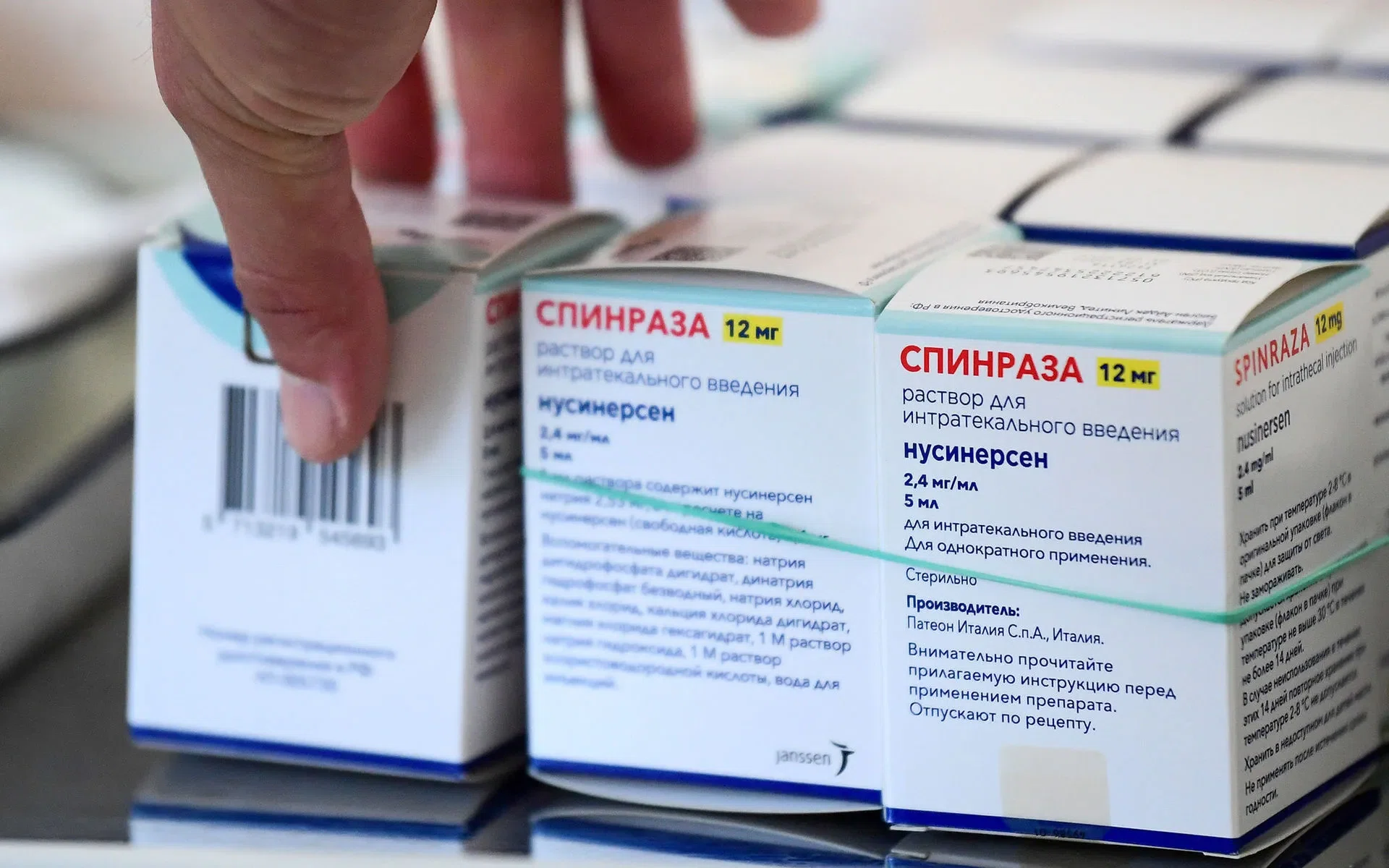
It is reliably known that the list will include patients with spinal muscle atrophy (SMA).
The authorities' refusal to treat “emoticons” provoked a large public scandal at the beginning of last year. Patients are made of expensive drugs. One of them - Zulgensma - is listed in the Guinness Book of Records as the most expensive medicine in the world (more than $ 2.1 million). The authorities of the regions refused to purchase medicines, referring to the lack of budget funds. Parents of small patients collected huge amounts on their own.
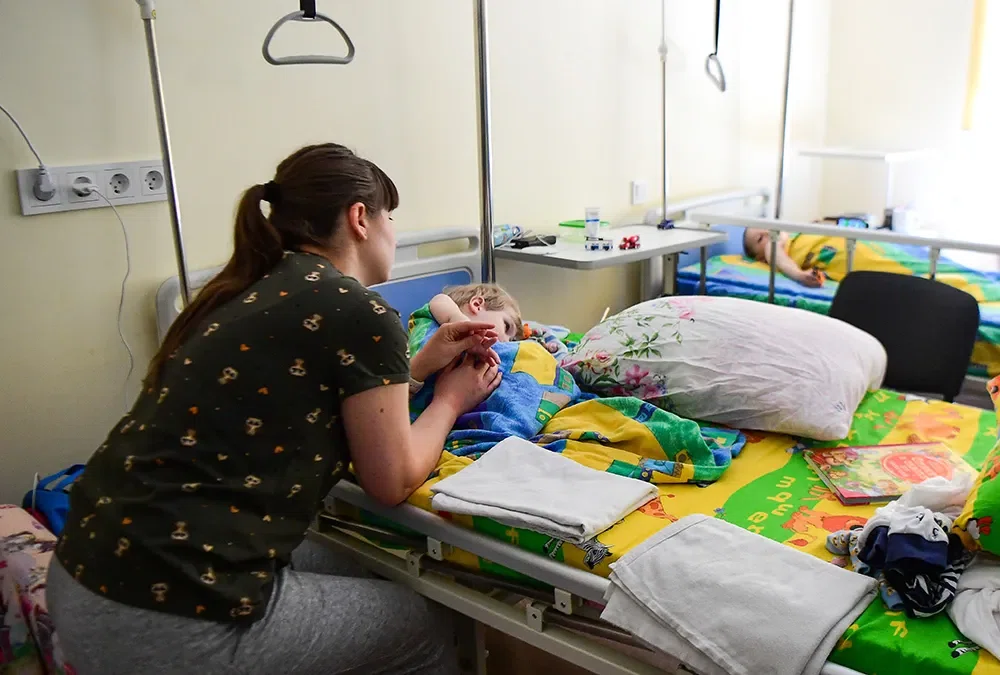
Several children died without waiting for saving injections.
The main governing body of the new fund is the Board of Trustees, which will control the budget and areas of activity. It included 15 public figures and doctors. Among them is the founder of the Hospice Fund “Vera” Nyuta Federmeser, the trustee of the Bella charity foundation. Children-butterflies ”Ksenia Rappoport, actress and co-founder of the“ Give Life ”Foundation Chulpan Khamatova, Doctor of Medical Sciences and President of the National Medical Chamber Leonid Roshal, Director of the All-Russian Society of Rare Diseases Irina Skrynikova and actor Konstantin Khabensky, president of the charitable foundation of the same name.
Archpriest of the St. Petersburg Diocese, Chairman of the OP Commission on Charity and Social Work, and founder of the first children's hospice, Alexander Tkachenko, was appointed head of the Circle of Good Foundation.
“We understand that we will be very carefully checked. Not just objectively and in detail, but daily, under a magnifying glass. And the board of trustees of the fund, and tax authorities, and our founder - the Ministry of Health, and public organizations, and patient communities, and even the media. The key principle of operation of the fund should be the transparency of all work processes, ” said Tkachenko.
However, some processes are still blurry to experts. Novye spoke with the director of the Family of the SMA, Olga Germanenko and a member of the Public Chamber, Ekaterina Kurbangaleeva, who participated in the discussion of the creation of a new fund.
Ekaterina Kurbangaleeva,
Deputy Chairman of the Commission of the Public Chamber on Social Policy:
-When for the first time, at the end of October, we gathered in the Public Chamber with a narrow circle of patient organizations and experts-geneticists, we formulated several basic issues. First of all, what is the optimal legal form of financing mechanism. And after we have decided, we concentrated on three questions: what are the directions of activity, the structure of the fund’s management and what nosology should be included?
By and large, the Ministry of Health listened to all our proposals.
We insisted that in form it should be the fund. This is a more flexible financing system. The money of the fund can be spent on treatment abroad and the purchase of unregistered drugs, do not waste time for government procurement when urgent assistance is required. In the logic of spending budget funds, all this would be impossible. As a result, both a fund and a subordinate state institution were created.
As far as I understand, now purchases will be made by two organizations. Large batches of registered drugs will be purchased through a state -owned institution, and unregistered or small batches of drugs, as well as technical means of rehabilitation and medical products through the fund. I think that purchase procedures will begin already in the first quarter, and for patients such as SMA, now. It is important to note that the decree directly says about the purchase of unregistered drugs and technical means of rehabilitation that are not included in the federal list.
As for the structure of the Fund, we are glad that the Ministry of Health has gone along the path of creating a collegial higher governing body, the trusteeship of the Fund will play this role. It is he who will have to approve the budget and lists of nosologies, drugs and TCR.
Now you need to look at the particular: what nosologies and drugs will eventually enter the lists, whether the diagnosis will be included and additional financial mechanisms are prescribed. For example, we suggested using risk-sharing. When large pharmaceutical companies come out with innovative drugs, even despite successful clinical trials, we do not know what medication will have in the long run. Here the risk mechanism is used. If the drug is not effective for a particular patient, then it is not paid.
Obviously, 60 billion is a lot of money, but someone in any case will not be covered by the fund. There is not enough money not because it is not enough, but because every month we open new diseases, a new pathogenetic treatment appears, diagnosis is being improved. And in this case, it will be necessary to revise the lists of nosologies, drugs and registers of patients. The population is growing, which means, unfortunately, the proportion of patients will also grow.
Olga Germanenko,
Director of the Family of the SMA:
- We have long been waiting for the signing of this decree and perceive this news positively. Families are exhausted by the incessant struggle for the life of their children. But, of course, like any regulatory act, now the decree is a fairly frame structure that does not give a clear understanding of how the system will work. There is still no answer to the most exciting questions: when, who, how and how will the necessary treatment be received?
At yesterday's meeting with President Tatyana Golikova, she brought statistics, which was gathered by the Ministry of Health about patients with SMA, who are already in treatment - these are 466 children. The figure correlates with our data and is generally reliable. I very clearly hear that work has been done to understand whether patients will be provided with treatment in January. However, for those who have injections scheduled for March-April, we no longer have such rainbow expectations. There is no confidence, but there is hope that by this moment the fund will have time to catch these patients.
In addition to them, about the same number of children do not receive treatment. Now there are many babies from the 1st type, who cannot wait. Every day they lose the opportunity to recover. All New Year's holidays we collected money for censaclers, agreed with other funds for lung ventilation - so that the children at least survive. And what about these children? Will the fund pick them up? Or he will not pick up, but at first it will provide therapy with those who have already begun? We are not yet clear. I would like to run for treatment.
And one more point that continues to bother, but today there is no solution: we are talking about adult patients. Among them are 17-year-olds who have already begun therapy. My parents call me and ask: “In March, my child will be 18. The fund will work since January. Maybe we will have time to get one injection at the expense of the federal budget. And then? " I have no answer. More than 230 adult patients still remain in the regions.