
Translated material
He died on a call
In the Murmansk region, a physician died at work. This is the second death of an ambulance employee in the workplace lately
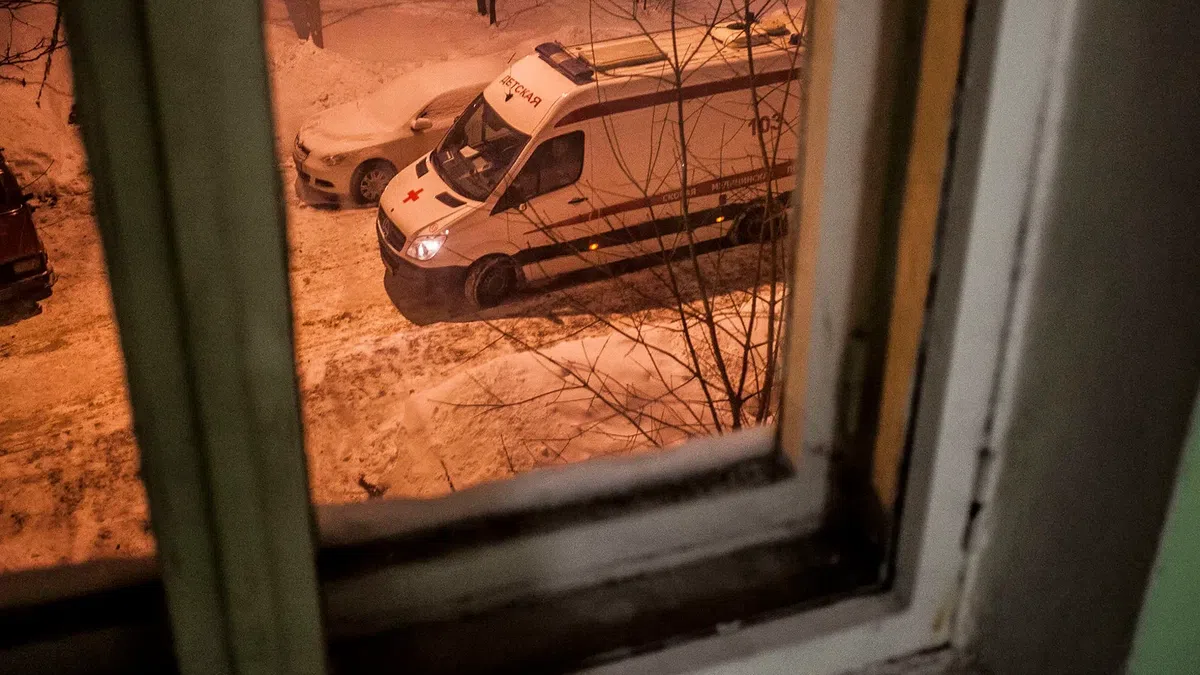
Alexei Fomitsky was gone on January 1. The ambulance paramedic of the small city of Kovdor Murmansk region replaced, felt unimportant. He was a little behind, as his colleagues say, and again went to the call. In the road, the heart of a 43-year-old medic stopped. The official cause of death will be called the Investigative Committee, which began verification. Unofficially, Alexei’s colleagues say - a logical result of work on wear.
“There are not enough paramedics, and they work for days. 24 hours, ”explains Igor Chizhov, the leader of the free trade union of the ambulance. - We have a backup machine, and a paramedic sits on it after the main shift. That is, he worked for a day, from 8 a.m. to 8 in the morning, then he has 6 hours a break, and after him he will intercede with us on the 9-hour shift again. Calls per shift from 8 to 15, depending on severity. So at work you will not sleep or rest. We almost do not call on the substation. ”
In the Murmansk region, officials regularly pose against the background of brand new ambulances, the keys to whom are handed to doctors. Once, a young candidate for governors even stated that these same ambulances would buy instead of expensive cars in a government car depot. And really bought.
Only from the amount of equipment does not increase the number of brigades - there are no people.
“Today in Murmansk on the line of 25 brigades. I remember the time when there were 45 of them, ”says Chizhov. According to him, 60 people are not enough drivers alone - and this is only in the regional center. It was precisely because of the lack of brigades instead of the previous “two in two” schedule (two day or night shifts of 12 hours, dedicated and output) have recently been working like this: two days from 8 to 20 hours, then two “nights”, also half a day, and only then rest. In addition to one half -hour break for lunch, it is almost never possible to take a break for a shift to the substation. People are exhausted.
A few months ago, the driver of the Murmansk ambulance Vasily Fugue died on the shift. He came to the call, the doctors went to the patient’s apartment, and he remained behind the steering wheel. When they returned, he was no longer breathing.
“I saw him an hour and a half before, everything was fine, calm, cheerful. The brigade descends, and it lies in the seat.
They are to him: "Vasilich, why should you sleep?" And he is already blue
- says Igor Chizhov. - Investigation? But what is the investigation, who needed it? They told us that the thrombus broke. There was nothing, and no insurance too. 60 with a little he was strong, healthy like. A blood clot, of course, is such a sudden thing. But, to be honest, I think that our loads have finished it ... "
In Murmansk, even taking into account the lack of employees, the situation is better than in the field. For example, in the city of Kola and the village of Murmashi on the line of two brigades, and they serve the entire Kola district - the largest in the region. In the village of Nickel, according to the trade union, 3 brigades work - for 3 large settlements 200 km from Murmansk. “There when something serious happens, we are going from Murmansk, because if the brigade leaves the patient with the patient, this is for the whole day, then there is no one to work there,” Chizhov explains. - At the same time, we, drivers, at least have norms, more than which you can’t work. But now is such a situation that even drivers in some cities, it happens, on a change of 24 hours. ”