
Translated material
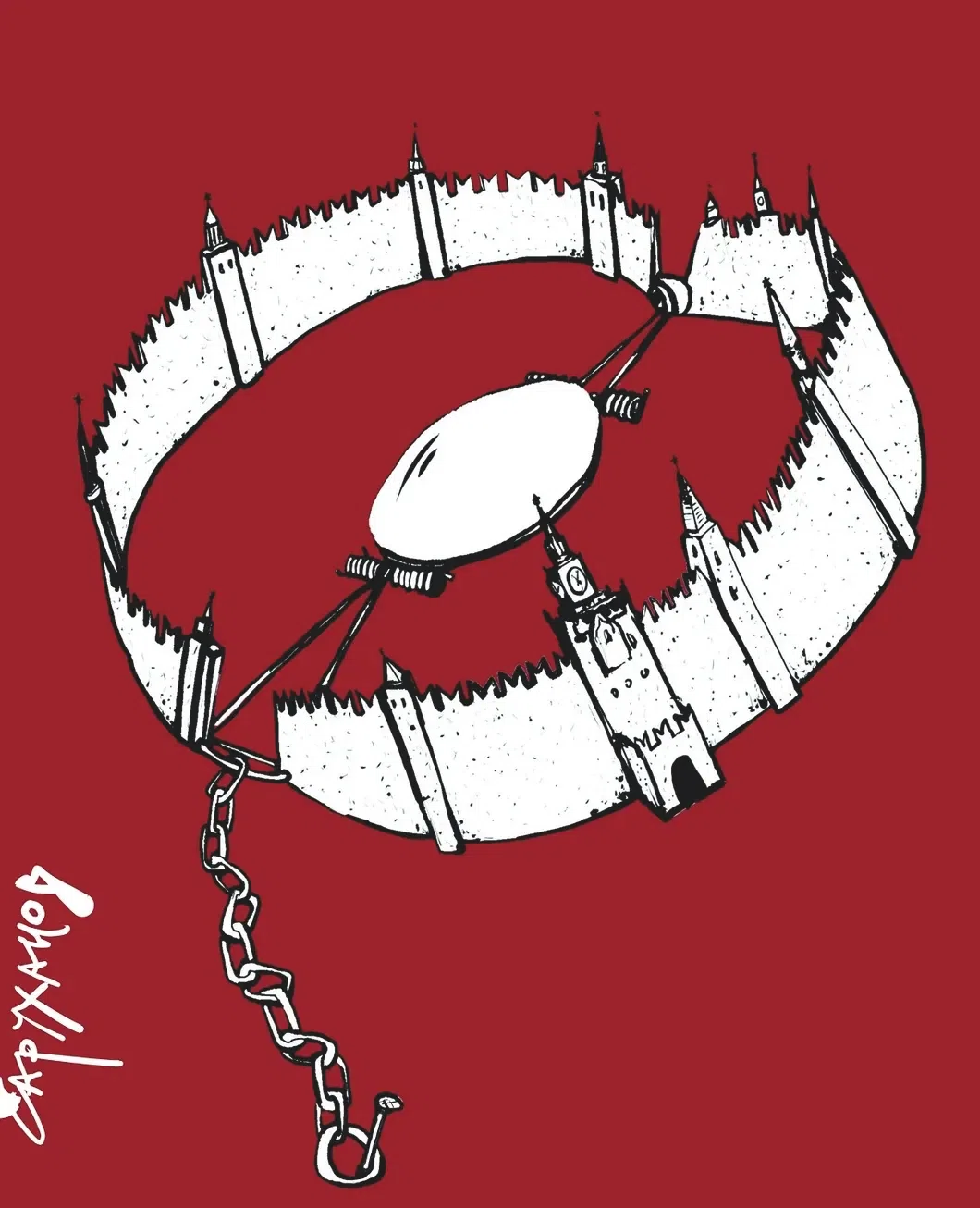
Fortress besieged from the inside
The Kremlin who quarreled Russia with the whole world set about "internal enemies"
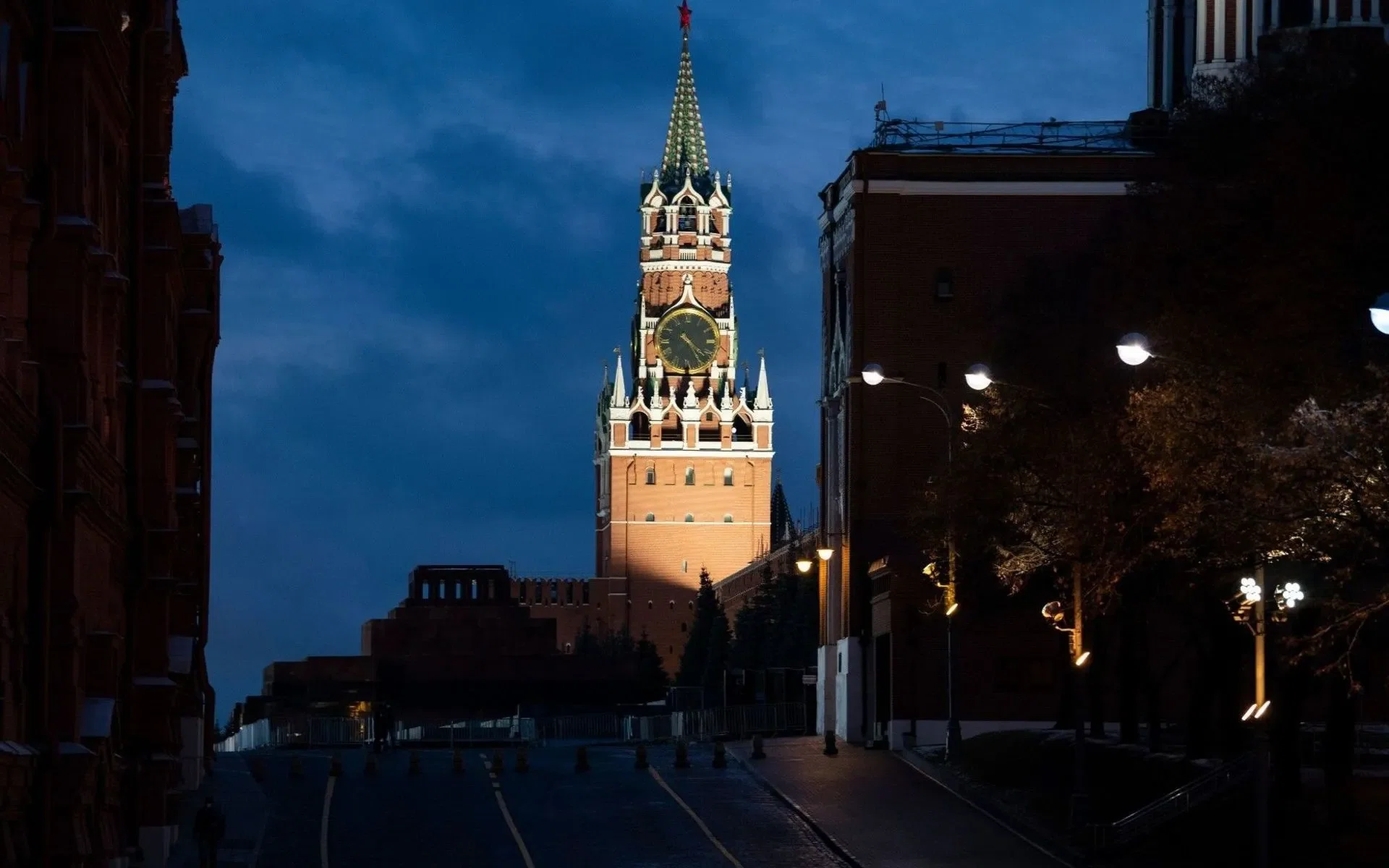
The image of the “besieged fortress”, surrounded on all sides by enemies, has been created by the Kremlin for the past one and a half decades. This began after the first Kyiv Maidan and Putin’s statements that the collapse of the USSR was the "largest geopolitical catastrophe of the century."
Accordingly, the main efforts of the authorities were focused on the external front. Where there were more and more enemies, and friends - after the recent Karabakh war and refusing Armenia, there were almost no remaining around. The past year has significantly changed the picture: the Kremlin behaves as if the fortress was besieged from the inside. Seeing the main threat not to external, but internal enemies (although partially associated with external).
It seems that there were no serious reasons for overcoming the guns inside the fortress. Neither the Moscow protests of the summer of 2019, nor the successes of the opposition in the elections to the Moscow City Duma, in the municipal elections in St. Petersburg and in Pskov have not yet created a large-scale threat to the authorities, although sociology showed a deterioration in the “United Russia”.
However
The year began with a change in the Constitution and zeroing of Putin’s presidential terms, and ended with a bulk of repressive laws,
Actually declare a crime any disagreement with the policy of power.
At the same time, basic democratic principles - democratic, honest elections, responsibility and replacement of power, the rule of law, the independence of the court, the separation of powers, the priority of personality rights to “state interests” - are called “hostile Western values”, supposedly threatening “sovereignty and national security”.
Recall that Putin’s announcement on January 15, these amendments were accompanied by many expectations of the “transit of power” upcoming after 2024. There was no optimistic forecasts on this topic - meanwhile, the author of the article was one of the few skeptics, from the very beginning (“New Gazeta”, 01/15/2020) suggested that it would be “transit to himself” because Putin does not intend to change the constitutional structure otherwise than to maintain a dominant role for himself. And he was the first who, as soon as the text of the amendments appeared, predicted (“New Gazeta”, 01/20/2020) that the proposed changes “Rules of two terms” are intended solely in order to reset the previous terms of Putin's reign.
Many did not believe then, but after the “amendment of Tereshkova” had to be believed. Actually, only this (and even in the lifelong inviolability of the ex-president) was the only and main goal of the amendments-everything else was either a smoke curtain of empty and legally non-meaningful formulations, or frank demagogy, or the consolidation of the existing order, or some strengthening of the Presidential power. In the very political structure, almost nothing fundamentally changed - and that is why the entire “correctional” campaign was met by the vast majority of citizens with enviable indifference: no constitution on their real life did not affect either before or now, but that Putin would not want to leave power, they did not doubt it anyway.
The fact that the Kremlin’s priorities are set just like that, the citizens were convinced quite quickly: the Duma began to register projects and stamp laws aimed not at all at the solemnly promised indexation of pensions or growth of wages, but completely different.
To the announcement of “extremists” of everyone who dares to doubt the general line, to tighten responsibility for participating in “unauthorized” public actions, for prohibitions of “picket lines” (previously not required coordination), to expand the powers of the police and ensure its impunity, to block the uncontrolled authorities of information resources, and to tighten the rules for participation in the elections and relieves falsifications and the general announcement of “foreign agents” of all opponents of the authorities engaged in “political activity” (the spectrum is as wide as possible: from participation in elections and observing them to the authorities of their proposals). In the best case, opponents are declared “foreign agents”, subject to defeat in rights (prohibitions on participation in the elections and work in the civil service), and in the worst - enemies, subject to liquidation with the help of military toxicologists.
The “stormy stream” of repressive laws did not run out before the New Year, and all this, of course, like cartridges in the clip, filed in solving the problem of self -preservation of the authorities. Understanding that after its real shift, very many of its representatives are not waiting for lecture tour abroad and not well -paid positions in pre -created funds and centers, but a much more unpleasant fate: with the need to answer unpleasant questions, not having the opportunity to avoid answers.
However, it was precisely the adoption of all these laws - and before that the adoption of the zero and the law on inviolability - the Kremlin publicly revealed his Achilles heel.
Citizens were clearly demonstrated by genuine aspirations of power: a categorical reluctance to be responsible for the deed, animal fear of changes and fierce desire to prevent these changes at all costs.
And, perhaps, this is exactly what, with a de jure, successful for the authorities of amendments to the Constitution-and will be de facto with its defeat:
The annoying, unable to solve the problems of citizens, but not wanting to leave power inevitably becomes not terrible, but despised and ridiculous. &
At the same time, you should not overestimate the meaning of the accumulated “legislative garbage”: all these laws, including life inviolability, will turn from a carriage to pumpkin as soon as real changes begin. Because not a single dictator has yet been judged by the laws that he adopted for himself.
But the question inevitably arises: what next?
What is the image of the desired future, which will have to be built in return for the current authoritarian police regime?
And here, it seems, it is important to avoid one trap: instead of abandoning the old political system, starting to look for a new leader for her as an “alternative to Putin”.
No need to look for an “alternative to Putin” - no one should be “instead of Putin”.
No need to try to “restore the autocracy” (quoting Lily Shevtsova) - we must refuse him.
To abandon the personalist model, adjusted for one person, without which no important decision is made - and therefore extremely depending on the information channels for the information to him and his ability to make these decisions on time and reasonably.
Go to the system with the government, law enforcement agencies and special services responsible to the parliament, with the lack of “verticals”, with real, and not decorative, prescribed by the Constitution by federalism, and with delegation of powers and resources from the bottom up, and not vice versa.
And then you don’t have to spend time on reasoning: will this or that opposition politician become a dictator if he comes to power?
Does he have such manners now - and if there is, should they come to terms with them for the great work of the overthrow of the current regime?
From “dictatorial disease” there is only one reliable tool: the fundamental absence in the system of power of the position with potentially dictatorial and poorly limited powers.
Otherwise - again we will go along the same closed circle, stepping on the same political rake over and over again.