
Translated material
"For 20 years I have tried 15 thousand beer varieties"
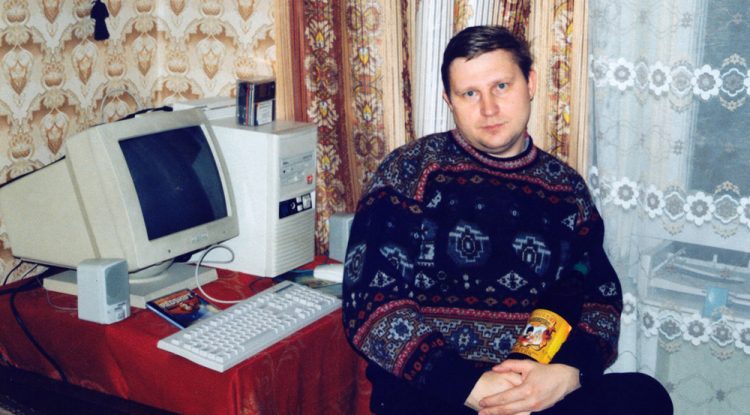
The author of the oldest beer blog Pavel Egorov - about how he quit his work on Channel One and devoted his life to beer
Since the late 1990s, 53-year-old Muscovite has been conducting a non-profit blog about beer-publishes reviews and collects virtual collections on beer themes. Egorova on the Internet is called a beer historian - he studies all kinds of documents and books related to this drink, and even himself compiled an encyclopedia of Soviet beer. Pavel Egorov told the “cold” why it is important to maintain the history of the disappearing brewer, what kind of beer was actually in the USSR and why Russia is now the most interesting place in the world in terms of beer.
- I read that you tasting two varieties of beer per day. Is that so?
- Something like that, yes. For 20 years, I have tried about 15 thousand beer varieties. On average, I try 500 varieties per year, but I do not do it every day. Usually, during some trip, I go to the beer bar and there I can drink varieties ten per day. A few can be represented by brewery, so I can try 20-30 varieties in a day, and then I don’t drink anything new for a month.
- That is, you do not drink beer every day as necessary?
-Every day I drink something simple, and tasting is a separate question. In the modern craft movement, hundreds of brewers, they make a huge number of varieties, and I began to notice that I no longer have time - many things pass by me. We need to try more than two varieties per day in order to at least just keep track of what is happening in the craft movement in Russia and in the world.
- There are periods when you do not want to drink beer?
- This is the only product from which I cannot get tired. Unless now I have chilled and did not drink for two weeks. But I have had two or three such periods since the beginning of the 1990s. And so, of course, I drink beer daily.
- You have been a blog about beer for more than 20 years. How did it all start, why is it beer, and not other alcohol?
- I became interested in beer when I went to the institute - it was 1984. But I tried it earlier, even when I went to kindergarten - we had a beer on pure ponds, my father often went there, gave me a sip to try. There were the most delicious salty lambs! But I began to really drink beer when I went to college. Why beer? Because, firstly, it is tasty, secondly, not so expensive, thirdly, it is most harmless from alcoholic beverages. Well, in those days, it was generally intense with alcohol, in 1985 an anti -alcohol decree was issued (this refers to the Decree of the Presidium of the Supreme Council of the USSR “On Strengthening the True of Drunk and Alcoholism, the Enjoying of the Council of Complex”, which was published on May 16, 1985. - Note to “Cold”) . Then in general there was a problem to get something, including beer.
- Do you remember when exactly you decided to start a blog?
- It all started gradually. In the days of the USSR, I drank beer when it appeared on sale. In the 1990s, he began to drink more, because it could already be found almost everywhere. Mostly I drank beer from the local plant - I live in Chertanovo, we have not far from the Moskvoretsky Pivzavod. And somewhere since 1996-1997, such a boom went! A huge number of regional brewing manufacturers began to import beer to Moscow, so dozens and then hundreds of beer varieties appeared in Moscow. Naturally, I tried to try them all. And I had the idea: why not soak the label and put it in the collection? So I began to smear one or two labels. Then he thought: is anyone else doing this? Then the Internet has already appeared-it was the second half of the 1990s. I looked - it turns out, yes. There were already people who collected beer labels, a collection club appeared. And from here a more serious hobby began.

- You have on the site not only beer reviews and beer establishments, but also GOSTs of different years, a collection of labels, badges about beer, there is even an encyclopedia of Soviet beer. How and how much did you collect all this information?
- After I saw that people were collecting labels, I created my small page where I wrote about my labels. And a year later, together with other comrades, we created a large site, about which we are now talking with you. Then it was also called Beer.artcon.ru.
We combined several parts: I mainly talked about labels and beer, and my friend Maxim Lubyanov talked about beer, collected all sorts of pictures and jokes. That is, at first there was a beer attributes, this is still, probably, the main part of the site: labels, banks, stands, traffic jams and so on. Still - my stories about various beer and about trips, recently these are also stories about brewers. Then I began to look for interesting information and began to collect everything that is: various documents related to the USSR, all kinds of GOSTs, books, everything that can be found and what relates to beer. Some things, on the contrary, began to clean up: all sorts of pictures and anecdotics there, which are already everywhere.
- It turns out that at first the site was a collective work, your and your friend?
- Not only we together [worked on it], other people joined, because it was hard to embrace. Kolya Moroz was engaged in beer stands, then a man appeared who was engaged in beer news. People came and left, but the last ten years, even more, I have been engaged in the site.
- Where do you have all this beer attributes?
- I have my own collection of labels, now there are about 50 thousand of them - they are simply laid out on folders. Usually a sheet of paper is taken, a label is glued to it, the label is in the file, the file is in the daddy. About a thousand pieces climbs into one folder, so I have 50 daddy-a huge such closet. There are still banks, they are difficult to collect, but I also have a huge closet with them. About a thousand cans climbed there, and another half thousand cans are simply laid out around-it is already difficult to put them somewhere. Well, another huge bookcase. The rest is virtual, that is, a selection of stands, matchboxes, badges and other things - these are not my collections, but other people. I just scanned them, systematized and published.
I still have beer glasses, but I know what real collections of beer glasses are, and I can’t consider my own full. Yes, there are a hundred, but real collections are thousands.
- In the list on your site about 250 books about beer. Have you read them all?
- A significant part of them are brewer textbooks, I don’t read them from beginning to end, but at least I looked through everything. I read the rest from crust to crust. It’s just the point of reading a hundred textbooks on brewing-they differ only in the nuances and the date of publication: before the revolution, after the revolution, the 1970s, the 1980s. Only the difference in the approach is interesting there, how much the technology and so on the like has changed.
- Is it difficult to look for books on a beer theme?
- Now the Russian State Library is digging old books, and it is not difficult to find pre -revolutionary publications. You just need to register on the site of the former "Leninka", and there you can download all these books. With Soviet books, it is more difficult - in the digitized form there are much less, probably, this is due to copyright. I try to buy paper books at all sorts of auctions, so I have the most Soviet books at home. They are often sold inexpensively: some library “throws” its funds, lays something for sale. Recently, one of the thickest and most interesting textbooks of the late 1960s bought for a thousand rubles.
- Why are you interested in the story of beer?
-The bulk of consumers about beer does not know anything, but if people know something, then this mainly concerns foreign beer-the history of monastic brewing, something about Belgium, England. And almost no one knows anything about beer in pre -revolutionary Russia and the USSR. Therefore, I am engaged in this particular period, especially the USSR. Oddly enough, there are few information. Brushing textbooks were then published, and there are practically no books on the history of beer in the Soviet Union, so it is quite difficult to restore the history of brewing of that time.
But, since I have a huge collection of Soviet labels, at least, I see what brewers existed, what varieties they cooked. I have a reference for varieties. And I am trying to show that the beer in the USSR was not only “Zhigulevskoye”, but different things that were interesting varieties, when these varieties were cooked, what a story they had. I am interested in it, because few people know it and few people do it.
There are many legends about Soviet beer. For example, where did Zhigulevskoye come from: how [the People's Commissar of Food Industry Anastas] Mikoyan came to the plant and said: “You have beer called in bourgeois,“ Viennese ”, let's call it by the name of your plant“ Zhigulevsky ”.” I still cannot find documents confirming this story. The modern "Zhigulevskoye" is not at all what was in the 1930s-then it was completely different to taste, in the recipe, in color. And this is actually very interesting. The last 10-15 years I have been trying to excavate everything that is possible, but then you have to dig completely deeply-in the archives, probably, there will not be enough life for this.
- Until 2013, you worked on Channel One, what did you do?
- I was a network administrator, that is, I was engaged in the construction of a network, which is on the outlet and in other departments. For some time I had the opportunity to deal with a hobby at work. But in recent years, duties have been greatly increased, and it was no longer before that. Maybe that's why in the end I quit, as it was possible not to work, and it was more interesting to engage in hobbies.
- That is, you left work precisely for the sake of a hobby?
- In general, yes. It began to occupy more and more time. I just have some investments, savings. There is enough life. And the blog brings me nothing in money. But [owners of brewer and bars] can pay me the way, drink beer and feed me.
Now I am maintaining the history of modern brewing, which no one else wants to preserve. If there are no people like me, then after some time about many breweries will forget everything, no one will remember that they existed. Already now, there are no information about some of the 1990s brewery.
- Why keep the history of brewer?
- We have to know about everything! I have already said that we are better known about German, Czech, English or Belgian brewing than about our Russian. Because abroad they retain history, you can find many books translated into Russian and all kinds of reference books about beer. You will find a bunch of information about Czech, Belgian brewery, and there is practically nothing about ours. The hole is formed. Someone was brewing this beer, someone produced new varieties, but they forget about this, and information about this is not saved anywhere. Why not save history? It's beautiful. Books about beer that are published, beautiful, all these photos of breweries, bars, mugs, why not make it to us? More precisely, they publish, but not about ours.

- It turns out that a large layer of culture is lost ?
- Yes. In fact, the very culture of brewing, maybe inferior in some way wine, but now such a concept as craft has appeared, and it has raised beer to the level of wine. And the consumption of beer is now no worse than the consumption of wine. We have a gigantic number of varieties that are difficult to figure out - a sommelier is already needed. And although you can argue if there is such a thing as a beer sommelier, but we have already advanced forward that really in the bars we need a person who would explain to the consumer, what beer is suitable for him, talked about the taste. This is a huge layer of culture of drinking drinks.
- How long does it take to keep a blog a day?
- It depends on the workload. In 2020, due to coronavirus, he occupied less than half of the usual time. But if you take the previous few years, it takes no less than ordinary work: six hours, or even eight per day.
- Now a blog for you is work, a hobby or something more?
- This is the meaning of life. Although I now understand that the demand is not very high. There are not so many people who are seriously interested in beer. Plus, the video format is more valuable now, and the text plays a smaller role. It is worth, of course, to engage in YouTube blogs-there is more attendance. On the other hand, I watch the YouTube Canals that my friends lead , and I think that the most cool, most serious, most interesting are just the least visited. And the simpler, the more hype at the channel, the more he is popular, although they say all nonsense there. I don't want to carry nonsense. I would like to tell something serious. But I understand that not many people are interested in serious. While at least someone reads me, I have some thousands of visitors, why not write on a blog.
- What is your traffic?
- Now my blog is practically divided into two parts: there is a site, but there is LJ. A total of 500 people per day comes. About 15 thousand visitors per month.
- It is quite normal for such a narrowly focused blog.
- In principle, yes! Jumping above is very difficult. I think 10 thousand a month is normal, 100 thousand is already a ceiling. But if we talk about [blogs that visit] millions, then this is a hype, which has little to do with beer, and more to the form of feed. There you will not find anything special about beer.

-You have a very old site from the 1990s. Do you specifically leave it like this or will you update it?
- There are two points. On the one hand, it is gigantic: due to the fact that there are all sorts of collector things, it occupies gigabytes of volume. And to make a new one will be very laborious. I have something to live on, but I, most likely, will not find money for investing in a new site. And on the other hand, I am a system administrator, everything that is there was done by my hands. I do everything myself, and it is not difficult for me. As such, there is no design, there are pictures and text, and I believe that it looks accessible and decent.
- There were periods when you wanted to quit a blog, because you are tired of a beer theme?
- My interests just changed inside one topic. Initially, there was a beer attributes. Then, at the beginning of the craft revolution, when there was a boom of craft bars in Moscow, I was only engaged in the fact that I traveled to the new bars, describing this consumption culture. In recent years, I have been mainly engaged in brewing industries and more often go to all sorts of brewers. In fact, I probably got tired of one and went to another. For some time I was engaged in home brewing quite actively. A lot of things can be done - this topic is so wide.
- Where to start a person who wants to understand beer?
- I would start by sharing the concepts of taste and quality. They are often confused, and these are slightly different things. A person most often likes the taste, but he does not understand as he. Quality is such quite technical things: the content of various substances, resistance, compliance with the style, etc.. For example, I know perfectly well that if the manufacturer boasts that its “living non -den” lives for three days, then this is an indicator of low quality or just antisanitaria in production. At the same time, there are quality defects that even improve taste. Therefore, someone may like poor-quality beer, and vice versa.
Now, due to craft movement, special reference books, the so-called BJCP , are created for judges who evaluate beer to taste, and various beer associations are created by the results of the results. Such lists are in English, there are translated into Russian, where it is clearly painted how beer is divided by styles, what style should have any tastes. You can come to the bar, ask for a beer of a certain style, try and compare with the description. If you like sweets, then you can try different steats, if you like sour, you can try labits, and so on. After reading the description of the styles and their history and trying beer, you will gradually begin to understand.
- Russian beer good compared to world competitors?
- Probably, now Russia has been in second place in the world. Of course, we are far from America, there are probably already seven thousand breweries there, and we have one and a half. Therefore, we are unlikely to ever catch up with America. But if we take Europe, then, perhaps, now Russian beer is no less interesting than Belgian or British. And I think, already more interesting than Czech and German. On the one hand, we have brewers who are no worse than the Pivigigans of Germany and many other countries. On the other hand, we have a layer of regional breweries, which boil a little different beer, no worse and no better than in the Czech Republic, Germany. We also have mini-brewers that produce various classic and non-classical varieties. But most importantly, it was precisely the craft movement that has gone recently, dozens have arisen, if not hundreds of breweries, which are cooked precisely by craft. And here we overtook the Czech Republic, and Germany, and other countries. Therefore, Russia now, I think, is the most interesting country in terms of beer, since we have everything.
In general, I believe that Russian brewing is very powerful. This is one of the few industries that shot and developed, no matter what - after all, we have the legislation, perhaps the most idiotic, the most terrible throughout Europe.
- How exactly does the legislation harm brewing?
— У нас просто приравняли пиво к крепкому алкоголю, и это привело к куче негативных последствий: запрет продаж в определенном месте и в определенное время, запрет распития в определенных местах. У нас есть разделение на пиво и пивной напиток, хотя во всех странах это одно и то же. Государство постоянно пытается что-то новое придумать. Сначала они ввели эту сложную электронную систему ЕГАИС (Единая государственная автоматизированная информационная система учета объема производства и оборота этилового спирта, алкогольной и спиртосодержащей продукции. — Прим. «Холода») , чтобы все посчитать, но оказалось, что этого мало. Теперь надо еще и маркировки наклеивать. В общем, постоянные наезды и постоянное ухудшение работы. Соответственно, бизнес, особенно малый, очень тяжело это переживает. Тем более в нынешние времена [пандемии].
Пивгиганты всегда выплывут — а для средних и малых заводов, конечно, сейчас очень тяжелое время. Cтали закрываться пивные заведения, появились ограничения на посещение, а основной канал сбыта малых пивоварен — это, конечно, бары и специализированные магазины. У всех упали продажи. Я не думаю, что на малых пивоварнях можно много заработать. Скорее, это про энтузиазм: если тебе хочется этим заниматься, хочется показать, как ты варишь пиво, ты хочешь продвинуть эту культуру, то ты этим занимаешься. Что-то ты заработаешь, но богатым не станешь.