
Translated material
Navalny crossed the border
He knows that he can be planted immediately after arriving in Moscow, and still decided to return. Who else will share his fate - so as not to live by someone else's will
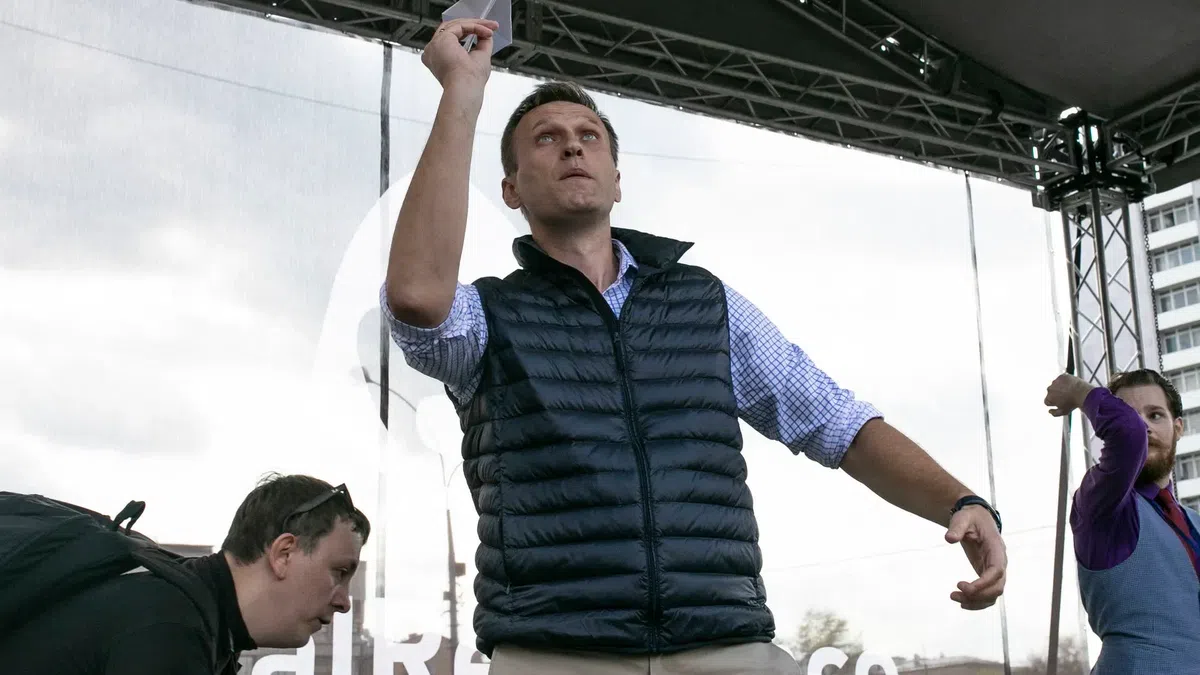
Navalny put an end to the speculations about his further plans, saying that he had bought a ticket to Russia. On the next Sunday, at Vnukovo Airport, his supporters, journalists and security forces will be met. The latter, most likely, will have an order to detain the politician immediately after crossing the border.
What is the meaning of this gesture? Someone says that Navalny can quite successfully engage in anti-corruption investigations from Germany.
Others can not understand at all how a person can voluntarily go to prison, sacrificing quite specific personal comfort and security for the sake of such an abstract thing as political values. These doubts look even more justified taking into account the circumstances of the evacuation of Navalny from Russia in August last year.
After the poisoning of Navalny became a major factor in international politics, the cause of the new sanctions of the West in relation to the Russian leadership, as well as the plot of the evil folk satire for the adventures of the FSB agents, the Kremlin unequivocally hints that the return of the policy to Russia is undesirable. Officially, the position of Russian officials is that there is no reason to investigate the coma of Navalny, and propaganda is no longer trying to answer the question of what it was, if not poisoning. The refusal of the investigation means that in all future cases no one guarantees Russian citizen Alexei Navalny protection by Russian law enforcement agencies.
Moreover, the business of these structures now consists in protecting the Kremlin from the presence of a politician in Russian public life. On the eve of the New Year, the Investigative Committee opened another criminal case against Navalny - supposedly on suspicion of fraud with funds donated by Russian citizens for the activities of the Corruption Fund. Immediately after the Christmas holidays, the Federal Penitentiary Service demanded to replace the conditional term in the Yves Rocher case. “You yourself understand everything, citizen, do not take new actions,” as if the Russian authorities tell their undershated criticism.
A day after Demarsh, the FSIN Navalny invites everyone to see him at Vnukovo Airport - at home. Cynics will see in this exclusively a desire to extract maximum political bonuses from the assassination attempt to kill, because every month that Navalny will lead outside of Russia, according to many, will lead to a decline in its influence in the country - it is precisely this that the security forces and sympathetic are now relying.
But in the actions of Navalny, it seems, there is another - more fundamental political meaning. For many years, the Kremlin accustomed us to the idea that the only political subject in the country is himself: the authorities act, the rest are undergoing. When the elections are falsified, for example, this is somewhere there highly specially trained people made such a political decision. When countless repressive laws are adopted - this is such a historical moment, the authorities are more visible. And if, for example, the opposition is given two years conditionally instead of a prison, this is, of course, a thaw and liberalization. But in this last case, political entities, people of “long will” sit in the Kremlin, who, at their discretion, dispose of the population.
The return of Navalny to Russia under the threat of a prison means that he does not want to be in this alien will.
As a free person and citizen of a great country, he demonstrates that he himself is able to determine his fate: without the hints of the authorities and the help of "senior comrades."
The theorists of modern republicanism understand political freedom this way: one who is not in the voluntary will of the other is free. When a certain dictator has already decided your fate, the only way to protect his freedom is to put everything on the end and contrast this arbitrariness.
After his “resurrection” with the subsequent exposure of the poisoners, Navalny acts as a political subject - this is what his visit to Vnukovo says, and this decision causes observers who are accustomed to the new Russian autocracy, so many questions. The return of the policy breaks the crosses of domestic political culture, where each action requires consultation on the old area.
More importantly, in the role of Navalny, albeit with less personal risks, there are now thousands of people throughout the country. Doctors for whom professional honor is more expensive than a career. Teachers who are not ready to participate in falsifications. Journalists who refuse to carry out propaganda orders. Volunteers who will not throw their case under the threat of criminal punishments for the “foreign agency”. Scientists who do not agree with the law on “state regulation of educational activities” and will not put love for the authorities above scientific truth.
Each of these people is fighting not to be in someone else's voluntary will, to maintain the opportunity to act independently. If you take them into account, the alignment of forces after a meeting in Vnukovo seems completely non -evident.