Translated material
"This is our Holocaust"
In the shelters for single mothers in Ireland, nine thousand children died in 70 years-every sixth child. Details of the national scandal
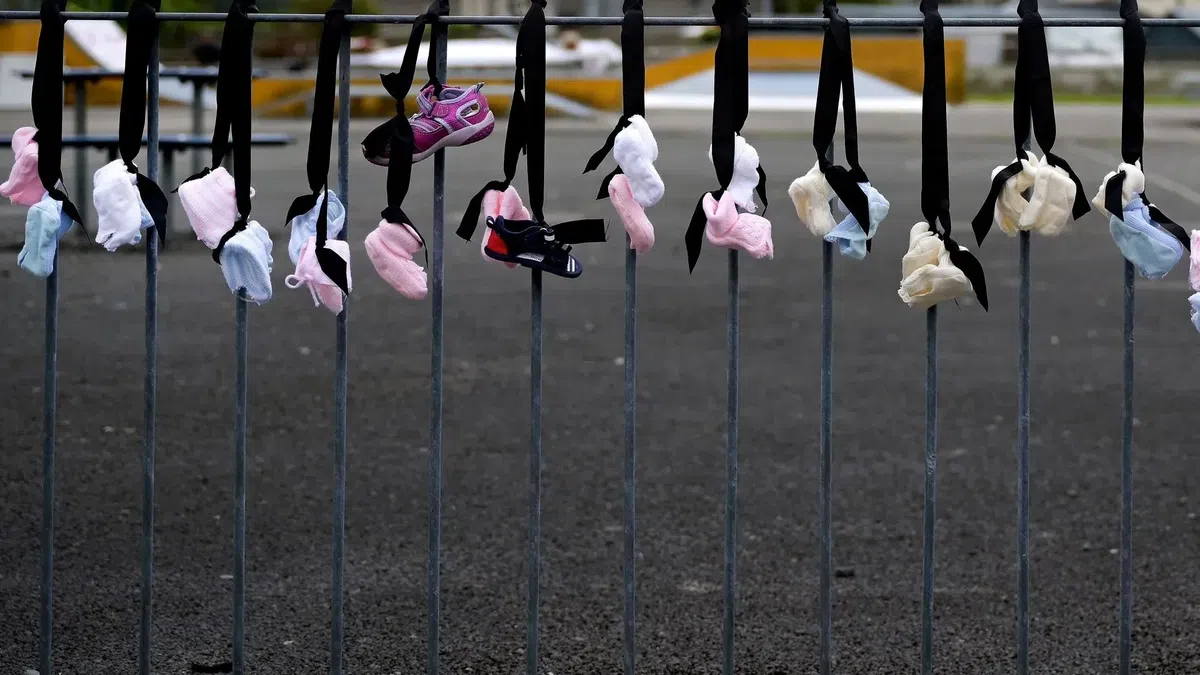
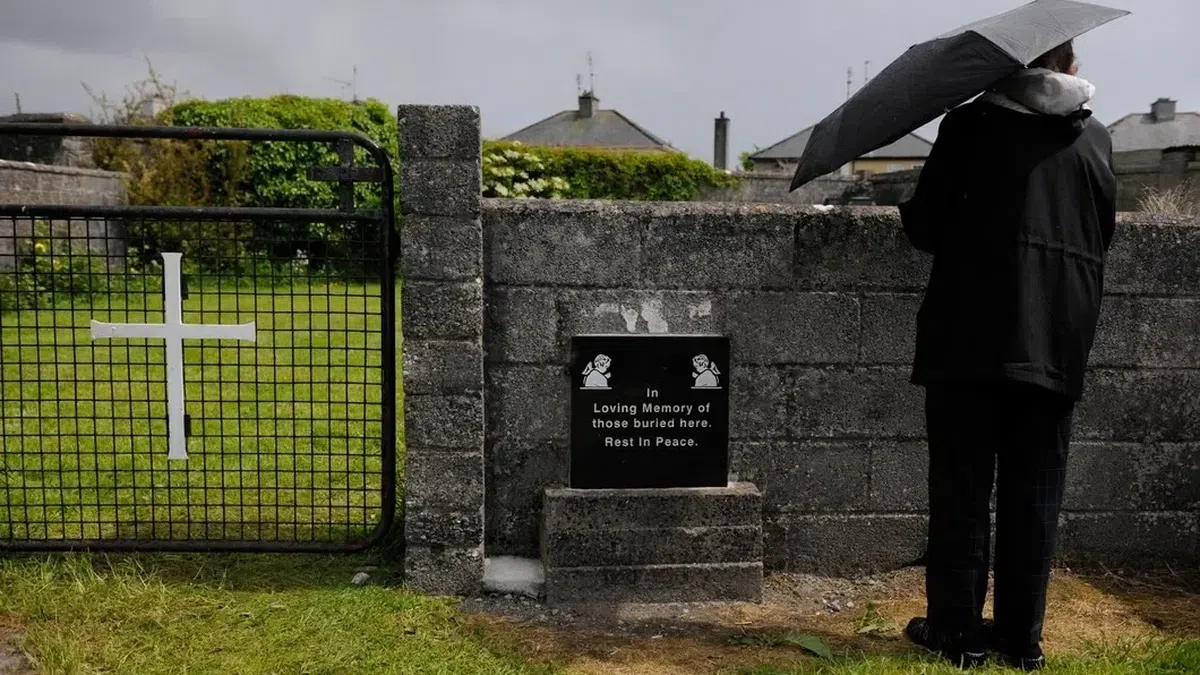
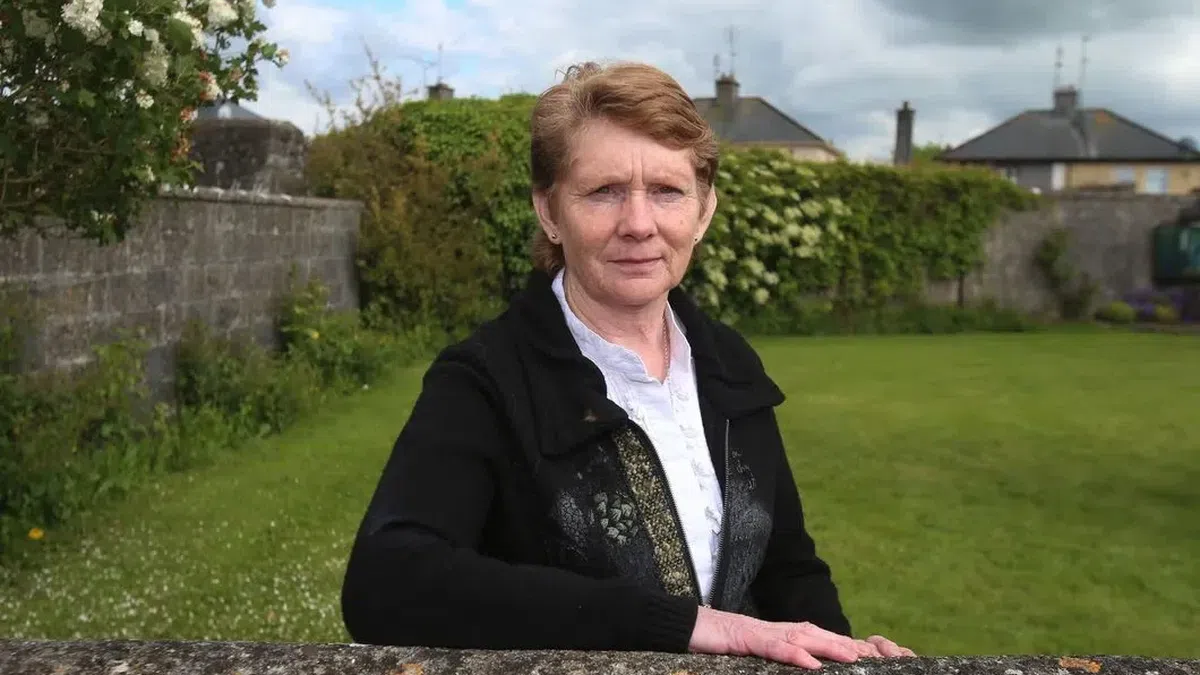
In 2014, the British historian Katherine Corlis discovered a mass burial of almost 800 babies on the territory of the former house and child in the west of Ireland. Corlis found out that 796 children died in a shelter and were buried in the cells of the former wastewater tank. History attracted the attention of the media and shocked the Irish society. According to the results of a five -year investigation , the government commission of Ireland revealed that from 1922 to 1998. In 18 shelters for single mothers, nine thousand children died-this is about the sixth child from Irish shelters for single mothers.
The country's Prime Minister Mikal Martin official apologies to all the victims, saying that the state had failed them. “I want to emphasize that each of you got into the shelter due to errors of others. Each of you did nothing wrong and deserves much better, ”he said, speaking in the House of Representatives of Ireland.
Why did the Irish society not notice such mortality figures before?
Women were forced to go to shelters
In the 20th century, Irish society considered an illegitimate pregnancy unacceptable. Families refused such women. And they had no choice but to go into the shelters.
The establishments differed from each other in the management system and financing methods: some of the studied institutions belonged to local healthcare authorities and managed them, others were subordinate to religious structures. In a number of them, the conditions were tolerable, but it was very difficult to live in others, the commission notes.
There was no evidence of women's coercion to premises in shelters, but unmarried pregnant women simply had no alternatives due to the lack of livelihood and censure of society. For many women, the experience of the child became traumatic: a series of guests became pregnant after rape, some had mental health problems. Soon after childbirth, women were separated from the children in the shelter.
Before in 1953 the institution of legal adoption appeared in the country, children were usually sent to other state or church institutions. And they lived there. As soon as legal adoption became possible for children born in shelters, this was the most likely continuation of life.
In 1967, the number of infants adopted in Ireland, born out of marriage, was 97%; It was the highest rate in the world.
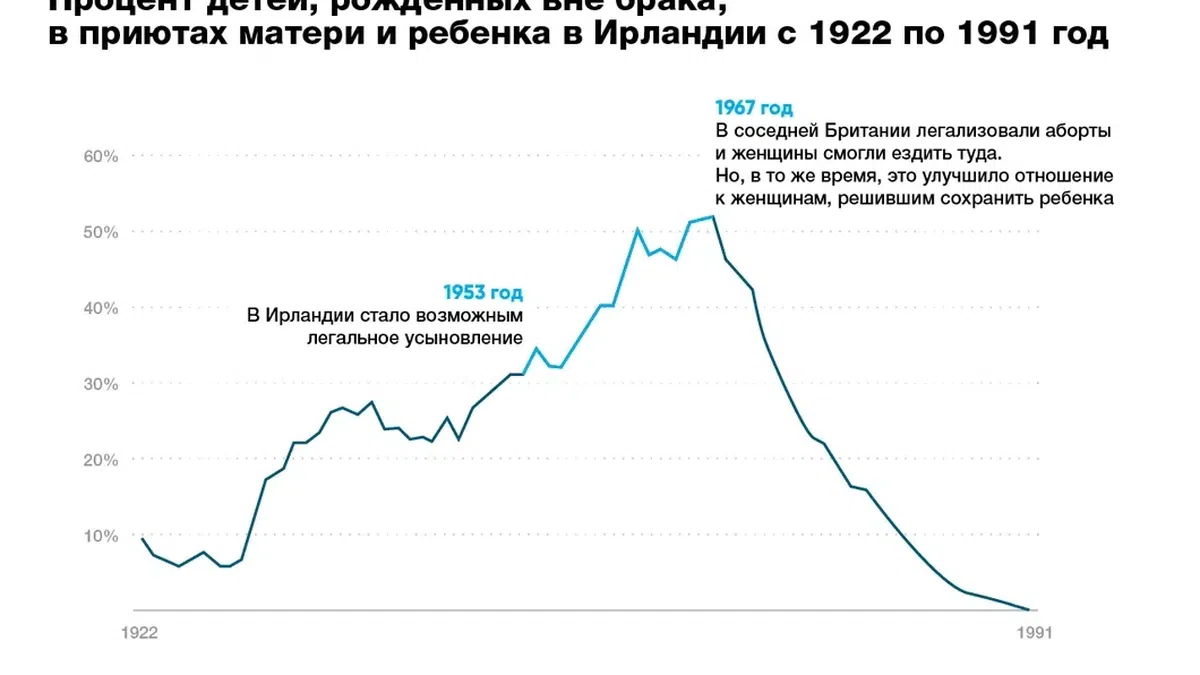
Although many special shelters for unmarried mothers in the 1970s were closed in other countries, in Ireland women continued to give birth in such institutions.
"The babies were mainly neglected"
Now it turns out that discrimination was subjected not only by mothers, but also by children born out of marriage. The conclusions of experts really became shocking: the dead nine thousand children are 15% of all the kids who were in Irish shelters for single mothers for 70 years, taken as a temporary interval in the investigation.
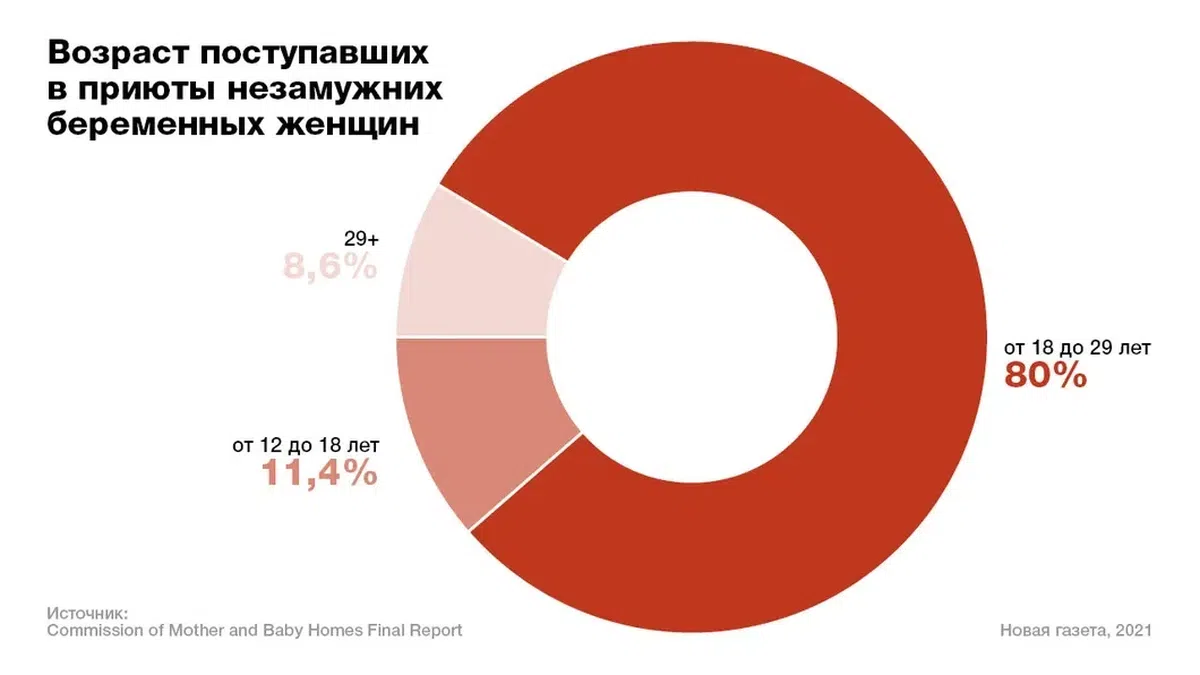
In total, the commission studied information about 56 thousand unmarried mothers and about 57 thousand children in shelters.
The report states that for 20 years (in 1930–1940), more than 40% of children in the shelters died without living until their first birthday.
Experts called this trend the most alarming.
Mortality among illegitimate children has always been higher than among those born in marriage, but in shelters these indicators were prohibitive: in 1945-1946. They twice the mortality on average in Ireland among children born out of marriage. Until 1960, in shelters for unmarried pregnant women, not only did not save children, but often reduced their chances of survival, counted in the commission. The authorities were aware of very high mortality rate, they were recorded in official publications.
It is likely that another 25 thousand unmarried mothers and another number of children were in district shelters that were not included in the investigation. Reception of unmarried pregnant women in such institutions lasted mainly until the 1960s. Experts noted that the conditions in county shelters compared to other institutions for unmarried mothers were worse. However, this concerned not only county institutions for mothers, but also for other citizens: for example, disabled people and elderly people.
Historian Katherine Corlis, speaking on the territory of the shelter in Tuam, where the mass burial of babies was discovered, noted that the Roman Catholic Church formed a position in society according to which a woman is sinful if she gives a child out of marriage: “At that time there was very little respect for illegitimate children-they were mostly neglecting. I believe that with a little attention to the hygiene and the care of many babies could be saved. ”
Sky News managed to talk with a woman named Vinnifred Karmeel Larkin, who was born in Tuam in 1949 and lived there for 5.5 years, until she was taken up to her family. She is still angry with how she treated her mother, whom she had not seen since childhood. "This is our Holocaust, isn't it?" - said Larkin. She never saw photos of her mother and does not know where she is buried.
The authorities intend to help the victims
The commission did not find evidence that politicians and the public were concerned about children born in such houses, despite the “terrifying level of children's mortality”.
The authorities apologized to the victims not only for what had happened, but also for the leakage of information, as the promise was violated that the victims were the first to see the report before the publication. Officials also plan to provide financial support to specific groups mentioned in the report. In addition, they want to adopt laws that will allow excavations, exhumation and, where possible, identifying the remains at the burial places. The issue of compensation and legislative norms that can help mothers and children find each other is also considered if they want to do this.