
Translated material
Magic country in depression
Review of Nikolai Epple on Piranesi Suzanne Clark
At first glance, Piranesi Suzanne Clark seems to be a simple, if not primitive, novel, who makes curtsies towards Borhees and Clive Steaples Lewis. Nikolai Epple - about why this fantasy thing is not as simple as it might seem to the reader who is not immersed in its context.Suzanne Clark. Piranesi. SPb.: ABC, ABC-Atticus, 2020. Translation by E. Dobrokhotova-Maikova
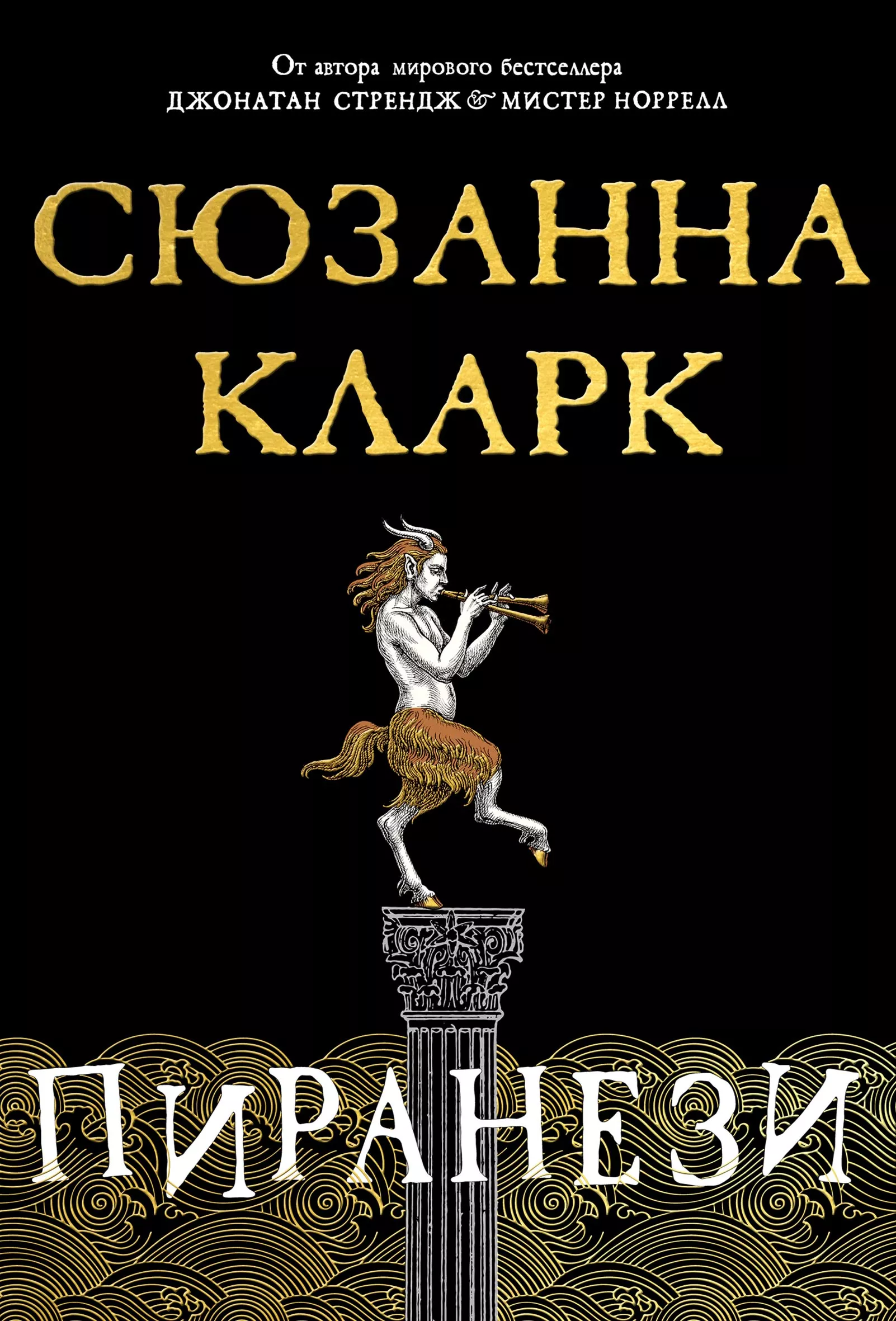 Without exception, all the review of Suzanne Clark begins with the fact that he does not look like the first - Jonathan Strande and Mr. Norrell, fantasy about parallel magical England. But in fact, he is not just not like, but forms an ideal pair of it. The novel about two wizards had a multi -page and multi -figure composition, in which there were a lot of details and attributes of the magic world, but there was no core - not a word about what this very magic is, where it comes from and how it works. The second novel is the complete, perfect opposite: a chamber, relatively short and extremely simple story, in which the attributes are absent almost completely. At the same time, both novels, so different, are connected by a single topic - the theme of the departure of magic from the world. It seems that it is precisely because of this evidence and simplicity of Piranesi that is the perfect material for all kinds of interpretations, interpretations-and just reader observations.
The plot is extremely simple. The main character of the novel is a house, a huge, infinite space that looks like the inside of either the Palladian palace, or the ancient Greek temple - endless halls, lobby, galleries and stairs. The lower floors are flooded with water and abound with fish, clouds are in the upper ones and birds nest. The halls are entirely laid up by thousands of classic statues - minotaurs, kings, dads, favins and satires, men, women, children. About half of the novel time “in the frame” is only two-the Piranesi actually “beloved child of the house”, exploring the infinity of his halls and writing down everything that is happening to him in the diary, and another, twice a week, coming from somewhere to work with a pyranesi on the search for great secret knowledge, then to return somewhere to “their halls”. Piranesi spends time traveling around the house and its mapping, fishing and helping another in finding knowledge. And he is in communicating with the house: everything that happens for him is meaningfully and imbued with love at home to him and care for him. In addition to these two, there are only 13 people in the world famous piranesi - the dead, whose bones he carefully cares about. Over time, however, it becomes clear that the world is not limited to these actors, and the house is a different world, a magical space discovered by a group of scientists with a dubious reputation.
The path to the house was found by the ethnographer-Office of Lawrence Arn-Siles (we recall Uncle Andrew Ketterli from the “sorcerer’s nephew” Lewis or professor Weston from his “space trilogy”), who suspected the descriptions of the world with an ancient person and modern ones not only in the fact that the human consciousness has changed, but also in the fact that the world has changed and a way of interacting with him. Once he was alive and was in communication with a man, and over time, a person more and more concentrated on himself and stopped hearing the world and perceive it as a living beginning-and the world closed.
“My first insight happened,” tells the hero himself Arn-Siles, “when I realized how much people lost. Previously, they knew how to turn into eagles and fly over huge distances. We talked with rivers and mountains, absorbed their wisdom. They felt the circulation of stars in their minds. My contemporaries did not understand this. They were carried away by the idea of progress and believed that the new one is certainly better than the old one. As if good - the function of chronology! However, I thought that the wisdom of the ancients was not completely lost. Nothing completely disappears. This is simply impossible. I introduced it as a kind of energy, flowing out of the world, and thought that she should accumulate somewhere else. It was then that I realized that there should be other places, other worlds. And he set himself the task of finding them. ”
What happened that can be described as the departure of magic from the world. Here, Clark uses the eloquent image of the water leaching the underground system of caves:
“Imagine the water current underground. She oozes a year after year through the same cracks and erodes the stone. After a millennium, a system of caves arises at this place. However, the water that originally created it is no longer there. She leaked for a long time. "
Arn-Siles not only opens the way to this world, but also creates around him a circle of followers, whom he uses in his interests. It quickly turns out that a long stay in the house is erasing the memory, and Arn-Siles sends several people there, sacrificing them with reason, and in several cases with life. In the reality of England of our days, Piranesi is a researcher who was going to write a book about Arn-Siles. The other (his name is Ketterli, just as Uncle Andrew from the Chronicle of Narnia) sent him to the house and left him there, giving his memories to be eager.
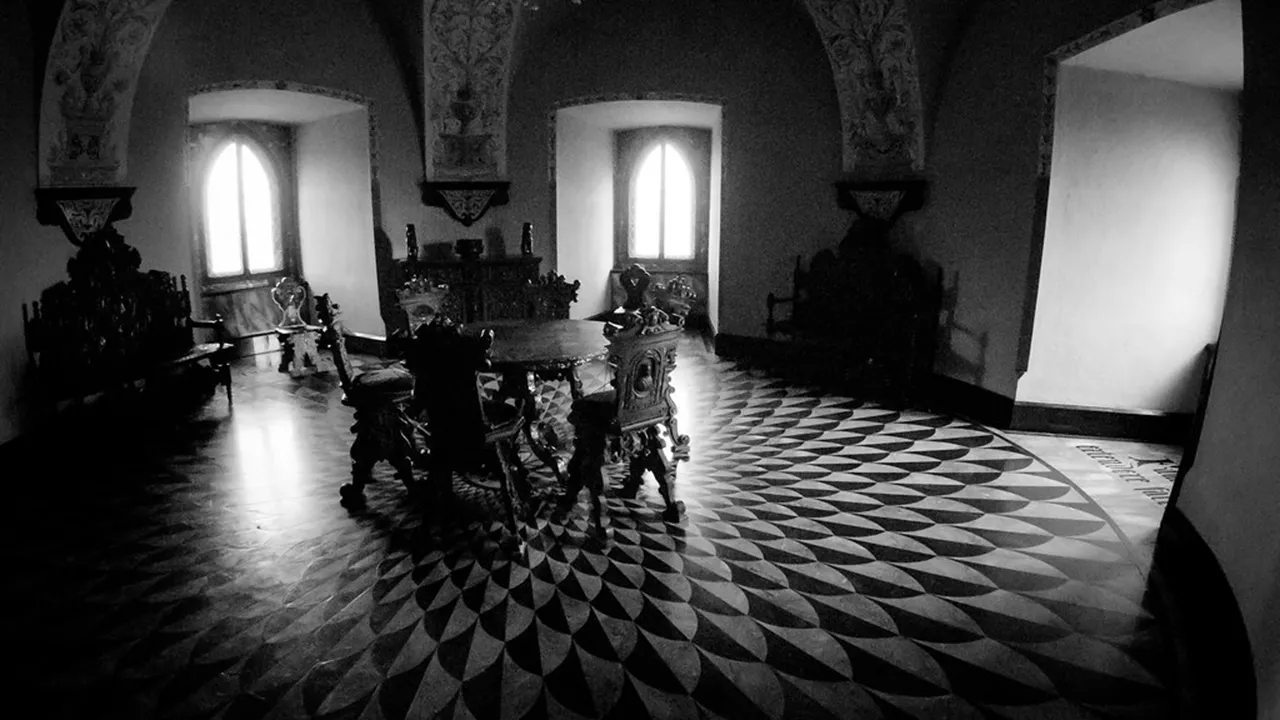
Boynitsky castle in Slovakia
Photo: Kurt Bauschardt, 2012 | © kurayba
Here is the root of the main conflict of the novel, however, remaining extremely simple and schematic. Another is convinced that the house keeps great secret knowledge capable of giving power and superpowers, and is ready, like his teacher, to sacrifice the lives of other people in order to gain it. Piranesi, at first obediently helping another in these searches, at some point understands that being in communication with the house is more important than ghostly knowledge, and the power holding on the subordination of others to his will does not attract him.
There is also no significant plot development in the book either-the intrigue is limited to how the hero learns about the existence of the outside world and finds a way to return there. No remarkable discoveries of the reader are waiting here. But Piranesi is not a detective and not a thriller, but a philosophical parable in which an intrigue is assigned a subordinate role.
The true intrigue of the novel, in any case, for those who sees Clark the heiress of the traditions of English fantasy, is how it works with the most important theme of this genre for the theme of the magical country and finding the way into it. This tradition belongs not only Lewis, but also George McDonald, Lewis Carroll, J. R. R. Tolkien and their many followers and epigones up to Joan Rowling. It is interesting that, deliberately pronouncing his connection with the Narniy (epigraph, the name of the hero, the statues of the faun and the fox, the very motive of the “forests between the worlds”), Clark develops this topic in principle in his own way. This is a very dry, adult, in English, a restrained or simply gloomy story about the path to a magical country. And most importantly - completely devoid of magic.
There is no magic in this world or in the ways of transition. Piranesi is sure that the house takes care of him and talks to him, but whether this is really so, we will not fully find out. Judging by the hints scattered in the book - not so. Vera Piranesi into the house is for the most part the naivety of a pure soul, a natural person who trusts the world around him and attributes to him, in reality, the dead and will. Piranesi catches fish in the lower rooms - and calls it the gifts of the house, he receives the necessary for life (sleeping bag, vitamins, boots) from another who deceives it - and believes that this house thus takes care of a friend less adapted to life. Piranesi provides messages in the movement of birds along the statues; Maybe they really predict the future (one of the messages works in this way), or maybe - this is also the game of the believing mind of Piranesi. Even for the transition to another world, magic is not particularly necessary: Arn-Siles, a genuine opener of the path, is able to get there without any magic tricks and mocks others, which cannot do this without resorting to the help of rituals.
But the “magic country” itself (if the house can be considered one) is very little similar to its habitual images. First of all, purely visually - this is not the natural world of Narnia or Middle -earth, and not even the Alice Garden in Wonderland, but the classic palace. The choice is quite non -trivial. Clark herself, explaining him, refers to the influence of Borges and Lewis. She calls the source of the idea of the novel by two short stories by Borgees about the Bibliotext universe ( Babylonian Library ) and the Labyrinth of the Minotaur (“Asteria House”) and from the childhood of the beloved “Sorcerer's nephew” (one of the parts of the “Chronicle of Narnia”) with his world Charn, the birthplace of the White Sorceress. However, these references raise more questions than give answers. The Biblioteka Palace in the novels of Borges is nothing more than a background for a mental exercise, not designed for an independent artistic existence. The world of Charna at Lewis-and even more so the world is unconditionally dead, not neutral, but with a fat sign minus (“It was quiet, like in the forest, only completely differently. There was a warm, full life, it even seemed that the trees were growing. And the local, empty and cold was unlikely to grow here.” To build the image of the world, the solution is extremely non -trivial.
Another important feature of this world is calmness, bordering on gloom, muffled light, full of sorrow. Initial is the sadness and fatigue of Clark herself: in an interview, the writer admits that she wrote Roman, struggling with attacks of nausea and chronic fatigue - but the world created in such a struggle is an independent artistic reality. The world of the house is not just petrified and deserted, magic left it - “the water that originally created it is no longer there,” it is difficult not to recall the tired and fulfilled the bright sadness of the immortality of the elves of Tolkien. The heiress of Tolkien and Lewis draws a magic country in the form of a rather musty and very “cultural” space - reminiscent of the British museum, and not at all the landscapes of the lake region, inspired by the romantics, or the hills of the Daun, inspired by Lewis. However, if we talk about the parallels with romantics, apparently, they are, but not with the landscape painter Wordsworth, but with the mystic Kolridge: the house can be compared with some mental effort with the Sanda-Khan Palace, and it is precisely from the Kolridge “sailor” that Albatros arrives in the southwestern halls of the house.
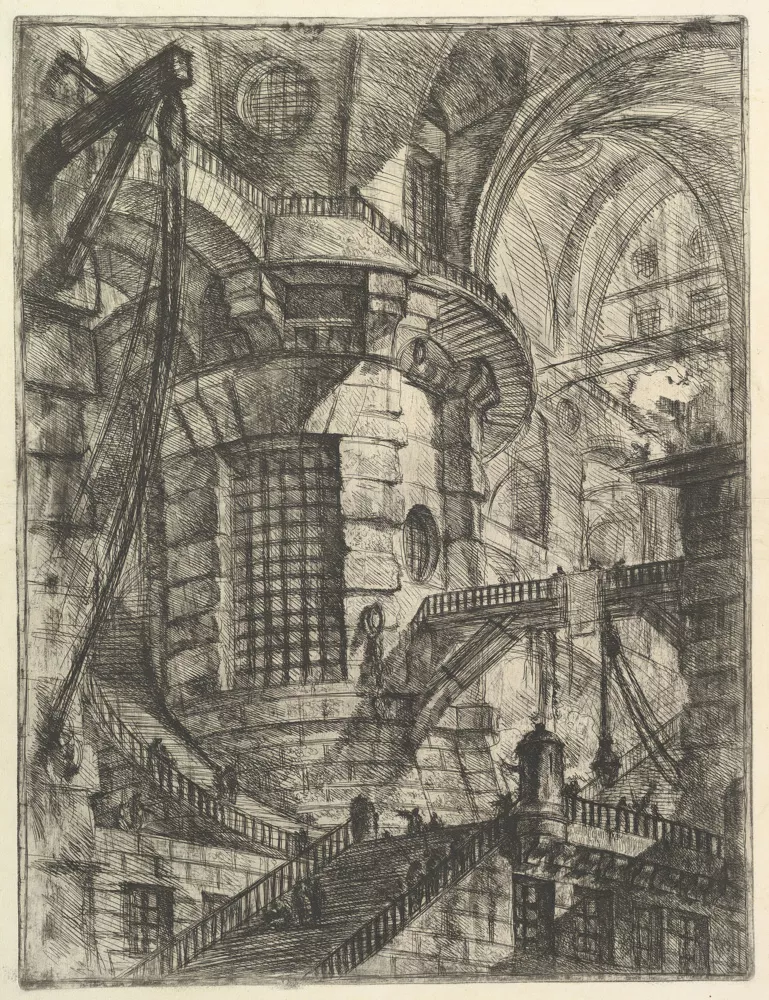 http://www.metmuseum.org/art/collection/search/337725
The world of the house is similar to an attempt to arrange in the form of an image of the Platonic world of ideas, perfect reality of philosophers, artists and poets. In one of the dialogs, when Piranesi says that the external reality is more perfect than these dead statues - he confidently objects: no, statues are certainly higher and more perfect, because they are devoid of random and transient features. This is the ideal of classical art in its dominant understanding. In the final of the novel, the hero, walking along London, distinguishes familiar statues in the passers -by who are found - this old man sits on the throne in one hall of the house, this boy is part of the multi -figure composition in another. This is very similar to one of the scenes of the novel "Senior Arcana", in which Charles Williams - a literary critic, the poet, the acting magician - leads the surrounding reality to the archetypes embodied in images on Taro maps. Free or involuntarily Clark in his novel writes a hymn to classical European art, making it an ideal and contrasting it with an imperfect, fluid and disturbing elements of our time.
It is interesting that if in the XIX and XX centuries escapism was a flight from the world of winning technology to nature (whether in life or art), then in the age of XXI is a flight from a “pixel crushing” (a refrain sounding the theme of London of the 2000s) of the noisy and mobile reality of our time-into the motionless and classicistically harmonious reality of the past. Inanimate and gifting oblivion, but at the same time solid, stable and perfect, as classical art compared to modern.
But the main value of the book is nevertheless in the already mentioned parables that allows it to work as a kind of projective test. It is so simple and well made that it completely provides itself for use to the reader, who can see in it everything that he pleases. Someone will see in it the development of the Lewis tradition of the literature of the magical country, someone Borkhesian tradition of intellectual trinkets, someone is a detective, and someone-a universal parable about the ways of treating us with a reality-a convincing comparison of the manipulative and consumer approaches to it with an approach, imbued with gratitude and reverence.