
Translated material
The bridge is in history
The series "Wolf" is the first attempt to honest statement about the terrible appearance of a secret police in many years
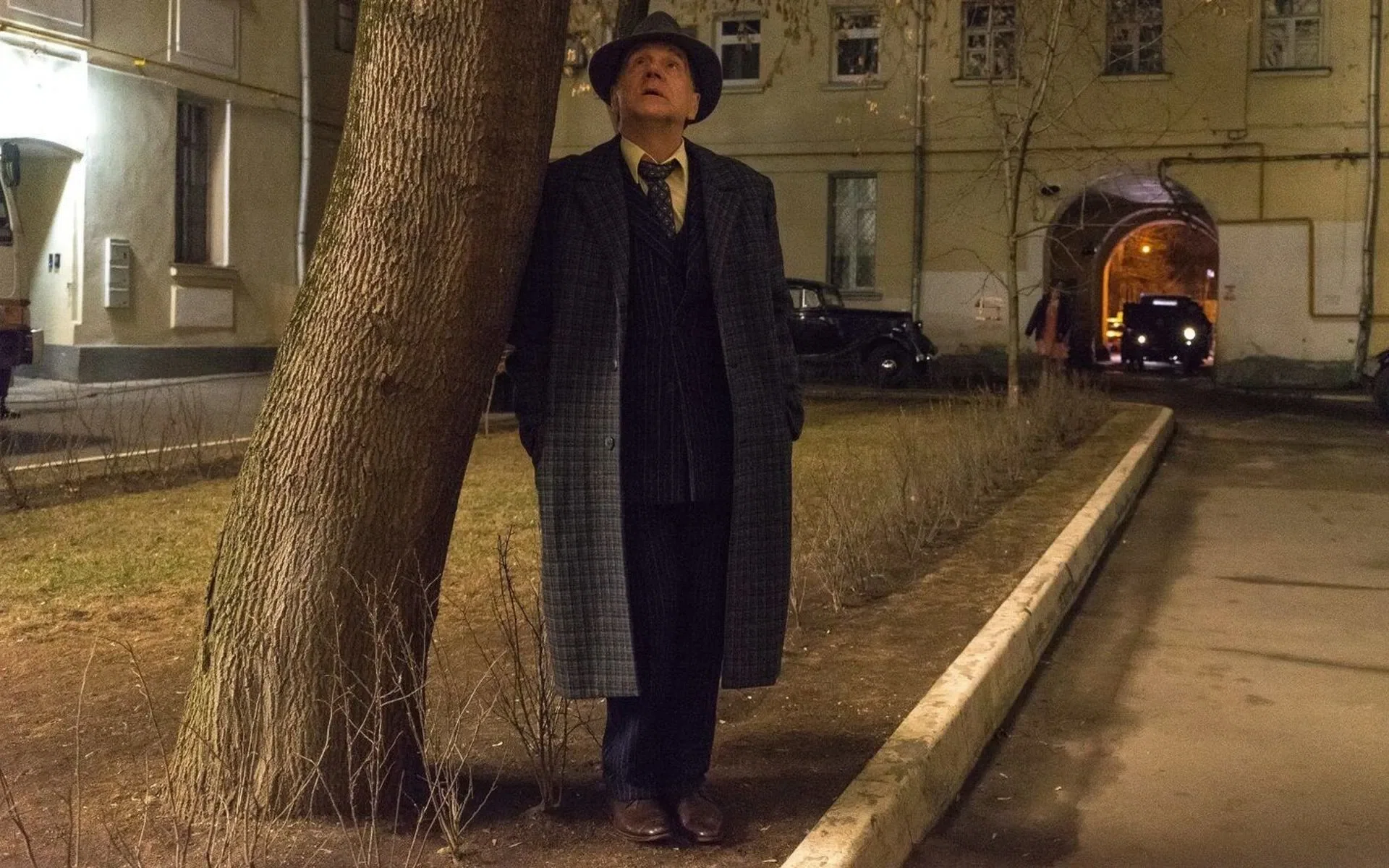
Confusion, Beliberda, confusion, Meshain - approximately the dry remnant of most reviews on the series of Gennady Ostrovsky “Wolf”. Moreover, as a mass viewer, so that surprisingly, critics. Those who confused the overbreases in time, flashbacks and the bizarre installation of Svetlana Maklakova are looking for salvation from this mess in the original source. And then the roof is already going completely. Because Alexander Terekhov’s novel “Stone Bridge”, not only is there a huge and plot of an incredibly intricate composition, it also has almost nothing to do with the series.
The viewer is offended by the screenwriter and director of Ostrovsky (scenarios of the films “Lover”, “My Famous Brother Frankenstein” and others) for arbitrariness, for the inconsistency of characters, for detective dashing, for melodramatic lethargy, for simplification, for complication, spitting the word “cinema” with another, not accepted in the press.
Therefore, immediately, in order to end the formalities, we will drink for the parents and agree that the “stone bridge” is separate, and the “wolf” is separate. This is called "based on." The motives are the murder of the daughter of the Soviet diplomat of Umansky Nina by her classmate in 1943 and the investigation of this murder after 80 years with a certain marginal with a muddy past. Well, a number of bright details with which Terekhov’s novel is richly rich.
Search on this basis of the responsibility of the series for the novel, and vice versa is just as legitimate as to compare me with the children of the Red Elite of the early 40s on the grounds that we graduated from one 175th school.
Brief content. General of the FSB Goltsman helps to free his young colleague Alexander Volk, a friend of his son Leoni from the Chechen captivity. Returning from the captivity, Lieutenant Colonel Wolf with a scandal quits from the organs that were substituted and condemned to death. The old man Goltsman hopes that the wolf, obliged to him by his life, will find the killers of his son: a young Goltsman, a historian and a collector, died allegedly with an explosion of a gas cylinder in the country. Death cuts off his study of the secrets of the death of Nina Umanskaya in June of the 43rd. The wolf is immersed in the investigation of the death of a friend, which becomes more dangerous every day. The dead did not bury their dead, as the Uman’s dust did not burden his daughter. The past is associated with a real thousand threads, and the slightest movement in the membrane of the past responds to the trembling of the entire web today. Here is such a synopsis.
If something to compare something with something, then the Wolf came out almost simultaneously with another series, built, as it were, according to the same principle: the KGB Major today is investigating mysterious events half a century ago. In the "Dyatlov Pass", as in the "Wolf", the viewer is transferred to different temporary planes, there and there the KGB/FSB officers (in the "Wolf" - a former, this is important) are looking for the truth covered with the darkness of time. But feel the difference.
“Dyatlov Pass” is a stylishly, inventively invented fairy tale of courage, about the confrontation of man and nature, about the organizing role of special services.
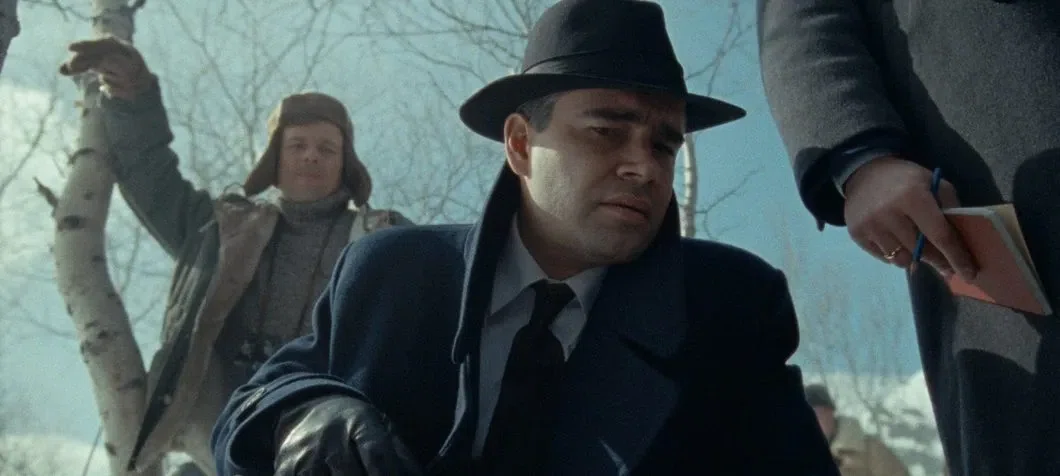
“Wolf” is the first attempt to honest statement about the terrible appearance of a secret police, about its immortal traditions and about how a destructive touch to this web is Forewa. Before his death, one of the KGB Bonz, General Sukhikh (Aristarchus Livanov), a former lieutenant, who has been frightened by his righteousness - over his own - over his own, says: "True is hidden behind the battalions of lies." Lies, betrayal, execution, and lies, lies, lies. Kill to live, betray, so as not to die. The whole historical part of the film is imbued with the spirit of this law.
In my opinion, all the concessions of such a series with the audience addictions of NTV, by the order of which it is removed (but where, which is characteristic is never shown), you can forgive. These concessions, of course, are.
First of all, the figure of the protagonist. Denis Swedes, an interesting man, the right -flank Russian series (three series with his participation were simultaneously passed on different channels), and the actor, not spoiling furrows. But specifically in the “wolf”, the choice of Swedov for the title role is seen by me with a deft directorial maneuver, a smoke curtain. As if this is the usual detective thriller with a calm (and immortal) superhero, capable of bleeding, rushing behind a jeep, jumping on the hood and, receiving another bullet, stab the driver. In this way. The wolf performed by Swedov, of course, is a pure function. And the fact that the series is called the "Wolf", of course, the trick. Because this wolf with his stone face (fundamentally sleepy gypsies next to him - Louis de Funes) plays the role of exclusively official in the series. As, strictly speaking, the entire modern line of investigation. Both the wolf and his assistants (good, by the way, young guys plus poor Major, are especially sorry for those who are killed-expressive Anton Vasiliev as a fighting friend Bori), and women of varying degrees of sexuality, and a gable pack, and many more people are needed here, as a staircase is needed. Or, in our case, as a bridge - bulls, supports. Without them, it is impossible, but the main meaning of the structure is still not in them.
Critic Anna Karelitskaya made a wonderful observation:
Actors in the historical part of the film play as in a movie. And in modern - as in the series. It's very accurately. &
And this difference is significant.
They play quickly in the series, settled the deadlines, loom the following seasons, let's board it, reach, if that. "But do not like it - call Di Caprio."
They play, as in cinema , means seriously. They play the truth, not without reason this word so often sounds from the screen. They play a large “adult” game: after death in this game they do not resurrect, there are no second seasons there. In this game, you need to speak out to the end, to the very end, which are done by the actors, especially two: the grandiose Makovetsky (Umansky) and - unexpectedly - Arthur Smolyaninov (Bezruk).
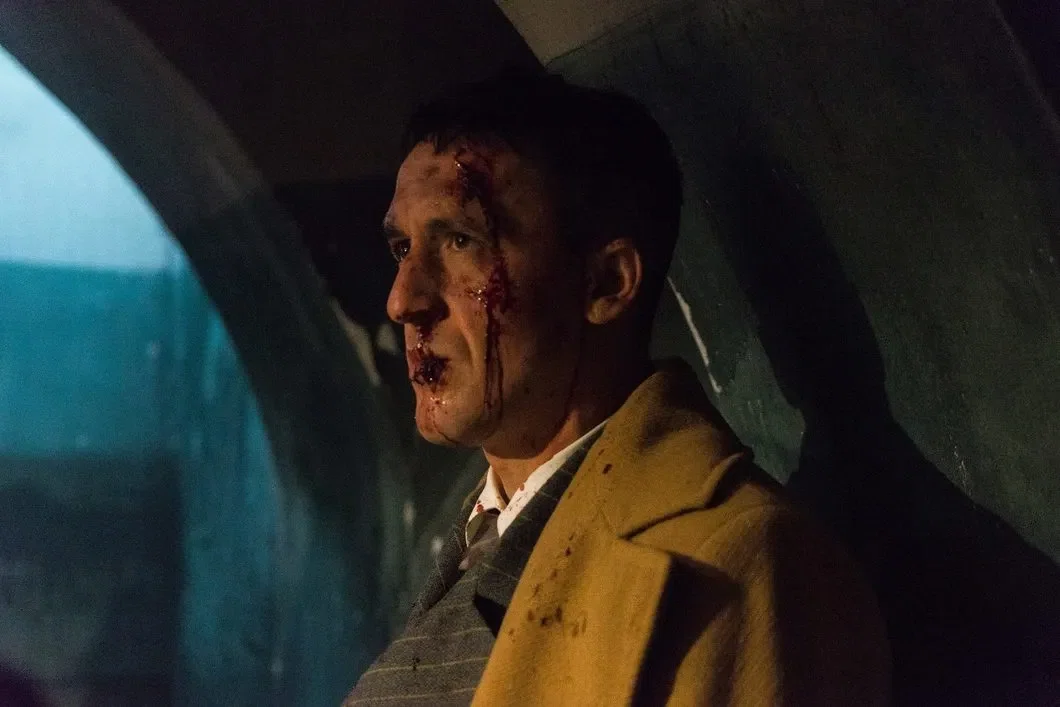
The film is not at all about the confrontation between the wolf of the companion (truth) and historical lies, which would be, maybe not bad, but superficial. No. This is about the confrontation between the victims. The main characters are two, and both are groaning. Umansky and Bezruk/debts. Their game for survival, their passions are what the most remarkable, most modern in this movie, and what it makes sense to talk about.
Konstantin Umansky is a diplomat, a Soviet aristocrat, an intellectual, a faithful servant of the “emperor” in the international field, a reliable conductor of revolutionary expansion. The elite, the white bone of the state, and he has so many things to lose! Therefore, the concepts of “fear” and “conscience” for him have long merged into the general - “service”. Which, in general, is equal to life. Therefore, he, who had been those who had been with all the giblets,, unlike his friend, a colleague and opponent of disgraced Litvinov (and Klyukvin), is not able to understand his doom. He believes, is afraid and asks.
Nikolai Bezruk. The one about which is not clear whether he had a mother. Miraculously, the soldiers surviving at the front, easily spitting his porridge. However, he does not have his own. The NKVD gets into the brigade of secret killers, and even surprises those with fossil. No feelings but hunger. Even women do not start him. A man scorched from the inside. There is nothing to lose, he is not afraid of death. The perfect performer. The only principle is launched on the hand: "Live like a dog, die in a grave." At least forget it with a hammer and a sapper shovel - but betray the earth. Beria himself (seductive dragon Said Bugs) appreciates him and forgives this sin of “mercy”. With the Earth, "Comrade Dolgov" (nickname Bezruk) is special relations. He was almost buried alive. After which he went to serve hell, gradually becoming fascinated.
We have long realized that “strength, brother”, not at all in truth. Bezruk understood this much earlier. Why is he stronger than Umansky, stronger than anyone who surrounds him in his gabshery hell? Even more than those who tell him: “Here in this corner was Marshal Blucher - a whole marshal! - and held his eyes in his hand. You don't want so, debts? " His strength is that he is nobody. As Nobody was Stalin. As Nobie Hitler was. And a number of other people. In the coordinate system where these and similar stories unfolded, only no one could become everything. (Such a transformation, by the way, is completely magically played by Malkhaz Abuladze - Stalin, a clumsy almighty dwarf with a maniac burning through and through through and through.)
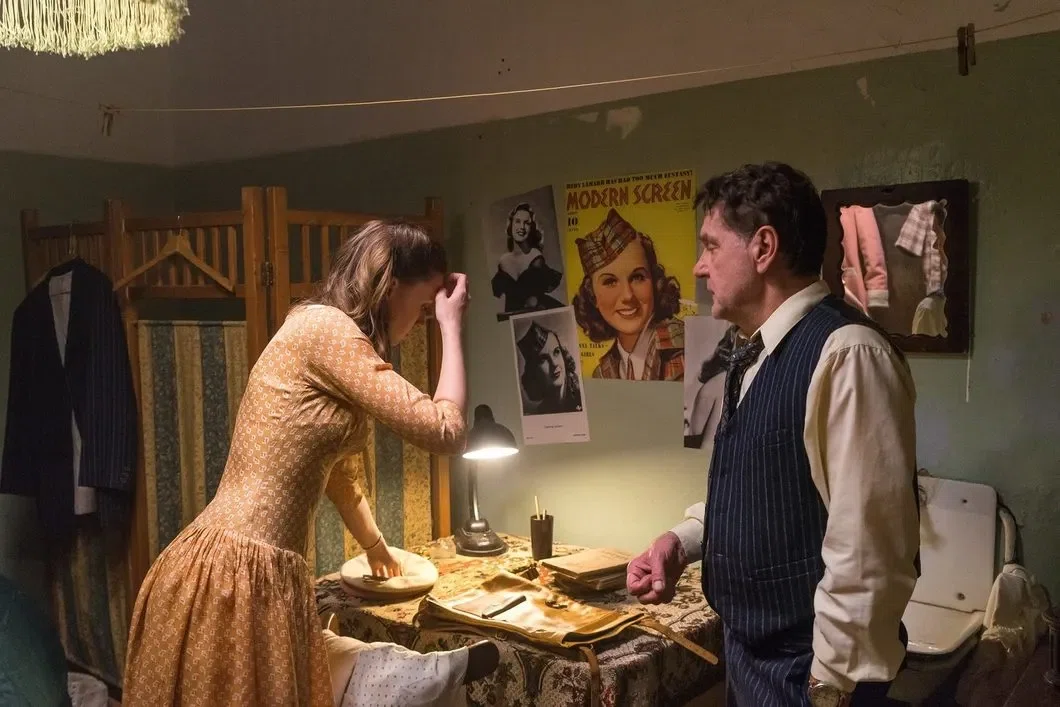
It is Dolgova to take Nina Umanskaya (Varvara Feofanov) and her boyfriend Volodya Shakhurin (Vitaly Andreev) with the recklessness of the ardent fools who thought up - Evona! - Kill Stalin.
The teenagers who fell into the trap on the Stone Bridge commit suicide in despair (Volodya shoots at Nina, then in himself). Here, in fact, the monstrous story and career of Bezruk begins, in which the entire satanic hton of the secret police came true.
Sonya Rykova (Alevtina Tukan), a loyal Komsomol member and friend of Nina Umanskaya (complex triple relations Sonya, Nina and Volodya), out of the best motives, runs to Comrade Dolgova to look for help, “save” friends and beloved comrade Stalin. From that moment on, they all turn out to be tied into the Gordian knot, the lovers die, and Sonya, having become the mistress of Bezruk, leaves the already flawed mind, imagining himself Nina.
Girls are similar. And in the underworld the devil's plan is born. Umansky did not have time to see the dead daughter, she was cremated immediately. Bezruk confidentially informs him that Nina was alive, another girl was killed instead of her, and he, Umansky, must fly out at his destination, Nina will come to him later. Having again gained a mourned daughter, he flies out as an ambassador to Mexico. And from Moscow, he will go and go letters of Nina, written by crazy Sonya, as well as film. Bezruk endlessly shoots Sonya on the camera, the quality of the shooting is unimportant, and the father of the night is all over, all in happy tears, sits at the embassy and twists the projector.
The way Makovetsky plays these “meetings with hope” should enter the history of a movie with an example of a great tragic experience.
Umansky must transport uneven millions to Costa Rica-to the needs of the revolution "in the underbread of America." The plane with bags of money explodes, without taking off, the Bezruk, who arrived at Mexico with special priesthood, shoots still a living Umansky (and before that, the entire Chekist team captivating here).
In Moscow, he transfers to Beria account details in the Swiss bank.
The story of the death of Nina Umanskaya ends.
But why is Leonid Goltsman killed today? Why are many more who have been killed, as said, as said in Terekhov’s novel, “to print a stone bridge”?
Because the main demon-performer is alive, he is a spring of this business. Bezruk is alive. Alive not metaphorical, but real. A deep old man who built his empire on the KGB gold. The fabulously rich mafiosi in the rank I do not remember which, general.
And then his completely peppy liveliness, here it is a completely understandable metaphor.

This is the third largest role of the film - Viktor Proskurin. His last role. “What do you know about death? - says his hero. - And you? “And I know ...” At this time, Proskurin really already knew something about her. And soon he recognized everything.
Old debts - and there is the bridge in the story on which the tragedy unfolds. Viktor Proskurin “plays like in a movie”, plays the last minutes - like the last minutes.
In these last minutes, the old spider, frozen in the center of his web, watches the movie. The old false shoot that provided him with such a long happy life on the blood _, -_ _a is poured with color, the girls dance, which of them is Sonya, who is Nina, no longer to make out. The movie becomes a series, and you can hope for resurrection.
This could be finished.
But I want to add a few more words.
A very respected colleague wrote that "for some journalists, the most important thing is as shown by the ChK -NKVD -KGB." It is shown, they say, as it should: death is the best way out of the situation, Beria orders, ordinary people execute, no barriers exist, everything is built on violence, fear and self -interest. But this is not a reason to look for meaning in the film. Because he is not there.
This is written in the days when the election program of the party “For the truth” of the Stalin Falcon Zakhara Prilepin was published, when Navalny and his meeters are Vinty at the airport, when the prison in the country is scored by political prisoners, and Stalin will be called the Savior of Russia from day to day.
That's all.