
Translated material
They wanted as cheaper
Due to the actions of the government in Russia, the increase in food prices accelerated
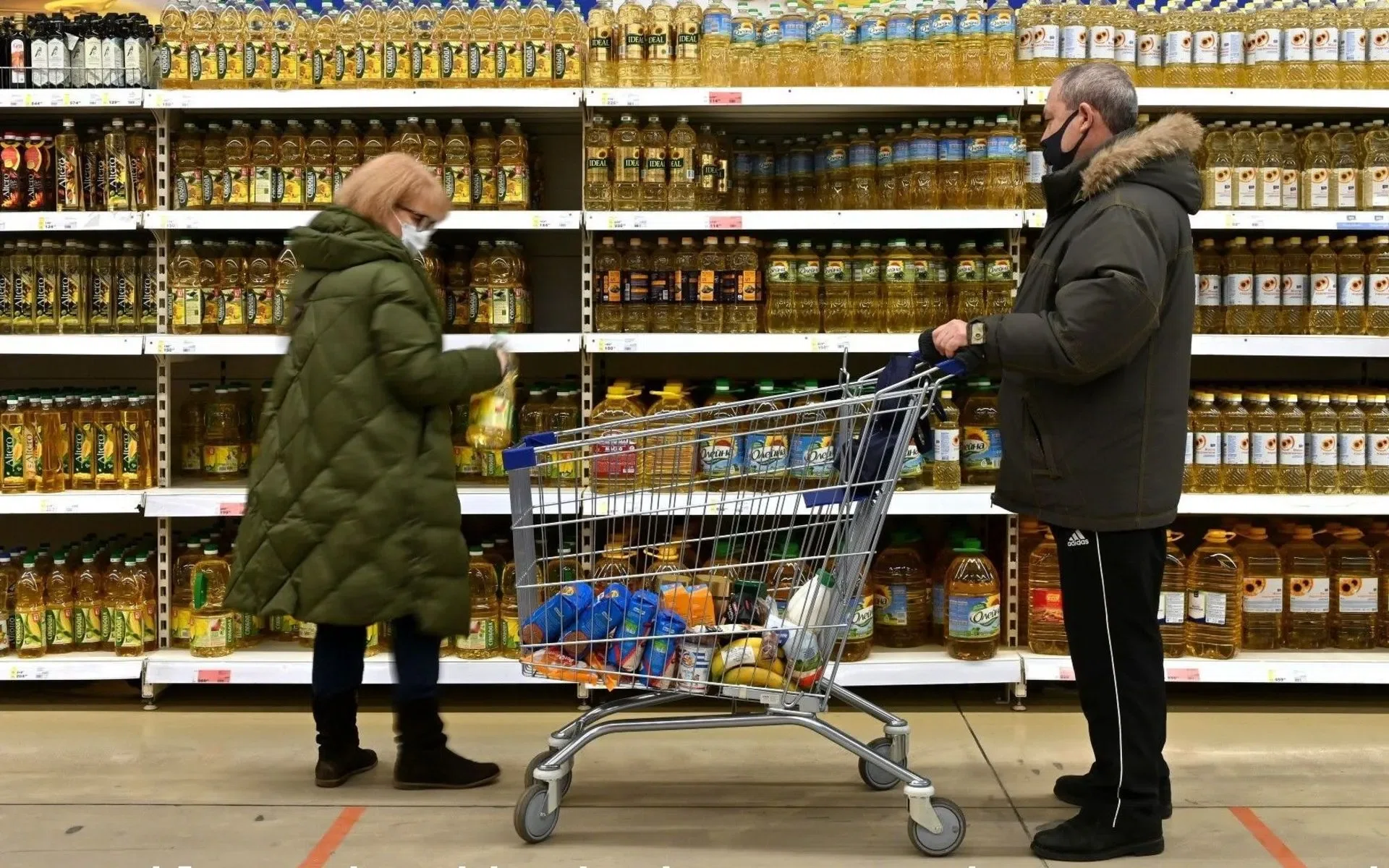
The current story with an attempt to regulate prices began, as you know, after President Vladimir Putin drew attention to the unacceptably high increase in prices for sunflower oil and sugar at the end of last year. Well, it is said - done. And literally a few days later, representatives of retail and manufacturers, as well as the Ministry of Agriculture and the Ministry of Industry and Trade signed an agreement according to which the maximum vacation price of sunflower oil was set at 95 rubles. per 1 liter, and retail - 110 rubles. for 1 l. Sugar prices were recorded at 36 rubles. and 46 rubles. per 1 kg, respectively.
Literally a few weeks of the work of manufacturers and sellers under this agreement, and reports began to come that small and medium -sized retail chains had difficulties with the purchase of oil and sugar at regulated prices. The fact is that such sellers have traditionally purchased products not from direct manufacturers, but from intermediaries-dispersalists. It is more convenient for them, because, unlike large retail chains, they do not have their own powerful distribution centers.
The problem is that the agreement on price regulation signed in December of last year does not apply to distributors.
That is, today, distributors-producers can purchase at the wholesale price of producers sunflower oil at 95 rubles. per 1 liter or sugar at a price of 36 rubles. for 1 kg, but they want to resell the same oil or sugar at a higher price (otherwise what their business is, they also provide services of a logistics-distribution nature).
However, if they resell at a higher price, then buying at this price it becomes unprofitable to the retail enterprises that are limited in their sales of 110 rubles. per 1 liter of sunflower oil and 46 rubles. For 1 kg of sugar, respectively.
The question is: what, it was impossible to foresee all this when concluding an agreement on price regulation? By the way, this does not mean that distributors today do not buy products at all. They purchase sugar and sunflower oil. Only sell them to retail sellers in no hurry. They are in no hurry due to the fact that we will not have time to look back, how the term of the agreement will end, and then it will be possible to sell more expensive.
Does this mean that a total deficiency of sugar and sunflower oil awaits us? No, there will be no shortage, because large network retailers who have always worked directly with manufacturers have no problems with the purchase of goods and they are unlikely to appear.
Nevertheless, the main problem of this kind of agreements on price regulation in another. The problem is not a possible shortage of goods, but in the fact that for which all this is done, will ultimately turn into an accelerated increase in prices.
The mechanism for stimulating price growth in this whole design is simple. The authorities today limited the maximum level of sugar prices and sunflower oil. Well, for some time the prices will really not rise. I have no doubt about it at all. And although due to the difference in wholesale and retail prices, the same retail sellers seem to be guaranteed some kind of margin, they are unlikely to be delighted with the current order today.
Their natural behavior in such a situation is as follows: accelerated, but not very noticeable to increase prices for other goods. Consequently, wanting to curb inflation, the authorities of their attempt to actually direct prices, on the contrary, stimulate this very inflation. People, because of such attempts to regulate prices, will have to pay more. This is in the context of the ongoing fall of real incomes of the population.
The official inflation rate according to the results of 2020 - 4.9% - has become an unpleasant surprise for the authorities. Two to three weeks before the New Year, they thought that it would be about 4%, and here only in December last year prices rose 0.8%. Prices for sugar-sand rose in 2020 by 64.5%, for sunflower oil-by 25.9%. During the period from January 1 to January 11, 2021, prices as a whole rose by 0.4%. And this is more, by the way, than a year ago for the same period (+0.3%).
There are already leaders at the beginning of this year. So, only in the first decade of January 2021, tomatoes increased by 7.7%, carrots went up by 3.4%, potatoes - 2.7%, etc. However, now you have to look at the consumer prices in a different way: should the presidential instructions and new prices on freezing prices should be expected for new goods?
The authorities actually entered a very risky path with this agreement on sunflower oil and sugar. Without involving the existing mechanisms to contain prices, they decided to quickly restore order, forcing manufacturers and sellers to sign an agreement on their freezing.
Only the main thing was taken into account:
Let us have a curve and oblique, but still a market economy. In such an economy, such administrative regulation turns into either a shortage of goods, or even a faster increase in prices. &
We can, of course, continue to experiment. Moreover, many people in our country are still sure that only this is necessary to set prices. Put things in order, so to speak. But ultimately the result is predetermined. And this is not a very good result.