
Translated material
The choice of Sedakova
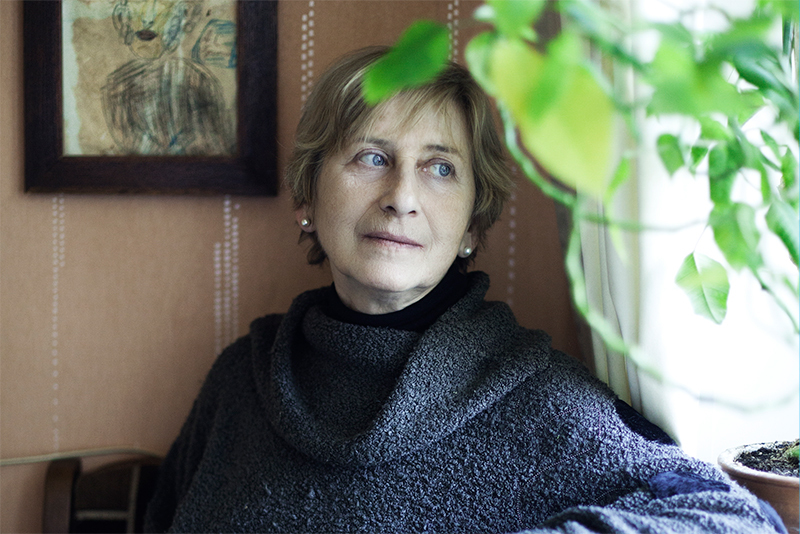
The publishing house of Yaromir Hladik published an Olga Sedakova translation book “Four Poets”. The “Festival” includes Rilke, Claudel, Eliot and Tselan. “What a gentleman's set,” Pavel Pepperstein answered in a conversation with me. And he was right. These are big poets. Poets, who not only determined the quality of their own voice (which Brodsky often talked about - “find your voice”, “free it”) - but also created a certain stylistic wave, grasping the turn of time itself, the very breath and pulse of the century in his conversation about the infinite. Their fame is international, and the language of poetry that they were able to get on the basis of national languages is special, unprecedented quality.
Why are these four, and not someone else? In Olga Sedakova’s four -volume, in one of the volumes of which exactly the translations were included, there were many others - but these were collected in four. Gathered in the four - and the four -man - the sign of the elements, the side of the world, the whole world. This is the collected world-the world in the hand of someone fifth. Probably the one who translated.
From Jung, Nietzsche, Lacan and Heidegger - everyone wants to collect her. The four is an important sign of the twentieth century. As the religious scholar, Biblicist Anna Ilyinichna Velikanova, in the Judeo-Christian tradition of the four-is not the most popular number: more important than seven, three and others. Unless you notice that four is the number of Jewish Easter. And also - that this is a cross. Verkh-Niz-Levo. It seems that who brings the four, holds the whole world in his hands. Probably, at some point, everyone should collect their own. At least somehow. The same quets are absolutely completed.
Ask me, then I will say: Rilke - the beginning, top, speech maximum, cage - bottom, end, speech minimum. And as for the “right” and “Leva” - here I will allow myself the liberty of interpretation. Well, Claudel is undoubtedly “right”. Tough "right". The Frenchman, the “Pillar of the regime”, the faithful Catholic, but the American who moved to England, the Eliot’s English migrant, who, after the publications, called the rejoiced audience “Bolshevik” ... from poetry, is, even “right”, but not in the same sense that Claudel, without any personal feat, without any inner jeanna d'Arke. Klodel has ballads, Eliot has an endless movement on a plane, and then - a prediction of fire, which, when with a rose of coincidence, everyone will be fine. Of course I am laughing. But Olga Sedakov also mentions the correspondence quarrel of Claudel and Eliot, speaking in the preface that these poets could never be together. Bolshoi does not tolerate the neighborhood - and not one of them was a devoted reader of the other. Perhaps only Celan, who, like a child, welcomes everyone.
And yet they are collected in one handful. German before and after Auschwitz and French with English in the middle. This, if you want, is all of Europe, the whole “high Europe”, the limits of the European “union” in Russian.
Perhaps, according to this principle, they gathered in the hand of the Russian poet, when it was necessary to “make a four”-not just strong poetry, not just a unique position, a linguistic experiment or a place in national literature, but this is something regarding the entire continent, all things as a whole. Two against each other - and two more against each other. Standing against each other - as in endless war and the world. In the course of world literature, we read an article by Sergey Averintsev about four gospels. And about each there was just such a fairy tale - one “fairy tale”, another “about love”, the third “like war”, and so on, as if even one story could only be told in four aspects, on four scores, in four voices. And, when Olga Sedakova collects her four - from all the translated and not all of what was translated by each of the invited - she means this story, this silent epicenter of the conversation. Otherwise, you can’t call poets invited to participation, because the Russian language meets the Russian language with Olga Sedakova can be envied by any poet in his own language.
Like candles, the darkness is fucked up
and accumulates in the persons of unopened
Under the beads of white stored,
and the folds of these hands are insoluble
Lying like folds of a mountain range.
In the almond - what is in the almond?
Nothing.
There is nothing in the almond.
It stands there and stands.
In nothing - who is standing there? There is a king.
There is a king, king.
He stands there and stands.
We have already left many times, but this time -
last.
Farewell to whom we are dear! The train is not waiting
We’ll forgive on the go.
We repeated this scene many times, but this
Once - the last.
Ah, you thought: I can’t leave? See: I'm going.
Lord, Roman hyacinths bloom in pots
And, flaring up, the winter sun crawls through the winter
Highlands;
The hard time of the year wasoning with us.
My life is easy in the expectation of mortal wind,
Like a feather in the palm of your hand near the eyes.
Jewish strand, you will not be gray -haired!
My face, like a manuscript on silk, looks at me from
mirrors,
And there is no hour to make a zealous scribe of new signs
I did not fit into it.
How can I not submit to such a skillful
And the imperious hand?
I will not leave this reading on the most important line.
If b, finally
There was still space in your pupils
And in it, exhausted, the beetle fit -
Then with a sudden insurance
You read the inscription: What are the letters
You slowly cut it in yourself
and put in words, and built a phrase,
And ah! She seemed meaningless.
Directors of the shooting range and today's businessmen,
setting on water on outlandish mechanical creatures,
Those who are far away from a farewell shaft,
And whoever waves them is not to recognize
And hum: Herself
Truth
to the human world
Entered
inside
Vorthy metaphore.
The Russian language of Sedakova is not the Potemkin villages built for the eyes of a European monarch floating by, thinking how to equip Russia. Such a monarch usually ends with serfdom. This is something else-absolutely endured, extinct, well-built, independent and deeply non-named. It has neither a “Moscow” dialect, nor “St. Petersburg” - nothing from his native local history. I would say - although Olga Alexandrovna does not like the word “project” - but her Russian is really on several large projects that covered the earth's territory - Christianity, and in the Byzantine edition, enlightenment, antiquity transferred through the Byzantine inheritance, European influences, and all this - yes, on the national root. So actually all European languages are made. And besides all this, the general large “project” of the twentieth century, where Russia flowed terribly, tragic and the whole creature. And these “projects” - on top of personal addictions, “like / do not like”, “I want / do not want” over any impulses on top of “daily daily”. The semantic pulse of a large grief should run as if on a planetary surface. And this is how “languages” are already made that matter in history.
And it is precisely such a greeting to the Russian language that the last of four is heard - the "six -loser" Romanian Jew Celan:
In Brest, where the flame spun
And the booth stared at the tigers,
I heard you sang, FRAGE,
I saw you, Mandelstam.
A long time ago, one famous critic, discussing modern poetry with me, once said that a simple definition of poetry as a “poetic function of the language” is enough for him. In a practical departure, this means: you can only determine whether “poetry or not”, and then this is a “miracle”. Everything else is not given to us. There is so little left for us, even less than Rilke said in the famous and many times translated by Requiem to Count Wolf von Kalkerita:
Great words of other times
other events, obvious - not for us.
What kind of victory? To survive - and that's it.
This famous end of the “Requiem” on the suicide is by the way, an incredible riddle for the translator. And the key to the semantic distance, which he agrees to keep for the necessary translationability.
Indeed, in fact, the “Requiem” promotes the “back” suicide of the young man. He returns “his death” to him and raises a certain meaning over death without making meaning - impudent, rebellious, elegiac, any - suicide itself. Rilke denies suicide, but not death itself, death is a strange, great burden, and even those who died are trained. And, teaching this, Rilke brings us all out with a stream to the shores of the dead, where we are all - we are modern - differ from the previous dead. We have a different death. We have nothing, but this does not make us worse than those who died, in great deeds or simply in the great time of nature. And then the translations vary:
Words of big times are not given to us,
When the achievement was visibly.
Do not win, but to survive - all in this.
(Evgeny Borisov)
Words of big times when an act
There were clearly visible, not about us.
Not to victories. It's all about overcoming.
(Boris Pasternak)
Great words from those eras
accomplishments of visible, not at all for us.
Who is about victories? Only to stand.
(Alyosha Prokopyev)
How many impulses are “translated”, there are so many solutions and the same number of understanding who are modern “we”.
Sedakova refuses to “explain”. Each word at its end holds a tense semantic distance from the center of understandability. And the end is important - it contains two blows. Sedakova, like Pasternak and Prokopyev, denied “victory”, there are no victories compared to what the “ancient” victory is. But, unlike Pasternak, we are not talking about personal feat. In contrast to Prokopyev, the thought of the “low -grass century” does not continue, but unlike Borisov, the case is not arranged in the “heroism of the exhibition”. At Sedakova, in this “famous place”, everything slides past these shows and mathematical equality. Because the status of the victory itself is removed: we are those who know that there are no victories as such. And there is great expectation. And they, dead, are also "waiting." We are all. And victory - her light body is different. This is where the meaning slides, because in this meeting with the dead nothing has yet ended, but only became big than it was, and it began again. Rilke is a master of absolute retreat, the adoption of every blow of all the evidence that restricts us, the impossibility - in order to turn them over, making the passivity of our undergoing some noble material for the height and strength of an inhuman statement, which begins to live “on us”.
There is always a question in translation: where we translate, what, which landscape. After all, the German überstehn from the “Requiem” also means “surviving”, and the Google translator - perhaps the most cruel and cynical from all the translators - gives a simple, concentration camp, in fact, the meaning of this limiting place: “Who speaks of victories? Everything survives. "
In a sense, this is exactly what the newfangled critic said - "we survive as we can." And in this translation of Sedakov, also approaches the words of the famous critic that “there is nothing left for us”, except for a small difference. It seems, and all four poets she chosen by her. Rilke - from which she chooses everything as “heavy”, the most difficult - the Gethsemane Garden, or the prodigal son, or the suicide of a young contemporary. Claudel - in whom the machine of French literature drives into the corner of Verlaine, drowsers the Titanic, St. Jerome was left not only in the desert, but also on the last limits of the Latin language, which is circling the translation of the Bible. Claudel is generally incredible in Sedakova’s translation-this is some kind of crystal clear sound of the whole world, and the world is completely earthly. How many words have been spent, how many jewelry, an incredibly diversity of the texture itself - and this is all to do one thing every time: yes, all this is dumped to the ground. The Eliot rises, overshadows logic and freezes before something, rather laying down at the threshold, on the threshold is no longer his own language, the language of quotes. And the latter is Celan - who is himself on the limits of the German language and squeezes it tougher around a certain invisible center. Rose is his important, I would say, a visual symbol. These are clearly marginal, the latest situations, but with only one difference - no one is equipped in this limit.
“We” if a small work of aesthetization took place, the soul found its own, albeit small, voice, some kind of “poetic” evasion in the almost domestic regime of perception, then this is already enough. And “they” are negligible. This is generally not enough for any type of activity, if it matters.
I can take any quote at random - and it will be "about it."
No road leads here, there is no map of these edges.
Only work in the same place, under the shower,
In the mud, in the overcoming of days and hours.
Because all four are not talking about arranging life near the limit, but about dissolving the limit. About the retention of such an interval of the language, such a semantic gap, that is, such a pause, void, semantic rose of meanings, that there for a moment the absolute light cross -country cross -country, the sensual proximity of immortality. So the strong poets know how to do this. Language, logic, pause, sound have this strange force of super resource.
And this “overcoming” is no longer from Rilke. This is different. But their cross -country ability is in practice is very accurate.
And here again the choice of Sedakova is important. You can notice a certain general structure of each part - it all ends with the theme of music. Each time at the end is music. Music is the limit of the language, with the back of the language, it has silence. And this is not only another cross -cutting theme of all four, but also a constructive principle of their work. And when you notice the structure of the parts - you begin to notice the rules of the transition from the verse to the verse, from gesture to gesture and between words, as if we were sent in reality to some wanderings from the marginal experience, from stone to stone, from sound to sound. This is a rolling quadriga, a chariot that is lucky to the very end, to the last word of this seventy-page logical-philosophical non-stop and parallel installation of incredibly beautiful images. And what is the last word of this single hypertext poem?
This word is Pallax, which “sick Gelderlin spoke instead of“ yes ”and instead of“ no ”, as Olga Sedakova comments. The word that, like the famous shadow of Eliot, always falls “between”. The invented word, a word-discovery that makes you always answer the same and not the same and not the same-and yet the same. But when the limit dissolves, then you can immediately see everything - and children's sleds of Claudel, and leopards at Eliot, and the German teacher at Celan, and the Greek harp at Rilke. Here at such altitudes, radical questions about the connection of the world and language begin, about what truth is, and about what love is. And what is poetry, and why it is needed in the world of Google translait and doubts about man as such. After all, he is nothing more than a “naked life”, with the words of Georgio Agamben, or “surviving”.
Before us is four radical forces, four cross-country resources, and perhaps what unites them with Olga Sedakova is simply some kind of mathematical straightening of the will. “Four poets” is, of course, a masterpiece of translation. A masterpiece of selection. And yet-an independent work as a whole, a poem, because here the Russian language does what he does and always when he succeeds: he translates someone else's radically so much that it becomes his own and creates something new. And also, "translating", he studies and teaches. Four poets are four teachers. It is very difficult to learn poetry and writing, the sound of the word of Olga Sedakova. The author’s intonation is still working there too. But in these translations, where everything is like for the first time, our learning is increasing significantly. This is a strange effect, but, having gone through this book as a whole, you seem to be translated through some important doubt-doubt either in the Russian language, or in the language as such. Why does the translation have such an effect? Maybe because, shown in work with other people's creativity, carrying someone else's through the “ocean”, Sedakova’s word is able to transfer and transport so much that the question of a person can be posed only in him. “Four poets” is an incredible trip that has not been in the language for a long time. Just because Olga Sedakova herself is one of the “same”.
It came, it came.
The word came, came, came through the night
I wanted to shine, wanted to shine.
Ash.
Ashes, ashes.
Night.
Night - and - night.
Go to the eye, to wet.
Olga Sedakova. Four poets. - St. Petersburg: Jaromír Hladík Press, 2020. 152 p.