
Translated material
Black River, which is no longer
Anna Pugacheva, who grew up in a small village in the taiga, talks about her childhood
Anna Pugacheva grew up in a forester family in the current village of Chernya River in the Tomsk region, lost in the forests. About 100 people lived in it then. Especially for the heading “From her words”, Anna talks about how it was.
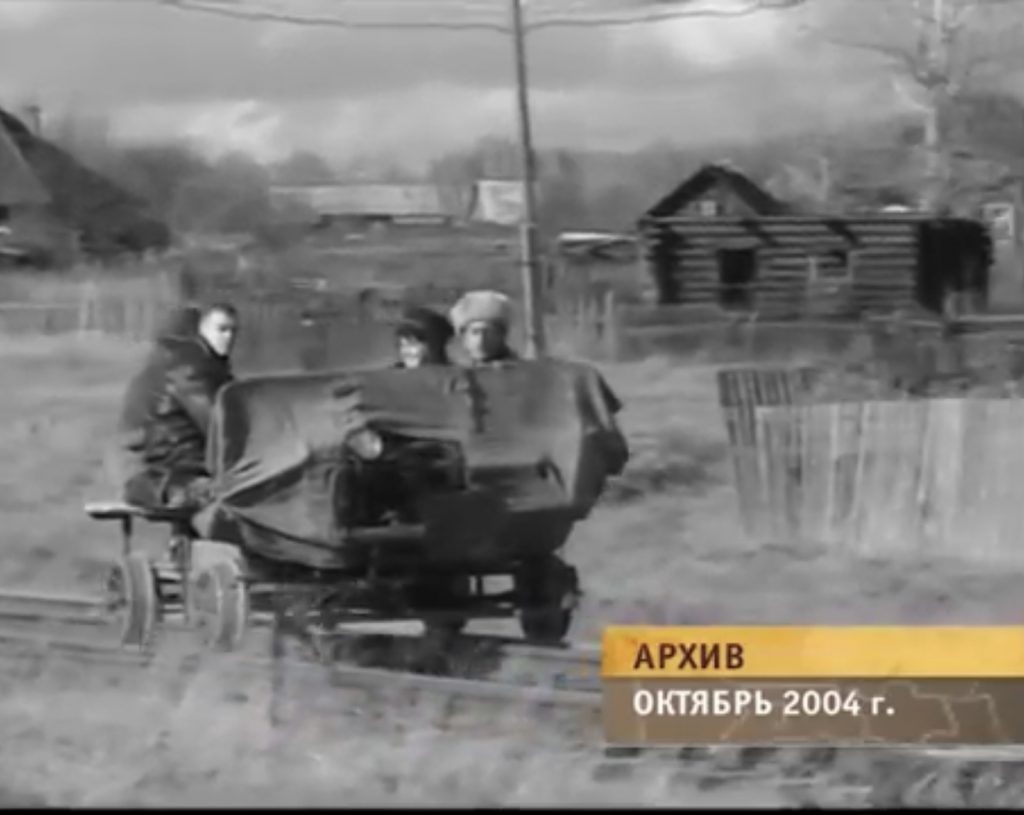
At the very end of the summer of 2004, my parents, sister and a cat who sat in the box, bulging eyes, rode on the railway on a piece in the city - to a new life. We collected clothes for the first time - a month or so, we took the old TV, which my mother is still watching, because it seems to be reflected in her past life, and several bags with food reserves, which was raised and laid out into banks. 16 years have passed, and every time we get together, I think that then we brought with us a lot more than things - our story.
When the logs begin to crack in the wood stove, and not only the nose is cold from under the blanket, you can get up. It is most pleasant to wake up in the summer, when mom and grandmother take off foam from jam from Victoria - so we called strawberries. They tastily spread them on hot homemade bread with melted butter, which is knocked down, dripping a three -liter jar wrapped in a towel.
It is still easy to get out of bed when the dad has a day off, which means that he will allow playing in the carpentry while he himself repaired. If he does not have many things, then he can even make a metal tractor, an all -terrain vehicle or a gun for us and unnecessary pieces of metal for me and my sister. Once he made a cart for us, in which my sister and I rolled each other and treasures that were mined along the abandonment of the village at the cost of my punctured leg and a broken collar of the sister: scrap aluminum, duralumin and the most valuable - copper wires, peeled from the braid.
The favorite of what the father did is the harness sewn from tarpaulin belts. She clung to her mother’s water sledges, accommodating two flasks of 20 liters, and put on the Karai - a huge red -haired dog of Siberian likes. If he did not go to the forest with his dad, he was very happy to rush around the snowy village for the timber trucks-and we, clinging to him, did not really prevent him from enjoying freedom.
My dad was born in a bathhouse in a neighboring Itatka and almost all his life did not leave our village, with the exception of service in Morflot and studies at a forestry technician. Despite the fact that he liked the sea, he stayed at home, because, besides him, there was no one to take care of two brothers and his mother. I have never seen my village grandfather: he was killed by a local crazy joke when my dad was 15 years old. Grandma even had to close his father in the cellar for a while, because he was going to take revenge. Since then, he had to become the eldest: to stab pigs, cows and solve other economic issues.
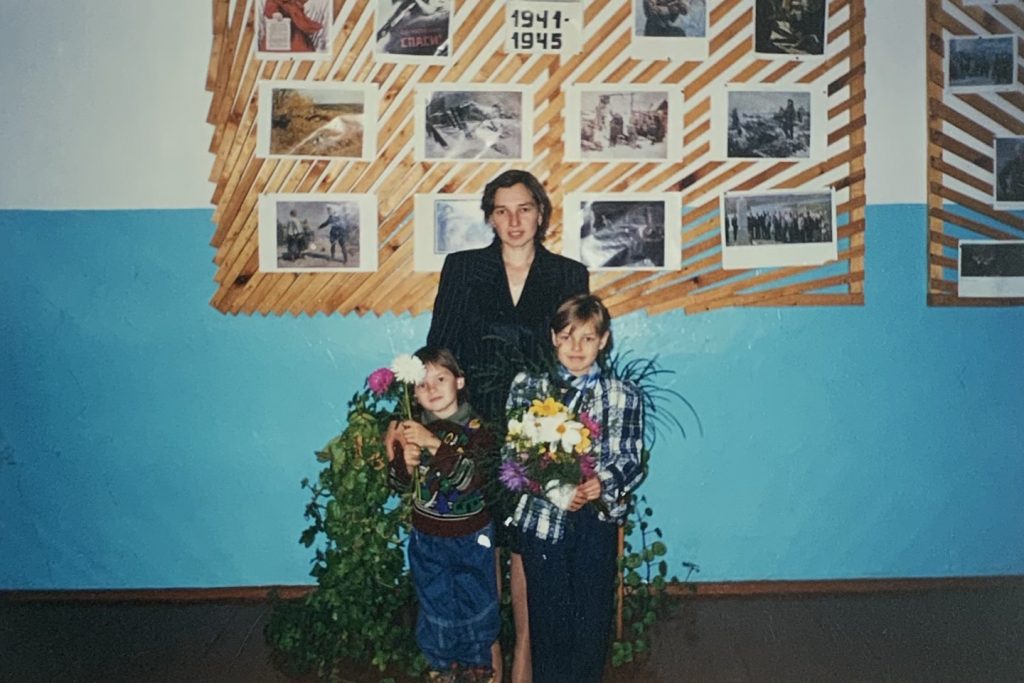
Mom worked as a teacher of biology, chemistry and all elementary items. She got to the village by distribution from the Tomsk pedagogical institute. Three months after meeting, my dad told her: "You need to marry in March when I take off the traps."
Father worked as a forestry, and since there was no kindergarten, he had to take me with him to work. It was necessary to take care of the trees: chop the thick stems of the herbs that were taller than me and covered the Sun to the seedlings with a huge knife; To cross through the Boille with a long, long roulette, measuring pieces of forest are divided, in which firewood can be harvested.
When I was still too small to help in work, but large enough to school the house alone, my father took me with him to the taiga and left me on the banks of the Yuxi River to sort out beautiful pebbles. When he returned after me, he found fresh bear traces. Mom will learn about this only now, when he reads it.
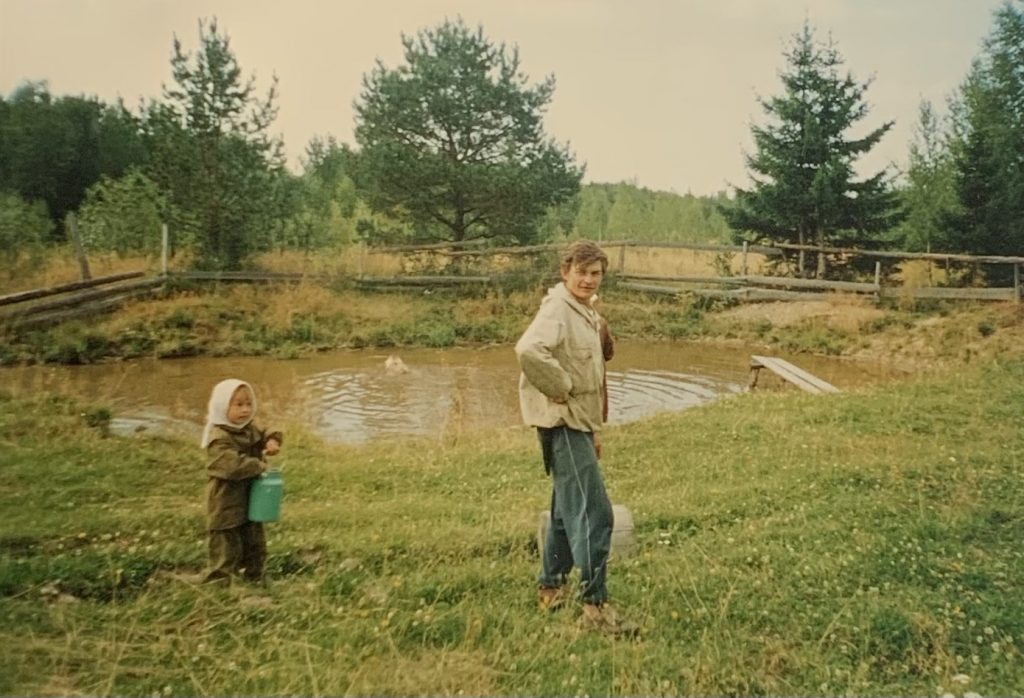
Parents held a large garden and many animals: cows, pigs, chickens, rabbits. With the whole family, we took care of them - even Sister Nadia, who, four years younger than me, tore grass for rabbits and collected chicken eggs in the hem of a T -shirt. Our grandmother took care of pigs most of all: her efforts were given to them a pond for bathing, where my sister and I sometimes made up the company. Grandma did not allow us to ride their “Borky” - in our village they called the pigs that way - explaining this by the fact that they will have less fat, and added: “There are strangers run around the fence.”
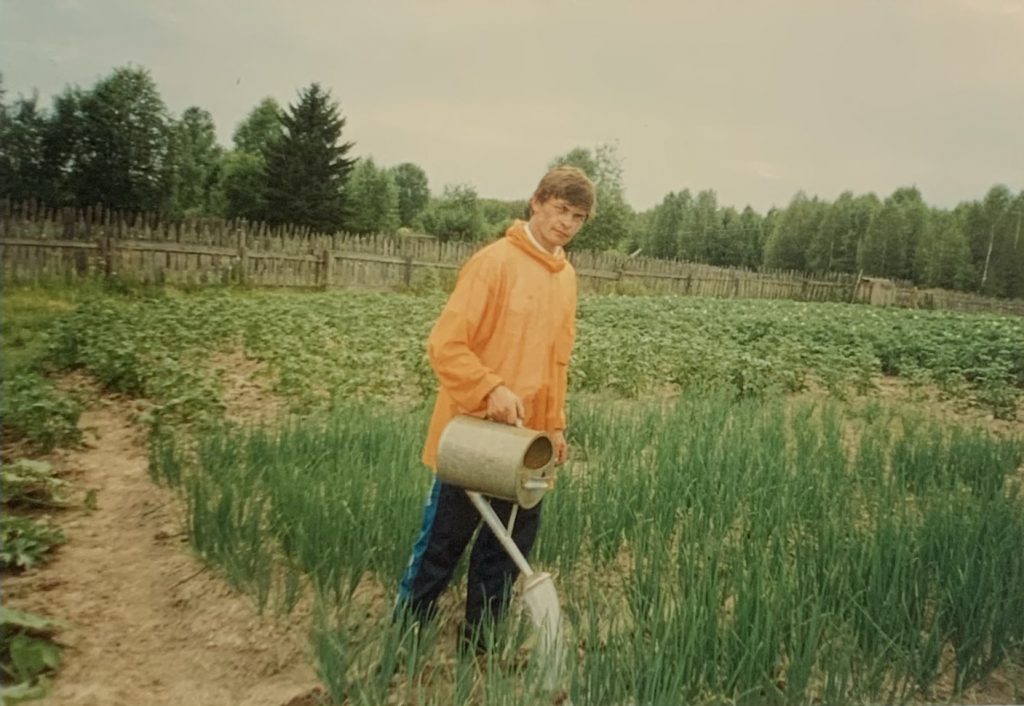
Our village was a little bit. Of the entertainment for children, except for the school, where I was given almost eight years old - a year later, so that I had four classmates, and not one - there was still a forest. I had an anti-encephalite costume, sewn by my grandmother, on the dark green matter of which it was easier to detect ticks. When returning from the forest, they had to be burned in a stove or poke a burning match on a tributary sheet until they turn into coals.
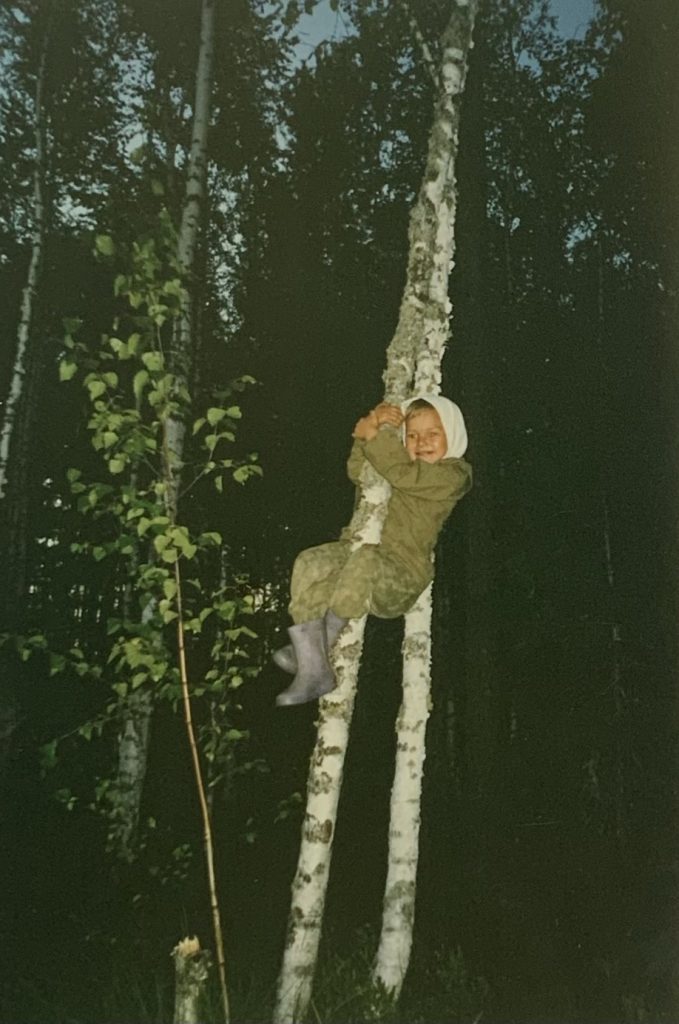
At the beginning of spring, walking on the snowy nasopness of hunting skis, I collected young pine cones in a canvas bag to sell them into the forestry for seeds: so I earned my first money - 16 rubles. I bought four ice creams with raisins in waffle briquettes and a kilogram of gingerbread on them: it was a great time when there was still a store in the Black River.
On very special days, trips occurred 24 kilometers from the house to the neighboring Old Believer village of Gar. There was another forestry where dad and colleagues decided what to do with forest fires and a harvesting of firewood for the winter: it was a fairly important thing, because the winter was very cold. Sometimes it happened that classmates and I studied in warm outerwear and mittens, and wrote with pencils, because the pasta in the arms froze.
Once in the summer, during the discussion of important matters, adults and my daughters of the local forester decided that the fences are large stakes, dug in the sand on the Yux River, inside of which we had to swim, for weaklings. As a result, when my dad and I were already driving home, I was sick of river water from the side of Zila, on which we went to the burn. But I did not drown, but even learned to swim. In the middle of the journey behind the village of Karakozovo, the truck was stuck in the mud - this would not have happened with a caterpillar all -terrain vehicle and would not have to move then to Yuksu through the old terrible bridge. On an all-terrain vehicle, you could go straight across the river and watch how the water reaches the middle of the glass, and not be afraid, because the roof has hatches, and Uncle Anton has a special hat-hat, and this means that he knows exactly what he does.
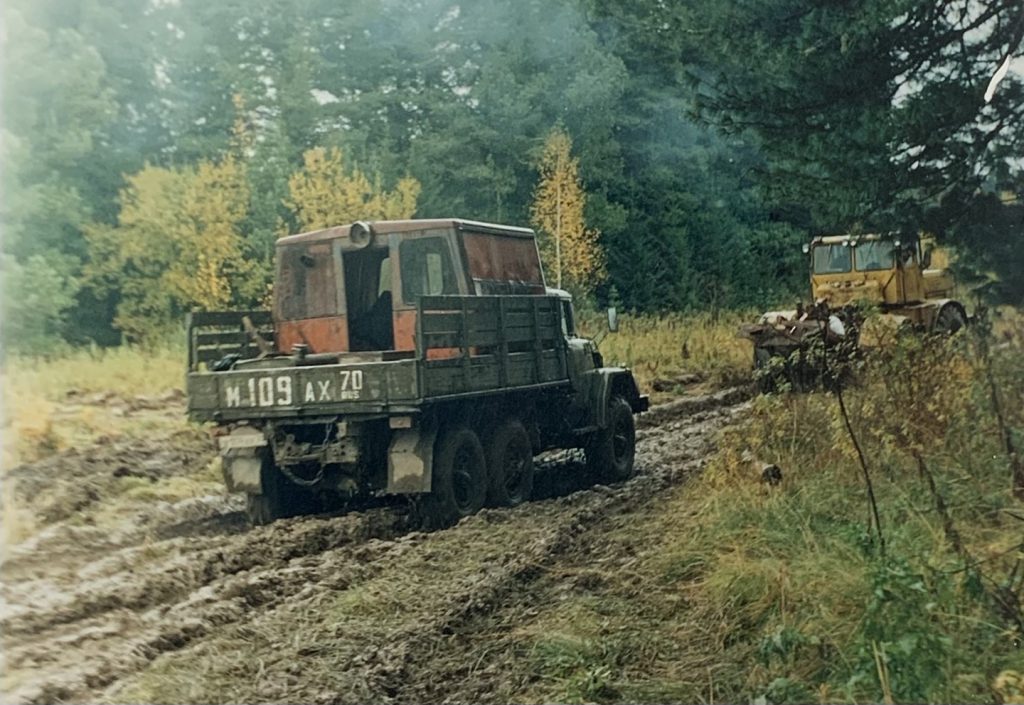
After unsuccessful attempts to pull ZIL out of the mud with branches, winches and swear words, dad left the driver, and we went a few kilometers later to the acquaintance of his father - one of the several remaining residents of the abandoned village of Karakozovo. He was an alcoholic. Even in our village, despite the fact that there were not three inhabitants, like in Karakozovo, many drank - this was the most affordable entertainment. Someone drove himself, someone bought from illegal traders who managed to buy alcohol in the city and sell it in the village, diluting with water.
Papin, familiar in a fit of white fever, shot the walls in his house - even the mirror was broken by shot. But he and his cat mutated were very hospitable: my dad and I got an old terrible cotton mattress in a strip, and in the morning we drank tea with cakes from the water and flour, which Uncle Kolka fried right on the metal part of the wood stove. And after breakfast, my dad and I went to the truck, who was already pulled out by Uncle Anton who arrived from the village of Kirovets.
Despite the fact that my mother worked as a teacher, I don’t remember that my parents someday had a vacation in the usual sense: usually we spent time together for some things useful for the family. For example, they collected mushrooms or berries in the forest so that in winter there is something tasty-because usually from the store we had flour, sugar, vegetable oil and animal feed. All this was stored in a huge barn, where, moreover, we had bags of cedar nuts in the shell - instead of sweets, if you click them and pour honey. I constantly forgot that there was a trap on the mice, and came into it with my fingers.
Parents collected blueberries and lingonberries with brows - buckets with long metal teeth, which needed to comb the bushes so that the berries remained inside the bucket. And for my sister and my dad, the dad made a container from birch bark and a bitch where we collected berries with fingers, because the brothers were only for adults. I wanted to grow up sooner so that I also had my own bracket. If my sister and I became bored, then dad built a hut from the branches so that we played in it and would not run away to look for something interesting in the forest. So we sat in our castle and pretended to be bears: we burned with blueberries to blue teeth, or climbed into the trees and growled pretty, or lying upstairs on the large dry islands of the moss.
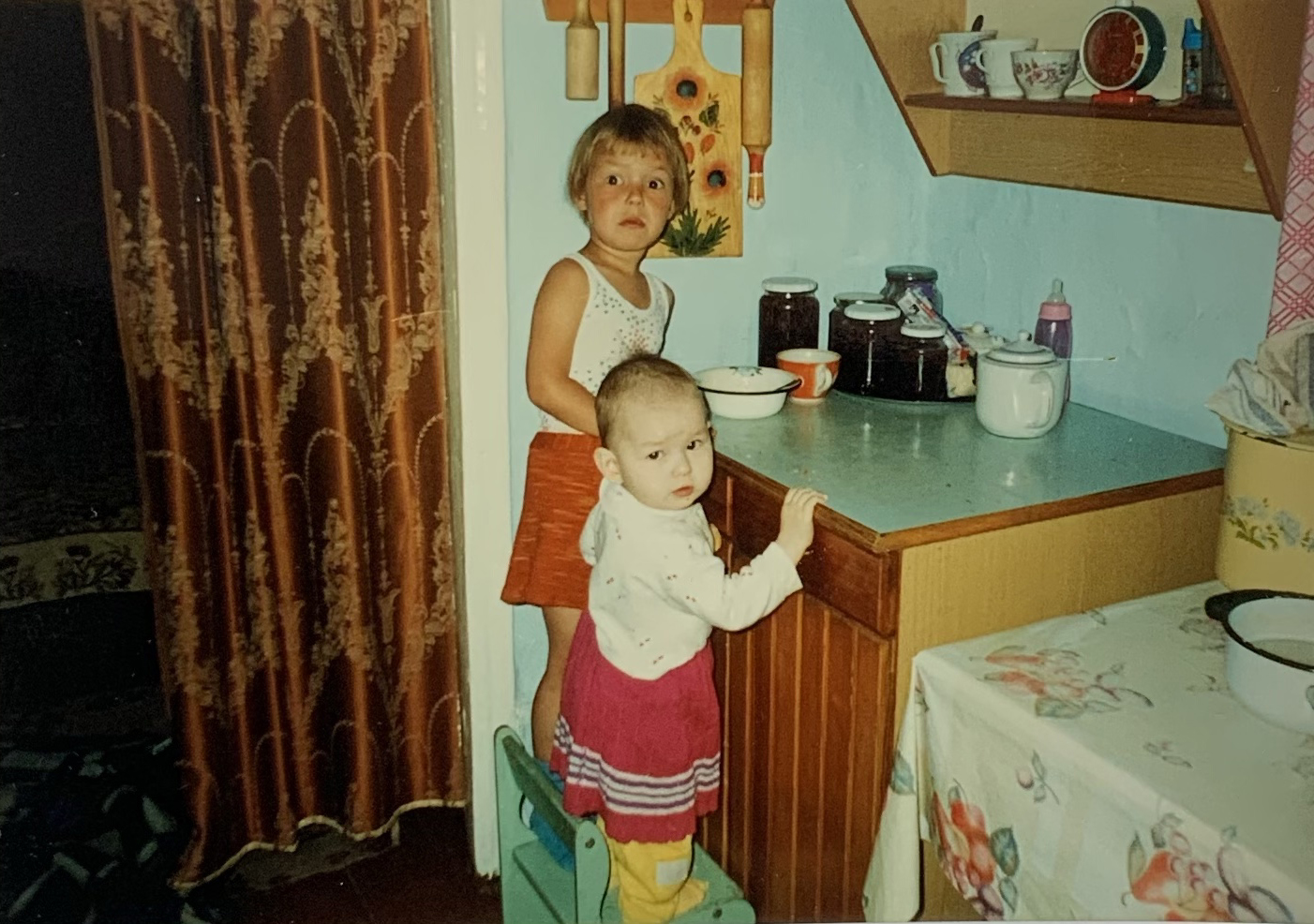
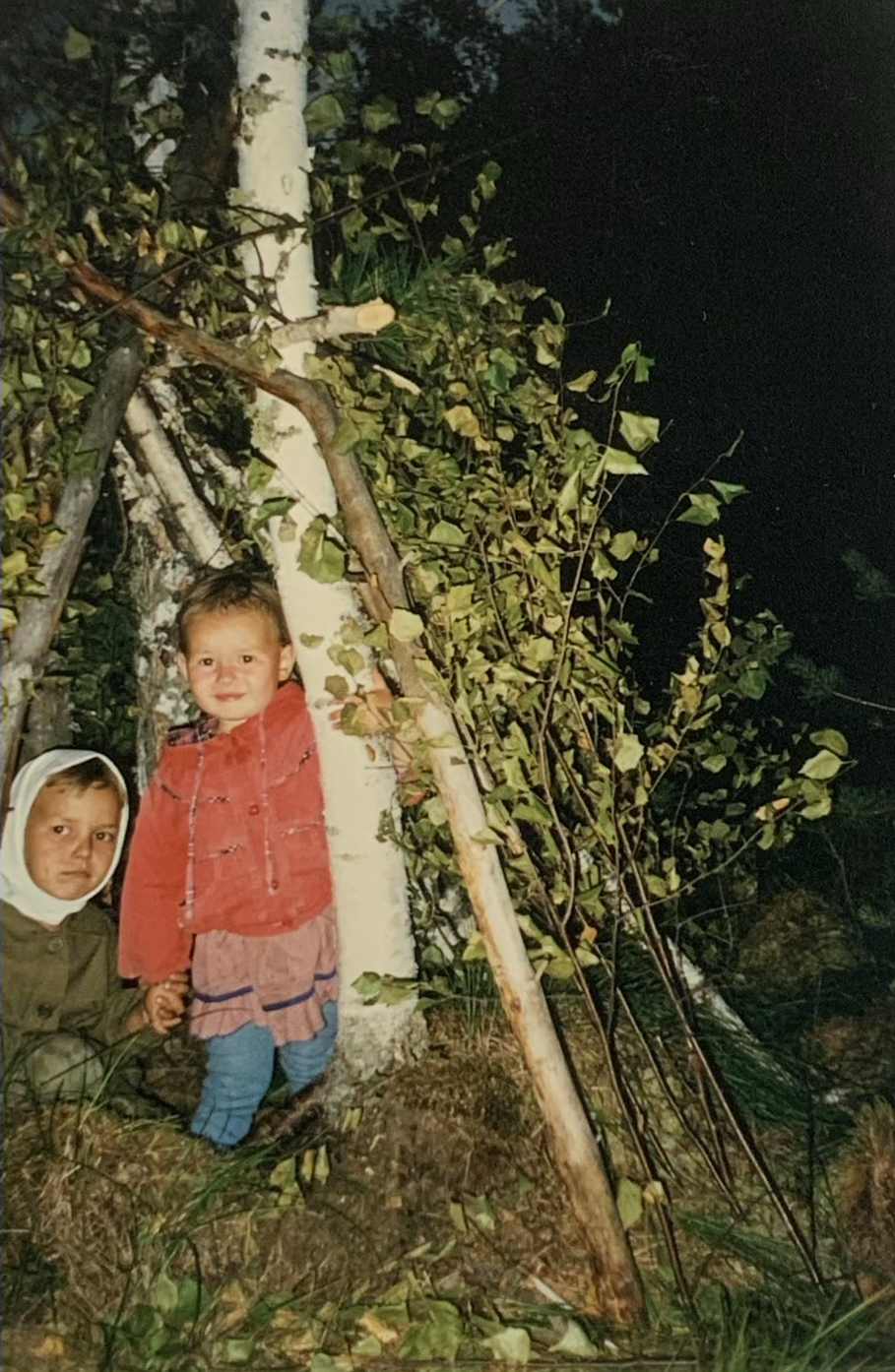
It was also interesting to collect cranberries, but not so pleasant, because the swamp where it grew was wet, and black vipers were warmed up among the bright red berries. Parents considered it necessary to warn us that they should not touch them. There were not such obvious rules for the swamp: to advance trace in my father’s steps, jump on bumps and not touch a sharp sedge with your hands.
In early spring, parents drove moonshine from the mash, which they put in flasks, mixing water, yeast and before the year, which no one wanted to eat even in winter. It was necessary to wear snow in buckets to cool the serpentine, and set fire to a spoon with a liquid that went out droplets to understand whether it was necessary to overtake it again or is already tight enough.
“An, let's go to collect cartridges, I have already chopped wads.” After these words, it was necessary to take my mother's nail polish from the trellis. Dad used the raspberry color than mom, and when it was not necessary to rush anywhere, he allowed me to paint the capsule on cartridges in order to seal them, and at first he fell asleep for gunpowder and fraction into the sleeve.
I had colored wax crayons, and dad was friends with me because of them: with a meter wooden ruler, I helped to mark the long drags (the so-called trees without branches, which dragged the tractor from the deed to the house) for about 50 centimeters. Then he sawed them on Churochki and allowed me to split a few pieces when I had enough strength. I liked to learn to work with tools from dad's carpentry: an ax, saws, hacksaws, a grinding circle, a circular saw. All fingers are in scars, but I can do a lot with my hands.
My dad was respectful of animals, despite the fact that he hunted all winters and we lived more or less decently thanks to the hunt and the subsidiary farm. He did not have a stupid habit of conquering the taiga, and he hunted with old gear, half of which was given to him by Strekalych - a friend who spent almost half a life in prison, because he treated people with teeth at home without permission and education. In the zone, he undermined his health and could no longer go to the forest. The dad had a Ural motorcycle, where in the summer we went for blueberries and fish for Yux, and the old snowmobile “Buran”, on which he left to hunt in winter. I remember well how we were waiting for my father from hunting: at first the sunset, then barking dogs, and then the sound of a snowmobile engine was heard, and dad returned home with prickly cheeks, smelling of cold and needles, with “from a bunny” and frozen game tied to a backpack.
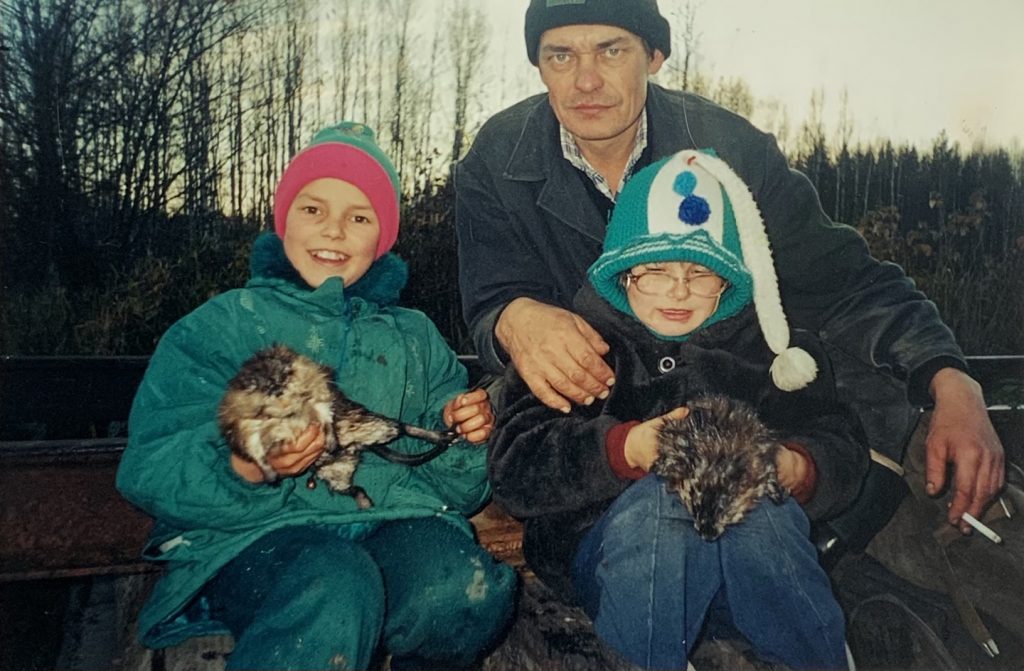
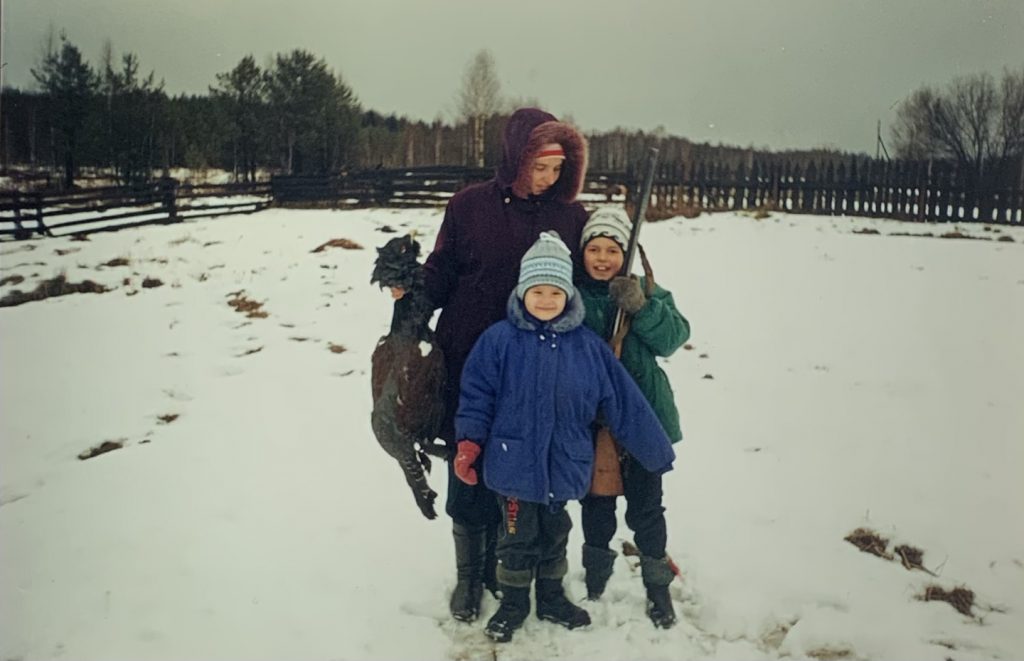
I understood everything very well about my father when he and other men from the village came to take me and the rest of the children from the children's camp, where the Siberian chemical plant sent us due to the release of radiation , after which the wind blew towards our house. My sister and I really missed the family: we were not at home for three weeks, we never left the village for such a long time. But dad, despite the fact that he also missed it, put next to him to the stove of the old “UAZ” with a tarpaulin tent is not me or sister, but someone else's girl, because she was much less than us and easily dressed for winter.
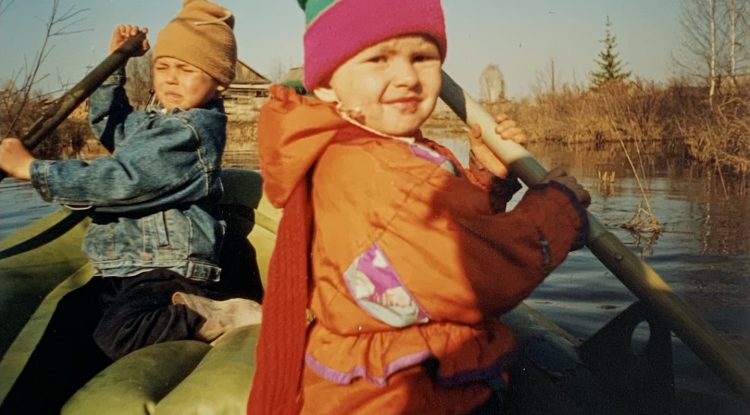
In the spring, life near the swamp in the village cut by the river becomes interesting: in order to bring dinner to the forestry, you need to go through the forest, which stands in the water, jumping from bumps to bump. But then you can go for the school and ride with friends on rafts, knocked out of logs and all that can be dragged into the forest without being stained by parents (although 20 years ago my father did the same secretly from my grandmother). The permitted entertainment was skiing on an inflatable boat along a spilled river. Dad taught us with my sister to row.
.mgl-tiles {display: none; } #mgl-gallery-640E8E686EB28 {margin: -2.5px; Width: Calc (100% + 5px); } #mgl-gallery-640E8E686EB28 .MGL-box {Padding: 2.5px; } @Media screen and (max-width: 768px) { #mgl-gallery-640e8E686EB28 {margin: -2.5PX; Width: Calc (100% + 5px); } #mgl-gallery-640E8E686EB28 .MGL-box {Padding: 2.5px; }} @Media screen and (max-width: 460px) { #mgl-gallery-640e8e686eb28 {margin: -2.5px; Width: Calc (100% + 5px); } #mgl-gallery-640E8E686EB28 .MGL-box {Padding: 2.5px; }} 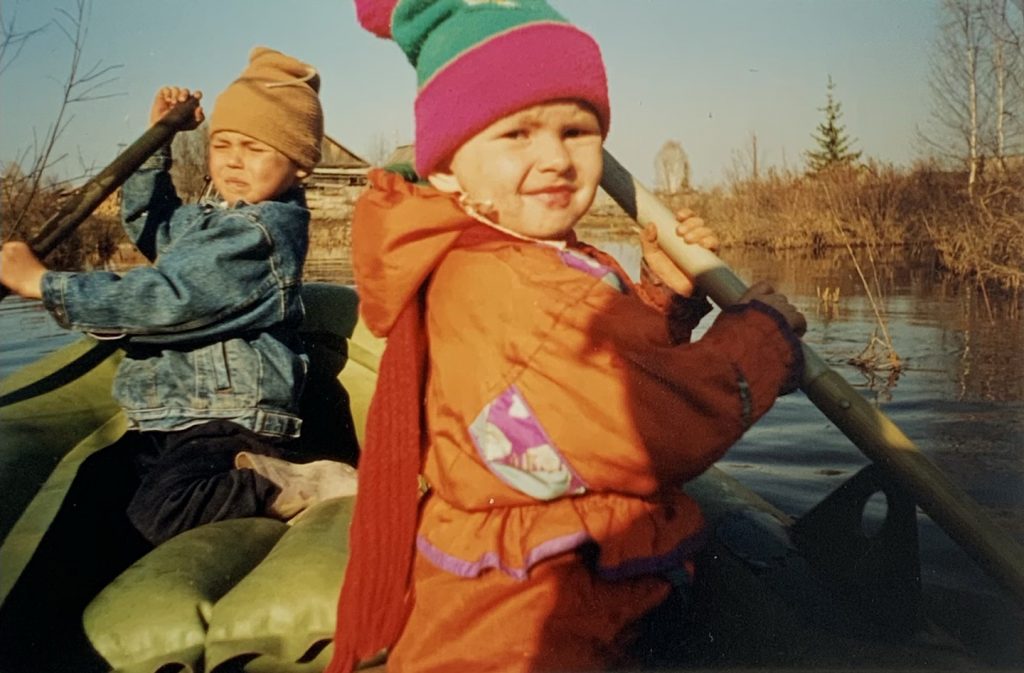
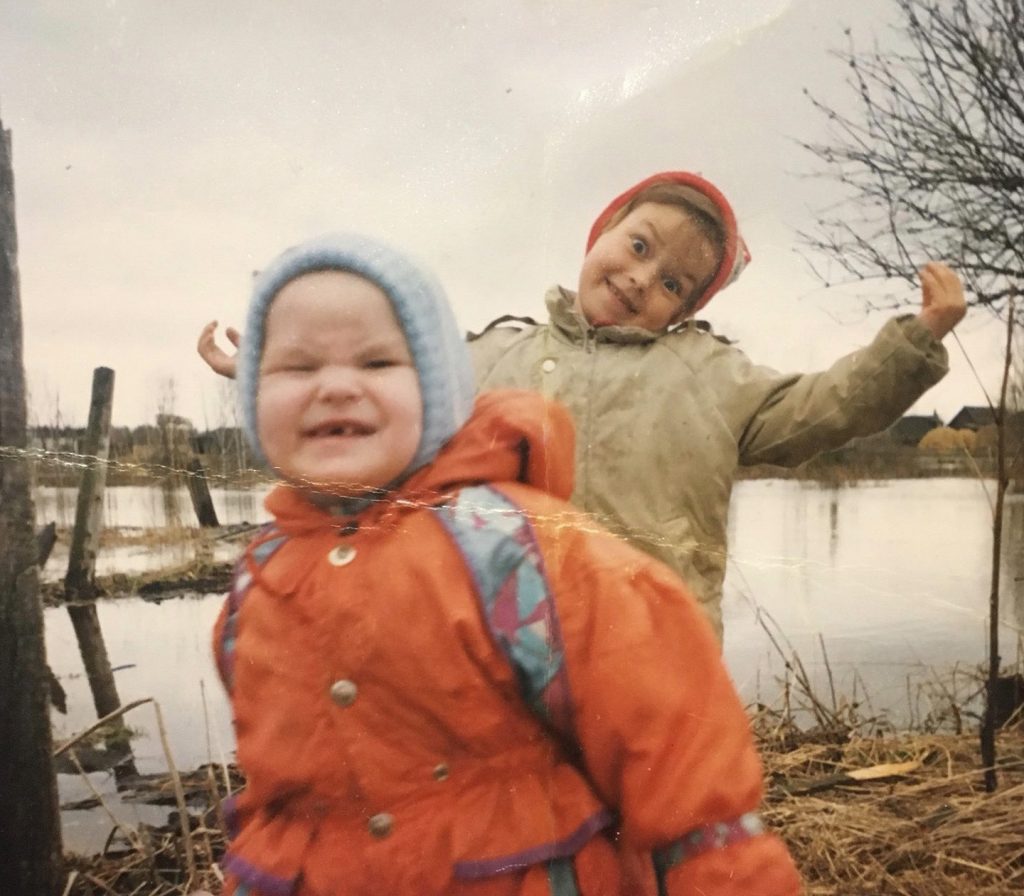
In early May, the time for a duck hunt came. The river came out of the shores, filling the bridges that connect the parts of the village among themselves. Now it was small not to go to the other side, unless the father would take it in his arms or put him on his shoulders and transfer it - the current was strong enough. But you could go to an abandoned village of small pots or take a sister with you and go 12 kilometers in Karakozovo to that father’s strange acquaintance, making one halt for lunch in the form of canned porridge with stew and a handful of punishment. There are many wild ducks and only three local people.
Once dad gave me a small rifle: she was heavy for me, and had to outweigh it from one shoulder to another, and once also a shutter fell, and it was necessary to return to the beginning of the village to find it. On that campaign in the early morning, dad was able to get two ducks and prepared a shurp with vegetables and baked cakes, but I managed to shoot on empty glass bottles. And to my mother we brought the fluff, which she collected on the pillow.
In the middle of summer, when the water in Yuksa fell and my brother could easily cross it for no problems, or, like along a bridge, along a fallen tree from one shore to another, we went fishing - check the nets and cook fish for the winter.
I liked to watch how the father takes out a thin mesh with silver fish from the water. When part of the network with pikes or crucians appeared on the sand, it was possible to pull them out. From time to time it was even possible to climb into the river as much as the height of the rubber boots and daddy's stern gaze allowed - but even they did not prevent me from once to crash into the water. Dad had to get me out of the water and dry my clothes at the stake. I burst into tears because I was afraid that they would no longer take me fishing, but in vain - we still had a lot of fishing. For some holiday, my father even gave me a pendant-a basket woven from an aluminum wire, which needs to be thrown into the water, putting the bait inside. She was checked a couple of times a day, taking out large fish, and the little release to swim further.
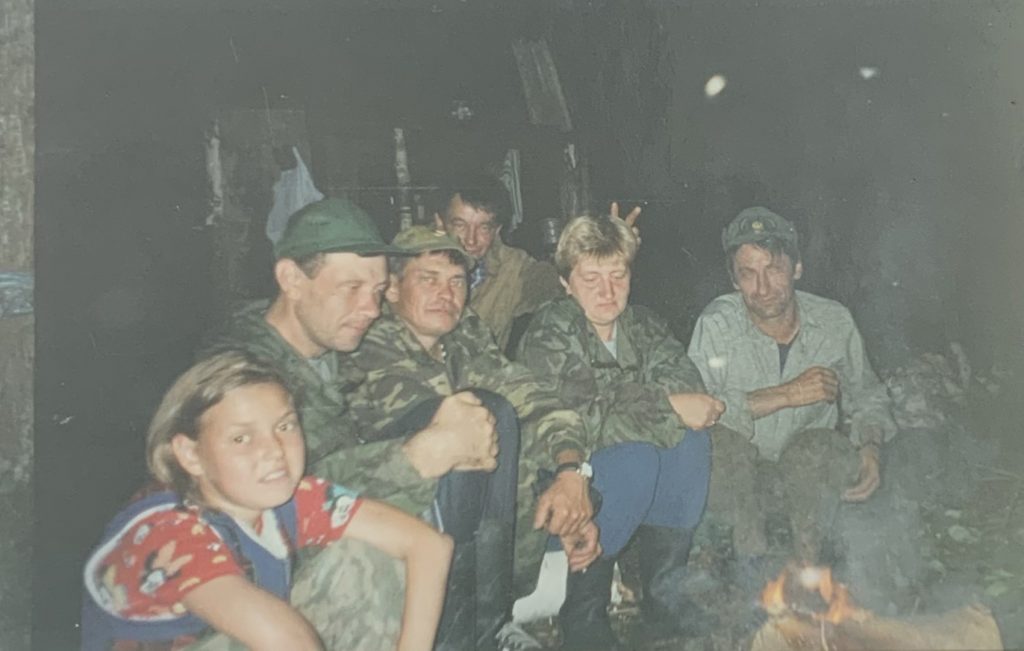
When I ended a quarter for five, in November, during school holidays in elementary grades, my father took me with him on a hike to a borrow - a small hut in a forest intended only for an overnight stay. It was necessary to check the traps, lay out the bitch - rotten meat seasoned with valerian, on the huts - small huts into which dad placed traps, and remember the drawings of traces of animals. If you walk fast, it’s not cold at all and even fun to go with several dogs through the forest. Dad’s dad’s - lean Siberian likes, which he brought with puppies from the Old Believer village and raised to bark at every tree where the squirrel is hiding, or chasing the plow, sensing its smell.
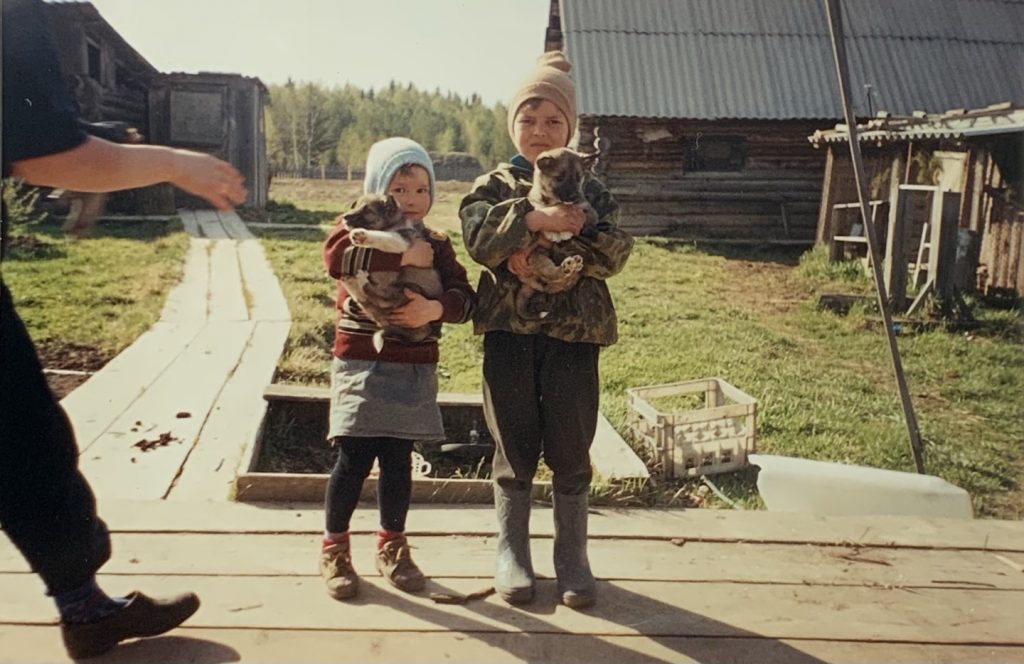
Many years later, when moving to the city of all the dogs, it was possible to attach to dad's familiar hunters and rustic, but no one wanted to take the old Karai, with whom dad had been getting game for more than ten years. He could not live in the apartment: he was strong and once even made an undermining from his kennel through a thick layer of the earth and the wall of the chicken coop, directly to the hens. He was said to him, because he is a hunting one. Despite the great love and many years of joint adventures, the father had to shoot a dog - this was one of the few cases when he cried.
On that campaign, 13 kilometers later, by the evening we finally came to the hut two by three meters on the lake: in the bourgeois, logs are cracking, in an iron container where the mice cannot climb, except for cereals and black sheet tea, we find caramels (this is where the sweets that the dad convey from the guns who dwells in Papina come from in Papina Bearing. In the forest, it is enough just to be hospitable - you just do not have to close the hut and supplies to the lock.
After dinner from buckwheat porridge with stew, bread with salty lard and tea with “goose legs” sleeps well: dad snores on one flooring, and I with fluffy dogs on the other - so I will be warm and the dogs will not run away to look for game.
In the morning we go back home, the dogs bark restlessly in the distance and are in no hurry back, we hurry to their barking, we find moose traces and gnawed bushes. It becomes clear why the dogs woke up-the moose passed somewhere near the hut, but his father told the dogs to sleep further, because it was dark and it makes no sense to go to watch what was happening. I want to see the moose, but I am glad that he ran away from us.
In the taiga it is very good: you feel restless power inside yourself, but you understand how small you are and the forest is big. А вернувшись домой с обветренными красными щеками, цыпками на руках, спеша к протопленной печи, на верхнюю часть которой можно забраться в шерстяных носках, с книжкой, пушистым котом и бутербродом со сливочным маслом и смородиновым вареньем, начинаешь намного больше ценить все, что теплого у тебя есть.
Жизнь в полузаброшенном поселке была интересна еще и тем, что «большой земле» не было дела до нас, а нам до нее. Два мира встречались во время выборов, на которые ходили все, потому что привозили не только бюллетени, но и магазин, в котором можно было хоть что-то купить — чаще всего какую-то ерунду в виде брелоков и футболок с Леонардо Ди Каприо: кто это, я узнала только через пару лет после того, как переехала в Томск, потому что с телевидением у нас было не очень, а видеомагнитофоны были всего у двух семей. Поэтому мы с одноклассниками чаще смотрели не новинки кино, а что можно найти интересного в заброшенных домах, которых год от года становилось все больше, — была даже одна улица, на которой совсем никто не жил.
Зимой в город выехать можно было только тогда, когда лесозаготовители расчистят дорогу для лесовозов, а летом — только на дрезине , собранной дядей Антоном из мотоцикла, рамы и колес от вагонов. Надо было закутаться в тулуп, потому что даже при 30 км/ч продувало насквозь, несмотря на тент.
Если в межсезонье кто-то сильно заболевал или рожал, то прилетал вертолет: огромный, оранжевый, он распластывал траву по земле и притягивал посмотреть на себя всех жителей. Когда-то у нас был фельдшерский пункт, но врач умерла, а нового на население меньше, чем сто человек, не прислали. Все лечились в основном методами народной медицины: при простуде мама растирала нам с сестрой грудь, спины и пятки барсучьим жиром, от больного горла полагался мед, настоянный в чеплашке, вырезанной из черной редьки. На крыше крольчатника все лето мама сушила травы, которые должны были спасать от всех возможных болезней.
Отец мог сделать укол от столбняка по случаю проколотой ноги, обработать раны настоем березовых почек, вправить вывих или наложить шину на перелом. Он сам лечил домашних животных и делал небольшие операции — мог зашить рану или кастрировать борова: всему этому он учился от старших приятелей и по книжкам.
При всем этом у меня никогда не было ощущения, что я не в безопасности, не было страха, что что-то может случиться и останешься без помощи.
Большую часть времени мы с сестрой проводили вне дома — уходили в лес выгуливать лаек, собирать грибы и ягоды, подпаливать кусочки хлеба на огне в консервной банке, сидя в домике на дереве (тогда это не казалось нам чем-то опасным), который построили сами из досок на толстой сосне с мощными ветками.
В нашем доме часто останавливались разные люди, в основном папины друзья и коллеги. Однажды в поселок приехал американец Боб, который решил заготавливать лес в Сибири. Все утро перед встречей с ним отец ворчал, что подерется с ним, — он смотрел телевизор и верил тому, что американцы — самые ужасные враги, — но уже вечером они пили самогон в летней кухне и парились в бане. Еще отец дружил с Игорем Семеновичем — участковым из соседней Итатки, который рассказал мне в один из приездов, что голова сама по себе очень много весит. В тот день я узнала слово «расчлененка».
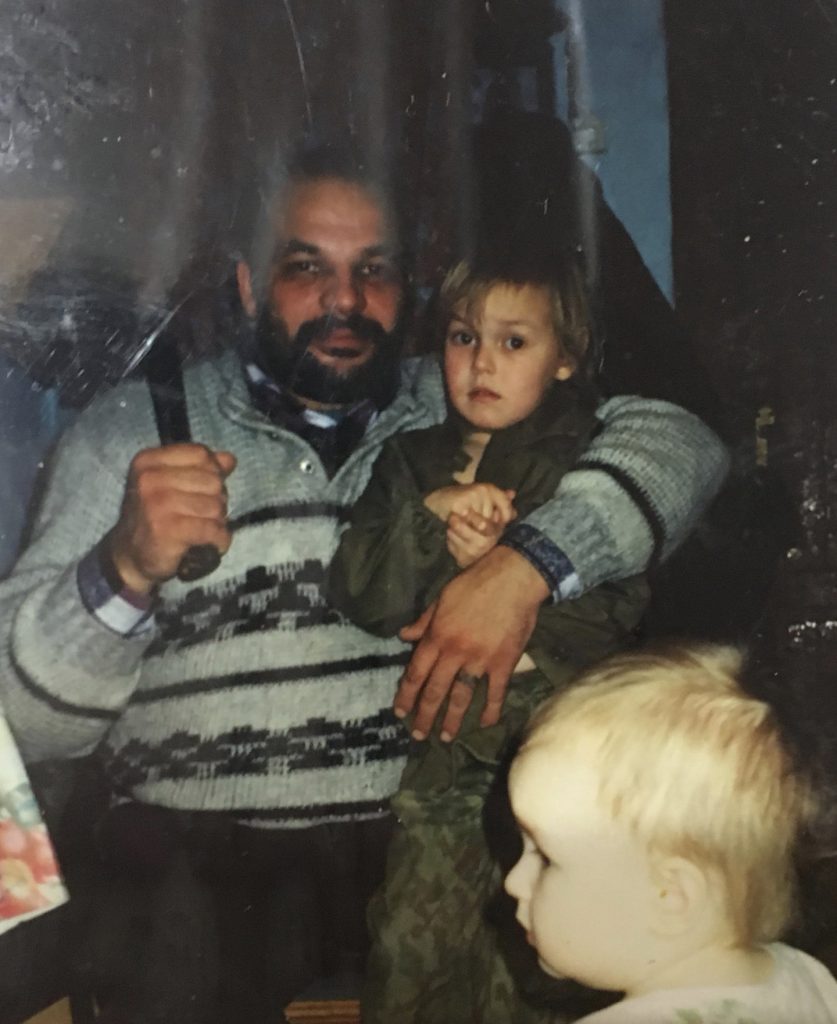
В межсезонье сильный ветер и дождь загоняли всех домой, и иногда провода срывало падающими деревьями: мы оставались без электричества до времени, пока ЛЭП не очистят. В такие дни мама готовила еду на дровяной печи и доставала свечи. Перед сном она обнимала нас, говоря, что мы у нее под крылышком, а папа пел колыбельную Умки и песню про солнечного зайчика, чтобы мы не волновались.
Когда мы стали жить в Томске, а папа приезжал на выходные, он рассказывал, как живут наши животные, соседи и все, кого мы знали и кто был нашим миром. Год после переезда ему нужно было заканчивать работу, и это было тяжелее суровой зимы и отшельнической жизни. Мы были втроем с мамой в городе, жизнь в котором сложно было понять, папа был с лесом, и ему тоже было непросто: от тоски и стресса у него случился инфаркт, но его успели спасти — довезли на дрезине до соседней деревни, где его уже ждала скорая. В городской период мы все равно часто бывали в лесах, собирали дикоросы, и у нас оставались многие привычки и достаточно простые взгляды на все, происходящее вокруг.
Прошло 16 лет, как мы перебрались в Томск в маминой охапке, и почти два года, как не стало папы, но кажется, если пройти 30 километров от Итатки по насыпи — это все, что осталось от железной дороги, когда рельсы растащили на металлолом, — то в Черной Речке будут ждать папа, дом, собаки, лес — детство.