
Translated material
Seven days in January
Now we live in another country
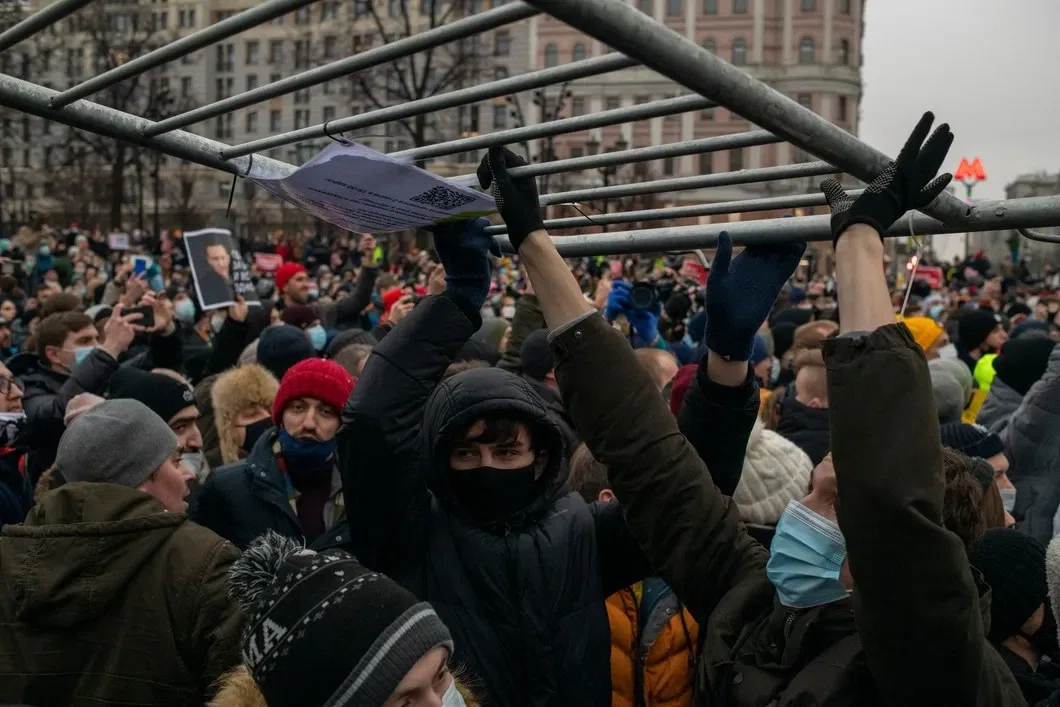
In these seven days - from January 23 to 23, who had passed since the return of Alexei Navalny to Russia, fantastic changes have occurred in the country, and it became clearer that we were waiting for all. Ten conclusions:
1. The action on January 23 collected a large number of participants, and, which is very important, in different cities of the country and different ages and socio-demographic groups.
Conditional protest veterans came out - those who participated in them already many times. But many newcomers joined them.
The base of protests has expanded. The expectations (at least expressed) by official propaganda that the protests would be very youth and even for children obviously not justified.
2. The law enforcement agencies used unlawful, unmotivated violence - this was visible on dozens and hundreds of rollers. Namely, the actions that seem illogical allow us to understand the true goals of the subject. In this case, it can be assumed that the authorities were interested in exacerbation of the situation. Apparently, the police were given the relevant orders. Or they had a pre -formed idea of protesters as enemies, and about the protest itself - as an extremely dangerous event for the state.
3. The reports are extremely alarming that the protesters allegedly used the children as a cover, and about injuries, which allegedly received 39 or 40 employees of law enforcement agencies in Moscow. None of this has yet been confirmed. But messages of this kind can give grounds for criminal prosecution of accidentally chosen people - witnesses in such cases have more than once the police themselves were, and all this together indicates preparations for large -scale repressions against participants in today's protest.
4. It is quite obvious that the status of Navalny as the leader of the opposition, who went sharply up after his return, arrest, trial in Khimki and a film about the palace in Gelendzhik, today strengthened even more. He finally became a figure of equal -ella of the Kremlin and a real contender for the presidency.
Judging by the current actions of the police and the propaganda campaign against Navalny - the “spy, the traitor of the Motherland” - the authorities understand this.
5. It is obvious that the declared goal of protest - the liberation of Navalny - could not be achieved. The liberation of Navalny in February, when the next court will be held, and even more so now, will be perceived by the opposition part of society as a victory of protest, so the power will not go to this. His arrest and condemnation for 30 days were a point of no return. Most likely, Navalny will remain in prison for the entire period of Vladimir Putin’s stay in power.
6. Today's actions not only raise the authority of Navalny, but strengthen the feeling of moral correctness of opponents of the regime. The political confrontation in the country is increasingly becoming moral confrontation, which additionally complicates the position of the authorities and reduces the corridor of possible reactions for them.
7. The events of January 23, like the Navalny film, are unlikely to increase the number of opponents of the system - they reduce the number of its supporters. The complete absence of shares of civil support of the Kremlin-pickets, rallies and generally any speeches of supporters are noteworthy. So something unclear announced the so -called “Guard of Zakhara Prilepin”, but noticed in any activity. This means that the only resource of the system is its power structures.
8. Everything that we saw today allows us to talk about the “Belarusization” of the situation is with all the consequences of this for people and for the state.
9. All this will have long -term consequences - in these seven days a new period of our history began, when the dialogue between the government and the society, which was not there, becomes simply impossible. The authorities will finally strengthen in the idea that domestic political problems can be solved only by strengthening repression. Moreover, not only in terms of suppressing protests and the actual opposition activities, but also tightening the media control, for the intellectual activity of people who are negatively or skeptical of the regime, for the situation in universities and schools.
10. It is not clear how, in these conditions, the power will hold future elections? A relatively soft option is an unconditional preventive elimination of everyone who can pose at least some danger, and the complete removal of civil society from election control and, in fact, from participating in them. But the system can go further - the question is how far?
We now live in another country.