
Translated material
The Israeli startup began to produce batteries, which are charged in five minutes. When will it be possible to try them out?
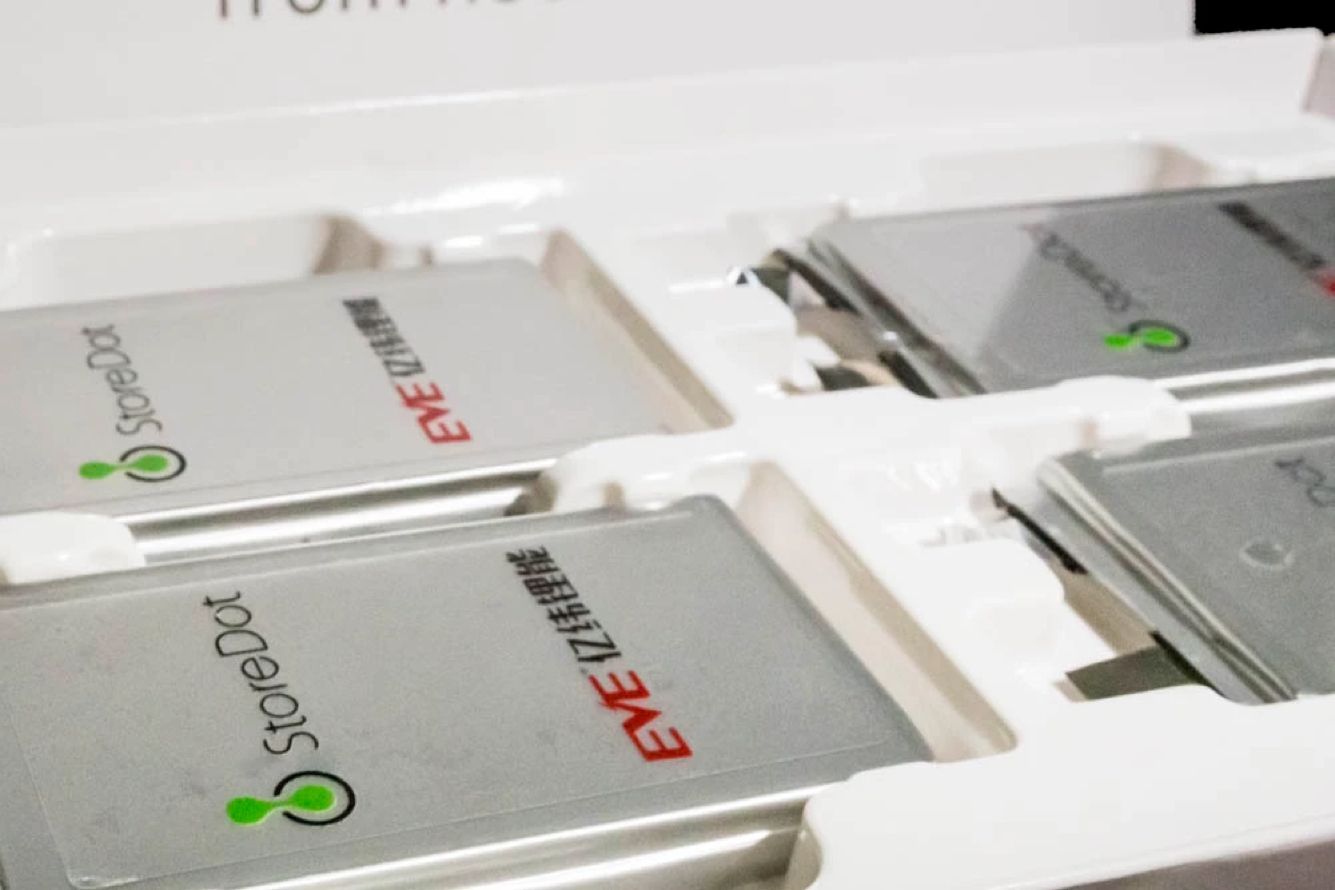
This week, the Israeli StoreDot startup, which has been developing batteries with ultra -construction charging for more than five years, announced entering a wide market. Its batteries are planning to produce a large Chinese manufacturer Eve Energy. The company is going to install new batteries only in smartphones and small electrical vehicles - for example, scooters. But Storedot does not hide its main goal: according to the developers, it is the slow modern batteries that restrain the widespread introduction of electric vehicles - and the company intends to change this. "Medusa" tells what, in fact, there is a difficulty with fast charging lithium-ion batteries, and what can prevent Storedot from introducing its ultra-fast batteries in practice.
12 years ago, Deutsche Bank predicted that by 2020 more than 10% of the cars sold annually would be electric. In reality, as of 2020, this indicator, according to Bloomberg, was at the level of only 2.7%. There are several reasons for the growth of the electric vehicle market, one of which is a low capacity of the batteries used and a large amount of time required to charge them.
Today, for complete charging the electric vehicle battery requires several hours. Even in fast charging mode for the full restoration of the battery charge, for example, Tesla Model 3 will take about an hour. This fundamentally distinguishes electric cars from traditional gasoline machines and, of course, limits their sphere of use.
This problem is aware of many people, hundreds of research articles and many efforts of engineers are devoted to it. Among them is the Israeli startup Storedot, which has been developing its own battery at least since 2015. Its engineers have already managed to create several prototypes, for the full charge of which only five minutes are enough.
Why do ordinary batteries not charge quickly?
The rate of replenishment of the battery charge is determined by the voltage and current strength that are supplied to it. In theory, the more volt and amperes you give, the faster the current source will restore its capacity. However, in practice, when supplying current with a too high voltage or force, the battery can greatly lose in the container, swell or even explode.
“When the battery is charged, lithium from a positive electrode switches to a negative one. In a traditional battery, this electrode consists of graphite. When we discharge the device, lithium is introduced into the structure of graphite, ”says Dmitry Semenenko, deputy head of the laboratory of physical and chemical processes in post-literion sources of current sources of current, in post-literary sources of current sources. - If you do this quickly, then lithium does not have time to be introduced into graphite and is formed in the form of a metal phase on a negative electrode. Litius in the form of metal forms not smooth layers, but branched structures - dendrites. ”
The dendrites are elongated, similar to branching trees (hence the name) crystals from lithium atoms, which, at high currents, germinate quite quickly to the cathode. As a result, through them two electrodes are connected to each other and cause a short circuit, which can lead to fire.
With the normal discharge of the battery, the reverse process occurs: the connection of lithium and graphite decomposes, as a result of which the electron enters the circuit, and the lithium atom again becomes a positive ion. If you try to speed up the process, another problem may arise: an incoming or outgoing flow of lithium ions will destroy graphite, greatly reducing the capacity of the element.
How is the Storedot battery different from others?
Back in 2019, in his advertising video, Storedot demonstrated how in just five minutes the battery he developed for an electric scooter charged from 15% to 100% capacity. Nothing is known about the battery capacity of the battery, but the developers assure that a completely charged scooter can drive about 300 kilometers.
According to the developers, they "completely remade all the components of the batteries." The key innovation of Storedot is the use of silicon nanoprofor instead of graphite. Dandrit does not grow in silicon with fast charging, which makes it safer.
“Silicon has many other problems, but it increases the charge rate slightly, raising the voltage at which the formation of a metal lithium occurs. Storedot suggested using silicon in the form of nanoparticles. This made it possible to increase the surface area and reduce the current density, thereby making the process less intense, ”explains Dmitry Semenenko.
Thanks to the use of the nanopot, scientists managed to reduce the thickness of the silicon layer in the electrochemical cell by 30 times - from 300 to 10 micrometers. To collect the battery, the developers folded many cells together, thus forming a high -capacity battery. A decrease in the thickness of the cells is critical: the thinner these components of the battery, the more compact battery with the same container or more capacious with the same thickness.
However, not all silicon materials are equally good. Despite the fact that the silicon anode solves the problem of dendrites growth, with quick charging it also swells strongly due to an excess of INOON introduced, like an electrode of graphite. By absorbing lithium ions, the silicon electrode increases greatly in volume, which literally destroys it from the inside. The use of silicon nanomaterials instead of a crystalline compound allows you to partially solve this problem, but restrictions on the charging current parameters in this case still remain.
When will our electric cars be able to charge in five minutes?
At the moment, Storedot is aimed at the market of small electric vehicles, drones and smartphones. The Israeli startup intends to produce the batteries at the EVE Energy plant-one of the leaders in the lithium-ion batteries market, which has been creating effective high-capacity batteries for 20 years.
In the future, the company plans to build its own factory called Onegiga . It will be sharpened for the production of batteries with the function of super -construction charging.
Key investors Storedot - BP (British Petroleum), Daimler , Samsung Ventures and TDK . The sizes of investments are not disclosed. The startup has not yet signed any contracts for the supply of batteries, but assures that "together with his strategic partners is at the forefront of the movement for the mass introduction of electric vehicles."
Despite the good news from one of the many startups, we are unlikely to be able to charge electric cars in five minutes in the near future. And the point here is not only in the restrictions of the batteries themselves. “To make up for the Tesla battery charge with a capacity of about 100 kilowat hours in five minutes, currents with a power of Megavatts will be required. These are very large values - the currents of such power are consumed by factories. Even if the electrochemistry itself [of the new battery] will be able to allow a super -free exercise, then a serious infrastructure will be required, which we do not have yet, ”says Dmitry Semenenko.
At the moment, Store Dot has brought to the commercial market only the first generation of its batteries. Israeli scientists plan to soon present a new type of batteries with higher characteristics. And although the scooter’s battery with the help of new technology can be charged in just five minutes, to make up the battery capacity of the electric car, it may take from 30 minutes or more.
"Jellyfish"