
Translated material
What is the article on blocking roads?
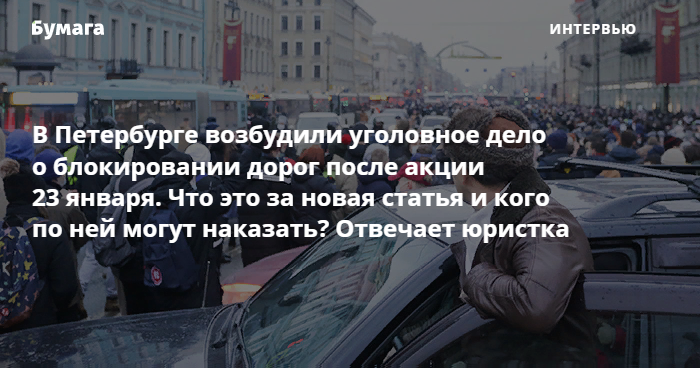
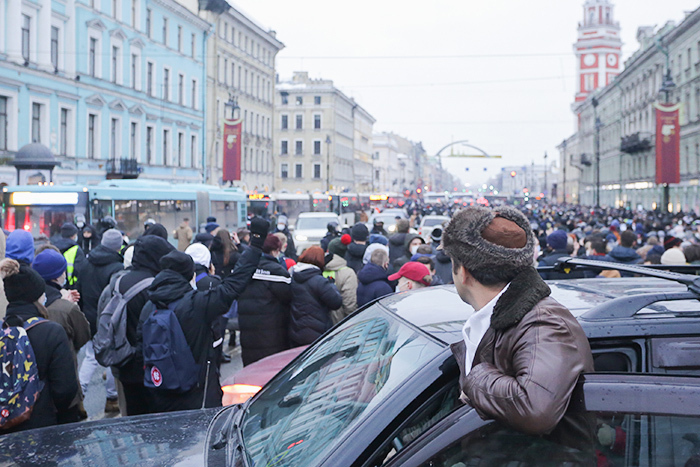
In St. Petersburg, according to the results of the mass protest, on January 23, a criminal case was opened on the blocking of roads (part 1 of Article 267 of the Criminal Code of the Russian Federation). According to the police, the “group of citizens” reached the roadway of Malaya Morskaya Street and posed a threat to the safety of other Petersburgers, and forced drivers to “use dangerous maneuvers”. This is one of the first cases under the criminal article after amending it.
The lawyer of the human rights association “Team 29” Valery Vetoshkina told “Paper” how the article works, what punishment threatens it and how the authorities can abuse her.
- The author of the initiative was the State Duma deputy from United Russia Dmitry Vyatkin. The bill was introduced on December 16, and on December 30 it was already signed by the president. In general, he fell under the New Year's conveyor when the deputies adopted bills of packs . He entered into force, so they are already initiating criminal cases for shares on January 23.
Article 267 of the Criminal Code of the Russian Federation already was already, but criminal liability occurred only in case of blocking transport communications and only on condition that these acts entailed by negligence causing serious harm to human health or his death or causing major damage. Now, criminal liability occurs in that case, for example, if these acts have created only a threat of damage.
Punishment depends on the consequences. For example, if serious harm is caused to the health of the victims or large damage was caused in the amount of over 1 million rubles, then the perpetrator can be sentenced to 4 years in prison.
Also, in my opinion, a new formulation of the part of the first article is quite blurred, where criminal liability is provided for blocking roads in the event that actions have created a threat to the life, health and safety of citizens or a threat of destruction or damage to property of individuals and (or) legal entities. How and who will determine that there was a threat to property of persons is not very clear. But it will allow law enforcement officers to attract this article by the ears.
As far as I understand, in the new edition of precedents, except for criminal cases for protest actions on January 23, there were no (similar cases after the action were initiated in Moscow and Vladivostok - approx. "Papers" ). In St. Petersburg, a criminal case was not instituted against a particular person, but on the fact of a crime committed. I do not think that the application of this norm is justified in this case, because, based on the materials in the open access, there was no threat to the property or the life of the participants of the action. The courtesy case for the action on January 23 perfectly shows what this law is aimed at. Personally, these changes cause fear that it is for such shares to be initiated and will be.
However, in any case, I want to say that during protests it is better not to reach the carriageways if the action is not agreed and transport can drive along the road. The defendant, in fact, can become any person who went to the roadway.
At the rally on January 23, the security forces consciously and harshly detained journalists. They do not comment on their illegal actions, and in the Kremlin they justify them. "Paper" spoke in detail about the situation.
More than 500 detainees, a criminal case of blocking roads, dozens of arrests and fines: we say that it is known about the results of the rally on January 23 in St. Petersburg.
Why did so many people come to rallies on January 23, do these protests differ from the previous ones and how can they end? Political scientists answer .