
Translated material
Results of January rallies in St. Petersburg
It is impossible to find out the exact number of participants.
From a small sea to Zinger's house
From sink to stone bridge
According to the Media Law, “Paper” is obliged to report that the FBK was recognized as a foreign agent. At the moment, the list of foreign agents includes several publications, activists and human rights activists, as well as a number of well -known NGOs, for example, “humanitarian action”, which has been working with drug users for 20 years.
The final results will be published later. The survey was attended by more than 2 thousand people. Of these, the action was visited by 38.9 %.
From 9 to 20 %, from 2019 to 2020
This happened in the police department, not a court
The numbers continue to update.
This is a 36-year-old programmer Nikolai ninth and 39-year-old civil servant Nikolai Lomov. Read more here .
Vishnevsky learned about this from a friend of the activist, whom the Fifth Canal told about this
There were four such announcements during the day.
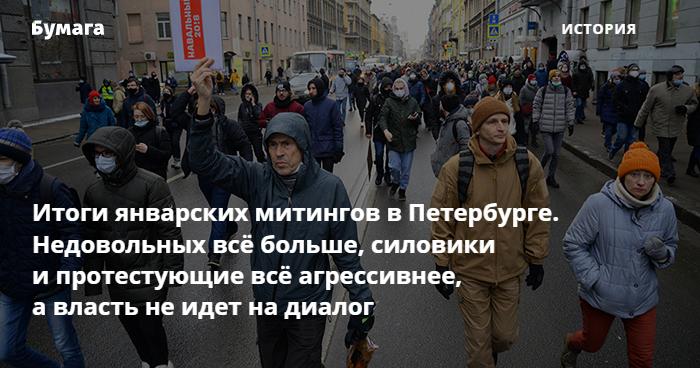
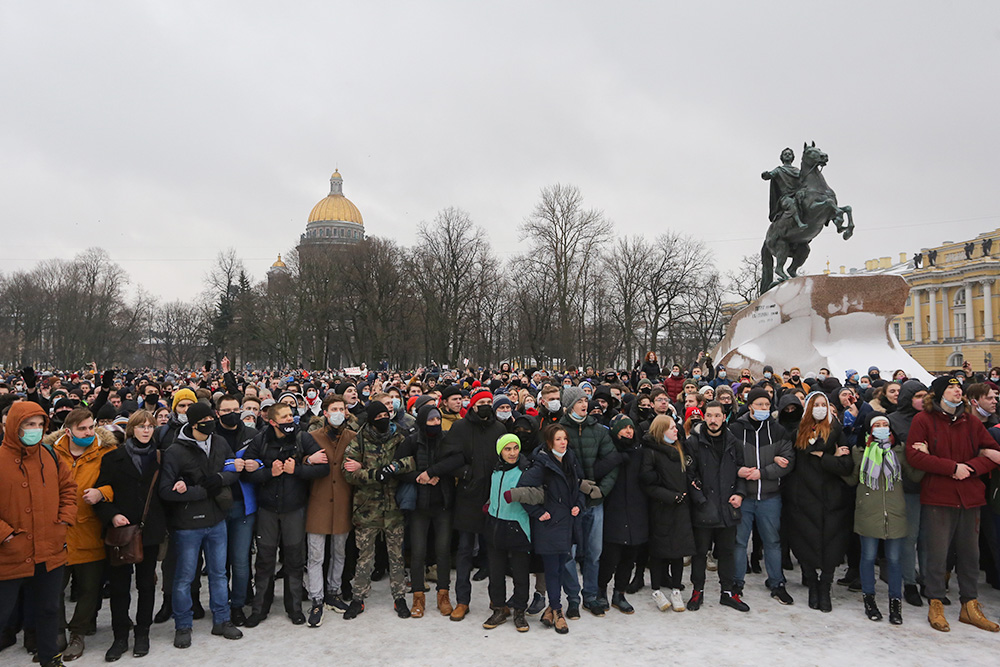
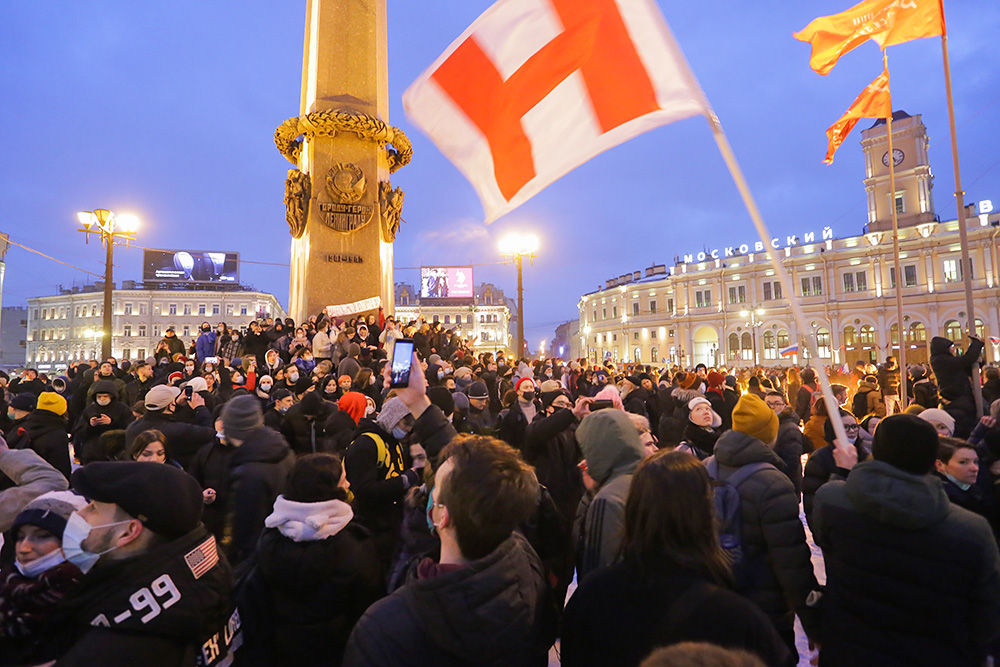
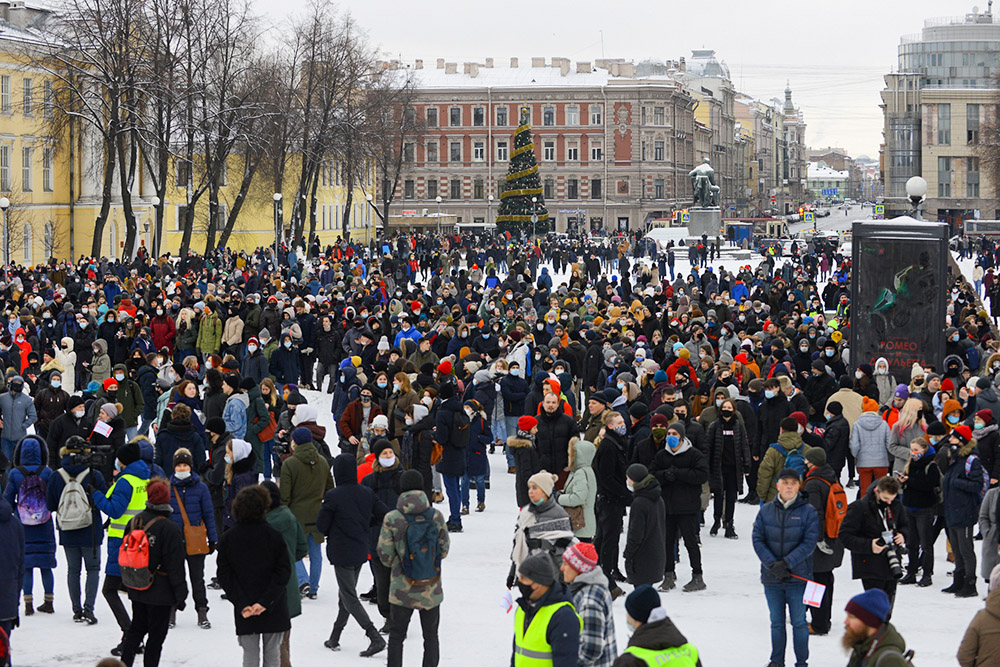
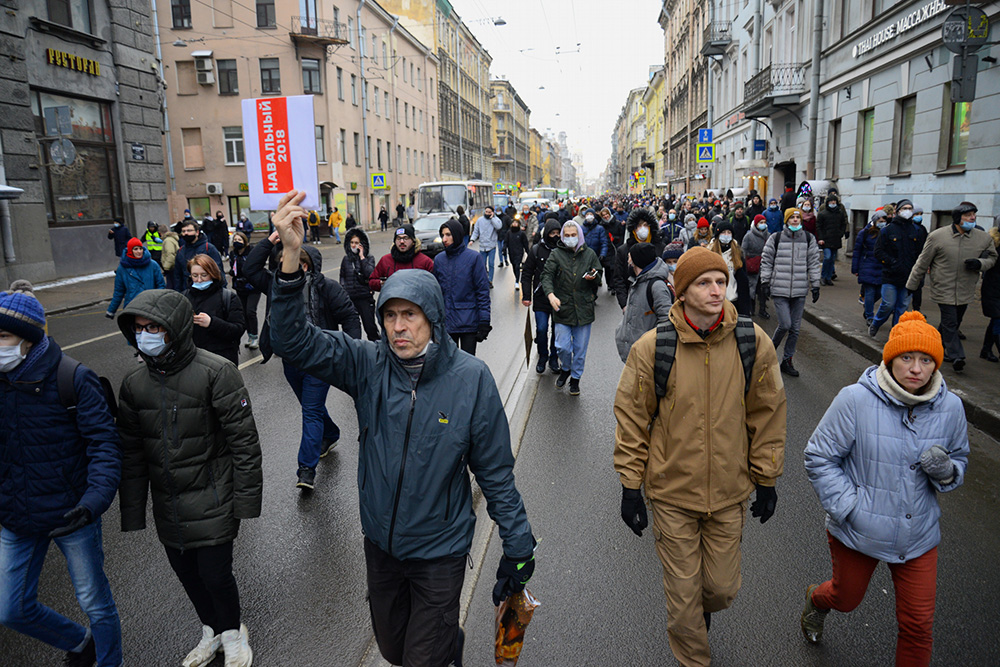
In January, in the center of St. Petersburg, with a difference of a week, two large -scale rallies took place in support of Alexei Navalny and against the current government. The shares were accompanied by record detention - the most massive in the modern history of the city - and regular clashes with security forces.
The dialogue between the authorities and protesters did not happen: the actions of the security forces are justified at the Ministry of Internal Affairs, and several criminal cases were instituted against the participants in the shares. On the eve of the inconsistent rally on January 31, the city leadership blocked central streets without warning - which caused the discontent of Petersburgers who did not participate in the shares.
"Paper" sums up the results of January protests - one of the brightest in recent years.
January inconsistent rallies are one of the most massive in St. Petersburg
Petersburg is traditionally included in the lists of "protest" regions of Russia. Mass shares in the city were held in 2011-2012 due to the irremovability of power, in 2014-2015 due to the accession of Crimea and the war in the DPR, in 2017-2018-due to the investigation “He is not a dimon”, against corruption and raising the retirement age. Thousands of people came to them, often less than in Moscow, but more than in other regions of Russia.
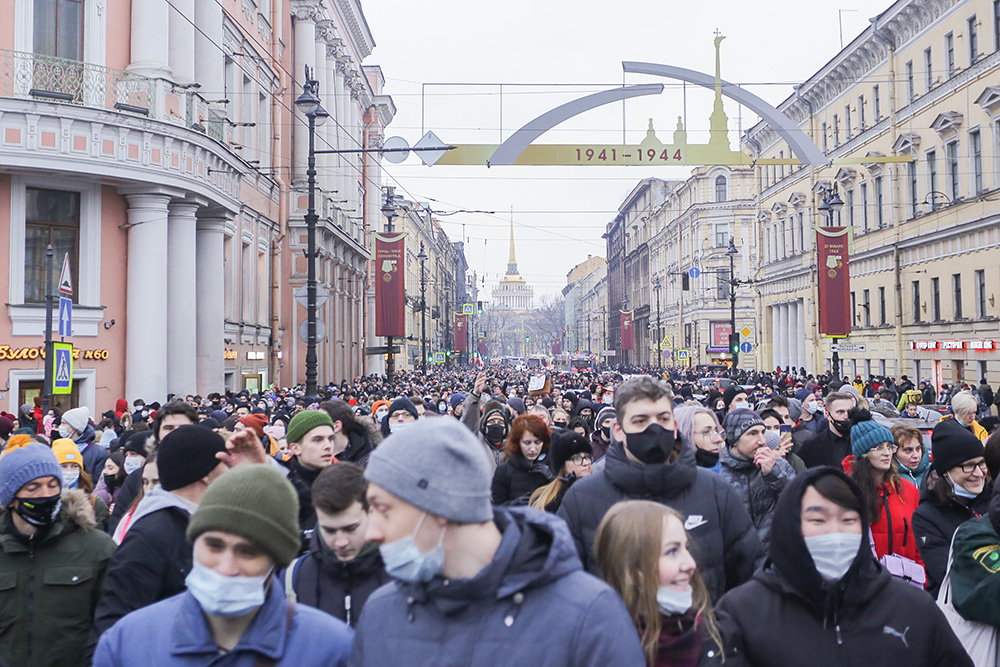
Judging by the data of the Ministry of Internal Affairs and the media, the new actions in St. Petersburg have attracted more people than in the last 9 years. For each of the protest rallies on January 23 and 31, declared by the headquarters of Navalny, from 7 to 30 thousand people came out, according to various sources, their number is called record.
“Paper” using the Mapchecking service rated the column on Nevsky Prospekt January 23 at least 15 thousand participants, and the crowd on Gorokhova Street of the 31st-at least 10 thousand participants. It is important that the composition of the participants was updated during the action, the protesters were scattered - many went to the neighboring streets. The headquarters of Navalny in St. Petersburg, who organized both shares, stated that the number of participants in the first rally amounted to 20-30 thousand people. And the director of the FBK Ivan Zhdanov called the second rally in St. Petersburg even larger.
Political scientists believe that those who have reached the rally are only the most active part of the disagreements.
“These protests are much deeper and more than we are trying to talk about it, ” political strategist Julia Mileshkina told Paper . - Go to vote for Putin on the polls is easier (especially when you are campaigned at the place of work) than to go to an unauthorized protest.
Political scientist Vladimir Gelman added that "this [a large number of protesters at an inconsistent action] once again suggests that the people who came out had a serious intention to demonstrate their disagreement."
According to the preliminary results of a poll of readers of “Paper” , more than a third of the people who went to the rally on January 23, decided to go to the action due to a sense of their own powerlessness and insecurity, about a third of motivation was a sense of anger and indignation. About 15 % replied that they like to be part of a group of people who share their values. In addition, almost a third of the participants in the survey who went to the rally came to the action with a sense of excitement, 17 % - joyfully, 10 % with fear and anger.
The organizers called the goals of rallies the “Freedom of Navalny” and “Freedom of each of us”. At the same time, only 10 % of respondents in our survey called their motivation the possible liberation of Navalny. As the protesters themselves said and as political scientists noted , one of the main reasons for people to enter the streets is dissatisfaction with the current government. Of the Paper surveyed, only 50 % partially support Navalny, while 68.9 % do not support the government at all.
“The detention of Navalny became a trigger for protests, but many came out because“ boiled, ” the associate professor of the Department of Political Psychology of St. Petersburg State University Alexander Nenfisakhor explained . -For some reason, it is generally accepted that people watch TV and really support the presenters, share their point of view. But in fact, people live in the real world and understand the current situation, so the Palace of Putin - probably the most popular cinema of recent years - also spurred.
Read more about the reasons for the protest here .
Dissatisfaction with the current authorities and confidence in Alexei Navalny grow synchronously. According to the results of 2020, the Kremlin included St. Petersburg among the outsiders in terms of trust in the current president. At the same time, the level of trust in Navalny in Russia, including in St. Petersburg, has more than doubled over the year.
Before mass protests, Petersburgers took part in local stocks. Petersburg activists met Navalny on the day of his detention on January 17 at the Moscow Airport Sheremetyevo. After the arrest of the politician for 30 days in the Yove Rocher case, more than 100 people came out with pickets to the living room. “If now they detained Navalny from lawlessness, then the next time you will be detained,” one of the activists told the paper . On that day, the security forces detained 40-50 people for violation of anticoronaviral norms.
At two rallies, a record number of participants were detained. Between protesters and security officials, skirmishes are increasingly happening
The number of detainees on the January actions of 2021 is a record for the history of modern Russia. According to the OVD-Info, at a rally on January 23, more than 4 thousand people were detained throughout the country, and more than 5 thousand for shares on January 31. In St. Petersburg, more than 570 and more than 1300 people were detained , respectively. Among the detainees, according to eyewitnesses, were not only protesters, but also passers -by.
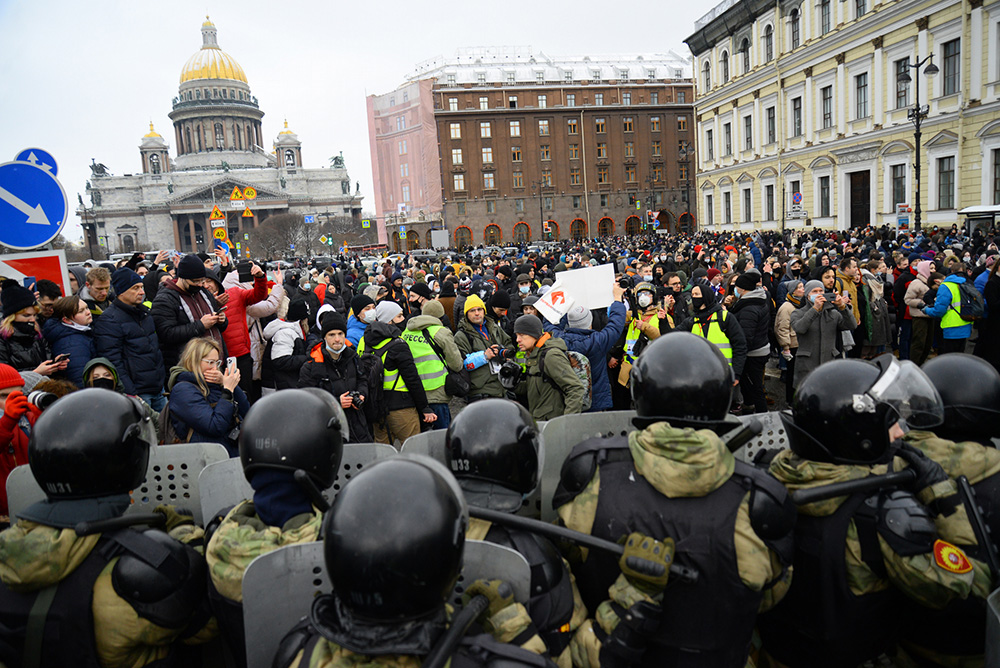
Human rights activists, journalists and eyewitnesses celebrate more stringent actions of security forces than in recent years. In addition to the use of strength and batons, during the detention, it was reported to use stampers, and one of the security forces sent a table weapon to the crowd. The security forces consciously and harshly detained journalists. The Ministry of Internal Affairs denies the use of light -school grenades, although a similar item exploded next to a “paper” correspondent and pepper gas (judging by the photo , people in the crowd of protesters could use it against the security forces).
The most famous and one of the most cruel was the case of Margarita Yudina. On January 23, the security official hit a 54-year-old woman with his foot in the stomach. From the blow, Yudin fell, hitting her head. She was hospitalized twice . The criminal case against the security forces was not instituted, but the guardianship authorities became interested in the children of Yudina.
At the same time, judging by the number of complaints in social networks and the assessment of the journalists of the “Paper” , which illuminated both rallies, the most stringent detentions were for shares on January 31. Protesters pinals were crowded with shields, poured to the ground, it is known about a man who, according to him, received a head injury - a wound of 4-5 centimeters. There were also a minimum of two participants in the action, who lost consciousness in a skirmish with security forces, and the use of electric shockers.
None of the known cases on January 31 became an occasion even for verification, and Dmitry Peskov called the actions of the security forces "a necessary measure."
Law enforcement officers also suffered in conflicts at rallies. This was especially noticeable in the numerous skirmishes of security forces and protesters on January 31. At the first promotion, after the start of the detention, the security forces were thrown with snowballs, the man hit the traffic police officer, and on Nevsky several people tried to break through the cordon. In both cases, criminal cases have been instituted, the defendants are facing up to 5 years in prison.
In the second action, the protest participants regularly tried to recapture the detainees, some attempts were successful . The riot police fighter, according to the UK, hit the head with his fist. On hay policemen who held hard detentions, they kicked “leave” with shouts. Due to the last two cases, criminal cases have been instituted , the defendants threatens up to 5 years.
Political scientists note that a rebuff of the protesters of the security forces is a new milestone of protests caused mainly by the actions of the authorities. According to the expert of the Moscow Center of Carnegie Andrei Kolesnikov, the country's leadership “provokes” conflict, knowing that the security forces are protected by the Criminal Code, and the protesters are rather not. Kolesnikov sees in this “suppression of civil society”.
Ekaterina Kurbangaleeva, director of the Special Opinion Research Center, also believes that in the future, the radicalization of the protesters is possible, to which law enforcement agencies can give a mirror rebuff. At the same time, the head of the VTsIOM Valery Fedorov believes that the organizers of rallies primarily make a bet on radicalization and increasing the “political temperature”.
“Paper” noticed at the January rallies many cases when the crowd discouraged protesters from provocations - snowballs and insults of the security forces. Opposition politicians also mainly condemn the actions of those who enter into skirmishes.
- This always happens. People begin to be angry and lose control of themselves, ”Ilya Yashin told the editorial office. - I do not justify. <...> Power insults people, angers, these emotions should splash somewhere. I see this now for young guys 20–25 years old: how decisively they are and how they are disconnected by self -preservation instincts. How they see that riot police are waved with batons and jamming women, the elderly, and they forget that they can be planted, that there may be criminal cases. They jump into this thick and begin to beat off.
Already on the first night after the rally on January 31, the courts in St. Petersburg arrested protesters for up to 10-15 days and fined up to 18 thousand rubles. Dozens of cases were discussed in a few hours. At the time of the release of the material in the district courts, more than a hundred cases remain.
It is also known about seven criminal cases against protesters in St. Petersburg: four about the use of violence to law enforcement agencies, as well as one for blocking roads, involving minors in rallies and damage to a traffic police official car. A source of Paper , close to law enforcement agencies, believes that new ones may appear in the near future.
In the city, without warning, they block the center during rallies. There is no dialogue between the authorities and protesters
Both inconsistent shares were accompanied by mass floors of the central streets and restrictions on the work of transport. On the eve of the first campaign in St. Petersburg, numerous fences appeared, on January 23 partially blocked bridges, limited the work of the central metro stations and even blocked the Nevsky section. There were no warnings about this.
Large -scale ceilings were not announced in advance on January 31. Two hours before the rally, the authorities closed the movement throughout Nevsky Prospekt and the neighboring streets. The townspeople who did not participate in the action could not get to work or home.
In addition, on the day of the second rally in the lobby of central metro stations, “ownerless objects” were regularly found - with this and technical problems they explained the temporary closure of six stations. The routes were also changed by public transport.
- Nevsky Prospekt completely blocked. And by no means a walking people, - the Petersburgers cursed in social networks. - Well, will criminal cases at the Ministry of Internal Affairs for overlapping the highways and restriction of people's movement?
The authorities still have not commented on the need to introduce such measures. The Commissioner for Human Rights, Alexander Shishlov, called them "actually a military operation." Alexander Beglov refrained for a long time from assessments. The governor mentioned that the inconsistent rally “could lead to an increase in the incidence due to mass accumulation of people”, and on February 1 stated that it was the protesters who “violated the plans of thousands of citizens”.
- Some citizens staged a massive walk along the roadway of the central streets, which forced to strengthen security measures in the city. Many citizens did not have time about their business, did not get to the places of rest. Illegal actions also prevented the normal work of public transport. The city was faced with irresponsibility and egoism, hostage to which Petersburgers became.
According to Fontanka, an emergency meeting in Smolny was held by Valery Pikalev, the former chief guard of the Valdai residence of Vladimir Putin, before the rally on January 31. Then, according to the publication, it was decided to take more than 4 thousand security forces to the streets, who, among other things, were engaged in the overlap of streets.
There were other reactions of officials. So, the speaker of ZakSA Vyacheslav Makarov thanked the employees of the Russian Guard and the police for working for the rally on January 23. Two opposition deputies Maxim Reznik and Boris Vishnevsky, in turn, publicly stood up for the protesters. The press service of the Ministry of Internal Affairs is limited to releases on detentions.
The position of the federal authorities and state media is as follows: rallies are not agreed, which means that they need to be dispersed. “We are talking about illegal actions. <...> We all saw that there were a fairly large number of hooligans on these shares, provocateurs with more or less aggressive behavior in relation to representatives of law enforcement protection - which is unacceptable. Therefore, of course, the police acts and takes the necessary measures, ” said Dmitry Peskov, press secretary of the president, according to the results of January 31.
At the same time, supporters of Navalny refuse to coordinate their rallies - they do not believe that the action will be approved. In St. Petersburg, there is still a ban on mass events of more than 50 people. In addition, in Russia, together with the right to peaceful meetings, enshrined in the Constitution, a notification form of mass events has been established , which in practice allows them to prohibit them.
A part of the townspeople reacted to the masses during rallies during rallies. Some complained about the reaction of the authorities, others about the demonstrators. The protesters also faced the discontent of the locals: on January 31, they tried to pour boiling water on a crowd from the windows and threw a glass jar. Other residents of the center told the “paper” that they went to the protest rally when it began at their house.
Deputy Zaks Boris Vishnevsky reported that in St. Petersburg a petition allegedly from the townspeople to the authorities, "to make the weekend free from rallies." Vishnevsky suspects that it could be created by Smolny officials themselves to further tighten the rallies' law.
“Even in the conditions of the coronavirus epidemic, it is possible to organize a dialogue, give people the opportunity to legally express their position, exercise their rights, without violating the rights of others,” commented rallies by the Commissioner for Human Rights in St. Petersburg, Alexander Shishlov. - But instead of answers to questions that concern society, the authorities again put up the police and riot police for the “dialogue”. Buildings and stun gunners will not solve existing problems. Violence only enhances intransigence and gives rise to bitterness.
Read the reports of “Paper” from rallies on January 23 and 31 , as well as see photo galleries from shares . We talked about dozens of arrests and fines, criminal cases and detainees at a rally on January 31. Here you will find infographics with a comparison of the number of detentions on all major protest promotions since 2000 in St. Petersburg. And here - monologues of protesters.