
Translated material
Beria as a new screening

About the reasons that the Rosatom’s leadership could turn to the figure of Beria, and why the installation of any monuments to the organizer of mass repressions is unacceptable, “such things” talked with human rights activist Nadezhda Kutepova, Moskhorduma deputy Sergei Mitrokhin and who was born in the deportation by Hussein Iskhanov
Beria Tactics: Fear, Secret, Lie
Nadezhda Kutepova was born in Ozersk - a closed city of nuclear industry, which is still possible to enter only by special passes. Plutonium was created there for the first Soviet atomic bomb. Nadezhda recalls that when she had completely left for her grandmother in Sverdlovsk, her father and mother forbade her to talk about Ozersk with someone: otherwise “you will never see her parents-a black funnel will come behind them.”
In 1957, a radiation accident occurred at the Mayak enterprise - one of the largest in the history of the USSR. From 1999 to the forced departure from Russia, Nadezhda led the non -profit organization Planet of Hopes, protecting the rights of the affected accidents on the Mayak. In 2015, its organization was recognized as a foreign agent.
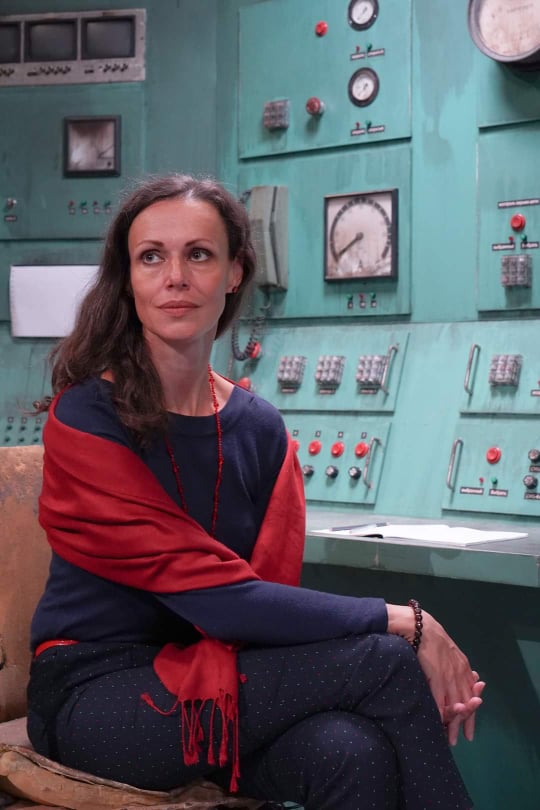 Nadezhda Kutepova photo: Hubert Amiel
Now Kutepova has finished work on a book with a working name “The Secret of a Closed City”. The lawyer and human rights activist studied archival materials related to the history of the nuclear industry, including the period when the project was led by Beria.
- Do you remember how they treated the personality of Beria in Ozersk? They talked about him in the nineties or two thousandth years, discussed his contribution to the nuclear industry?
- I was born in 1972, and my childhood passed under the Soviet system: I was an October, Komsomolskaya Pravda. At the time when I went to kindergarten and studied at a Soviet school, in our closed city where the first atomic enterprise existed, no one ever mentioned the name of Beria. I have never heard him as a child. I think that after Beria was convicted and sentenced to death, this name was prohibited in the nuclear industry itself.
When I began to study the archives, I saw how the story associated with the name of Beria developed in closed cities - as it was then called, in social houses - which were built with atomic enterprises. Indeed, Beria headed the atomic project and personally visited the sites on which construction was held. He gave a carte blanche for any actions of the newly created industry, and they could not be regulated by any laws of the Soviet Union.
The people who worked there recalled how he came, different stories were connected with him, including funny ones, but, of course, all had fear in front of him. At that moment, his crimes were not considered crimes and were not exposed.
- But after he was arrested in 1953 on charges of treason, everything changed?
- The process over Beria was in the spirit of open processes against the Trotskyists and enemies of the people. The party committees of nuclear enterprises received an order to hold meetings: to talk about Beria's harmful activities, to condemn it and get the responses of citizens. I read the minutes of the meeting of the party assembly of the Mayak production association, where the leadership and political officers read this information, stigmatized Beria. At that moment, in the Sotsgorodki, including in Ozersk (in Soviet times, Chelyabinsk-40), the streets were named after Beria. In Ozersk, Beria Avenue was called one of the central highways of the city. She was renamed Victory Avenue. That is, in 1953, nuclear workers, by order of the order, erased Beria from the industry as an enemy of the people and a spy.
- Until today, attempts have been attempts to “resurrect” Beria as an “outstanding nuclear holder”?
- The nuclear industry in the Soviet years existed in an atmosphere of secrecy. And the nuclear workers forgot about the role of Beria until the end of the eighties - until the time of publicity and perestroika. Their attempts to achieve his rehabilitation ended in failure, and then they left them.
- Why is the role of Beria so important for employees of the industry?
- Beria acted illegal methods and illegally sent hundreds of thousands of people to death. Exactly the same methods, Beria led the atomic project. He was issued a carte blanche and the right not to comply with the laws of the USSR. This means that from that moment the whole country has worked for an atomic project.
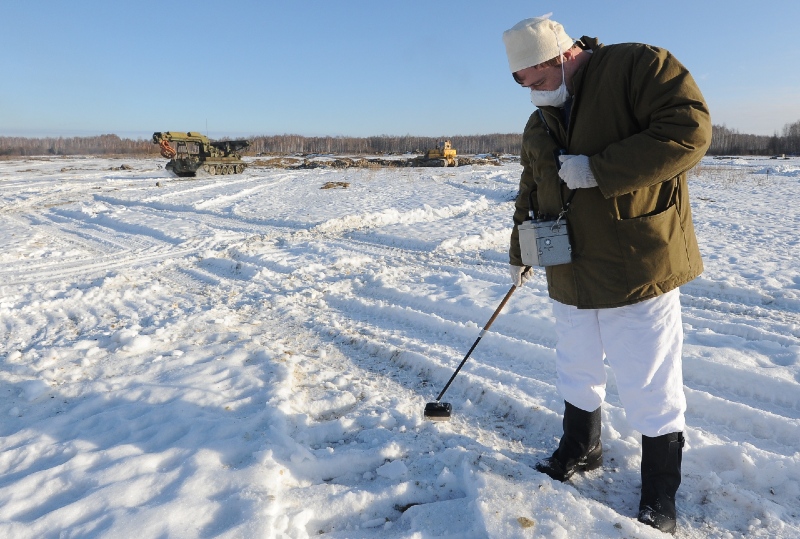 Employee of the Federal State Unitary Enterprise "Production Association" Mayak "" of the city of Ozersk, Chelyabinsk Region, is working on the reclamation of the reservoir Karachay photo: Alexander Kondratyuk/RIA Novosti
- Is it possible to say that in closed cities the principles of the work of Beria have been preserved?
- In the closed cities of Rosatom - and there are ten of them, according to my estimates, about 700 thousand people live and work there now - the authorities today retained all the features that Beria invested in it: for example, the opacity of decision -making about why one person can enter the city and the other cannot. In this sense, those who are in power in closed cities believe that the influence of Beria is positive, but those who live there, and human rights activists consider it differently. When the question arises, you need to choose a law or “Rules from Beria”, most often the local leadership chooses the “Rules from Beria”. And it is difficult to change.
- Why did you need to return Beria to the public public space today?
- Recently, the series “Bomb” was held on the Russia 1 channel. He talks about the creation of a nuclear bomb in the USSR and ordered by Rosatom to the 75th anniversary of the domestic nuclear industry. The series brought to the screens of a criminal and a villain who plays one of the key roles in the film - the creator of nuclear weapons, which we protect so and threaten them all. This probably allowed Rosatom managers to think that they have a moral right to put the figure of Beria in a public place.
- It turns out that this is propaganda for corporate use?
- “Rosatom” is the successor of the Soviet nuclear industry. But today the main meaning of the existence of the state corporation is to make money on atomic projects. The "Rosatom", which is not guided by physicists, but managers probably came up with the idea of raising a patriotic spirit. They needed a scrap, and with this cross, they considered the heroism of their ancestors, including Beria. I think their goal is to give employees an old ideological message. But society should not allow them to turn Beria’s figure into an object of worship, because Beria was a criminal.
Beria believed that people work only for fear. The only motivation that he created for nuclear workers, and was fear. Beria, along with Stalin, destroyed a huge part of the population of our country, and their methods should in no case be encouraged.
The culture of neglect of the human life, which was supported in Stalin's times, has successfully survived to this day. We see that any accidents in the atomic industry - for example, the 1957 accident, when an underground container with liquid radioactive waste exploded on the Mayak, and Chernobyl is also the fruits of the ideology of Beria. This is all his system: fear, secret and lies.
"We still remember the deportation"
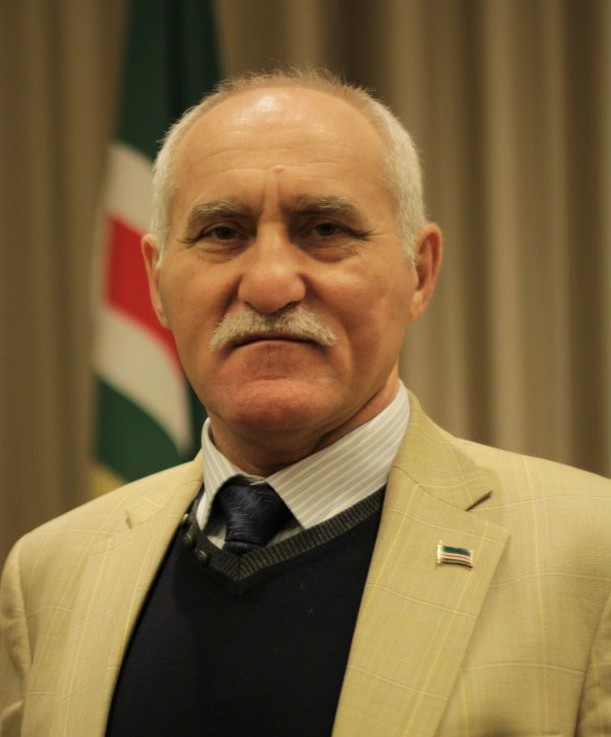 Hussein Iskhanov Photo: From Personal Archive
On February 23, it will be 77 years old since the deportation of Chechens and Ingush from the territory of the Chechen-Ingush Autonomous Soviet Socialist Republic to Central Asia. The Operation "Chechevitsa" was carried out by the NKVD, NKGB and SMERSH under the general leadership of Beria. According to various estimates, from 500 to 650 thousand Chechens and Ingush were evicted during the operation. In 2004, the European Parliament recognized the deportation of the genocide and accepted the corresponding declaration with an appeal to achieve peace in Chechnya and stop massive human rights violations.
The coordinator of the organization “Democratic Association of Chechens in Austria” Hussein Iskhanov told “such matters” that he perceived the news about the opening of the Beria monument at VDNH as “spit in the soul of people”.
- I was born in deportation. There were defenseless people next to us: children, old people, sick - they gathered everyone there on the orders of Beria. More than 50 percent of our population died there. We have been in Kazakhstan for thirteen years, the people survived a lot of horrors. Deportation was very affected by our people. This is a collective trauma. The people are still under the oppression of this deportation - each family has its own sacrifices and tragedies. And the monument of Beria would be offensive to the Chechen people. But who asks us?
- How did the deportation affect the life of the Chechens?
- Before the eviction, people lived compactly in the republic, engaged in various crafts: there were hereditary blacksmiths, hereditary jewelers, and these traditions were interrupted. Related ties were torn - we could not get together at the parent's hearth in our villages. After the deportation, everyone was scattered in various places, and the Soviet authorities did not allow people who lived in the mountainous part in the mountains, fearing that they would develop anti -Soviet activities.
- How now young Chechens perceive this historical period?
- In Vienna, we are holding events dedicated to February 23. We made a film, found a man who remembered these events, he recently died, unfortunately. We have collected families of families where children speak on behalf of their grandfathers and tell the stories of those who survived the deportation. We are trying to work with youth so that she does not forget about the tragedy that happened both in 1944 and during the Caucasian War. Honestly, it is no longer surprising me what is happening in Russia - even if the monuments are erected by Stalin. The name of Beria for the Chechen people, as for the Ingush, Kabardins, other peoples of the Caucasus - for everyone who was expelled to Kazakhstan, Siberia and Central Asia - is associated only with punitive operations. We perceive this injury even more painfully than the last two wars in which we had the opportunity to protect ourselves with weapons in our hands.
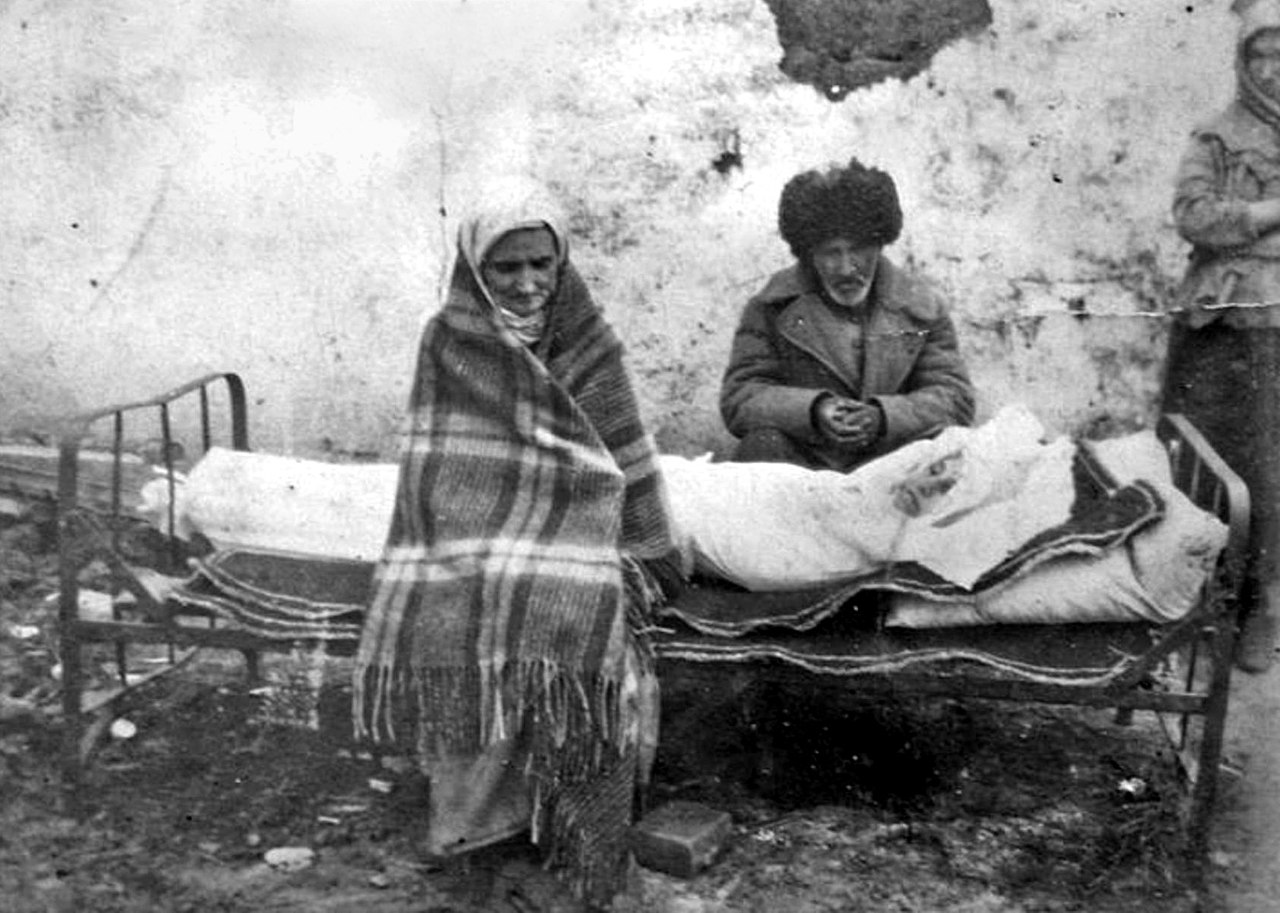 The Ingush family of the Gazdiyevs at the body of the deceased daughter. Kazakhstan. Ingush deportation in 1944 Photo: Wikimedia Commons
- Do you remember the time when it became possible to talk about deportation?
- At six, I went to school in the Soviet Union. The topic of deportation was already very quietly discussed at home, but it was forbidden to talk about it in public places. We carried this pain in our souls, but openly could not share it. When the Soviet Union collapsed, I had more than thirty - and I gladly took the change. Then I worked in the Volgograd region and in 1992 returned to my homeland to be with my people. Everyone then hoped for changes.
And the fact that the Beria Monument is going to open is a spit in the soul of many peoples. After all, hundreds of thousands of people were killed according to his decrees. However, when the avenue was named in Grozny by the name of Putin, the name of the man who destroyed this city, it became clear to us that nothing good should be expected.
How in the Moscow City Duma they argued about Beria with the Ministry of Justice
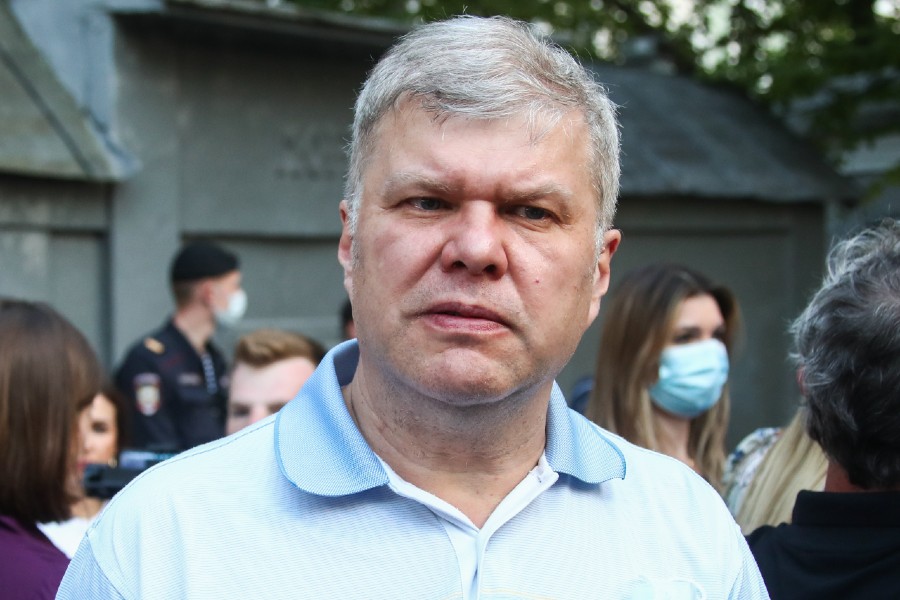 Sergey Mitrokhin photo: Valery Sharifulin/TASS
On January 27, the deputies of the Moscow City Duma with the annual report was the head of the Main Directorate of the Ministry of Justice of Russia in Moscow Kirill Balashov.
The Yabloko party faction in the metropolitan parliament sent him the question of the admissibility of the installation of Beria monuments at VDNH. In particular, in an appeal to Balashov, deputy Sergei Mitrokhin asked for an assessment of the fact that the state organization is going to perpetuate the memory of a person who was invalidated by the Military College of the Supreme Court of the Russian Federation of May 29, 2002, was recognized as not subject to rehabilitation as the organizer of political repressions and thus is a criminal.
Answering Mitrokhin’s question, Kirill Balashov noted that this issue is not a sphere of regulation and control of the Ministry of Justice. “I can give an assessment not as a boss, but as an ordinary citizen. I did not really deepen into the history of this situation, but, as far as I know, Rosatom is going to hold an anniversary exhibition dedicated to atomic energy in Russia. I will express my personal point of view: yes, he is not rehabilitated, and, as a lawyer, I will even tell you, my biography, she is not secret, as a Chekist, I agree that a person who does not deserve our respect is not subject to rehabilitation. Nevertheless, the contribution of this person to the development of the nuclear industry is obvious. If we disagree as citizens, as residents of Moscow, then the question, firstly, to the “dew”, and secondly, to the government of Moscow, which organizes this exhibition. But this is not a systemic question and is subject to discussion. ”
Sergei Mitrokhin told “such matters” that the party faction consolidated opposed to the installation of Beria sculptures: “I asked Kirill Balashov to evaluate the actions of Rosatom and asked if the department was going to demand from Rosatom to abandon these plans. What he answered me, I still did not understand. It seems that it turns out that a state organization can calmly glorify a person at the expense of the budget, which is officially recognized by the criminal by the same state. Back in 2009, as chairman of the party, I constantly raised the question of overcoming the heritage of Bolshevism and Stalinism. We conducted discussions with the participation of leading Russian human rights activists and experts, published books on this topic. The policy of Stalinism is adopted by the ruling elite, and the story of Beria once again confirms. We will seek that the monuments of Beria do not appear on VDNH or anywhere else. ”
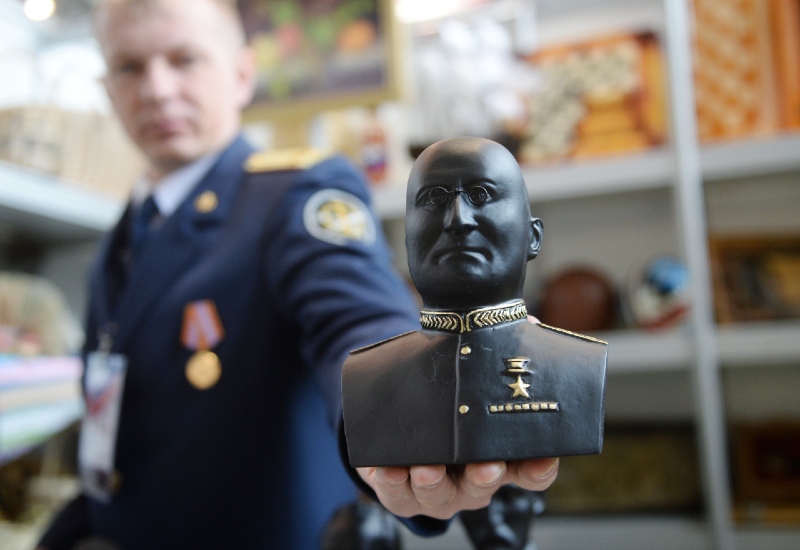 Products of the Federal Penitentiary Service at the All-Russian Forum-Exhibition "Gosakaz-For honest purchases" in Moscow photo: Kirill Kallinikov/RIA Novosti
 On the eve of the children and grandchildren of scientists who participated in the Soviet atomic project, they filed an open letter in which they expressed a categorical protest against the installation of Beria’s figure at VDNH. They called the figure of Beria a "symbol of lawlessness, cruelty and moral decay."
An open letter was published in Novaya Gazeta and sent to the President of the Russian Federation and the State Corporation Rosatom.