Date
Author
Владислав Янюшкин, Юлия Сугуева, Саратов, Алла Константинова, Виталина Василенко
Source

Preserved copy
Translated material
“We drove one and a half to two hours, look out the window, and there the forest.” Where and how the arrested Muscovites arrested for participation in protests
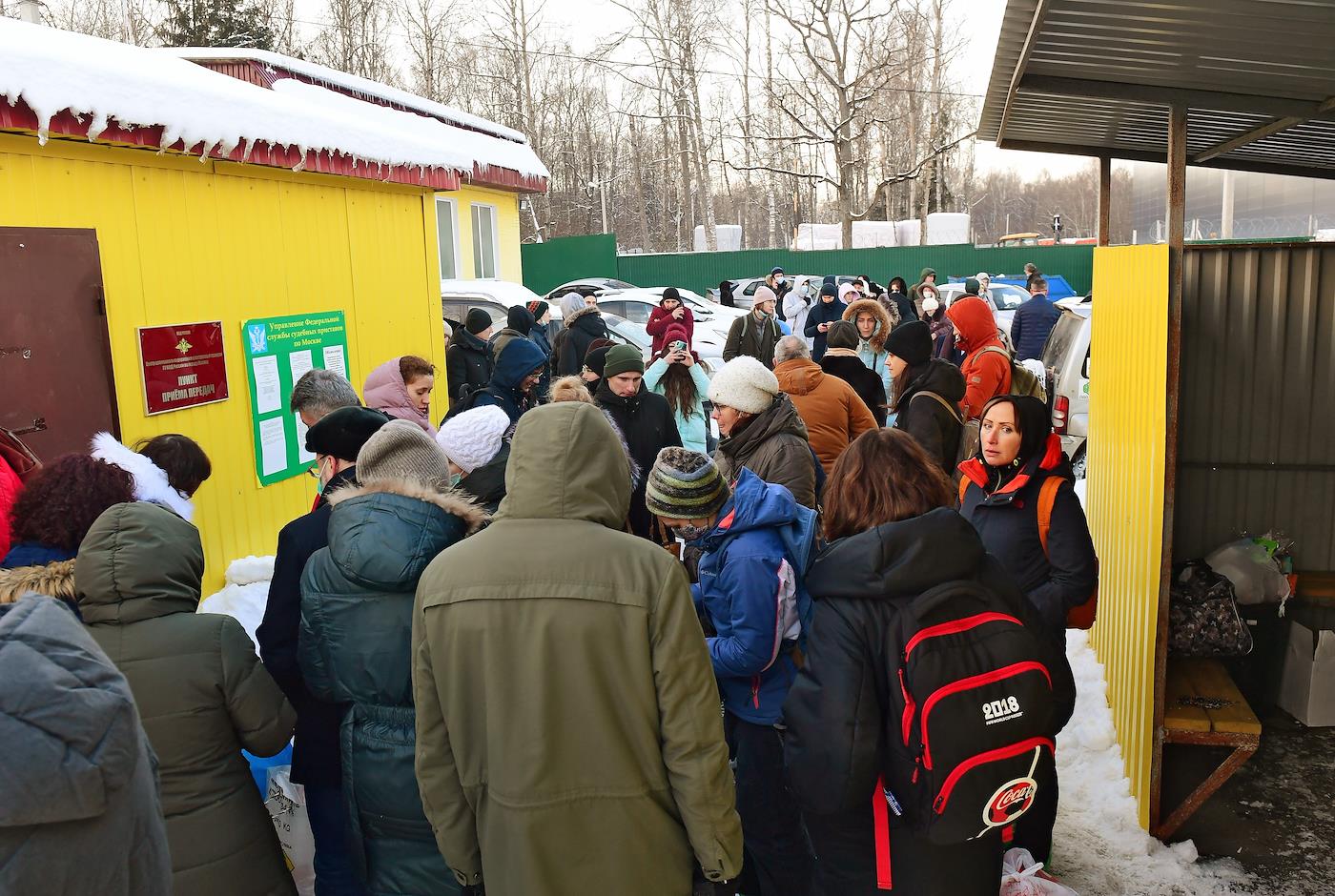
Relatives of the detainees at the special receiver building in the village of Sakharovo, February 2, 2021. Photo: Igor Ivanko / Kommersant
Places in Moscow specialists ended even after the rally on January 23 - the detainees were kept in autosaks for days. After the rally, on January 31, hundreds of Russian citizens sent to serve as an arrest in the center for those awaiting deportation of foreigners. About a hundred more detainees from Moscow are now in the special receivers of the Moscow Region. As the Mediazonapredicted , a wave of protests against the persecution of Alexei Navalny turned into a serious crisis in places of forced content.
On January 23, in Moscow, according to the OVD-Info, 1,558 people were detained. The courts appointed administrative arrest to many of them, andplaces ended in the capital's specialists. Then some of the prisoners were sent to serve his sentence to the Temporary detention center of foreign citizens (TsVSIG) in the village of Sakharovo in New Moscow.
After the rallies on January 31, another 1,871 Muscovites were in the police departments, and they began to put the administratively arrested in the insulator for foreigners. About a hundred people were placed in special specialists near Moscow, while the courts over the detainees on January 31 continue, Mediazone told Mediazone the member of the Moscow Public Supervisory Commission (PMC) Marina Litvinovich.
Mediazona said that after the action on January 23, Moscow courts set a record for administrative arrests. 154 people were sent to specialists, while their maximum capacity - 141 arrested throughout the city.
From January 23 to February 3, 222 records of affairs appeared on the website of the Moscow City Court with the appointment of administrative arrest in the “rally” article 20.2 of the Code of Administrative Offenses and 6 entries under the article on disobedience to the police officer (19.3 Code of Administrative Offenses).
At the same time, Member of the Moscow PMS, Marina Litvinovich, said that TsVSIG in Sakharovo is designed for about 800 seats. According to the PMC of the Moscow Region, there are another 404 places in the TsVSIGs in Yegoryevsk and Korolev, as well as 230 seats in special receivers in the region.
“According to my information, four specialists in the suburbs are involved: Lyubertsy, Elektrostal, Istra and Mytishchi. 30 people on average. I asked to go there on the Moscow Region, they gathered yesterday for sure to Elektrostal and Lyubertsy, because we cannot go there, ”said Litvinovich. “Since they did not call me back, it means that everything is more or less there.”
On the night of February 3, the left activist and defendant of the “Swamp business” Alexei Gaskarov, arrested for seven days, said on his Instagram that he was transferred to a special reception in the village near Moscow.
“We were discharged from the [ATS in the district] Strogino and taken to Istru, because dozens of other people were brought from protests,” he wrote to Storiz.
The wife of the anti -fascist Daria Suleiman confirmed that Gaskarova has already been placed in the Istra special receiver. “He called, the conditions - as in a pre -trial detention center. The four of them were delivered from Strogino and four of them in the same cell there, but still better than in the police department, ”she added.
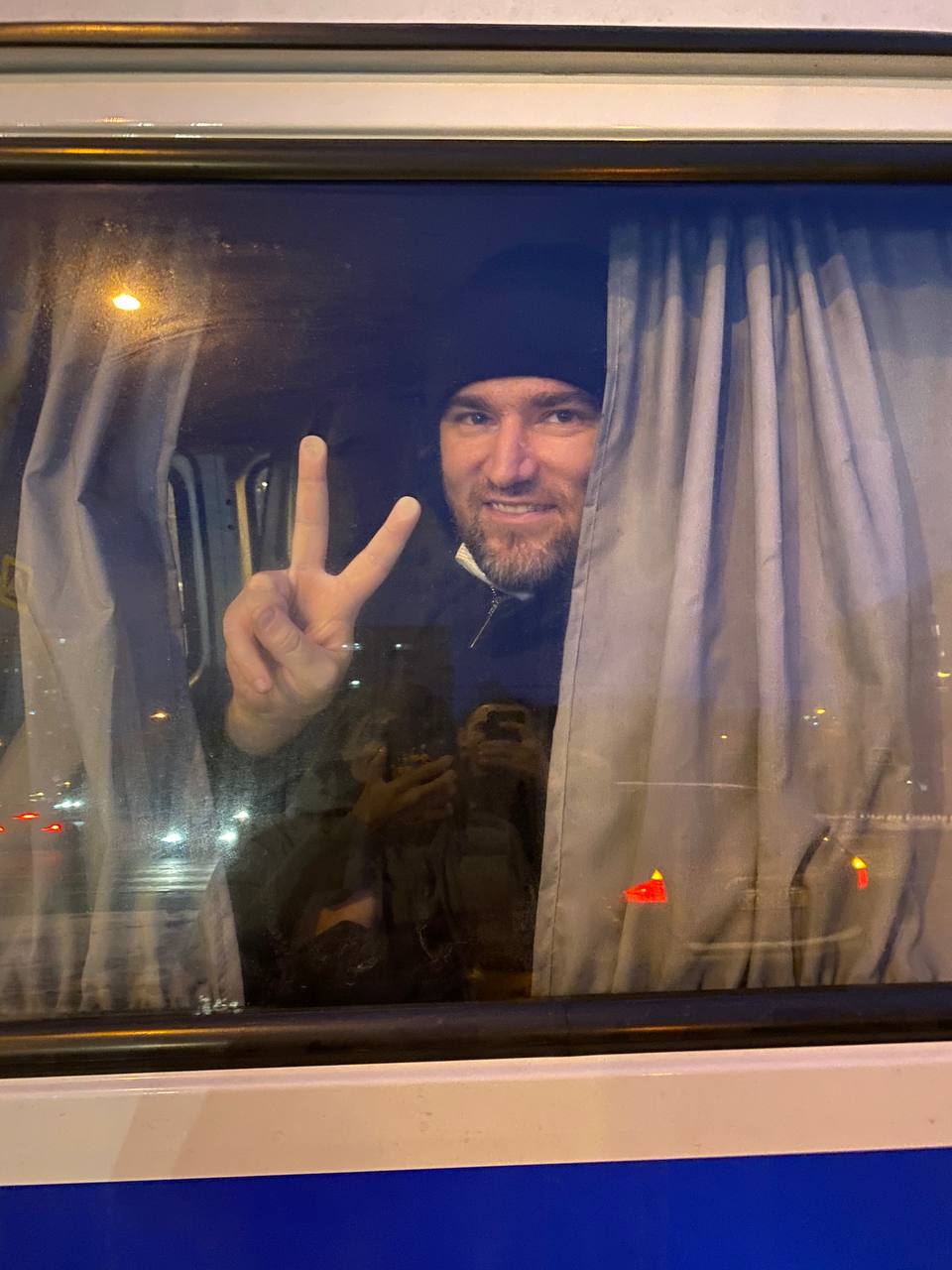
Alexey Gaskarov after the detention. Photo: Daria Suleiman
In the specialists of Elektrostal and Mytishch, Mediazone confirmed that they were brought to them arrested from Moscow. In the rest of the special specialists near Moscow, they either refused to talk with journalists, or they assured that the participants were not delivered to them.
According to Litvinovich, people continue to be lucky in the village of Sakharovo in the village of Sakharovo.
“As of today there are 506 people, 95% are those who were arrested [after protest shares],” says the observer. - There are problems there. At the same time, three buses arrive, in which 60 people, and one person accounts for 20 minutes, is if it is very fast. Even if everyone is very in a hurry and try, it still turns out the turn of expectation, and it is very difficult for them to everyone: both employees and people. They just arrest a lot at the same time. ”
The queue for the isolator
On the morning of February 2, a video message of people locked in crowded autosaks in the queue for the insulator was dispersed along social networks.
“We, detained on January 31 at a peaceful protest, ask for help and attention from the public to the inhuman conditions in which we are forced to be. More than 40 hours have passed since the detention, and we are still tortured. We were practically not fed. The last nine hours we have been on the bus, people are forced to stand. We are deprived of the opportunity to move, we do not have water, we are not taken to the toilet. Here, the insulator for foreign citizens in the village of Sakharovo, the same conditions in dozens of cars with detainees, ”the young man said on the camera.
What is a tsvsig in Sakharovo
The temporary detention center of foreigners was opened in the village of Sakharovo in December 2014. It is located on the territory of the former military unit. Already in March 2015, the leadership of the new institution was fired after a group of foreigners tried to open their veins, protesting against the conditions of detention. After the incident, 15 employees of TsVSIG lost.
Member of the Moscow PMS Boris Klin in November 2019 visited the center; According to him, the conditions of detention are worse there than in a pre -trial detention center. “Behind the steel doors are the same cameras as in investigative insulators. There are small (3-4 people) and multi-seater (15-20), ”said Klin.
According to a member of the PMC, the inhabitants of TsVSIG are sleeping on prison beds. Instead of bedding, the guests change medical sheets once a week. There are no toilets in the cells - they are replaced by the floor bowls of Genoa. The "bathrooms" are separated from the living space of the cameras with only low partitions. Water taps flow, lighting in many chambers malfunctioning. Electric sockets do not work. There are no board games, newspapers, radios and TVs laid here. Paper and pens do not give out.
The chief of TsVSIG Alekseei Lagoda was directly admitted to the PMC members: the center already needs repairs. “The building has been operated for five years in difficult conditions, during which time more than 30 thousand people have passed through it, not the most law -abiding ones. Repair, replacement of plumbing is needed. But we cannot do this, since the building belongs to the Moscow government, and our headquarters only exploits it, ”he said.
The video message from the autozak was shot by 22-year-old Dmitry Epishin, his friend, Moscow activist Sasha Fishman, told Mediazone. On February 2, she stood in line for about six hours with dozens of relatives and friends of other prisoners who arrived in Sakharovo to make a program.
Epishin was detained on Komsomolskaya Square when he photographed a policeman, says Fishman. The day after the detention, the Kuzminsky District Court arrested the young man for seven days for, but in which special receptionist he would be taken, their relatives were not reported until the next night.
“They constantly said in the police department:“ Now it will be clear in which special receptionist will be distributed, ”says Fishman. - After that, Dmitry stopped in touch. Somewhere until 23:00 on February 1, we called the departments. And they were taken in Moscow for several hours - they collected people in order to move them all together to Sakharovo. In Sakharov, they eventually arrived somewhere around four in the morning. Somewhere at the beginning of the sixth, he wrote that they were still in a car carrier, and they were still not distributed. In addition, they were not fed, water was not transmitted, people ended in people on phones. ”
Nikita Skorokhodov, who also found herself in one of the Avtozakov sent to Sakharovo, managed to inform the Mediazone that 60 people from different police department were brought to the center for migrants. “Auto -zak is full. Half of the bus is on your feet all this time. They don’t let the toilet, ”he said.
The certificate of another activist sent to Sakharovo cited the OVD-Info project; According to him, in a car carrier “out of 23 people in a small space, two are standing, two are sitting on the floor”, while “most of them do not sleep for the second night in a row”.
According to the estimates of the activist Sofia Marshak, who is engaged in the organization of the programs to the detainees and the arrested, 150-200 people brought to the migration center on the night of February 2.
“It was cold until the car was opened, when it was opened, people suffocated from the gas gas. They did not accept any transfers. Some girls-I know about two, were from the Maryino police department, there were generally some terrible people work there-they said that they saw the drypack only on the first day of the detention, that is, there was no food and water until they were taken to Sakharovo, and some employee took pity and bought them water, ”says Marshak.
By about half -past five in the evening, the arrested were released from the autosaks and brought into the insulator. According to Marshak, the volunteers failed to make full lists of those who are serving a sentence in TsVSIG, because it is difficult to get through to the special receiver. In the chat of relatives of prisoners there are messages of people who unsuccessfully recruited the institution number 25 and even 80 times in a row.
“Very little is well known. We can argue that a person there, only when a special receiver confirmed this to us only when people are already coming there, try to make a transfer and take it, we understand that this person is there. Or when one of the sidelts calls his family and lists everyone who is in the cell with him, ”says Marshak. - Everyone says that there is stuffy, that more water is needed. As I understand it, according to the rules, only boiling water is given out in the special receivers, and the guys are all the drunk asking for water, water, water. ”
Yesterday and today, in the village of Sakharovo, relatives and friends of the arrested stood in lines who tried to make sure that their loved ones were delivered here and transfer them to their products.
At first, the special -reception officers refused to accept the programs if the close prisoner did not know the chamber number in which he is contained. Later, the requirements softened: now enough name and surname.
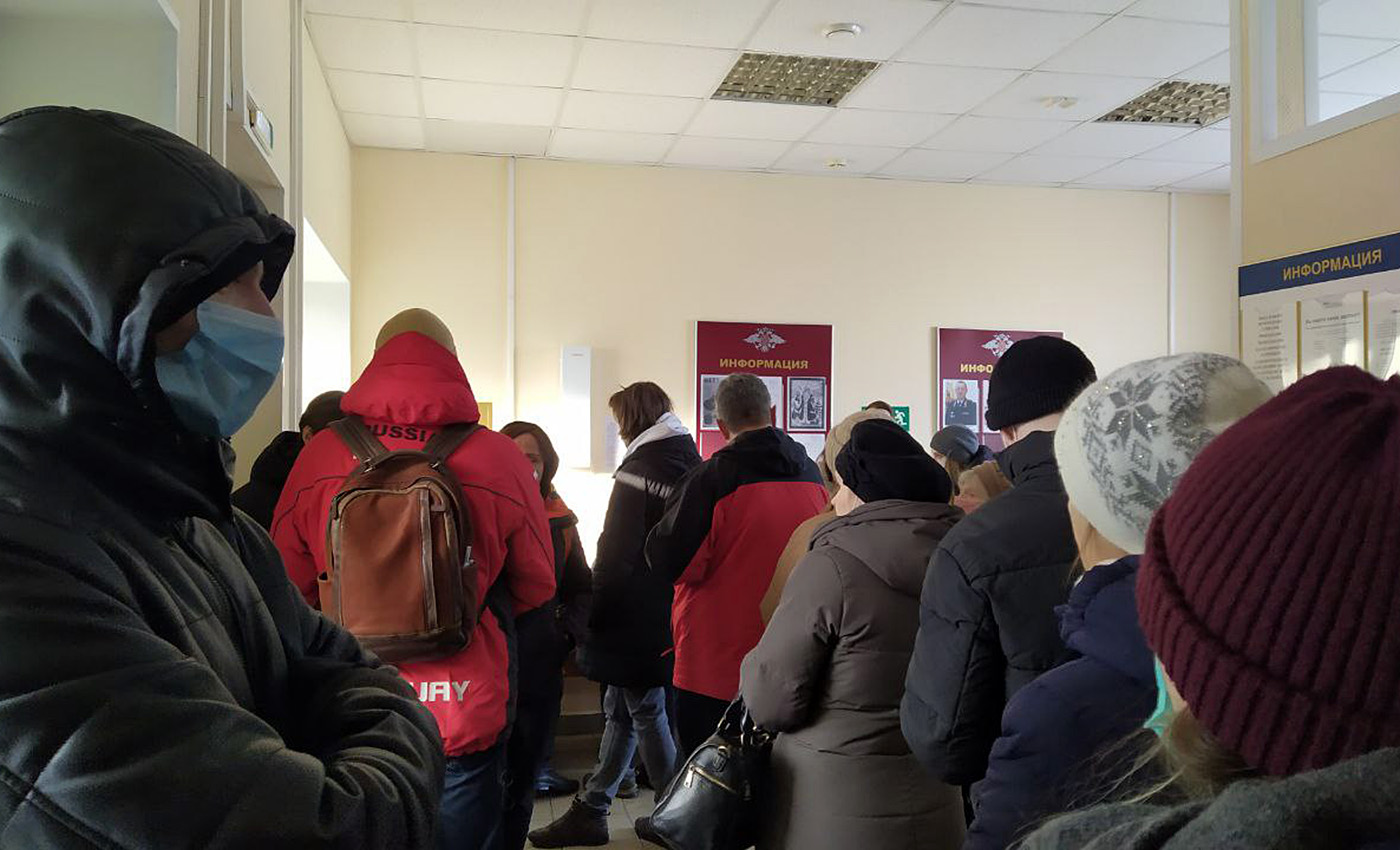
Relatives of detainees in a special detention center in the village of Sakharovo. Photo: Sasha Fishman
Completely cattle conditions. Three stories
From February 1, Moscow director Alexander Siriskin, detained on January 31, has been in TsVSIG. Cheremushinsky District Court arrested him for seven days, says a relative, actor Yevgeny Tsyganov.
“Sasha entered a peaceful rally, considering this to be an expression of his civil position,” says Tsyganov. - As far as I know, he and other people who were nearby cordoned off OMON employees at the Sailor’s silence, put them to the wall, after which they took them to the ATS on a warm camp and kept there a night without food and other conditions of detention. They were not given the opportunity to inform the relatives what would happen to them and how much they were detained. At eleven in the morning there was a court, and it would be nice to have a lawyer on him. But if a person does not have the opportunity to make a call and tell where he is, we are not talking about a lawyer. ”
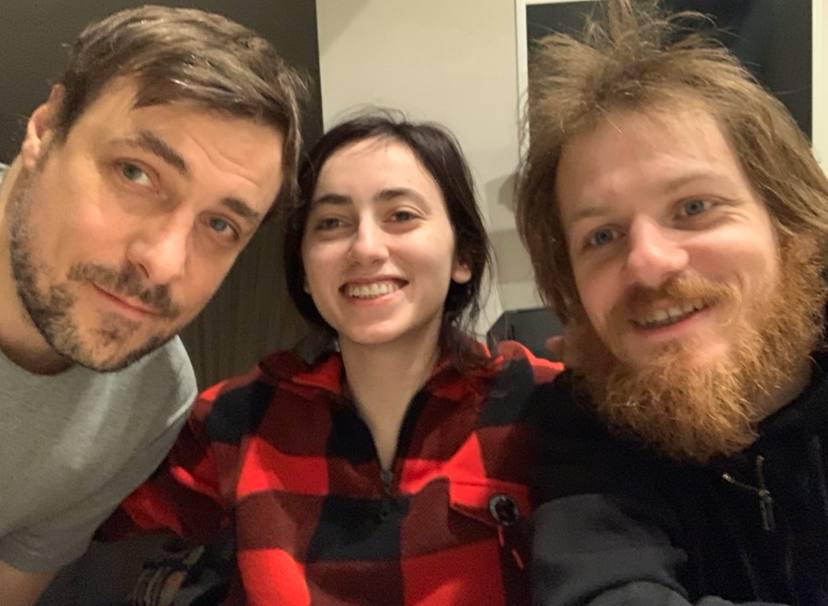
Evgeny Tsyganov and Alexander Siriskin (right). The photo is provided by Tsyganov
They condemned Siriskin without a defender, the gypsy continues. The phone was returned to Alexander, and he managed to call home when he was already taken to the Cheryomushkin court. Later, from Sakharovo, he once again got in touch - but since then to Siriskin could not get through. Tsyganov says he saw photos of cameras in Sakharovo in telegram-chat relatives of the arrested. In the pictures - metal beds without mattresses and a Genoa bowl instead of toilets.
“These are completely cattle conditions,” the actor shares his impressions.
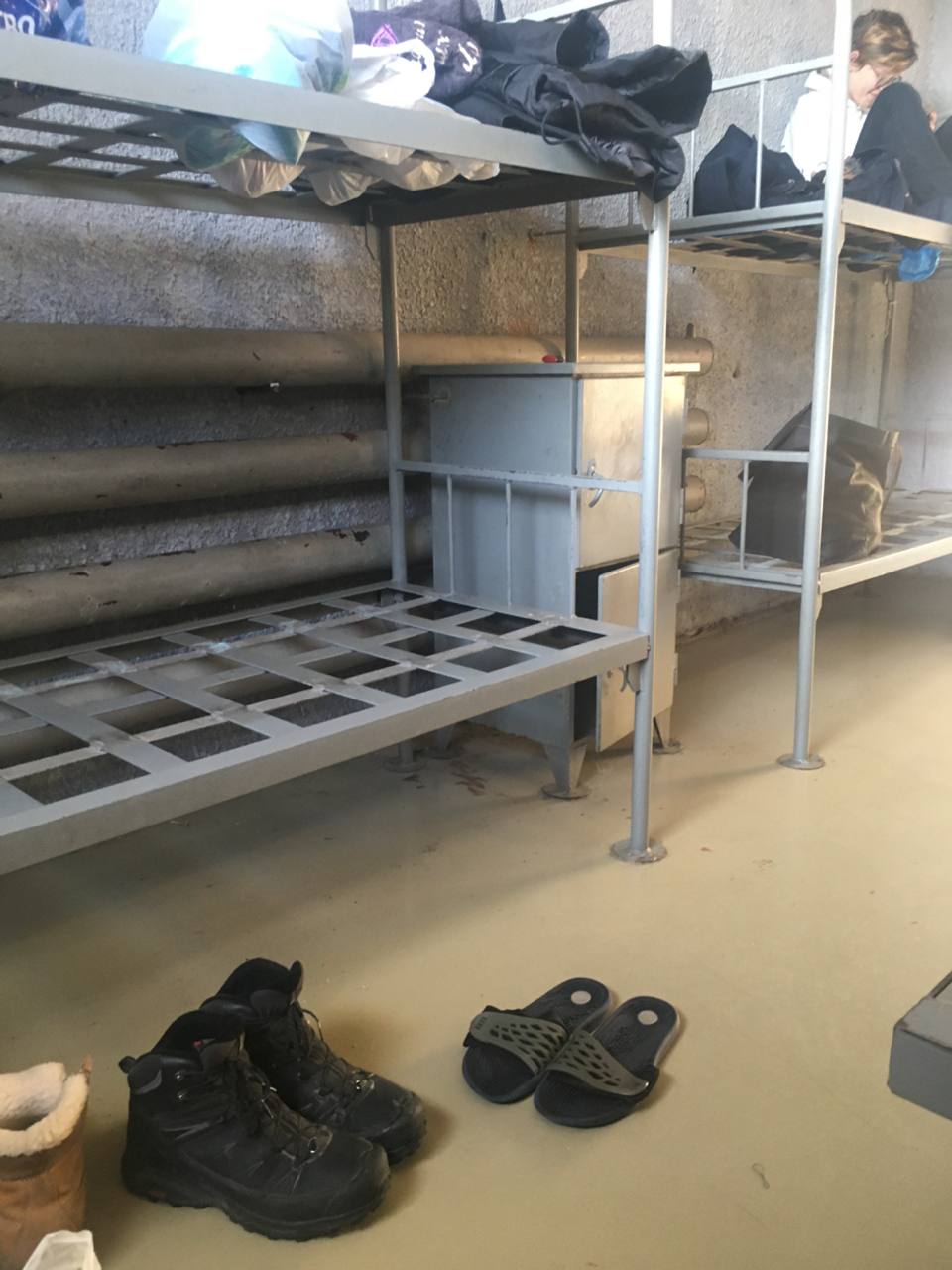
Photo from the camera in a special detention center in the village of Sakharovo
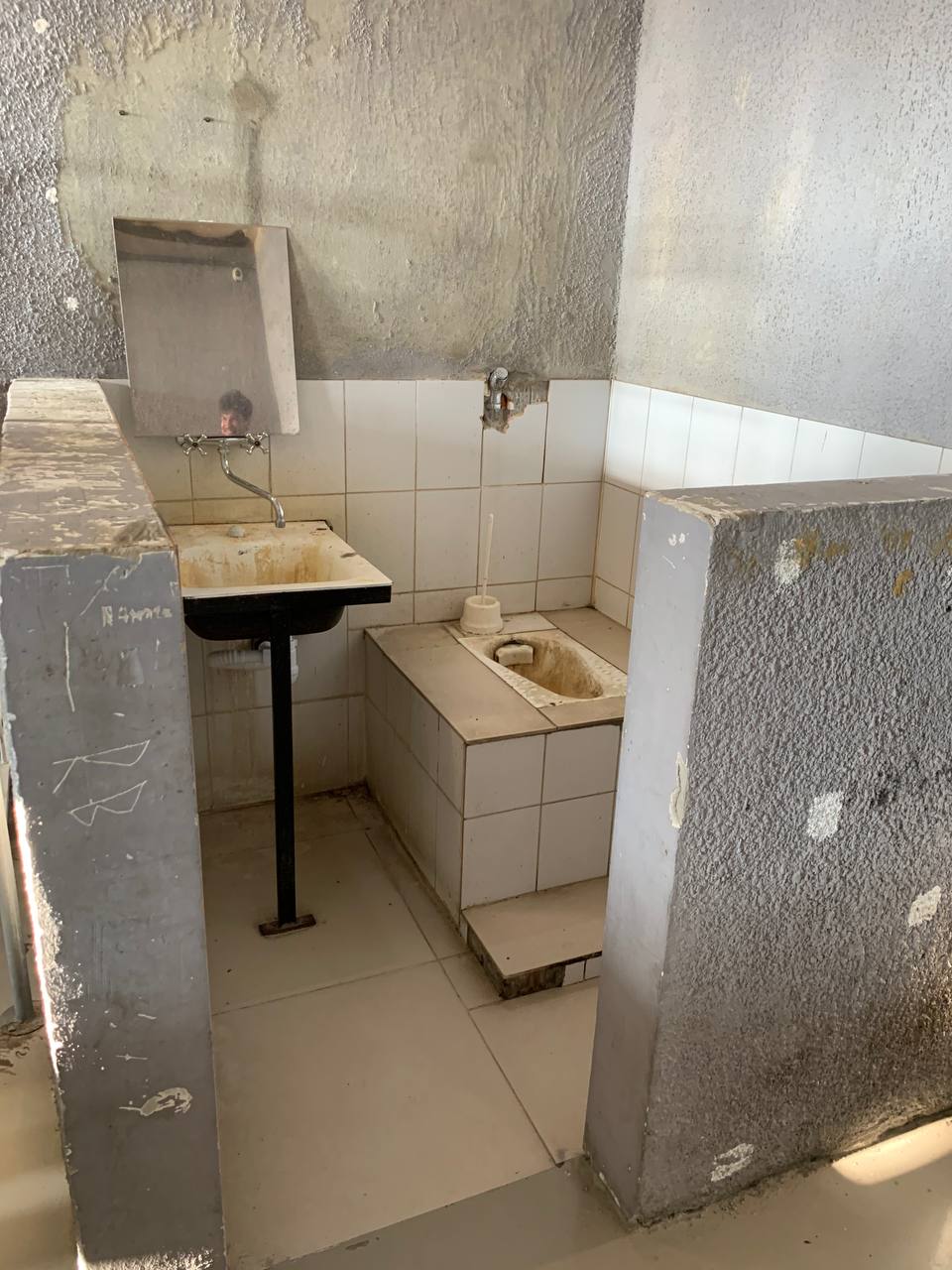
Photo from the camera in a special detention center in the village of Sakharovo
Olga Krivosheeva, the mother of 21-year-old Nikolai Mammadova, arrested 12 days after the rally on January 23, says she still does not know what was with her son. “We did not get into [in TsVSIG] at the moment. We are only 108th by record, we could not even transmit the gear. He wrote to me yesterday while the phone was given to him. For two days he served at Babushkinskaya in the Ministry of Internal Affairs. Yesterday he was brought to dinner here. I call there to find out the condition of the child, because the vision is weak, minus 15 both eyes, he practically does not see. They didn’t take the phone there, nothing, ”says Nikolai's mother. - I just drove back [from TsVSIG], but closer to the evening I will go back again. While I was present there, the tenth man [in the queue] only passed, 50-60 people were already. ”
“I would like to get into the date, see. Today I can hardly get to the date, only to transmit the gear. Because the child is already hungry for three days, ”mutters Krivosheev.
The conditions for the detainees are prescribed in Article 7 of the Law “On the Procedure for serving administrative arrest” and in the “internal rules of the internal routine in the places of serving administrative arrest” of the Ministry of Internal Affairs, human rights activists from the “apology of protest” explain. Among the prerequisites are an individual sleeping place with bedding, eight -hour sleep at night, daily hour walk, hygiene supplies, a bathroom, three meals a day and access to drinking water.
“The conditions for the transportation of the detainees are separately related to the standards of humane treatment of people, and the auto -zats are not adapted to long -term finding people,” the organization says. - People come to the court in auto -zats, sit there without access to water and toilet, without food. And after this, the trial of still people take ten hours in search of free places in specialists. This is undoubtedly an inhuman attitude. "
In the “protest apology”, the detainees are advised to record the conditions for administrative arrest on the photo and video - this will help if you decide to apply to the ECHR with a complaint about the inhuman conditions of serving the sentence. “However, there were no decisions of the European court related to administrative arrest,” the human rights activists say.
23-year-old Emin Kerimov freed himself from Sakharovo on the evening of February 2. He says that on January 23 he walked with a girl in the Lubyanka area when he was seized by the security forces. First, the young man was taken to the Ramenki police department, where all the detainees were forced to go through a dactyloscopy, and then transferred to the department on Vernadsky Avenue.
“They took the laces, there were no windows in the cell, there was nothing, they slept on schools, gave out the type of mattresses and pillows. They fed once a day, gave tea, biblies, [which] tasted like paper. 48 hours passed, drove back to Ramenki. I was led to an investigator in a criminal case as a witness-in my opinion, the organization of a rally or something like that, I did not remember. He panicked, as he saw sheets of criminal proceedings in front of him. He has transferred my data, then he began to interrogate, I took advantage of, ”Kerimov recalls.
The Nikolsky District Court appointed him 10 days of administrative arrest. “Of the 20 people [who were judged with me], 19 received ten days, one guy who provided a certificate that he worked on this day in - he left work and headed for the subway, when they detained - they gave 15 thousand a fine,” says the young man.
After the trial, he was taken to the Moscow specialist No. 2 in the Khoroshevo-Mnevniki area. Kerimov believes that he was lucky: he was waiting only for about half an hour. Other arrested told him that in the auto-zaks, they were kept 15-20 hours in front of a special-reception. The conditions, according to Emin, were acceptable: they gave out bedding, fed, he managed to receive a program from his relatives and waited for the medicine - Kerimov said that he was “jumping on the pressure”. But in the evening of January 26, prisoners were informed that they were transferred to a special receiver near the Academician Youngel Street metro, where the conditions are much better.
“Lapsha, it turns out, hung it on the ears,” explains Emin. - We were plunged into a car zak of 20 people. We drove one and a half to two hours, look out the window, and there the forest around. We were delivered to Sakharovo, quickly issued. ”
Four -seater chambers, two -tier beds, a toilet without a partition “on the review of everyone” - so Kerimov describes the conditions in the TsVSIG. They fed there worse than in the “Mnevniki” - “Portations were small, they didn’t always eat, sometimes it was inedible.” Once the prisoners were given a five -liter bottle of water and two towels for four; There was not enough boiling water.
“The light was included in six, then breakfast, at twelve, a check came - whether everything was in place, then lunch and a walk for an hour in the interval from three to nine o’clock. Once managed to go to the shower. On the second day, button phones were given, at first there were two on the case, then one was broken, they gave 15 minutes per person, ”says Kerimov. - I asked the doctor. On the eighth day, it only managed to meet, measured the pressure - 170/100, pulse 116, this is very high. They gave some pills, I did not feel the difference, still my heart pounded. Maybe because they smoked constantly in the cell. I also started, although before that I threw it for six months. ”
Marina Litvinovich says that the courts still did not have time to consider all the cases of the detainees to the rally on January 31-"someone was transferred, someone was called yet." Those to whom the court will arrest, most likely, will also be taken to Sakharovo.
“The question of what the courts will give there,” says Litvinovich. “If they are arrested, then Sakharovo, I think, will be scorched to the limit, but the rest will be taken to the receivers near Moscow.”
Editor: Dmitry Tkachev
Fixed on February 4 at 8:26. Attentive and indifferent readers indicated the “mediazone” that the holes in the floor, which equip the cells of TsVSIG in Sakharovo, are more correct to call the Genois bowls or Turkish toilets. Wikipedia calls the main advantage of this design simplicity and reliability, and the disadvantage is “the need to squat, which requires a certain coordination and balancing”.