
Translated material
"This is the path to dictatorship"
After landing Navalny, no one knows what to do - and what will happen next. We asked to answer these questions of historians and political scientists
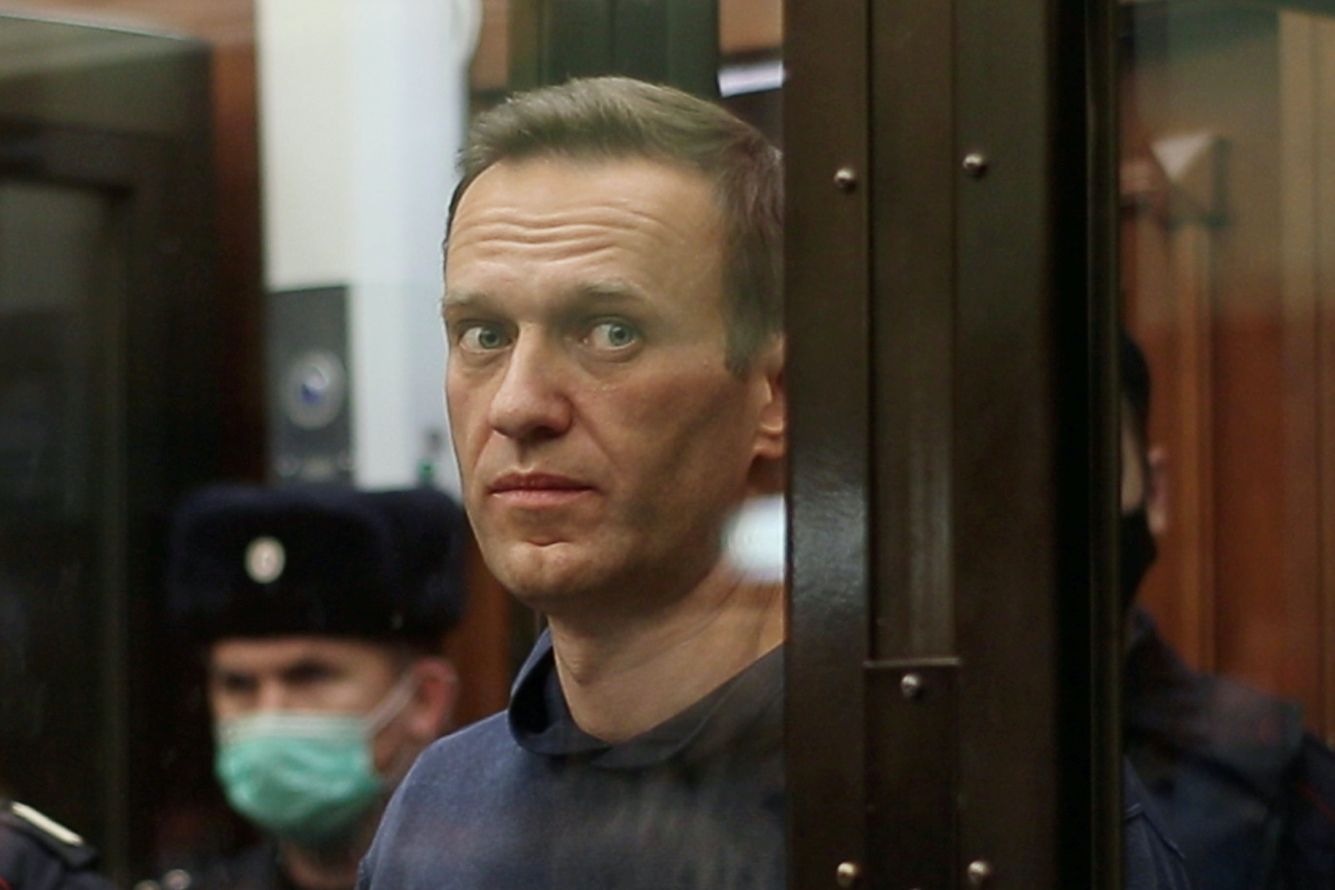
Simonovsky District Court of Moscow replaced the policy of Alexei Navalny as a conditional term with the real one. What will happen next is unknown (although the expectations are the most alarming). To understand what Navalny’s sentence means for the entire Russian political system and what are the development options, Medusa spoke with political scientists and historians.
Alexey Makarkin
First Vice President of the Center for Political Technology
The sentence to Navalny speaks of toughening in relation to the opposition, and this fits into the general trend. Even before his return, new laws on “foreign agents” were adopted - individuals, a bill on control over educational activities.
Plus, law enforcement practice under the article on rallies and “Ildar Dadin's article” . There were sentences to Konstantin Kotov , Julia Galyamina - this is all the same trend. Therefore, when Navalny flew, he perfectly understood what was waiting for him within this trend.
I think it will continue. The only thing is in 2019, when there was acceleration of demonstrations in Moscow, the Levada Center ( recognized as a “foreign agent”, we have to write this at the request of the authorities ) conducted a survey that showed that the Russians are dissatisfied with this-even part of the authorities of the authorities. People are ready to support power, but are not ready to maintain acceleration. And now the authorities are trying to act like this: the main thing is that there is no negative annoying “picture” [cruel actions of the security forces].
Supporters of Navalny will probably survive his landing. The core of the protest movement has long been ready for the fact that Navalny could be planted. The core will remain, and the periphery of protests will depend on the degree of pressure of [state] and new irritants.
And from such a factor as the attitude of the environment to people who come out. In Moscow there is an opposition subculture: if you were called a “foreign agent”, this is even a plus. And if [this happened] in the region, how will they react? A person goes outside [to a rally] - how will people from his environment react? Will it be morally comfortable or uncomfortable?
If it is uncomfortable, it can stop going out. He went out once, went out two. And then they told him (and not the authorities, but relatives): “Why are you going out? Do you need the most? We say on TV that these are spies, agents, saboteurs, so stop. ” And if they say: “This is your business, your truth and choice. Indeed, it became bad to live, and you are also offended for anything about anything, ”is another question.
Will there be comfortable for people in their environment? There are not very many people who are ready to go out at all costs. There are always not very many of them. It all depends on the atmosphere. Will the pro -government trend win the opposition is an external factor and enemies? Or will the point of view will win that it is impossible and the exit to the street is quite legitimate? Let's see what delights here.
The fact that Navalny was planted fundamentally does not change anything [in the situation with the elections to the State Duma]. Initially, it is clear that the non -parliamentary opposition will demand the registration of its candidates - and [at the same time] with the elections will go out into the street.
With parliamentary elections, society is always politicized, because it increases attention to problems, they are articulated. Even the parliamentary opposition, moderate, loyal, still says this. And when the elections are held, the question arises of the degree of their honesty. Often because of this they go out into the streets. The sentence to Navalny can give an additional impulse to such shares. Give additional emotion if it lasts before the election.
The verbal reaction of the West [to land Navalny] will be stiff. As for new sanctions, I think that the Biden administration will engage in the inventory of existing sanctions - and an attempt to understand what is effective and what is not. When they understand, they will act.
Kirill Shamiev
Doctoral program of the Central European University
Since Alexei Navalny was the leader of the most active part of the opposition, he could bring the largest number of people on the streets and mobilize them for political purposes as an opposition politician. The fact that he was “closed” speaks of reducing the competitiveness of the Russian political regime to the level “even worse than it was”.
It is believed that the Russian political regime is electoral authoritarianism with the technology of legitimization of this regime through the elections. And when they “close” such a political opponent, the question arises of the legitimacy of elected procedures. In general, now this is the way to personalist dictatorship, fixated on one person.
[In 2021] there will be elections to the State Duma, and I think the goal of the presidential administration is to destroy the entire organizational structure of Navalny’s headquarters, so that they do not have the opportunity to mobilize opposition politicians. So that, due to difficult socio-economic and political conditions, the opposition did not have the opportunity to take the necessary number of votes. Elections to the Duma should go beautifully from an external point of view. Although opposition deputies will not be allowed inside, an ordinary voter does not see this.
While Alexei was free, he was a peaceful politician, although [propagandists] tried to display him as a revolutionary or rebel - but all his demonstrations were aimed at political existence and democratic struggle. Holy place is not empty. There is a chance that other organizations will appear and they can be more radically aimed at confrontation with the authorities.
Because the economy is in poor condition, the coronavirus hit the welfare of citizens greatly, foreign policy is very difficult (most likely, some sanctions will be imposed). The situation is much worse than when Navalny was planted in 2012-2013. Then there was more places for positive maneuver from the Kremlin with the help of concessions and money than now. Now the conditions for protest have become more common, and it will be necessary to look at the agency - who will come [to the action] and who can lead [them], because the leaders are very important.
I am as a person who studies Russian law enforcement agencies, I do not believe that security forces can seize political power in Russia. They definitely obey the President of the Russian Federation, and in regional cases - [informally subordinate] to the governors and mayors of the cities . The Kremlin perfectly controls them. And the fact that they are now taken to the streets of cities is their direct task. If necessary, they will get even more.
When they say that the security forces seize power [in Russia], then let's see what happened. Since the late 90s, there have been no cases that immigrants from law enforcement agencies were active candidates [for higher posts]. In the 90s it was, but now not-they all serve. From the point of view of the state, this is good. But on the other hand, they are subordinated to one person - the president. Even in the State Duma without the permission of the president, no one can coordinate them.
[On current protests] it is not very pleasant to see terrible stun gunners, but the same means were used as usual: batons, shields, arrests, preliminary detention of leaders. And when compared with other countries, our police are not so gestured as it could be in France and the United States, where gas and light -school grenades are used. But in Western democracy, then you can achieve justice [in the case of unreasonable tough measures] - sue and recover millions of euros of damage. In Russia, this is impossible.
Violence can be used to a certain point when it is unnecessary. Such violence mobilizes people who sympathize with the opposition or completely neutral. I am taking a conservative position here: so far the violence [from the Russian security forces] has not reached a point that can mobilize a large mass of people. In total, for three [days] protest, a huge number of people were detained - 10 thousand. But how many cases are bloody? 150-200? They should not be at all - they should never beat people for peaceful protests. But this is a policy, and there is such a thing that 150-200 cases are few. It will not seem to people that violence was used massively.
Regarding the West - we saw a tough verbal reaction of all leaders of developed Western countries. The foreign policy agenda is such that sectoral sanctions and actions against [the construction of the pipeline] “Northern Stream - 2” are now more likely. But Germany will not stop it - this is their internal question, their industry needs gas.
The United States and Europe can impose sanctions against Russian generals, but they are meaningless because they do not go abroad. I would like to believe that personal sanctions from the Navalny list will be introduced because we see how the Kremlin reacts. They even want to introduce criminal liability for the recommendation of personal sanctions.
Now the Russian opposition is more positive with the Biden administration, since it is more configured for democratic values than Trump. And personal sanctions are scary for the Russian regime, as it depends on the elite. If their wealth [is] abroad and they are not allowed into their homes, then it will be problematic - not to mention the "gray money", which they also spin there.
According to my sensations, the potential for confrontation increases and [opposition] should be used. Now there is a window of opportunities due to elections to the State Duma and socio-economic situation.
Vladimir Gelman
Professor of the European University in St. Petersburg and the University of Helsinki
Our political system is more and more based on repression. These repressions have the goal not only to punish those who are against the regime, as Navalny and the participants of his team, but also to signal citizens that if they behave badly, they will also be bad.
Then it all depends on the scale of mobilization [people]. The larger the scale, the less likely to be punished. There is no answer yet - we cannot predict the development of events. The dynamics of mass mobilization is unpredictable. This is not a process that since they went out into the street - and everything changes. As a rule, several mobilization waves occur.
The mobilization is affected by the support of public movements by influential allies. It can be individuals, organizations. In Latin America, the main fighters with authoritarian regimes were trade unions. In many countries, the Catholic Church played a huge role.
In Russia, there are no such strong organizations - this makes it difficult to mobilize, but this does not mean that it is impossible. We do not yet know how students are organized, who are delayed a lot during the shares, and some exclude. Will student solidarity manifest? We do not know anything about the solidarity of others. When it comes to very famous people, it works quickly there. The case with the [specialist "Medusa" Ivan] Golunov is the most famous example. But how ready are our citizens to engage in unknown people, we do not yet know.
We see that OVD-Info helps detainees. These are very important support elements. But we cannot expect that they will immediately lead to the fact that millions will go outside. But in previous waves of mobilization [in Russia], this was not. Therefore, the protest is growing, although the current wave will not be the last and decisive. There are still waves.
Before the elections [to the State Duma], the authorities will be all forces to maximize the voices for United Russia. From those who opposed the Kremlin, there will be efforts to prevent this. What will outweigh - we do not know yet.
The authorities may not hold these elections if they are very afraid. When you have an idea that there are strong threats, they affect the perception of the situation much more than if you were not afraid of these threats. In politics, this mechanism of perception of threats means more than the real scale of these threats. From the activities of Navalny for the authorities [actually] not such a big threat. Yes, it is unpleasant that he publishes revelations and discredits the regime, but the idea that Navalny will arrange a revolution, forces to resort to such hard methods.
There is one problem: the tail wags the dog. You give instructions to disperse [protesters], and they tell you: "We can, but we need more money and authority." One time you give more money, the second, the third, and the fourth those who disperse will say: “We will handle it ourselves. Why do we need an unpopular leader, because of which everyone comes out? Let us accelerate this leader. ” This situation is completely in the authoritarian modes - and can stand in front of Putin too.
Now the security forces have reached a larger scale of violence. We knew about all the manifestations of police arbitrariness before. But usually arbitrariness is happening in relation to those who are a suspect in the crime, lingering for activities that are not very approved by public opinion. And now other people turned out to be his victim - thousands of detainees who, under other circumstances, would not face it.
I think there will be no serious answer from the West. In a wide context, sanctions create serious problems in the fact that international companies do not want to cooperate with Russian. Many believe that the activity related to Russia is risky and toxic. But the sanctions that could change the behavior of Russia have not been talking about them, and I do not think that the situation with Navalny’s poisoning will somehow qualitatively change the situation. The main role for us is now playing what is happening inside.
Andrey Kortunov
Director of the Russian Council for International Affairs
The fact that Navalny was planted, despite the strong public and international opposition, is a harbinger of deepening the schism in society between those who support power, and those who support Navalny and solidify with its tasks. And the split will continue. There will be appeals, and there is a chance that the verdict will be canceled, but it is insignificant.
The rate of power that the protests will be exhausted. While the opposition will try to aggravate the degree of political tension and use the situation during the Duma elections. It is clear that the elections will be difficult for the party in power and there will be chances for the non -systemic opposition. But the elections are still far away, and other incidents are possible that can provoke protests. In the same way, the authorities will try to mobilize their supporters.
The factor of Navalny will now be constantly attended by any visits, discussions with Western colleagues. If Western figures come to one of the first questions about Navalny. Requirement or request - depending on the nature of the relationship - to meet him. And the call to free him.
And the narrative that the Russian government uses, that “we have a court, we have no relation to this, since the court is independent”, will not be perceived seriously by Western partners. They do not believe in the separation of powers [in Russia].
Ivan Kurill
American historian, professor of the European University in St. Petersburg
On the one hand, what was planted by Navalny is an expected thing. When he flew, people hoped, but hardly anyone seriously expected him to leave him free.
Navalny forces the system to manifest itself from the side of the power of the country. He was recognized as the victims of the ECHR , and nevertheless he was sentenced to a real term. From the point of view of legality and justice, everything is violated. Navalny forced the system to lead the system like this - already without covering the legality that the system used before.
The system revealed things that existed before, but they became visible to the much larger number of people who had not followed this before. Therefore, the concomitant protests and overclocking of people will have a greater effect - and not that they planted Navalny.
A few years ago, one could say that the state was governed by political methods. One could say that this is a manipulative technique, a hybrid regime, electoral democracy. The elections, albeit emasculated, were. There were representative bodies that influenced something and adopted laws. There was an authoritarian system, but it had a political course. It is important that it was political logic. Now - the feeling that the political forms of management are completely discarded and the country begin to control the purely forceful ways. There are no attempts to solve the crisis politically.
The question is whether the policy or its [completely] will replace power acts? You need to fear this [and] those who are behind it. Hybrid regimes have existed for many decades, and the military is a relatively short time, less than the life of one generation.
What is happening now is like a transition from soft authoritarianism to military regime and junta. In our case, these are security forces, the Russian Guard, the FSB, but none of them can lead the country with political methods, they do not know them. The political method for them is [acceleration] with batons.
There is also a risk in the fact that at first there was a power that balanced between the security forces and the political bloc, then she completely trusted the security forces, and then the security forces will think: “Why do we need a leader, if we ourselves are led by [the country]?” For example, one of the generals of the Russian Guard will say: “Why do we generally defend the cooperative“ Lake ”, if we are already power?”
How long will the mobilization of [protest activity will last - it is incomprehensible. I'm not sure that it will be as long as in Belarus. Но общественное движение последние разы выходило не только за Навального — это не десятки тысяч навальнистов. Навальный дал повод мобилизоваться тем, кому не нравится, куда идет страна. И даже не знаю, будут ли у нас выборы хоть в каком-то смысле. Если будут, то партии власти будет намного тяжелее. Доверие к власти подорвано очень сильно среди даже лояльных к ней людей.
Я как оптимист жду лучшего — возвращения демократических свобод. Каким образом это произойдет, не знаю — в результате раскола элит или Путин одумается, — но какая-то из этих возможностей есть. Но гораздо больше стоит ждать ужесточения — и нескольких тяжелых лет для России.
Но чем темнее сейчас будет ситуация, тем она будет короче. Чем более жесткие меры захочет принять режим, тем меньше лет этот этап продлится.
Recorded Alexander Sivtsova