
Translated material
Consider for three will not work
Putin instructed Beglov, Miller and Olga Lyubimova to oversee the museum on Okht. In St. Petersburg, the concept of the reserve is already ready - it was not created thanks, but contrary to this three
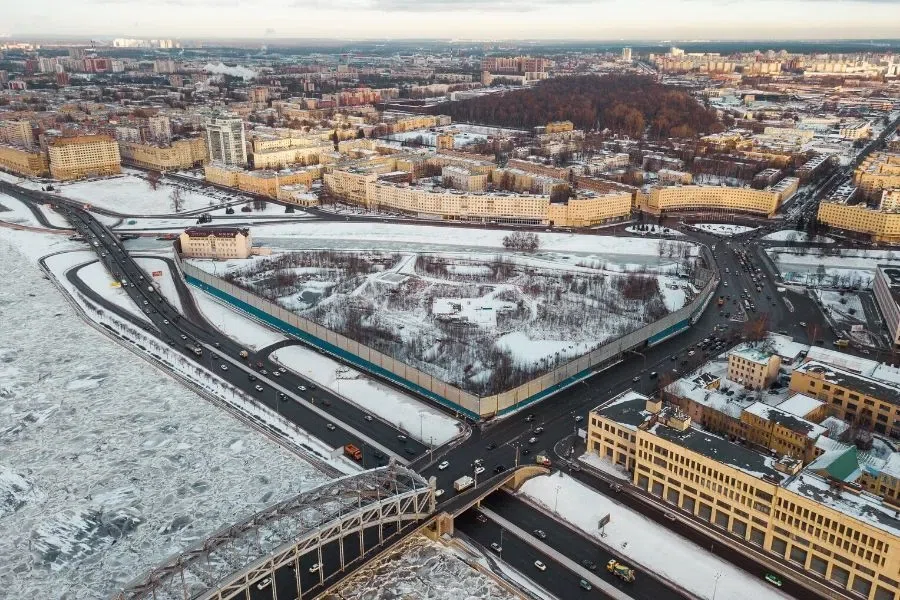
On the Kremlin’s website, the order of the head of state was released according to one of the most acute problems for St. Petersburg-on the creation of an archaeological museum-reserve on the Okhtinsky Cape. The question raised at the December meeting of the Presidential Council for the Development of Civil Society and Human Rights was ordered to be considered by the Ministry of Culture, the Government of St. Petersburg and PJSC Gazprom (the owner of the territory of Cape), submitting the relevant proposals before May 1.
Alexander Beglov, who still repelled all the proposals for the creation of the archaeopark, immediately realized his necessity and expressed gratitude to the president for the wise order.
True, a list of performers is alarming.
So, the governor sees the problem exclusively in the fact that there is nowhere to store the “little things” found by archaeologists, which can be dug and demolished into the brand new building:
“Over 70 years of research, archaeologists have discovered thousands of historical evidence. There is nowhere to exhibit them today. ” Despite the fact that scientists who have been talking about the need to preserve the elements of ancient fortifications for a year exactly where they are found.
Moreover, Beglov is ready to "participate in the project in the dialogue with the owner - from methodological assistance in creating the museum to a full partnership." That is, to seek methodological help not to scientists, but to a raw material company.
The Ministry of Culture, in turn, still served the interests of Gazprom, including in the courts, defending the sufficiency of maintaining only 15% of the unique territory. This position was taken by Vladimir Medinsky, but Olga Lyubimova did not react to calls to return the state guard throughout the entire territory. The position of the Ministry of Culture in the courts in the claims of the city defenders has not changed.
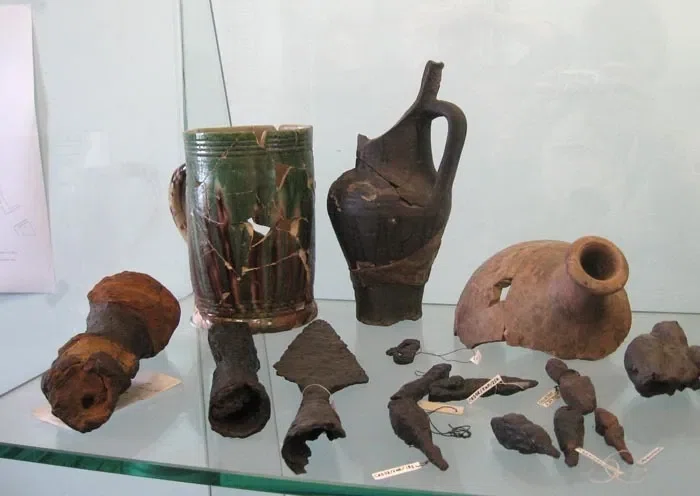
And Gazprom Neft is on its own and is ready to ensure only the preservation of the “cultural heritage objects approved by the Ministry of Culture of Russia” (that is, 0.8 hectares of 4.7 covered by the office development project).
Urgent defenders should begin to fulfill the fulfillment of the presidential assignment, immediately taking the monuments of the Okhtinsky Cape, discovered by the expedition of Peter Sorokin. And only then to develop the project of the museum. There are a scientific base for this: two state examinations made at the initiative of the Obopiik by authoritative specialists, but rejected by the Ministry of Culture on far -fetched grounds.
The concept of the archaeopark under the working name "pre -Petrine Petersburg" already exists. This is an initiative project of the ANII Cultural and Natural Heritage, the St. Petersburg branch of VOOPIIK and the architectural bureau "Studio-17" Svyatoslav Gaykovich.
The principle of preservation of cultural heritage objects (immovable), artifacts of different historical periods and conducting further research.
Until now, according to archaeologists, about 4 thousand square meters remain not excavated. M of the medieval cultural layer and over 20 thousand square meters. m of the cultural layer of the era of Neolithic and early metal, blocked by medieval fortifications.
According to the concept, parts of the Nyenshantz have survived to our days are canned and museum -free. A fortress taken by Peter I is reconstructed over them. The space inside the bastions partially overlaps at the level of the upper mark of the earthen shafts. This will be the main hall of the Museum of Archeology. Its gender will become the most important element of the exposition - with a demonstration of the remnants of the fortifications of the ancient Russian mouse settlement from the times of Alexander Nevsky and the fortress of Landskron.
The bulk of the Nyenshantz defensive structures is exhibited in the open air, in the historical landscape.
Lighting will provide light lights of the roof, repeating the configuration of the structures of Landskrons and the settlement. The restored bastions from the south and east are surrounded by a water moat, which connects the Okhtu River and the internal pool in the southern part of the cape (here in the XIX century there was an Okhtinsky shipyard). The pool will exhibit full -size models of ships of different eras, including ships created at this shipyard.
It is provided for a cape and a pier for walking boats.

The park will take almost the entire space around the museum. A plot of future archaeological studies and a historical cemetery fall into the green zone (its memorial memorial sign will be well -maintained and established).
The entrance to the archae park will be on the east side of Okhta. A car park with a reserve will connect a pedestrian bridge.
The office building in the northern part of the cape is proposed to be used for administrative needs and supplement the restaurant pavilion. From Malokhtinsky Prospekt, the territory can be protected by a transparent noise -protective screen. The maximum museum height is 9.5 m.
In the near future, the creators of the concept are ready to present it by starting a public discussion.
Meanwhile, deputy Boris Vishnevsky appealed to the Minister of Culture Olga Lyubimova and Governor Alexander Beglova, urging immediately to protect all the discovered objects of the cultural heritage of the Okhtinsky Cape, to use the territory under the archaeological museum-reserve, as well as solve the issue of returning this land to the state property of St. Petersburg.
“New” has already investigated circumstances in which Gazprom received a plot at the cape at a price, several times less market. We add: according to the law, this site was not at all subject to alienation from state property. According to Part 5 of Art. 27 of the Land Code of the Russian Federation, plots occupied by archaeological heritage objects, including those who come in the ground, cannot be privatized either under the Land Code, or according to the federal law “On cultural heritage objects ...” (Clause 3, Article 49, paragraph 1 of Article 50). The Okhtinsky Cape was recognized as the object of the archaeological heritage back in 2001.