
Translated material
TV shows - cinema 5: 0
Why does our full meter lose to domestic series with a crushing score?
Another media revolution unfolds before our eyes. Expansion by the series of the territory of cinema has long been going on all over the world, the pandemic only spurred the horses at the crossing. The Russian series was somewhat subcutaneous, but literally in recent years it makes up for the missed. We understand.
Shadows of films
Of course, the coronavirus stunned and blinded the film industry: launches and filming processes froze, cinemas were under the blow, the platform lured a huge part of the audience.
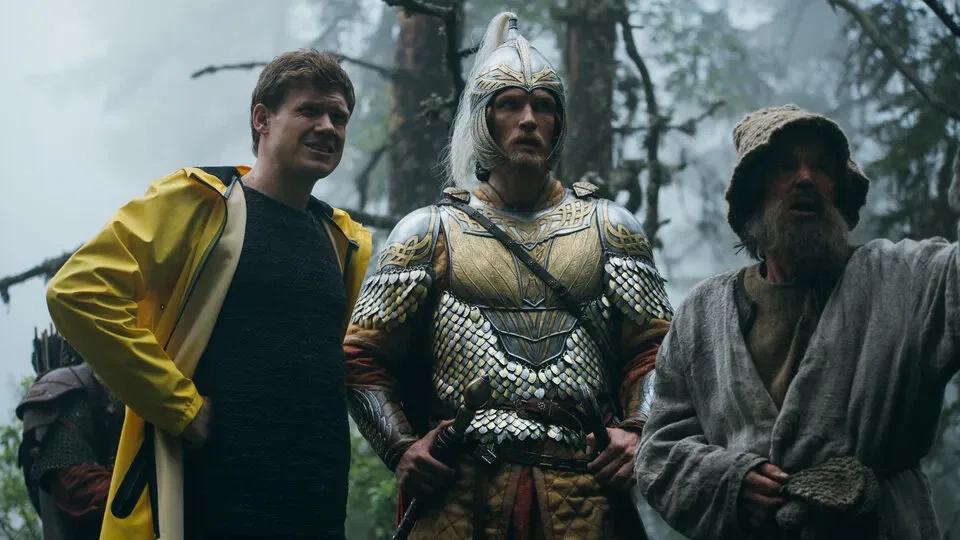
But look. The premieres of large Hollywood films have gone in an inextricable, but future. And during the New Year holidays - the most expensive to the heart of the producer of the week - mainly domestic releases that were shot to the Locdown remained. More than 80% of cinema duties and attendance was for Russian -made films. Domestic paintings collected 2.7 billion rubles at the box office. At the same time, almost every second movie ticket (48.7%) was sold for a family fantasy session “The Last Bogatyr: Evil root”.
The viewer of the cinema, mostly young man, wants to watch the brisk, spectacular, attraction cinema (the state does not have enough funds for him) and comedy - the producers give their hearts to entertain: cheap and cheerful. Drama, high -quality children's cinema, experiment - risk. Another thing is a patriotic blockbuster: the state is ready to invest, costs, cash fiasco will write off on the account of the pandemic, the political irresponsibility of the public. At the same time, the statelit in the field of cinema is focused on one indicator - the share of Russian cinema at the box office. The share grows, first of all, due to one or two New Year's blockbuster. The path is slippery: a little more - and a couple of expensive “very necessary country” of films about the heroes of the past, malicious Decembrists and the noble grandfather Stalin plus unpromising comedies, who have recently stamped along the tracing of the breakthrough comedy “bitterly” to their native tunes of popular popes.
In its bulk, our cinema is faded, inexpressive, unconscious. They object to me: there are always several decent films. Undoubtedly. But every year there are fewer of them, the path of their creators is difficult. The path to the viewer is even more complicated. And the best paintings of the past year: “Scared”, “Dear comrades”, “Man from Podolsk”, “Conference”, “Kitoboy” - not breakthroughs, rather a high -quality mainstream. And how many names that the viewer does not suspect at all: the shadows of films that have received subsidies and dissolved in non -existence.
The main enemies of Russian cinema are censorship (and its side effect - self -censorship), manual management with the help of multiplying instances: from expert councils and RVIO (Russian military historical society) to receiving PU (rental certificates).
There are impassable topics. Perennial names. And one of the most titled Russian directors Andrei Zvyagintsev cannot find funds for his already developed projects.
Watch who!
In Russia, like around the world, a serious diverse movie, talented authors and producers emigrate on the Internet. And the reasons for this is the number of numbers.
The platforms opened the boundless field of opportunities, the inexhaustibility of the choice. Censorship has been minimized on the network, and this applies not only to obscene vocabulary.
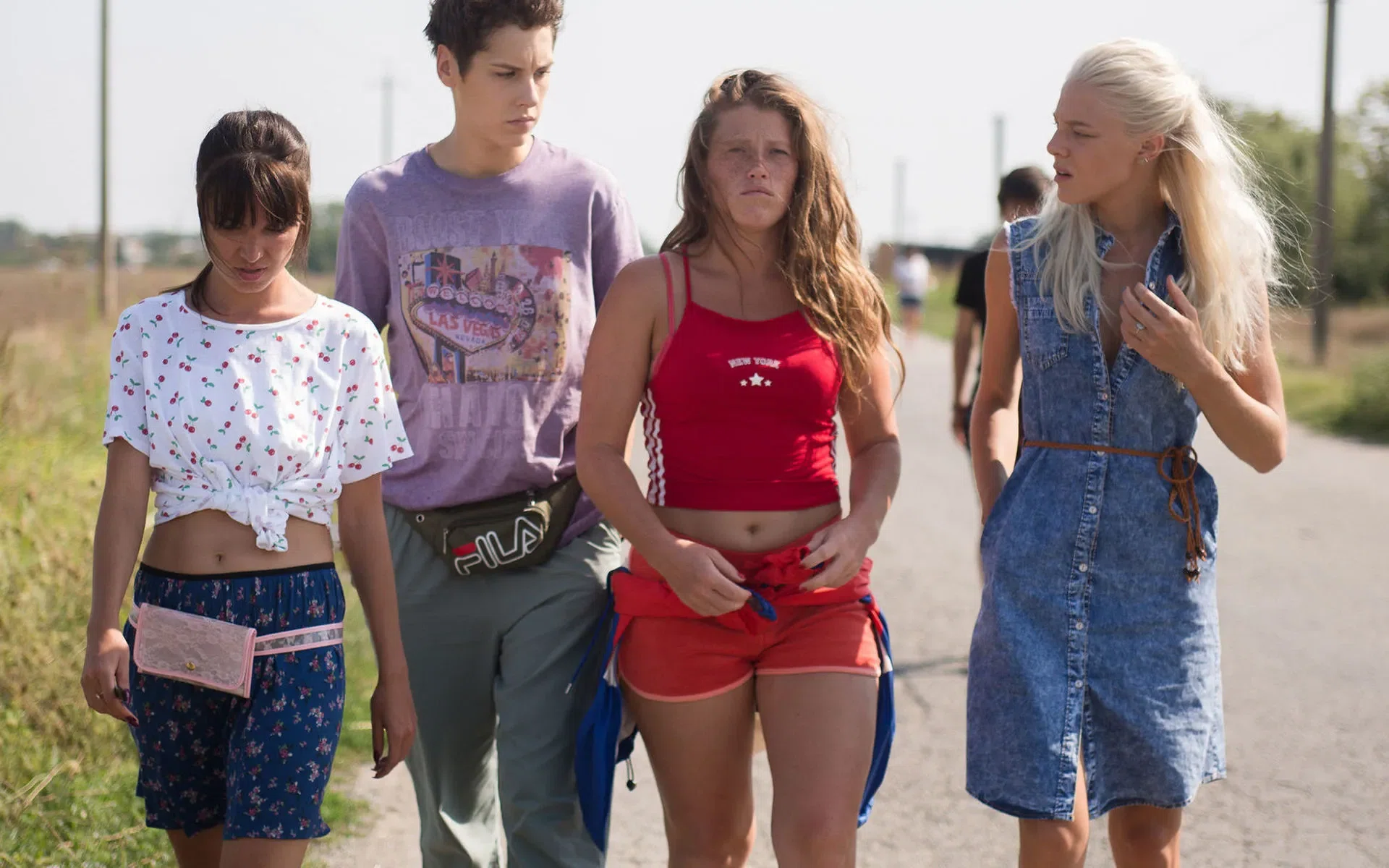
In such multi-part films as “Call DiCaprio”, “Chiki”, “Just imagine what we know”, “Speak”, “Sulls”, “Call-center”, “An ordinary woman” talk like people. Joke like people. There is no distance between the viewer and the screen.
This is modern Russia, Moscow and the province. Today, now and yesterday or long. An exaggerated conditional and documented reality.
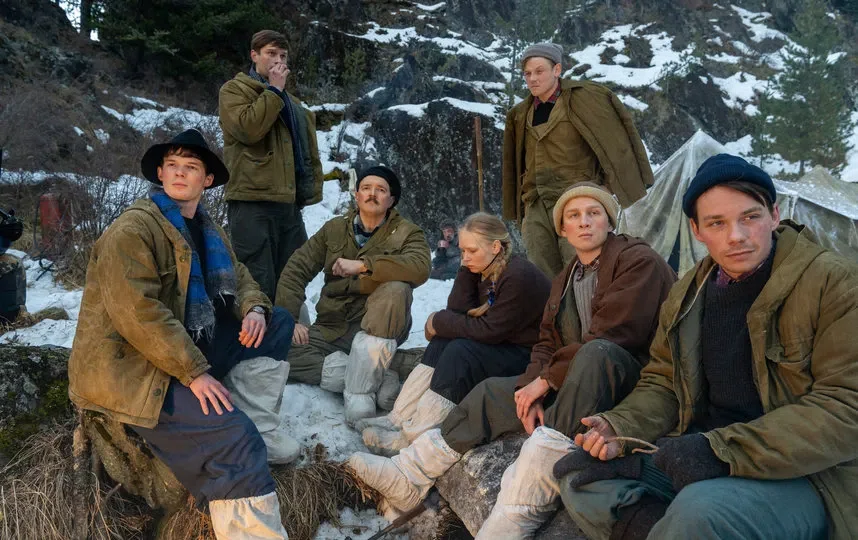
The genre variety of TV shows is altered, a sore, flowing into childhood screen: Drama (“Call DiCaprio”), criminal stories (“Ordinary Woman”, “Good Man”), Black Comedy (“Garden Ring”), adventure SCI-Fi (“Anna Nikolaevna”), social comedy (“House arrest”), Drama ( “Chiki” ), a historical and political thriller ( “wolf” ), a micetic horror (“top”), a social satire (“last minister”), a free fantasy fantasy ( “dead souls” ), a psychotriller ( “psycho” and “flight” ). And in the "Dyatlov pass" in one bouquet reconstruction, retro-nuar and a mystical detective are woven. We can say that not only a few genres, but also a few paintings in one series.
Of course, the designs, scenario skill and the performance of a number of series are far from perfection. But there are more and more stories that are clinging to you personally. It seems that their authors do not think about “share”, “patriotics”, “grandmas” - first of all, about the viewer, raise relevant topics.
Today, the most advanced producers work in serial cinema: from Todorovsky to Ilyoyan, from Murugov and Tsekalo to Fedorovich, Nikishov, Dulerain, Slepakov. The best directors: Khlebnikov and Popogrebsky, Meshchaninov and Kryzhnikov, Kostomarov and Bogomolov, Mirzoev and Buslov, Constantinople, Gai-Germanic, Bardin. They are open for unexpected and bold sentences. To pass the overcoat of Dead Souls into a narrow costume of today's corrupt bureaucracy, who dreams of at least a carcass, even behind the skirting board, even on Novodevichy - to lie down next to Prilepin, Navalny, Bondarchuk. In the series, they say on the topics taboo in the cinema: about gender, post-colonial problems, about the stupidity of power and telegram channels, about political correctness, about AIDS, about the issues of identity-collective and individual. About conscience - the main obstacle of social mobility in a rebuilt and concreted vertical. But most importantly, in a serial movie there is a compatriot floating in the thick fog of the twenties. Sounded. Masqueing complexes and fears of audacity and extravagance. Secured and making ends meet. Vicious and honest. One on one with serious psychological problems. As a rule, not trusting anyone. However, stepping in the leg, in the foreground of a number of series (Chiki, an ordinary woman, 1, 2) - not a hero, but a heroine. And she acts outside of relations with men, responding to the challenges of vile reality. He herself, like a glossy psychotherapist, Maria Mironova in a “garden ring”, who does not live his life, tries to break through the drawing of widespread lies to himself - the real one. The series debut or loudly declared themselves, of course, talented directors: Eduard Oganesyan, Roman Volobuev, Alexei Smirnov, Peter Todorovsky-Ml.
Choose or ...
Casting is a trump card of our series. Great actors against the background of the played mass. It would be okay that the stars like Tsyganov or Serebryakov (“Dead Souls”), Gorbacheva (“Chiki”), Makovetsky or Smolyaninov (“Wolf”), Mikhalkova and Dogileva (“Ordinary Woman”), Robaka (Storm), Nikita Efremov (“Good Man”). But look how many fresh people, discoveries. Anton Vasiliev in the Volk, Julia Melnikova and Daria Savelyeva in the “ordinary woman”, Varvara Shmykova, Alena Mikhailova, Irina Nosova (“Chiki”), Anna Kotova (“Storm”), Anastasia Krylova (“Thundy”). The series give the opportunity to talented actors who are not included in the duty casting-OBOBUM, make us worry, feel alive on the screen ... Maybe the last time. The grand, but underestimated Sergey Koltakov played the Governor’s quiet cunning cunning in Dead Souls (in August 2020, the actor was not shooting the series of Grigory of Constantinople, in September). Viktor Proskurin (“Wolf”) will be remembered in the role of a fading killer, scrolling on the projector happy miGI with his endless and endlessly vile life (the last role of Proskurin).
Of course, many series are arranged in such a way as to kill two birds with one stone: to appear on the TV, and they have a long time to settle on the Web (and here they have an advantage over films, which usually have a two -week life in the rental, and whether they will buy a question). Recently, parallel versions have been created: censored-where they drink less, scorn, sequestrals and obstacles-and free. The viewer chooses, including on the Internet, which one to watch. I don’t know statistics, but something tells me that there are not so many well-being, abstained, embarrassed spectators.
According to the figures of the Film Foundation: we do not pay off every third film, shot with the participation of state money.
And it seems to have already come to terms with this. But while filmmakers are in line for subsidies, ready to go to ideological and creative concessions, the best series begin to earn good money. Listen, it turns out we can shoot so that we are watching in the world! There are no longer accustomed to the festival awards of Russian cinema (although there are no good author’s cinema without internal freedom of authors). Now our TV shows are breaking through a wall of mistrust. Western experts note their quality, freshness of topics, acting. (Polina Maksimova, who shot in the series “257 reasons to live”, was awarded the prize of the prestigious international Canneseri festival.) They are acquired by the world's largest platforms. They have an army of fans in the West.
"Eat, pray, look, love!"
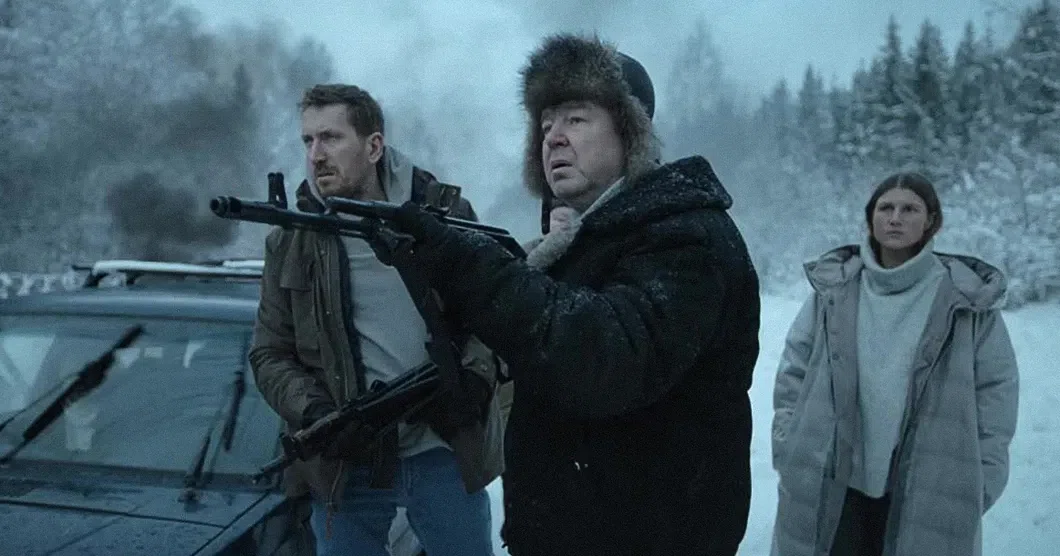
The Epidemic Pavel Kostomarov, who included in the TOP-5 for views on the Netflix streaming service, broke the record for the cost of selling a platform for Russian producers (about $ 1.5 million). In addition to this series about an unknown virus, Netflix acquired the long -lasting detective "Major", a thriller "Method". Scientific and fiction action about Androids “Better than People” has been released under the Netflix Original brand called Better than us with local dubbing (it was translated into 25 languages). The amount of the transaction: $ 1 million. Disney acquired the rights to show the Russian film "Dyatlov Pass", it will be watched in Europe. “Casters” and “good man” will be shown in Australia and New Zealand. Rights sold to the Walter Presents platform. “Casters” can be watched in the library of the Amazon Prime service, on the British platform Walter Presents, South Korean media holding CJE & M.
Of course, today-for many reasons-there is no and it is unlikely that the emergence of a series uniting a nation, which makes, as in Soviet times, to adhere to the screen in combat-family, experiencing for the fate of Stirlitz or Zhelov and Sharapov. Today there are so many series that "everyone chooses for himself." Tell me that you are watching ...
They argue about the series, it seems that today they have taken the place of previously popular thick magazines. The series "Chiki" has become the most discussed visual project of 2020.
The conclusion is still optimistic. The new Russian series (of course, in its best manifestations and, above all on the platforms), is similar to the free zone: economic, intellectual, aesthetic.
Our best series - sessions of collective and individual psychotherapy - have the therapeutic significance, especially in the times howling from injustice and hopelessness.
Today they would shoot the film adaptation of Roman Gilbert “Eat, pray, love”, then the name would most likely have improved: “Eat, pray, look, love!”