Date
Author
Виктория Ли, Юлия Любимова, Софья Игинова
Source

Preserved copy
Translated material
"I am a citizen"

As former citizens of the USSR are trying to expel to a country that no longer
After the collapse of the Soviet Union in 1991, its former citizens continued to live with Soviet passports, but from the beginning of the zero they were declared invalid, and in 2002 a law on foreign citizens appeared, thanks to which people born in the USSR and living in the territory of the current Russian Federation without new passports began to be considered stateless persons (LBG), or Apatrid. This, in turn, created a number of legal conflicts - in particular, in any contact with law enforcement agencies, as soon as it is found that such a person does not have a valid passport, it can be placed in the center of temporary detention of foreign citizens (TsVSIGs) in order to expel to the alleged country of civil affiliation. But they do not have this country.
"No one knew what citizenship is and what it was eaten with"
Konstantin Ty - Korean is from Tajikistan. As he says, when a war began in Tajikistan in 1992, he went to relatives in the village of Free in the Krasnodar Territory so that he was not drafted into the army, and lived there with a Soviet passport and temporary residence permit. The insert confirming Russian citizenship, which was issued for Soviet passports from 1992 to 2002, did not take Ty.
“Many people of my generation, born in 1975-1976, did not make this insert because they took him into the army and sent to fight in Chechnya,” he explains. - Many Koreans did not take it, because with the Soviet passport and registration they traveled through the fields (they rented land and raised vegetables or fruits, paying rental and part of the grown products. - Approx. “Cold” ) , no one disturbed, everything was fine. ”
From relatives in Svobodny, a year later Tu moved to Volgograd to friends, then to Kazan. He did not work anywhere, says that "he was lying a fool." In 1998, he was sentenced to eight years in a colony under the article “robbery”. “A friend worked with the Chinese, she was not paid five thousand dollars. I came to them, smashed everything, beat them and took 25 thousand. They wrote a statement of robbery, ”Konstantin admits.
As the coordinator of the project of stateless persons explains, the analyst of the “Civil Assistance” committee (in 2015, the organization was declared “foreign agent”) Elena Burtin, it makes no difference to execute the sentence, whether a person has citizenship, because everyone is equal before the criminal code: citizens of the Russian Federation, foreigners and stateless persons.
Ty was serving a sentence in the Republic of Komi, and was released in 2004 in an amnesty.
“I wanted to leave in Dushanbe, but in Aksaraysky, this is for Astrakhan, the border guards took me off the train, since I am not a citizen of Tajikistan,” Ty says. “I was not released from Russia, they told me to go to Komi and get a Russian passport, since since 1992 I have been registered in Russia, and already on it with a visa to go to Tajikistan.”
Ty returned to Komi, lived in Syktyvkar, was waiting for answers to the requests sent to Tajikistan to issue a Russian passport. “Previously, requests to the Tajik embassy went a year or more. While waiting, the court had passed, which was supposed to establish, from what year I am in the Russian Federation. Apparently, the Soviet passport with temporary registration in Russia was not enough. The court sent a request to the Krasnodar Territory, ”Ty says. But Konstantin did not wait for an answer: in 2007, a second criminal case was brought against him. “There was a small fight, my opponent died, and I was imprisoned for 10 years,” he reports without going into details.
When in 2017, Tu was released for the second time, at the exit from the colony it was detained by employees of the migration service and placed in the Tajikistan expression (TADZHIST TADZHIST TADZHISTA center. But, since this country does not recognize Tu by its citizen, he was released in six months.
“Even in TsVSIG, I was told that I would go to Syktyvkar and make documents,” adds Konstantin. - I turned to the passport office, wrote to the head of the department, everything is useless. I was told that my criminal record was not repaid, it must be removed through the court ( with a criminal record they are not accepted into the citizenship of the Russian Federation; in the case of TA it remains for 10 years . - Note of the Cold ), and there are no papers confirming that I am not a citizen of Tajikistan. As I understand it, they just do not want to work in the passport office. They send from one office to another, and from there to the third, then they were tired of sending and in 2018 they closed me to TsVSIG for the second time. ”
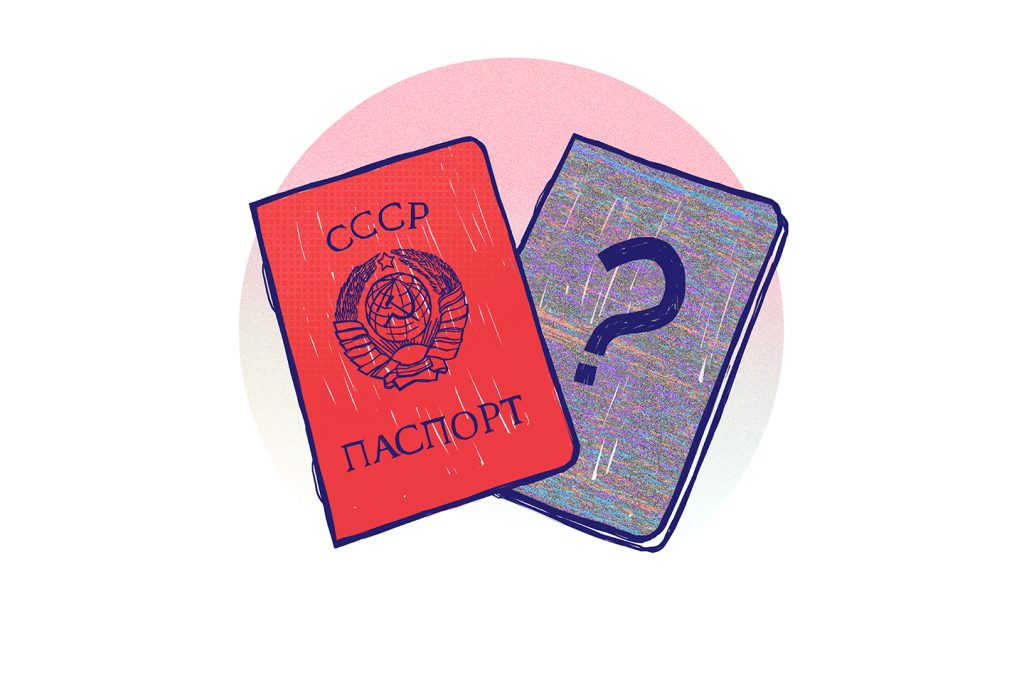
As Elena Burtina explains, in the 1990s it was possible to live calmly with the Soviet passport and many people did not understand that something needed to be done with the documents.
“People were not familiar with the institution of citizenship, because in the Soviet Union no one came across it. Everyone had Soviet citizenship from birth, no one knew what citizenship is and what it was eaten with, which means its presence or absence. It is impossible to say that there was some wide explanatory campaign in the media, ”says Burtina. “People lived with Soviet passports, not feeling like non -citizens.”
Since 1992, temporary deposits about Russian citizenship have been issued for Soviet passports. A sample of the Russian passport was approved in five years, and they began to change documents in stages, but Soviet passports still acted everywhere. In 2001, the old documentsrecognized as invalid and the liners ceased to be issued.According to the deputy chief of the passport and visa service of the Ministry of Internal Affairs Nikolai Smorodin, the Russians were in a hurry to change the passports, but it was illegal because there was no such order from the ministry.
“After the collapse of the USSR, people were given 10 years to decide who and where will continue to live. With the distribution of passports, they did not really bother. Many people were left without Russian passports with invalid Soviet ones. They forgot about them, ”says Illarion Vasiliev, lawyer of the Migration and Law network, the Human Rights Center.
Without new passports, for example, people who lived in the outback did not follow the news and simply knew nothing, says Vasiliev. The same thing happened with the prisoners who served a sentence during the passport replacement campaign. And also with those who, for example, served in Uzbekistan or left for family affairs in Moldova with a Soviet passport, then, having returned to Russia, did not register, which means that he could not confirm living in the territory of the new country. A separate category-people whose Russian passports were canceled due to false information and errors in the design-for example, they issued a passport, but did not enter the issued passports in the register, confused the date of birth and so on.
“For many, the Soviet Union did not break up, lived as they lived, did not bother with documents,” says Vasiliev. “And at some point, a person goes after a pension and finds out that he is not a citizen of Russia: he is not on the FMS lists ( now the Office for Migration of the Ministry of Internal Affairs.-approx.“ Cold ” ), and he turns out to be a stateless person.”
In 2002, they adopted a law on the legal status of foreign citizens who recognized foreign citizens of those people who have no Russian citizenship. So former Soviet citizens who did not have Russian citizenship were equated with foreigners.
“These people have become illegal,” says Elena Burtina. “As illegal immigrants, they can be brought to administrative responsibility [for violation of migration legislation], which involves expulsion with the premises to the Temporary detention center of foreign citizens (TsVSIG).”
"As soon as you stop serving the country, no one needs you already"
In 1994, Sergey Satirov was sent from the Batumi of the Adjar Autonomous Soviet Socialist Republic to St. Petersburg to study at the Ensign School. Having quit from service in the army, he remained to live in St. Petersburg.
“At first, the passport was Soviet, and I did not particularly attach importance to this, because I had a stamp about the adoption of Russian citizenship - otherwise they would not have taken me to the Russian army. And then the documents were stolen from me, ”says Satirov. “I have not received citizenship of a single country of the world, which means that I still seem to live in the Soviet Union.”
Sergey had a civilian wife, in 1996 they had a son. “He lived calmly, quietly, peacefully. Law enforcement agencies did not climb. I have my own life, they have their own. It used to be that money was just bought off from them, ”says Satirov. He worked as a builder, began the auxiliary worker, reached the foreman. He found employers through friends, everyone entered his position, because they did not want to lose a valuable worker, and turned a blind eye to the lack of documents, but paid less than those who have a passport, says Sergey.
From the documents, Satirov has only a Soviet birth certificate, a military ID and certificates of liberation from places of imprisonment: Sergey has three criminal records. The first in article 119 “The threat of murder” - he received a suspended sentence; The second for the beatings - the term was real. The victim in both cases was a civil wife. He sat from 1998 to 2001. The third term was for robbery and causing serious harm to health. “The little man was supposed to me, we fought, he went to the department and wrote a statement, took off his beatings, and I left,” says Satirov. He served two years, went out at UDO in 2005.
He began to draw up a new passport in 2008, but there were not enough documents confirming that he was not a Georgian citizen and lived in Russia since 1994. In May 2019, employees of the patrol service approached Sergey on the street, asked the documents. He says that he forgot to take with him the only identity certificate that he had - a working pass. He was taken to the police department, pierced the base in which he was listed as a citizen of Georgia. Satirova’s lawyer Olga Zeitlina, who collaborates with the Migration and Law network, PC Memorial, suggests that such an error could occur because he was once entered into the base at the place of birth.
“I was closed in TsVSIGA, made a request to Georgia, came a certificate that I was not their citizen. This is the basis for me to be thrown out of here, but I’ve been here for a year and a half, ”says Sergey. “I am not under investigation, not arrested that I am sitting here - I don’t understand.”
Zeitlina explains that her client is refused liberation, because "the possibilities for expulsion are not lost."
“I no longer know how to identify myself. I am a native of the Soviet Union with a birth certificate in the USSR. They look at me and say: “And you were not here until 1992 [in Russia], goodbye.” I would go to any country, it doesn’t matter to me, ”says Sergey. -If they close me here again, I will make me take me towards Kolpino ( there is St. Petersburg SIZO-1.-Approx. “Cold” ): the same Pepsa ( an employee of the patrol service.-Approx. “Cold” ), when I will take documents from me, give me to the face, and I will be closed in Kolpino. I don’t want to return here, it’s not interesting. I understand that as soon as you stop serving the country, no one needs you already. ”
In 2012, a simplified procedure for obtaining Russian citizenship for citizens of the former USSR and their children who did not acquire other citizenship and arrived in the territory of the Russian Federation until November 1, 2002 appeared. This is stated in Chapter 8.1 of the Law on Citizenship, which operates until 2025. Those who meet the requirements for a simplified order, but did not receive citizenship until 2025, are obliged to leave Russia. If a person does not fulfill this requirement, he is deported.
“Where they are deported - a question that is not an answer, because it is impossible to deport them,” explains Elena Burtina. - Temporary restrictions should stimulate people to seek legalization, but this is useless, because for the most part such people do not see and do not read laws. The action of this chapter was extended twice, but the likelihood that they will extend again is low. ”
To get a Russian passport, you need to independently collect documents: a Soviet passport or birth certificate, a certificate of the absence of other citizenship, and - the most difficult thing - you need to confirm arrival in Russia until November 1, 2002 and a free residence here since then, says the coordinator of “civil assistance”.
“All these conditions are not easy to confirm, sometimes even impossible,” says Burtina. “People can actually relate to this group, but use the simplified order [obtaining citizenship] because of the impossibility of fulfilling conditions they cannot.”
Lawyer Olga Zeitlina confirms that a simplified procedure in practice may not work.
“Simplified order is only on a piece of paper, in reality it is not. If a person does not have documents, he comes for legalization, they say to him: “You are illegally in the Russian Federation”, draw up a protocol and plant in the TsVSIG. So one of our clients sat three times, says Zeitlina. - The authorities do nothing, our Main Directorate of the Ministry of Internal Affairs does nothing. LBG has no rights. It remains only to lie to a person to the bottom and not come across, so they do everything. ”
In a general manner, foreigners must arrange a residence permit and be in Russia continuously for five years in order to apply for Russian citizenship. But the general procedure for the apatrides is not available, because they do not have an existing personality certificate.
“The Ministry of Internal Affairs should carry out the procedure for establishing a person, if a person is suitable for conditions for a simplified order, they should give him citizenship,” says Zeitlina. - But in practice, we see completely different: the Ministry of Internal Affairs refuses to establish a personality, although it should. To do this, you need to make requests, interview witnesses, sometimes countries do not respond to requests, and the Ministry of Internal Affairs requires that the person himself provides everything, but he has nothing. And instead of issuing citizenship, for example, Satirov, he was put in the TsVSIG for expulsion. ”
"Conditions - hell, better in prison"
Atanazar Samandarov is 50 years old. He was born in the Uzbek SSR, from where in 1988 he left for Mogilev in Belarus: he studied at a vocational school for a male-stucker, registered in a hostel. He says that it was difficult for him to give Russian, so he soon launched his studies. In 1989, his brother came to him and said that Atanazar was drafted into the army. He left, he was expelled from the vocational school and was discharged from the hostel automatically.
Atanazar was serving in the army in the Amur Region in the military unit of the village of February. A few months later, 29 soldiers were sent to the neighboring village - to help on the collective farm and supply part of the products.
“We were given the ground, we planted cabbage, potatoes, carrots and cucumbers. The field was at the swamp, only the army ZIL 131 could call there, ”says Atanazar. - We provided the military unit, and the excess foreman took to the military for sale. This is theft, he twisted everything. At night, five soldiers, including me, loaded the car because, for example, 20 cucumbers of cucumbers, 50 tomatoes boxes remained. ”
Atanazar says that the whole village was one store with food, clothing and electronics. Many goods were in short supply, sold sugar and alcohol on coupons.
“One night we robbed a store and loaded the car. They stole 13 cognac boxes, ten foremen taken to Voentorg, I took three. Since I worked as a cook, everything was stored with me, ”says Atanazar.
In the kitchen with one of the young soldiers at Samandarov, he said, a skirmish occurred.
“A young kid, the spirit, came to clean potatoes, but sat and did not work. I told him once, a second time, he sits in silence. I lifted him and hit him. But it turned out that he had been beaten before, he could not work in pain, ”says Atanazar. “He complained to the ensign, but no one did anything.”
About two months after the robbery of the store, its participants were caught.
“We drank a collective farm agronomist, he took a bottle of cognac and took the police department, said that we robbed the store. That's how we got, ”says Atanazar. - I took the blame on myself, because the foreman convinced me that they would give me six months of a disciplinary battalion, I will serve and go home. There was nothing foreman himself, because his wife’s brother is the head of the police department of that area. ”
"I went into the compartment of the officers, opened my bag and saw a Kalashnikov assault rifle and a lot of money"
But, when information about the hazardous relations, grandfathers, the military tribunal gave Atanazara three years of dysbata surfaced. He was sent to Ussuriysk, where he spent two and a half years in a disciplinary battalion: he worked at the reinforcing plant, received a salary that he should have given him out of liberation.
“In May 1993, when Uzbekistan was already a separate republic, two officers and soldiers came from there, they said that those who were from there - and we were ten people - amnestied the local Ministry of Internal Affairs and we need to go home. Later I guessed that we were deceived, because everyone remained different terms in Dysbat. Who will let us go? They wanted to transfer us to an imbath in Uzbekistan, ”says Samandarov.
They got to Uzbekistan by plane and train, the soldiers were not guarded. According to Atanazar, they were fed with one bread and tea, and the accompanying spruce in a restaurant car. He decided to escape.
“If we were fed humanly, I would not have fled,” says Atanazar. - I went into the compartment of the officers, opened my bag and saw a Kalashnikov assault rifle and a lot of money. It was money for the road from the state, our salaries from the plant and an army pay. They all wanted to steal. Я взял 700 миллионов рублей, сколько мог унести в спортивной сумке (в современных рублях это примерно 700 тысяч. — Прим. “Холода”) . Сошел с поезда и за сутки дошел до Самары».
Он предполагает, что офицеры планировали забрать деньги себе, потому что в Узбекистане они принесли родителям Атаназара его военный билет, а про 700 миллионов ничего не сказали и в розыск не подавали. Без документов Самандаров добрался до Москвы на поезде — по его словам, за деньги проводники на все закрывали глаза.
«Жил на “ВДНХ”, не работал, так как у меня было много денег. В декабре 1993-го ехал в электричке с подарками для младших сестер, золотыми часами. Кто-то выронил ручку, я ее подобрал. Зашел в метро на “Курской”, меня досмотрели, оказалось, что это была ручка-пистолет: выглядит, как обыкновенная, но стреляет, а я и не знал. За ношение оружия меня посадили на два года, — утверждает Атаназар. — Когда сидел в “Бутырке” под следствием, ко мне приехал отец, и я отдал ему все личные вещи и часы для сестер».
Самандаров вышел на свободу в 1995 году. Подал документы на российское гражданство — но, по его словам, ему отказали из-за того, что последняя прописка была в Беларуси.
«Так я, одним словом, стал бомжом, — рассказывает он. — Сначала занимался воровством, снимали с пацанами магнитолу и колеса [с машин]. В 1998-м меня закрыли за кражу на шесть с половиной лет».
В 2001 году он вышел условно-досрочно. Вернулся в Москву, знакомая помогла устроиться на работу. Несколько лет Самандаров работал на стройке, распределял по объектам контейнеры для строительного мусора. Снимал квартиру в Выхино, там познакомился с девушкой и начал жить у нее, в 2004 году у них родилась дочь. Но криминальные связи снова привели его в колонию.
«В 2009-м по пьяни залезли с друзьями в машину, сработала сигнализация, нас взяли за попытку кражи. А мы хотели просто покататься. It happened. Посадили на два с половиной года, — вспоминает Самандаров. — Мы с гражданской женой разошлись, может, ей надоело ко мне ездить и ждать. Когда в 2011-м освободился, узнал, что квартиру она продала. С тех пор не знаю, где они. С теми друзьями я перестал общаться и сидеть в результате тоже перестал. Живу честным, порядочным человеком».
После этого срока Атаназар начал жить со своей нынешней гражданской женой, у них родилась дочь. С тех пор он ремонтирует квартиры. Когда снова вернулся к вопросу гражданства, в миграционной службе ему отказали из-за судимости. «Нужно было либо ждать погашения судимости, либо снимать через суд. Через суд я не пытался — не помню, может, некогда было, просто ждал», — объясняет он.
В 2015 году он снова подал заявление на гражданство. По его словам, в ФМС его личность установили и попросили зайти за справкой.
«Когда приехал, меня увезли в отделение полиции [за нарушение миграционного законодательства], а на следующий день в суд Бабушкинского района, — говорит Атаназар. — Судья даже не спрашивала о моих документах, я только зашел [в зал заседания], она спросила: “Откуда? Из Узбекистана? Депорт и штраф пять тысяч, пять лет невъездной”. Я спросил: “Вы что, дура?”. На меня надели наручники и увезли в ЦВСИГ Сахарово».
Он рассказывает, что его адвокат пыталась обжаловать содержание в ЦВСИГе, но безрезультатно. Узбекистан его не принял. «Потому что я ничей гражданин, как был гражданин СССР, так им и остался», — объясняет Самандаров. Пока Атаназар сидел в Сахарово, по его заявлению официально установили его личность: пришлось проходить процедуру заново, потому что в ФМС он получил ксерокопию, а не оригинал справки.
«Условия содержания — ад, лучше в тюрьме (имеется в виду следственный изолятор. — Прим. “Холода”) посидеть два года. В тюрьме положено до 30 килограмм передачки в месяц, а в ЦВСИГе пять, но хоть каждый день. Кто будет возить по пять килограммов за 60 километров от Москвы? — говорит Самандаров. — Воду давали из-под крана — ржавый кипяток, по кружке три раза в день, а в СИЗО можно сколько хочешь кипятить. Магазин тогда не работал. Прогулки 40 минут в день. В камере железные двухярусные кровати, железный стол и нерабочая розетка. Если у тебя есть деньги или хороший телефон, все забирают приставы, якобы у тебя их никогда не было. Я устроил голодовку, чтобы мне дали телефон».
В ЦВСИГе Атаназар познакомился с Еленой Буртиной и адвокатом Розой Магомедовой из «Гражданского содействия», когда они приходили в центр, чтобы помочь иностранцам. Когда вышел на свободу в 2017 году, подавал на гражданство уже с помощью правозащитников. Атаназар говорит, что в МВД ему обещали паспорт еще весной 2020 года. Он предоставил все документы, что удалось собрать за эти годы: советское свидетельство о рождения, справку из посольства Узбекистана о том, что он не является гражданином этой страны, удостоверение личности, справки из исправительных учреждений и так далее.
«Но пришел отказ, — говорит Атаназар. — Я хочу получить гражданство, купить участок и построить дом. Буду искать бывшую жену, чтобы помогать. Старшей дочери уже 16 лет».
Елена Буртина поясняет, что в 2011 году, когда Самандаров отбывал наказание в колонии, Минюст вынес решение о нежелательности его пребывания в России до 2014 года. Это значит, что по освобождении его должны были депортировать, но этого не сделали. Когда выносят решение о нежелательности, должны учитывать, может ли человек выехать из России, тяжесть преступления, наличие семьи, жилья.
«Но на практике это совершенно формально: вне зависимости от того, за мелкую кражу человек сидит или кого-то убил, раньше Минюст, а теперь ФСИН может вынести решение о нежелательности, — говорит Буртина. — Оно несет за собой запрет на въезд, и это одно из обстоятельств для отказа в гражданстве. На самом деле у Атаназара этого обстоятельства давно нет».
Суд не определяет, на какой срок человека помещают в ЦВСИГ. По закону, на исполнение административного наказания, в том числе выдворение, дается два года, поэтому апатриды могут находиться в ЦВСИГ до двух лет включительно. Единственный способ выйти на свободу раньше появился только в 2017 году — тогда Конституционный суд признал незаконным содержание в ЦВСИГ Ноэ Мсхиладзе, которого было невозможно выдворить на историческую родину, в Грузию, из-за отсутствия у него какого-либо гражданства. КС дал возможность обжалования через три месяца после решения о выдворении и постановил, что нужно прописать сроки содержания лиц без гражданства в ЦВСИГ. Но до сих пор ничего не изменилось, говорит Елена Буртина: «Судебная практика складывается по-разному в разных регионах. В некоторых освобождают, когда становится понятно, что выдворение невозможно. Но, например, в Москве — нет. Мосгорсуд занимает позицию игнорирования решения КС, и люди сидят два года, а если опять попадутся — еще два».
Буртина рассказала о случае одного из заявителей «Гражданского содействия»: выходец из Азербайджана провел несколько месяцев в орловском ЦВСИГ, его освободили, поняв, что выдворить некуда, а в Москве он два раза по два года отсидел в местном ЦВСИГ, потому что Мещанский районный суд проигнорировал решение орловского суда. Что происходит с этим человеком сейчас, Буртиной неизвестно.
Статистики, сколько лиц без гражданства находилось в ЦВСИГ со времени создания первых центров в 2009 году, нет. На запрос «Холода» МВД не ответило. В 2018 году Елена Буртина и Ольга Цейтлина подсчитали , что в ЦВСИГ на тот момент содержались около 500 граждан бывшего СССР. Буртина считает, что всего через эти центры прошло несколько тысяч бывших советских граждан. Только в «Гражданское содействие» с 2016 года обратилось около 300 апатридов. Среди них много бездомных и пожилых людей, которые давно отчаялись получить какие-либо документы.
«Чтобы заполнить эту правовую пустоту, нужен закон. Нельзя применять к лицам без гражданства (ЛБГ) то же правовое регулирование, что и для иностранных граждан, потому что они не могут быть возвращены в страну, из которой прибыли, — говорит Буртина. — Нужен универсальный, постоянно действующий правовой механизм. Сдвиг в этом отношении есть, МВД подготовило небезупречный, но очень нужный законопроект , который предусматривает временное удостоверение личности для ЛБГ. Он прошел второе чтение в Госдуме. Если его примут, дело может сдвинуться с мертвой точки».
«Я жалею, что уехал в Россию»
Сурену 54 года ( имя героя изменено по его просьбе ). Он родился в городе Ленинакан, ныне Гюмри, в Армении. В 1982 году окончил школу, не поступил в институт и пошел в армию. Через три года Сурен переехал в Орел, где стал работать на заводе. Позже уехал в Иваново, прописался и заочно учился на кинорежиссера во ВГИКе. 7 декабря 1988 года на северо-западе Армянской ССР произошло разрушительное землетрясение, которое затронуло и его родной город.
«Я отчислился и вернулся в Армению. Приехал только на третий день после землетрясения. Дома нет, никого из своей семьи я не увидел. За пару секунд я поседел, — рассказывает Сурен. — Ко мне подошел двоюродный брат и сказал, что отец был в деревне и спасся, а остальные погибли. Я похоронил мать, младшего брата-десятиклассника, старшего брата, его жену и двух сыновей, и это не считая других родственников».
Сурен остался с отцом в Ленинакане. В городе не было света и газа, устроиться на работу было некуда, и в 1994 году Сурен вернулся в Россию. С тех пор он постоянно проживает в Москве, занимается ремонтом квартир — как он говорит, пришлось научиться.
«У меня был красный советский паспорт, с ним никаких проблем у меня не было, — рассказывает Сурен. — Но примерно в 1996 году я и мой друг из Украины поехали ремонтировать дачу в Петушках Владимирской области, друг меня научил этой работе. Я получил две с чем-то тысячи долларов за ремонт. Обратно ехали на электричке, заснули, и мою барсетку со всеми деньгами и документами срезали».
Он обратился в железнодорожный отдел милиции, но ему сказали, что не могут установить, кто украл барсетку, и заявление о краже не приняли. Дали только справку об утере документов. «Восстанавливать мои документы отказались, я психанул и больше этим не занимался», — говорит Сурен.
«Я торчал на вокзале, стоял голодный-холодный, стеснялся к кому-то подойти. Ко мне подошел армянин, говорит: “Братуха, ты здесь стоишь уже четвертый день, пойдем, я тебя покормлю”. Зашел в магазин и стащил еду. А я так не могу, — рассказывает Сурен. — Он познакомил меня с людьми, которые делают ремонт, и с тех пор только этим я и занимаюсь».
Из-за отсутствия документов Сурен три раза оказывался в приемниках-распределителях, которые позже стали называть спецприемниками. Координатор «Гражданского содействия» Елена Буртина поясняет, что в 1990-е наказывали за отсутствие документов или прописки. «Существовало понятие “бродяжничество” как наказуемое деяние», — говорит она. ЦВСИГов в то время еще не было.
«Меня сажали на 10-15 суток, когда проверяли документы и выяснялось, что у меня их нет. Например, был какой-то юбилей Москвы ( Сурен не помнит точную дату, но в 1997-м было 850-летие города. — Прим. “Холода” ), устроили зачистку всех, кто был в городе без документов или регистрации, и отправляли в спецприемники Москвы и ближайших городов, когда местные уже были переполнены. Меня увезли в Рязань, — рассказывает Сурен. — Когда вышел, нашел земляков, мне предложили работу, а я же без денег, без ничего. Два года проработал шашлычником и уехал в Москву».
Так как документов у него не было, Сурен не мог устроиться на работу официально или снять квартиру, поэтому работал по знакомству и жил там, где ремонтировал.
«Один раз я поругался с ментами, и мне пригрозили депортацией. Я говорил, что армянский паспорт я не получал, мое последнее место прописки — Иваново, меня что, в Иваново депортируют? В ответ мне угрожали, что на меня заведут какое-нибудь уголовное дело», — рассказывает Сурен.
Когда он делал ремонт в Электроуглях Московской области, его снова задержали из-за отсутствия документов. «Меня посадили в обезьянник, а за неделю до этого в том же районе подожгли дом какой-то бабушки. Хотели на меня это повесить, — говорит Сурен. — Держали три месяца в тюрьме в Тульской области — почему в другом регионе, я не знаю. Ничего доказать не смогли и отпустили, когда нашли двух братьев местных, которые по пьяни это сделали. Я вернулся в Москву».
Зимой заказов на ремонт было меньше, жить было негде. Сурен ночевал у знакомых, но подолгу оставаться у них стыдился. Говорит, два или три раза ночевал в социальных центрах для бездомных. «У меня был знакомый лейтенант юстиции, я сделал его квартиру, какое-то время жил у него на даче. Но я не люблю унижаться и просить о помощи, хотя он наверняка по одному звонку мог решить мою проблему с документами», — говорит Сурен.
Около 2002 года он обратился в «Гражданское содействие». Организация посылала запросы в Армению и в Иваново, но на сбор и поиски документов уходило много времени и сил.
«Например, мне говорят, нужно свидетельство о рождении, а где я его возьму, если дом полностью разрушен землетрясением? Меня отправляют в посольство Армении, я иду, а там говорят ехать в Армению за документами, а я никогда не был гражданином Армении, и как я туда поеду? Я уже начинаю злиться и ругаться матом, плюю на все это и говорю “Гражданскому содействию” больше ничего не делать. Года два не появляюсь, потом опять понимаю, что все-таки надо сделать документы, и так несколько раз», — рассказывает Сурен.
В результате паспорт он получил 21 ноября 2020 года по упрощенному порядку. Елена Буртина говорит, что были сложности с подтверждением, что у Сурена нет гражданства Армении. «У посольства такая политика, что они бы хотели всех армян считать своими гражданами по факту этнической принадлежности, но для этого все-таки нужно желание человека стать гражданином Армении. А на запрос о гражданстве они отвечали, что Сурен не получал паспорт Армении, что для нашей стороны не значит, что он не гражданин, — им нужен прямой ответ. Долго бодались за эту справку, это всегда проблема», — говорит Буртина.
Семьи у Сурена нет. Он жил с разными женщинами, с последней, как он говорит, может быть, все и сложилось бы, но она погибла в автоаварии. Получив паспорт, Сурен завел себе банковскую карту — раньше он оформлял карту на друга — и полный пакет документов, осталась только регистрация. Он планирует открыть цех художественной ковки металла и делать заборы, потом купить квартиру в ипотеку.
«Всю жизнь для других строил, пора уже и для себя что-то сделать, — говорит он. — В марте поеду к родственникам в Армению на месяц, схожу на кладбище. Я не был дома 26 лет. Они меня уже похоронили: думали, что я на зоне или что меня убили. Лет 10 назад, наверное, меня случайно нашла в “Одноклассниках” сестра — так я всю свою семью и нашел, узнал, что отец умер. Я жалею, что уехал в Россию».
Константин Тю из Таджикистана провел в ЦВСИГ города Ухта республики Коми два года и вышел на свободу в августе 2020 года. Сейчас он проживает в Сыктывкаре, оформляет российский паспорт и неофициально работает на пилораме.
«С документами никак, снова нужны подтверждения из Таджикистана, что я не их гражданин, жду ответа, — говорит Константин. — Все стоит на мертвой точке».
Пребывание Константина в России признано нежелательным до 2025 года, он оспаривает это решение в суде.