
Translated material
Why are there such terrible toilets in places of imprisonment
Human rights activists have been fighting this humiliating practice for almost 30 years, but without great successes
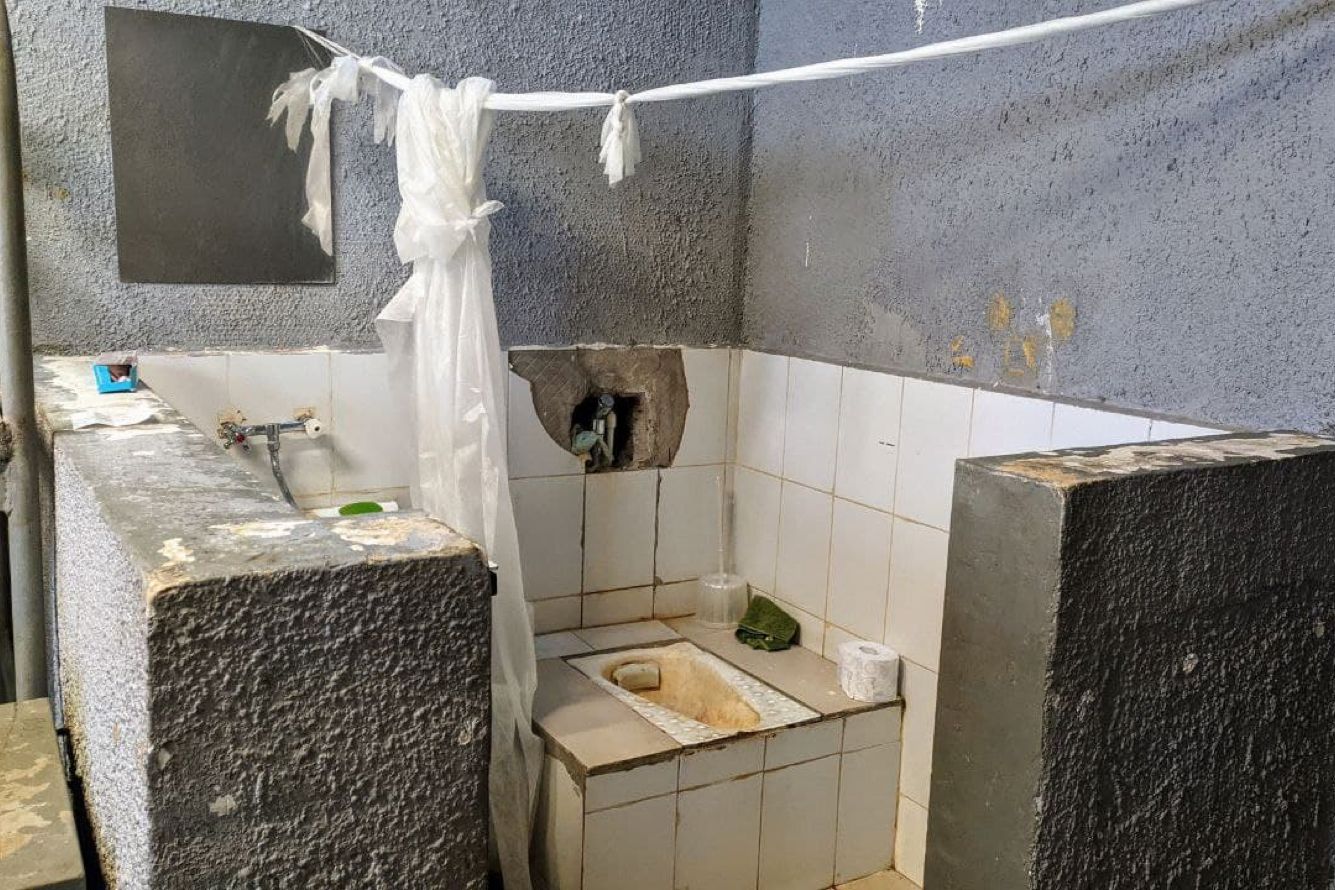
Thousands of people were detained on shares in support of Alexei Navalny, hundreds of them were sentenced to administrative arrest. Many of these people first ended up in police branches, insulators and special receivers and were horrified by toilets in the form of “holes in the floor”, which also had to use in front of everyone. Medusa Special Corps Maxim Solopov tried to figure out why in Russian places of imprisonment they still use the standards of the 1980s, establish Genoa bowls instead of normal toilets and do not ensure the privacy of late places.
“A hole in the floor instead of a toilet, around it a wall to the waist, and a camera was sent there,” Muscovchka, who was released after three days in the center of temporary detention of foreign citizens (TsVSIG) in the village of Sakharovo, described her camera there. “The toilet without a partition is visible to everyone,” said the 23-year-old prisoner TsVSIG Emin Kerimov in an interview with the Mediazona.
The detained coordinator of Navalny’s headquarters in Perm Sergey Uli was also most amazed by the bathroom in the city special receiver: “Not a hole in the floor, but an iron shell concreted on the floor, and only a small wall of one and a half meters high from the rest of the chamber: for example, it did not hide me at all. And if you go to the toilet, then it is still on the pedestal, there are three steps - and from there you can see you to the waist. This is the most humiliating: you have to go to the toilet with almost everyone. And from there the terrible smell comes. ”
Ukhov described the prison methods of combating this wildness-primitive, but used for years: “So that the smell does not come from there, they tie a half-liter packaging from under the sour cream to the pipe, put something heavy in this glass, tie everything in the package-and this“ traffic ”you must take this“ cork ”, must be taken out of this hole, it is necessary to reach the rope from this hole, And then back there. These "traffic jams" have been hanging there for many years - all black. "
"Hole in the floor"
The floor toilet-the so-called “Genoa” bowl -is used in places of imprisonment primarily because of its vandal resistance, Meduza explained the Honorary Chairman of the Moscow Supervisory Commission (PMC) of Moscow Andrei Babushkin, who has been involved in this problem in places of imprisonment for many years.
“It is almost impossible to break the Genoa bowl, while the toilet is very easy to break, and vandal -resistant toilets appeared only 30 years ago, there were simply no one hundred years ago. If you put a regular toilet in prison, in a month nothing will have left of it, ”says Babushkin.
In addition, according to him, it is believed that this type of plumbing allows us to “more fully empty the intestines” and do it faster. In the conditions when there was one in -way place for 25 people in the prison system - only since 1985, the standard was changed to 15 people to the place - the feces rate played a significant role in order for everyone to have access to the toilet, ”says the human rights activist.
The norm requiring one toilet for 15 prisoners is still valid-it is approved by the current order of the Ministry of Justice dated 02.06.2003 No. 130 for official use “On approval of the instructions for the design of correctional and specialized beliefs of the penal system”, follows from the decision of the Novokuybyshevsky Court of the Samara region of February 2019.
The regional prosecutor of the supervision of compliance with rights in places of imprisonment in the Samara IK-3 complained about the violation of this instruction in the Samara IK. In November 2018, the prosecutor’s audit revealed that 10 out of 14 detachments were not equipped with plumbing based on the specified standard (in some detachments there were only four toilets for more than 100 people). At the same time, the instructions of the Federal Penitentiary Service (FSIN) mentioned in the court decision allows you to install not only Genoa bowls in the cells, but also ordinary toilets.
The Sverdlovsk colony, Dmitry Matsiletsky IK-3, Verkh-Isetsky District Court awarded compensation of 25 thousand rubles due to the conditions of conclusion. Among other things, there were 170 prisoners on two bowls of Genoa and two toilets in the detachment, which "caused difficulties when using a toilet or washbasin in the morning and evening hours."
“In addition, there was no privacy in the toilets, since there were no partitions one meter with a height of one meter between the toilets and the Genoa bowls, while there was no running water in the toilet, which created stagnation of sewage,” the lawsuit said. - On September 22, 2017, waiting in the morning of the line to the toilet, Matsiletsky was late for the morning exercise, for which he was put in the penulator for 15 days. "
Human rights activists raised the question of the replacement of Genoa to the toilets since the beginning of the 1990s. “Now I have in my hands the corresponding recommendation of the round table to protect the rights of prisoners from 1995 - a quarter of a century ago,” says Babushkin. - I remember that in 1991, when I was the chairman of the Moss Council commission [to protect the rights of prisoners], we recommended replacing Genoa's bowls even then. ” According to him, to date, thanks to the pressure of human rights activists in most cameras [of the Moscow pre -trial detention center], the toilets have been installed, but this almost did not affect the police and temporary detention centers (IVS).
The reason is very simple, says Babushkin. “If [in the pre-trial detention center] someone kicked a toilet with his foot or sat on it and shake it, it will be very easy to understand to the cellmates who it was about, and express his displeasure to him. In the police department, a person is a maximum of 48 hours, in the IVS-most often two to three days. It’s hard to track under conditions who broke the toilet. In order not to change the toilets every month, the system is trying to use Genoa's bowls, ”the human rights activist explains.
In turn, for many people, Genoa’s bowls are simply not suitable, he says: “If people have bones fractures, spinal injuries, violations of the musculoskeletal system, violations of the vestibular apparatus, then the Genoa bowls for them are either completely unacceptable and force them to suffer, or at least difficult to use them.”
For example, a prisoner in the Kaliningrad region, who was wounded at the legs when trying to escape, managed to sue compensation for an improperly equipped recent place. In May 2018, the Central District Court of Kaliningrad acknowledged that the bathrooms in the IK-9 penalty isolated “were not properly equipped for persons with disabilities”. True, for the moral and moral suffering of Eugene with the Russian Federation, only ten thousand rubles were recovered.
The former prisoner of the Nizhny Novgorod pre -trial detention center No. 52/1 sued two thousand rubles for violating its rights. “Real torture” for a disabled person with a spinal disease, moving in a lumbar corset with a support on the cane, was the need to celebrate the natural need for the Genoa bowl. “The sanitary condition of the camera was terrible - cockroaches and rats with a slipper that crawled out of the toilet (Genoa's bowl). There were not enough mattresses for everyone, slept on jackets and quilted jackets, all things are constantly raw, and there were lice and bugs from this, ”the lawsuit said.
Privacy and prison
Russian prisoners complain not only to toilets in the form of “holes in the floor”, but also on the lack of privacy, normal partitions and unpleasant odors in the cell. There are a lot of such complaints in the file cabinet of the decisions of Russian courts, but most of them have been disgraced.
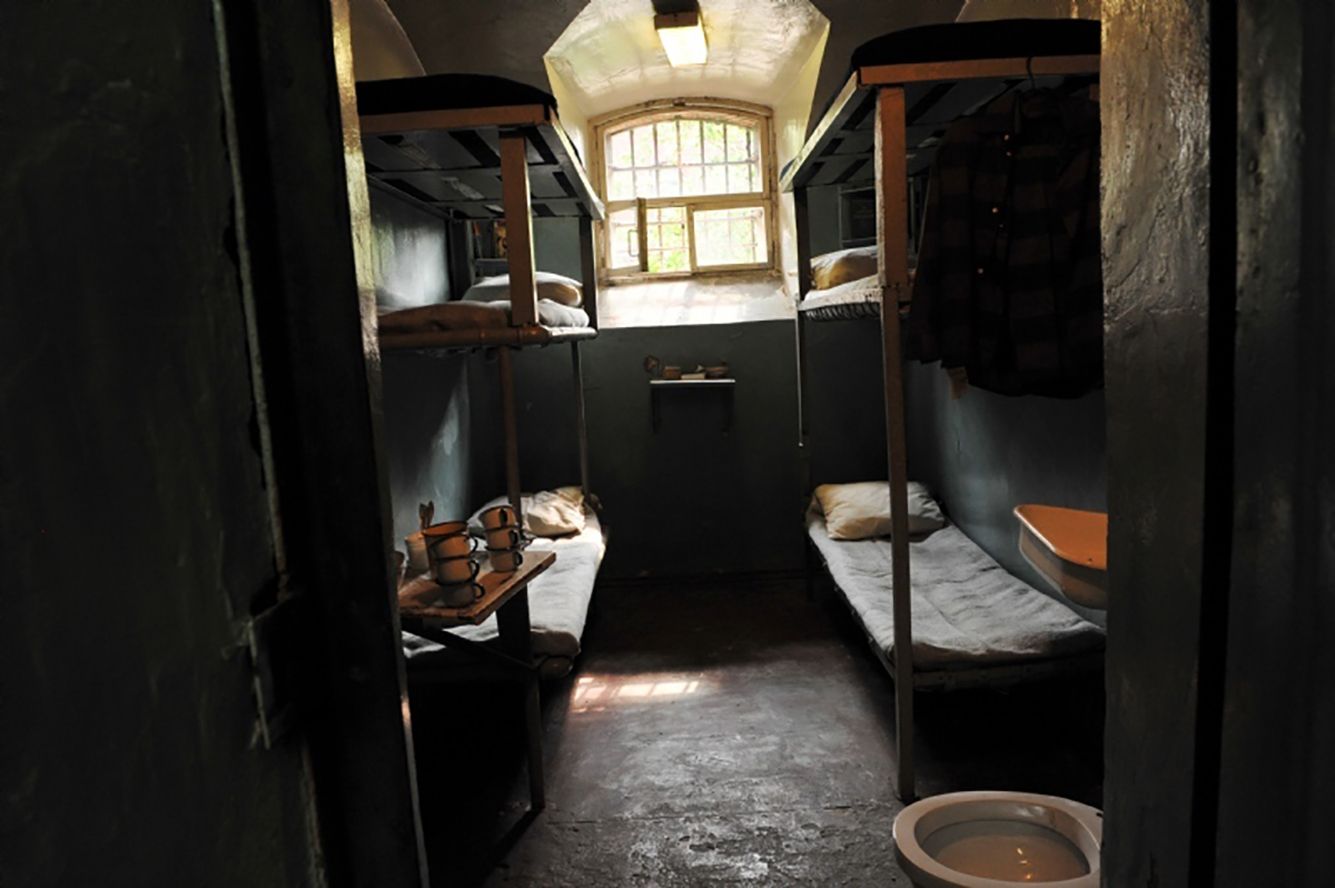
For example, in 2019, the prisoner of the SIZO-4 in the Krasnoyarsk Territory requested non-pecuniary damage to the Norilsk city court. In the chamber of the insulator, the Genoa bowl was not equipped with a drain tank, "everything was washed off by gravity when opening the tap, which is why there was an unpleasant odor in the cell." At the same time, from the residential part of the camera, the developmental place was separated by a partition with a height of only 80 centimeters, "because of which he had to celebrate his natural need before the eyes of their cellmates." In this case, the court refused the plaintiff-due to the fact that he addressed the complaint 12 years after leaving from the pre-trial detention center. Now the toilets in the cells of the Norilsk pre -trial detention center are separated by a partition 1.5 meters high.
In a life-convinced Sergey Piskunov, in 2020, complained that from December 23, 2019 to January 14, 2020, in order of quarantine was contained in special cells of the IK-18 of the Yamal-Nenets Autonomous Okrug in unacceptable conditions.
“Toilets installed in the chambers are concrete cubes about 40 centimeters high, about 50 centimeters long and wide with a Genoa bowl, they are not fenced off from the main chamber, in addition, the colony employees through the“ observation hatches ”in the doorway door or through the video surveillance system can freely observe the reference of natural physiological Needs without compliance with privacy standards, there is no liquid valve, which is why there was constantly a strong smell of sewage in the cell, ”the conditions of the detention of squeaks described. In May 2020, the Labytyutnagsky city court in a lawsuit Piskunov refused .
In Bashkiria, in May 2020, the court awarded one thousand rubles to the prisoner as compensation for non -pecuniary damage, which complained about the conditions in the Neftekamsk isolator of temporary detention, in the cells of which there were no bathrooms at all.
“In this connection, when taking the duty of the duty, a grinding output of the suspects and accused to the toilet under the protection of the interchangeing and replacing outfits is carried out. At night, dry closets (buckets) are used to dispose of natural needs. According to the day of the day, the contents of the dry closets in the toilet are poured into the unit, after which washing and disinfecting the guidelines using a 0.1%deck of Deo-Clor, ”the court says,” the court’s decision is poured.
And in 2018, in Orsk, the court, on the contrary, refused the former prisoner in his lawsuit to compensate for non -pecuniary damage for the maintenance of the IVS in 2010, finding no grounds for compensation. “There was no toilet in the IVS, there was a Genoa bowl instead without a flush tank, there was a video surveillance camera in the cell aimed at the toilet,” the former prisoner said.
A video camera, aimed at a latrine, is a gross violation, Grandmother's violation says. “If it seems to a person that this is so, you need to write a statement so that he is gone to the video surveillance room. There he can make sure that the camera is turned so that the toilet does not cover it. We always recommend doing just that. Normal heads of institutions provide people with this opportunity. For many hundreds of visits to places of detention, I know about five cases when the video cameras were indeed aimed at a latrine. For this, officials are harshly punished, ”the human rights activist assures,
A much more common problem is that sometimes the camera in the institution is arranged as if they are sleeping and eating literally in the toilet. “Imagine a camera with an area of eight square meters - we should have four square meters per person. Two meters in it are a toilet. So a person lives 10-15 days in the toilet. This is a really big problem, ”the grandmother argues. “Of course, the partitions separating the latrine from the rest of the camera should be high- to the ceiling, or at least a height with human growth, as well as video, sound and odor-permeable.”
Now in the Moscow pre -trial detention center, full -fledged partitions that separate the toilets are mainly installed in the Moscow pre -trial detention center, but in the IVS and special receptionists - far from always, says Babushkin. According to him, a significant merit in the installation of partitions in a pre -trial detention center belongs to the former Director of the Federal Penitentiary Service Alexander Reimer, convicted in 2017 for fraud. “It was his order in the pre -trial detention center that these partitions were introduced without fail. Prior to this, the partitions were at the discretion of the head of the pre -trial detention center and even the head of the corps. They considered it necessary - they did, then it took place in these partitions of the emergency - the same suicide - and the chief was removed from his post for such a decision. After all, no one ordered him to make such partitions. And from Reimer, this initiative received support, ”Grandmother explains.
It is noteworthy that when the Reimer himself ended up in the Lefortovo pre -trial detention center, he found out that “it was the only pre -trial detention center that did not fulfill its requirement to ensure the privacy of latrines and where there were no such partitions,” says Babushkin. “The Reimer was very indignant then. Now, in Lefortovo, the partitions still began to be done, although, in my opinion, not in all cameras, ”the human rights activist says.
Completely different requirements in the instructions for the design of internal affairs bodies of the Ministry of Internal Affairs of Russia, developed by the State Special Design Institute (GSP) of the Ministry of Internal Affairs back in 1995. “The toilets and washbasins in cells, croaks, insulators must be placed in separate cabins with doors that open out. The cabin should have partitions 1 meter high from the floor of the sanitary unit, ”the document says.
The question of the partitions is really difficult, Grandmother says: on the one hand, they still need to find money on them, on the other hand, the zone closed from cellmates and video surveillance is considered potentially dangerous, crimes or suicide may be committed in it. “In general, we managed to find the understanding that normal partitions are still needed. Although every time the next suicide occurs in a particular institution, the question is raised about the fact that such partitions are removed, ”the human rights activist says.
Author: Maxim Solopov
Editor: Valery Igumenov