
Translated material
The death of the poet
You can’t believe them when the authorities are recruited - one of the main lessons of Pushkin's fate
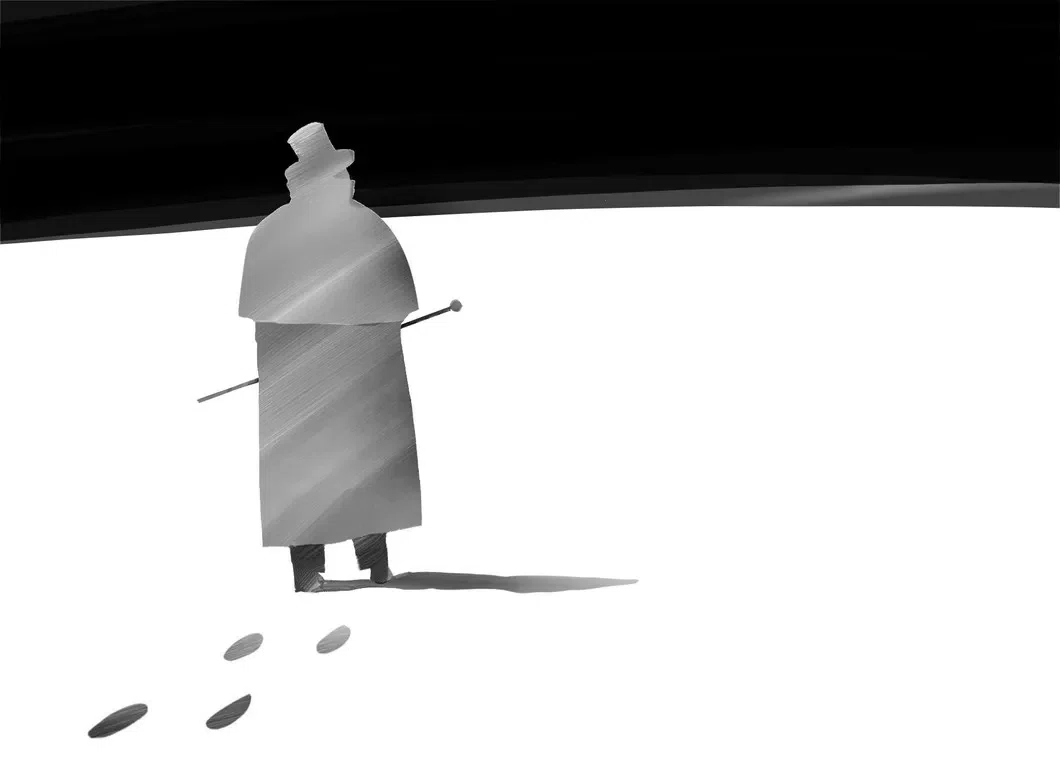
Pushkin died on February 10, 1837 in a new style. I would suggest appointing this date by the All -Russian day of the consequences of loyalty. Of course, nothing bad about Pushkin will be said here. A serious sin for the Russian poet is a bad or at least slightly disapproving about our supreme patron. But the pistol from which Pushkin was killed was charged on September 8 (20), 1826, on the day of the audience immediately after the coronation - when Nikolai called him from the Pskov exile to forgive, and was self -approved by his censor.
Pushkin was used to relying on public opinion, and public opinion in the second half of the 30s was against him.
For the first time he crushed with his audience precisely when he accepted the conditions appointed by Nikolai. However, one should distinguish between a common mood in the 20th and 30s. The most adequate exponent was Prince Vyazemsky, whom Pushkin considered not without reason to be a friend, and he seemed to sincerely sincerely considered himself a poet at least not weaker.
Until the Decembrist performance, Vyazemsky actively fronted - however, without consequences for himself. It is with him that Mitskevich talks in a well -known fragment of the third part of the “Dzyads” - “Monument to Peter the Great” (Pushkin during the St. Petersburg flood, as you know, was resting and treated in the Pskov estate to manage his personal doctor Alexander Pavlovich, when it turned out that he was harmful not only of the north, but also the south; written). Perhaps Mitskevich seemed more symmetrical to talk to him the “illustrious singer of the North” Pushkin, but the less famous singer talked with him.
After 1825, Vyazemsky replaced the open front to pocket, but was among the very “friends” to which the poem “Friends” was addressed with an explanation of the position set forth in the “Stans”. Vyazemsky condemned Pushkin’s loyalty in 1826 and in 1831, when the poem appeared to the “slanderers of Russia”. Akhmatova, who believed that one should always be on the side of the poet, said about this: Pushkin spoke throughout Russia, and Vyazemsky hissed in his diary. Pushkin, probably, would also have preferred the position of a pocket front, at least he would not have abandoned it, but he has another niche: he is the first poet of Russia, in the era of frosts “the poet’s vacancy” (from which Pasternak was released 100 years later), and the poet is deprived of the possibility of “hissing in the diary”. His business is to be “echoing the Russian people”, and in the era of glaciation the Russian people think this way:
“... the Kremlin and Prague are silent for you;
Smartly seduces you
The struggle of a desperate courage -
And you hate us ...
For what? Respond: for whether
What is on the ruins of a blazing Moscow
We did not recognize the impudent will
The one under whom did you tremble?
For that, that they knocked into the abyss
We are gravitating over the kingdoms of the idol
And our blood was redeemed
Europe is liberty, honor and peace? ..
You are menacing in words - try in practice!
Or old hero, deceased on the bed,
Unable to screw your Izmail bayonet?
Or is the Russian king already powerless?
Or do we have a new one to argue with Europe?
Or Russian from victories weaned? "
These are good verses - according to Belinsky’s remark, there are people, Pushkin, including who do not know how to do anything badly; It is another matter that they are inspired by a resentment, and there is nothing extraordinary in this.
The poet is not obliged to be inspired exclusively by the feelings of good - sometimes he is inspired by jealousy, hatred, and fear; We will be frank: for resentment, Pushkin had every reason, like Brodsky, when he wrote poetry “on the independence of Ukraine” - much more grown and weak than “slanderers”, but his temperament was different - “for a private person and this particular life is a pre -ghost ...”, as his Nobel lecture begins.
These two poems-the “slanderers of Russia” and the “Borodino anniversary”-explain in Pushkinism differently: some recall that they were written in the summer of 1831, which Pushkin spent in Tsarskoye Selo, then the lyceum memories were approaching, retreating, remembered how the troops were escorted in 1812, “we said goodbye to the elders and in the hodgen. Sciences returned with annoyance, envious of the one who walked past us. " Others believe that Pushkin had every reason to be jealous of the glory and reputation of the freedom-loving Mickevich, whose poem “To Moskal Friends” painfully wounded him two years later and provoked an incomplete answer; Fortunately, Pushkin did not finish this rather hypocritical answer:
_ "... but now
Our peaceful guest has become an enemy for us - and poison
Their poems, for the sake of violent mob,
He will drink. From a distance before us
The voice of an evil poet reaches
A familiar voice! .. God! Consecrate
In it, the heart is your truth and the world. ” _
Please tell me what peace. True, Mitskevich will be frank, there was some reason to turn to Russian friends with several words of reproach, and “violent mob” has nothing to do with it; Fortunately, Pushkin, whose moral and poetic flair was impeccable, preferred to answer Mitskevich with a “copper horseman”, where he explained the political system of Russia - the conflict of granite and swamps - with the ultimate clarity. There, he explained the hostage role of the poet, who becomes the first victim of the rebellious element: under the king, one can still survive, but under the Russian riot, meaningless and merciless, no king will protect you. The Russian poet - and moreover, the intellectual - always exists between these two equally hostile to him and equally poetic elements. On the one hand, he is haunted by a revived statue (what an invariant in Pushkin’s work was examined in detail by Jacobson), on the other::
"Siege! attack! Evil waves,
Like thieves, climbing the windows. Chelny
From the run of glass, they hit the stern.
Trays under a wet veil,
Fragments of huts, logs, roofs,
Product of stocking trade,
Belongings of pale poverty
Thunderstorm demolished bridges ... "
Naturally, over time, this element should be overlapped, which took place in the second half of the 30s (and in the 40s, after Lermontov, Russian public life completely died out and froze, “and the December terror smelled of people who survived the terror,” as Nekrasov wrote, the direct successor and absentee student of Lermontov). And here Pushkin could not but face the fact that his own niche was also eliminated, that the poet is no longer needed, that “knowledge about each other is extremely extreme two principles” is no longer relevant. The times when “our twins rattled the nightingale” ended: solo begins.
State power does not need the translators of its will and in the response of the signals of the company: there is no more society.
Pushkin’s society betrayed with the pleasure with which the idol always overthrow: aesthetically it preferred to him Benediktov, and morally - Dantes. Dantes in this drama was in such an impeccable position - a gallant, beautiful lover against an aging, unloved, furiously jealous husband! The heart breaks, as you think about Pushkin’s position in the 36th, of a malevolent hiss from all sides. But who was he relying on? People of honor died out, reborn, many reconciled with the inevitable. Pushkin in rage says to the young Vladimir Sollogub - almost the only one to his then interlocutor: "I will go to the opposition!" -And the 23-year-old Sollogub understands what he does not see, does not understand Pushkin: there is no opposition, there is nowhere to go. There are not only people who think freely, but also niches for such people that Lermontov will confirm with their fate four years later.
There was no place for Pushkin himself, Blok was right - “He was killed by the lack of air, and his culture died with him”; He could not even assume this in September 1826, but everything was decided then. By the way, Blok unconsciously quotes Pushkin about Ovid: “The poet kept his word, and his secret died with him”; Ovid was the first to stop fitting during the late August. The occasion is unimportant.
By the way, we note that in collaborations with Pushkin’s power, people most often reproached, who, unlike him, were not in any links, were not noted in the opposition and were by no means a moral standard. This is not about Vyazemsky - a heroic participant in the Battle of Borodino, Vyazemsky, after the persecution campaign, deployed against him in 1827–28, was forced to publicly make excuses, and then repent and, in general, suffered enough. The ambiguity of Pushkin’s position was that, having given the extremely honest answer about the inevitability of his presence in Senate, if he were in St. Petersburg, he was extremely difficult to an uprising and excluded success. For him, in 1826, three months after the execution of the Decembrists, to give a hand to the tyrant - especially if you take into account that in his pocket he has a “Prophet” with the Chernova Stanh “Risen, Risen, the Prophet of Russia” was an extremely difficult choice. But imagine that you have "Godunov" in your table, the best Russian drama, where almost the main words have been said about the historical fate of Russia; That you have two thirds of “Onegin” that you are deprived of the environment for four years, that the new king of Russia, a skilled recruiter, is pretended to be a reformer and your like -minded person, that you are extracted from the Pskov village of Mikhailovskoye immediately after the coronation and returned to Moscow - which your head will not be spinning? “You should not avoid doing a good deed” - and you agree to even state your thoughts about the public education, for which you have “washed your head”; Which of the big poets will refrain from “labor with everyone together and at the same time with the law and order”? In the Christological biography of Pushkin, this is a hefsiman moment. And, agreeing to Nikolai's proposals and actually fit into his allies, Pushkin never departed from this consent, because this was his knight, aristocratic code; Upon learning of the per lustration of his letters in 1834, he especially indignant precisely because from the government this was a deviation from the rules that he observed sacredly.
For him, it was generally a surprise that the authorities in this transaction did not consider itself obliged to observe its own guarantees. One of the main lessons of his fate is precisely in the fact that they cannot be believed when they are recruiting - never, under no circumstances! - But, on the other hand, on September 8, 1826, Pushkin bought himself ten years of life and work, and what work! So there is nothing to blame him for, as always.
…Here you go. And ten years later, when they ceased to be compatible, they killed him, hitting the most vulnerable and most sore spot - his family drama; And they chose for the murder, as always, the most dirty and disgusting people of the then Russia, who had nothing to do for it.