
Translated material
The handout is driven over
Three reasons for which you will not receive money from the government
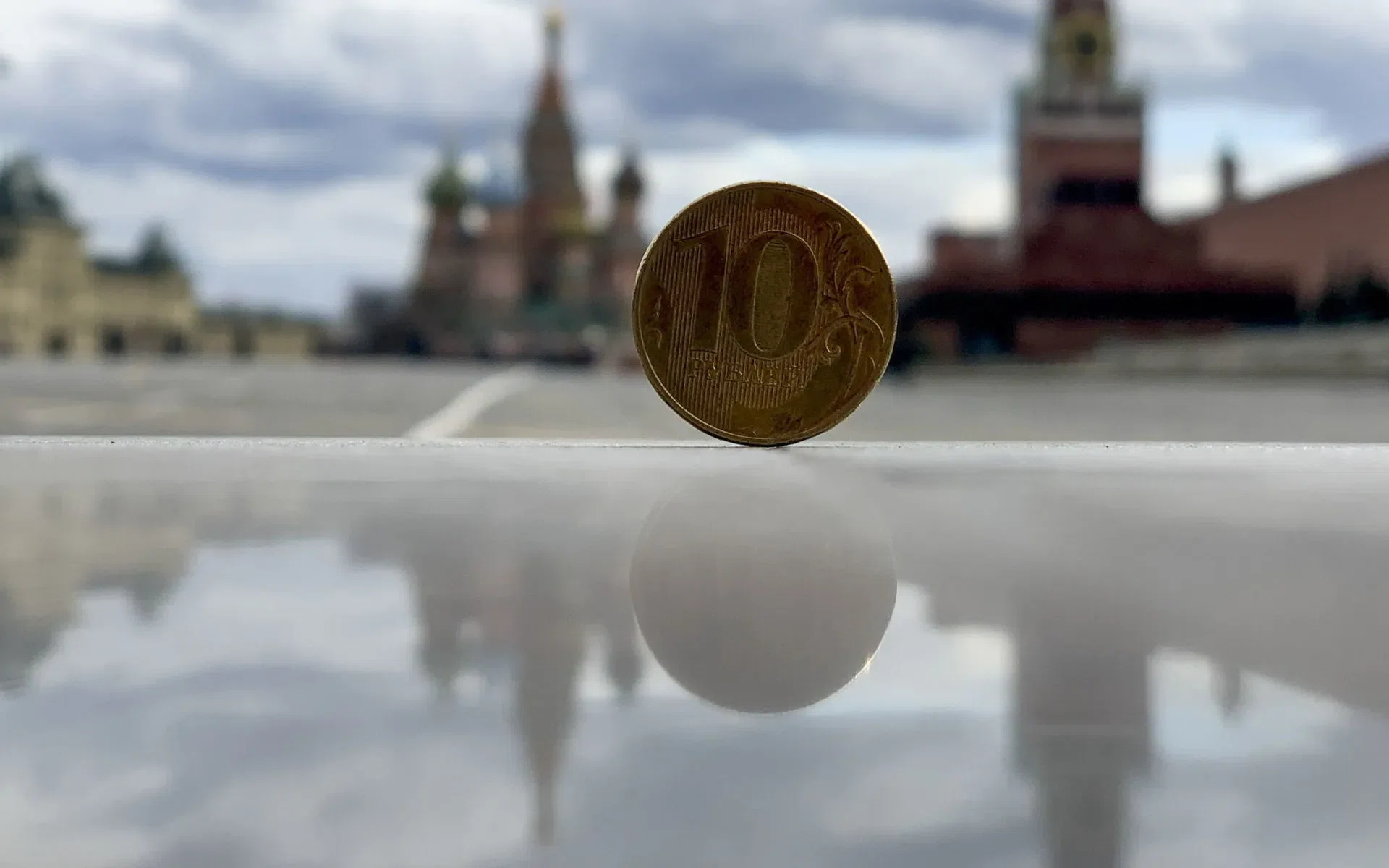
The story with five hundred billions of rubles, which allegedly could be allocated to the aid of the population, looks at least strange. First, Reuters reports on the preparatory distribution of money to people in the amount of almost 0.5% of GDP (they say, they say sources in the government), and then the main spokeswoman replies that there is nothing like that, no extremal financial assistance plans are being discussed, but “the continuation of targeted care to those segments that are most necessary for this support continues to continued on permanent basis ".
The phrase that “ the continuation continues ”, of course, sounds convincing, but I would like to know whether it is worth counting on a share of five hundred billion or not.
In fact, five hundred billion rubles, divided into 146 million Russians, do not look like some very extreme amount. 3400 rubles per brother, even less than $ 50.
Rosstat estimates the total income of Russians at 55 trillion rubles, which means that the size of the help, if it was issued, would add less than one percent to the average per capita income. It is clear that they would not divide this money equally, but in any case, the share of each would be small. Distribution of a penny from the ruble
But something happened, and they decided to postpone the conversation about money or even transfer it to another plane.
There may be several reasons here at once. The first, political, seems to be on the surface. Emergency distribution of money looks like an attempt to compensate, provoked by the events of the last days. Obviously, if the optimism of people grew up with their income, the authorities would not have to do everything that people saw on the streets of cities this weekend. But there is no income, but instead of optimism, discontent is growing. But if you give (or promise) money right now, people can draw an obvious conclusion - there is money in power, you just need to press it tightly, and the authorities will prefer to pay off. Obviously, the authorities do not want to form such a causal relationship.
Another problem lies in the economy.
The government has just mastered the model of GDP growth management through a decrease in people's income, and somehow improve them, even by a penny, at all.
Of course, you can report on the fall of GDP at some miserable 3.1%, but the ministers know very well that in the dollar terms in the real rate of GDP of the Russian Federation it decreased by more than ten percent (in fact, even more-in 2019, Russia was trillion seven hundred billion dollars, in 2020 there are no one and a half trillion). Another thing is that GDP has declined primarily due to the consumer economy, which lies outside the sphere of interests of the raw material and industrial oligarchy. The owners of the Russian economy, in principle, are not interested in increasing the income of the country's population. People are not buyers or shareholders for them.
If for the technological, trade and investment billionaires of the United States it is important that the Americans have a lot of money, the purchasing power of people is important to them - whether it is about buying their goods, or the purchase of shares, then for raw materials and industrial billionaires of Russia, an increase in the amount of money from Russian people at best is indifferent, and even in the worst, even in a loss.
According to the State Duma, the head of the Ministry of Economic Development, Maxim Reshetnikov, the real disposable income of Russian citizens, according to the calculations of his department, should grow by 2.5% per year. “The basis of our economic development is a steady increase in population incomes,” the minister said.
To make it clear how this growth is expressed in live money - according to the latest available data from Rosstat (at the end of the III quarter of 2020), Russians live on average in the amount of 35043 rubles per month. Compared to 2014, the nominal cash income of Russians increased by 7631 rubles (plus 27.8%), but the accumulated inflation for 2014–2020 amounted to 53.1%.
Thus, the increase in income of 2.5% planned by the Minister of Economic Development will increase the purchasing power of monthly income of the “average” Russian consumer by 876 rubles at current prices. Or a little less than $ 12 (at the current rate). For pensioners, the growth of real pensions by 2.5% in “living money” will be even less. If, according to the Ministry of Labor, the current average pension is 17,443 rubles, then its purchasing power will grow by 436 rubles per year, or about $ 6.
In other words, the three percent growth of the economy planned by the authorities will almost not affect people's income. In any case, Russians will be able to return to the income level of 2013 not earlier than 2024 - at best. So is it worth it to give people money now, the boss thinks, since the economy will definitely not move the economy from the dead point?
Moreover, the experience of distributing money in the spring of 2020 convinced the authorities that Russians spend the money received on essential goods, payment of loans and housing and communal services, as well as cheap smartphones . This is good for manufacturers of cheap products, supermarkets, usurists and communal workers, but this is never a small business, not services, and even more so not investments.
The third reason can be called "sociological." The fact is that there is no exact answer in the authorities -
Who to give money to bring a guaranteed result? The traditional answer - mothers with young children - are not very good, because they are not at all mother at all.
As experts of the Institute of Social and Economic Research of the Financial University under the Government of the Russian Federation calculated , as of January 2021, the share of “fully or mostly satisfied with life” of Russian citizens decreased to 77% against 86% in December 2020. The share of Russians, “confident in their own future,” decreased from 63% to 50%. And at the same time, the share of those who consider their standard of living “unacceptably bad” has grown: now it is 18% of the total population and 29% - in the age group from 40 to 50 years. Obviously, several thousand rubles of help are unlikely to convince people in this group that tomorrow it will be better than yesterday.
So will there be money or not? Most likely, the authorities themselves have no answer to this question. Just as it is not clear to the end - is there this money.