
Translated material
Ground a lumberjack
How the indigenous peoples of Karelia are fighting with Taiga cutters
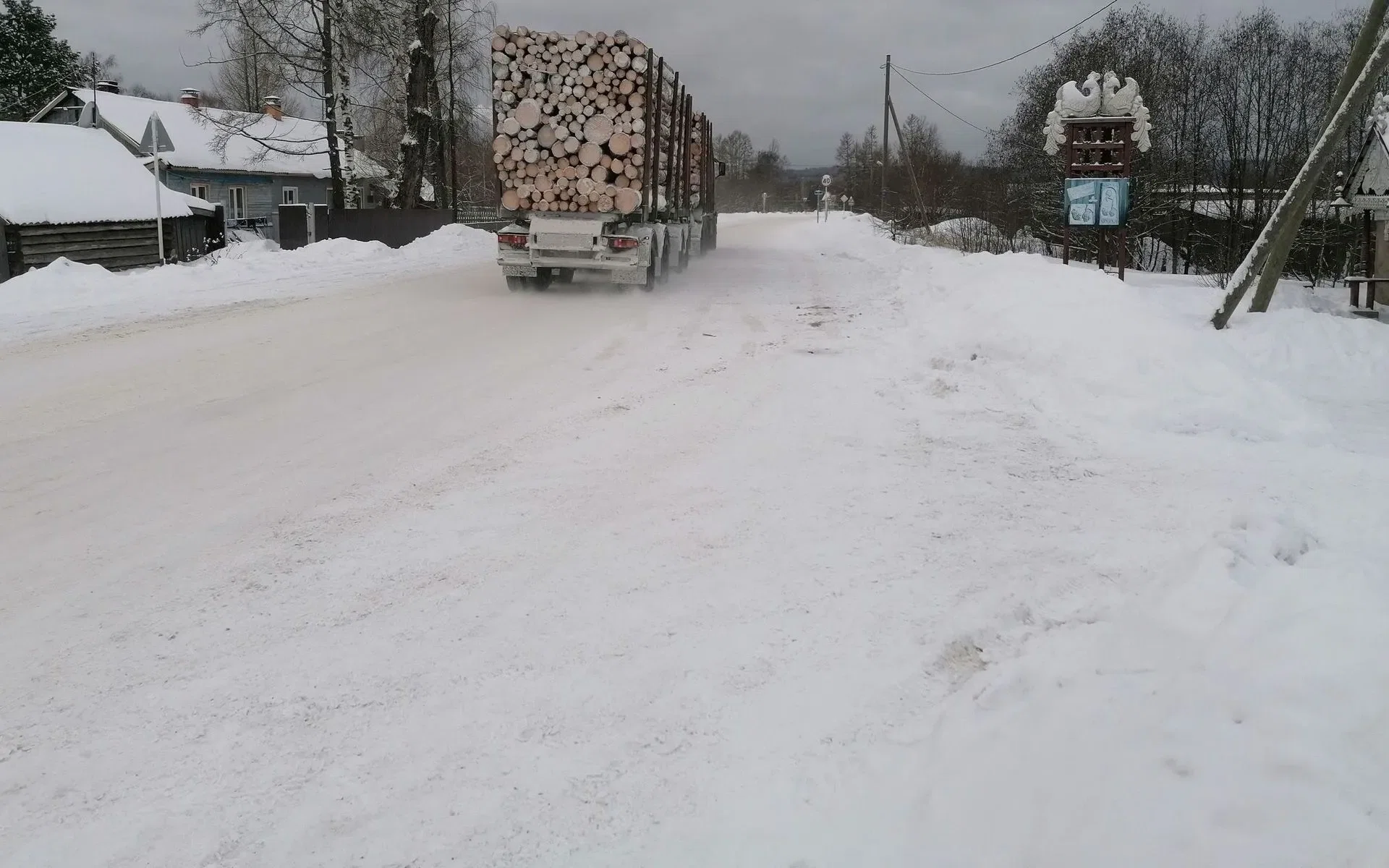
The village has silence and untouched snow. An hour drive from Petrozavodsk on a road, pretty broken by heavy trucks. High trucks are taken out of the Pronounge stone: the villages along the road are surrounded by gravel quarries. If there were no forests here, the villages would have drowned in gray dust. Pine groves restrain it like a filter. How much life is measured by these groves, local residents do not know: almost 50 thousand hectares for 49 years are leased to foresters. People learned about this when the axes stood.
“We were given together with the ground,” Elena Timbeva, a rural deputy and a native resident of these places painted a pile of papers, trying to achieve the truth. She is sure that the forest plots are leased in violation of the spirit and letters of Russian laws, not to mention international law. The rights of Vepsov - the indigenous people who live in the Prionezhsky district are violated.
Vepsa is a Finno-Ugric people, which from the 9th century inhabit the territories between Ladoga and Onega lakes, as well as areas of the present Karelia, Vologda and Leningrad regions.
Most of the approximately five thousand Vepses live in Karelia, where there was a national autonomy 30 years ago - a Veps volost.
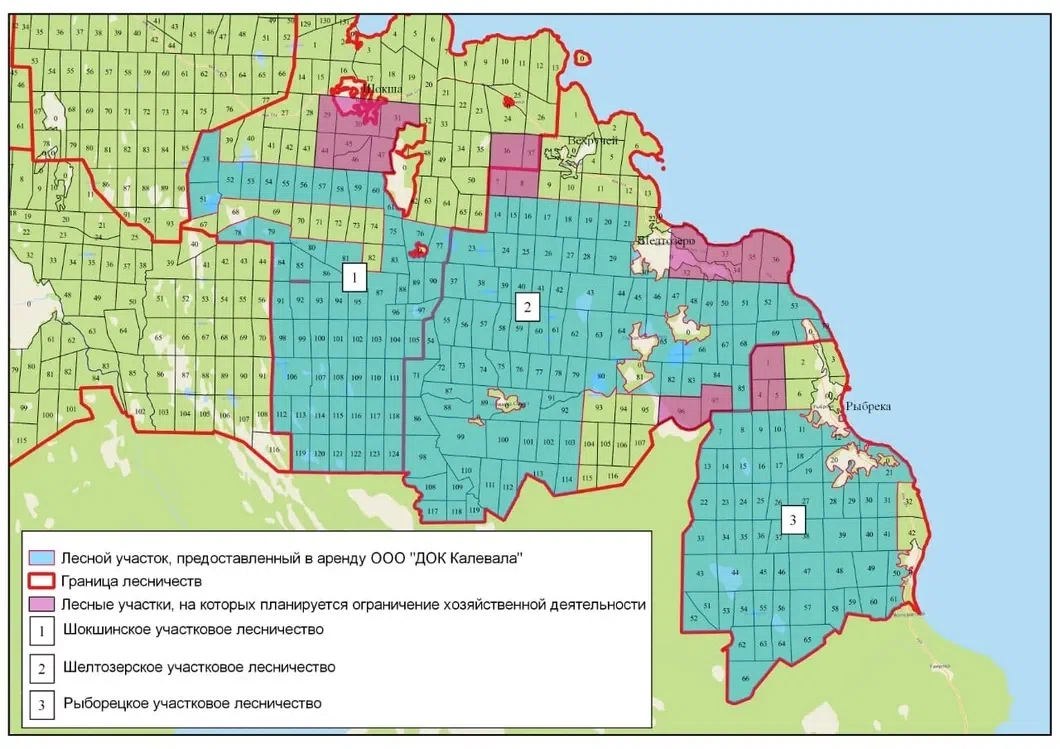
True, when the residents of the volost showed a remarkable will to self-government, they began to solve their problems without regard to republican officials and even wrote a program of socio-economic development, the volost was immediately eliminated. Settlements remained - Shokshinsky, Ryboretsky, Sheltozerskoye. The map shows that settlements are lost in a huge field drawn in green-blue squares. These squares are 165 land plots, on which it is a foregone conclusion into sheets made of wood chips-oriented stoves for the construction and production of furniture. For this, one of the largest Russian producers of wood, DOK Kalevala LLC, will annually pay 4.5 million rubles to the Karelian budget - the price of a modest Petrozavodsk Treshki.
Now the Karelian taiga is still noisy. According to the decision of the Republican Ministry of Natural Resources, the pines of wild Karelian forests will soon turn into neat piles of the pressed building material “Doc Kalevala”, which, according to the presentation on the site, “successfully expands the geography of export sales to the countries of the near and far abroad”.
The fact that the Veps forest now belongs to businessmen, the Vepsa themselves recognized recently. The Republican Ministry of Nature and Ecology concluded with Doc Kalevala back in August 2018 (it is at the disposal of the New).
But the small people, who have been living in the environment of these forests, have not been said about what happened for centuries.
Elena Tumbayeva recalls how surprisingly she found out: tenants met with the head of the Ryboretsky settlement two years ago (at a meeting with the residents of Shelevali confirmed this), while to find out who began to chop the forest in the district, the deputy had to fill the prosecutor's office and the Ministry of Natural Resources with requests.
In the fall, the Ministry of Natural Resources of Karelia officially proposed to the heads of Veps settlements to express their position on the issue of transferring forests for lease “Doc Kaleval”. At the same time, I recall that by that time the lease agreement was already signed for a year.
However, when members of the initiative group for the protection of the Veps forest at a meeting with the leadership of Doc Kalevala and its contractor LLC Zenit stuttered about untimely notification of the inhabitants, they were quickly besieged.
“Coordination is not required,” Valery Puchkov, Executive Director of Kalevaly, reacted. - Now, if we built a plant in your settlement, then we would have held public hearings in accordance with the Town Planning Code. And the forest is federal property. And therefore, there are no obligations to coordinate with you our actions. We are competent, the lease agreement with us is concluded, and of course, we will work. ” Simply put, no one asks you. They gave the peasants with the ground. Since the plot includes the forest, it is disposed of exclusively the federal government, and not people living nearby.
With the federal government, the woodworking enterprise is fine. Dmitry Medvedev praises him, calling, and Nikolai Patrushev. And Rashid Nurgaliev completely became an honorary citizen of Petrozavodsk, according to the local portal, for the support of economic projects, including the undertakings of Doc Kalevala. It was at a visiting meeting under Nurgalieva that Valery Puchkov announced the need to receive an enterprise for renting his own forest fund. Four years later, the agreement from the Ministry of Natural Resources was signed.
The names, of course, are loud. Yes, only the Vepsam has nowhere to retreat. They are the forest people, the forest is their breadwinner. They went to war.
Appeal
From the letter of the head of the administration of the Sheltozersky rural settlement of Irina Safonova to the Ministry of Natural Resources of the Republic:
“In the case of wood harvesting on the territory of the Sheltozersky rural settlement without coordination with the representative body and the head, in order to protect the original habitat of the indigenous people - the Vepsov, the Council of the settlement will send the appeal about the violation of the provisions of the Convention“ On the indigenous peoples and peoples that lead the tribal lifestyle in the independent countries ”regarding the violation of the rights to participate in the use and management natural resources and their preservation. ”
The argument is strong: several years ago, the appeal of the SAAMs living in the Murmansk region in the UN on the same reason led to terminating the lease of land concluded by the Murmansk Ministry of Natural Resources with the Belgorod hunting club.
Why are special rights to the indigenous peoples? They are alive until they retain identity. For this, preferences are needed so that Sami working in the city can go to their native places and catch fish there with the same gear that his grandfather caught it. And teach this your son. So that the educated Veps woman does not forget what the names are called and where therapeutic herbs grow. So that Nenets, who was taken out of the tundra to the boarding school, returning, could accurately recall all the 14 items of snow, which is in his native language. Small peoples need nature to survive. Ultimately, they protect her for us.
A business person will say: this is all the lyrics, we operate with legal norms. Right. Here, for example, is Article 69 of the Constitution of the Russian Federation:
“The Russian Federation guarantees the rights of indigenous peoples in accordance with generally recognized principles and norms of international law and international treaties.”
International norms are enshrined, for example, in the UN declaration ratified by Russia on the rights of indigenous peoples. The universal norm of international law is the free, preliminary and conscious consent of the indigenous residents to any economic activity in their places of residence.
Here is Article 48 of the Forest Code of Russia: “In places of traditional residence and economic activity of persons related to indigenous peoples, when using forests, protection of the original habitat of these peoples and their traditional lifestyle.”
But the Federal Government Act: Sheltozersky settlement since 2009 is included in the list of places of traditional residence and traditional economic activities of the indigenous peoples of the Russian Federation. And the excuse that the forest is not included in the boundaries of the settlement-the influence of the already begun economic activity on the life of the Veps people can become such that the people will not remain in 50 years, when the lease agreement will end.
But when the protesters begin to talk about their violated rights at the meeting, the tenant recalls: “We pay 400 million taxes per year.”
“Maybe we are not experts, but we live here! - the deputy Sergei Safonov explodes with all his might with all his might. - Tomorrow my child will go into the forest - and what is going on there?! "
Vadim Karabinsky asks the most questions. He is the only one is not indigenous here. He arrived in Karelia 17 years ago. He says he left the big city to live literally in the forest. Religious and philosophical searches led to this. Together with like -minded people - there are several families - Karabinsky lives in Zalesya, supporting life in a once empty village.
“I have a 80-year-old forest next to my house, 50 meters away. And it’s much better for me if he continues to grow there, ”explains Vadim. - We are told that the forest is the property of the state, but from our simple, human point of view, the forest also belongs to us - in fairness. Of course, you need to work with a specific enterprise and with specific legislation. But, you see, cutting can already begin, and we can’t even achieve an answer where they will be continuous, where the roads will pass, where roads will pass. ”
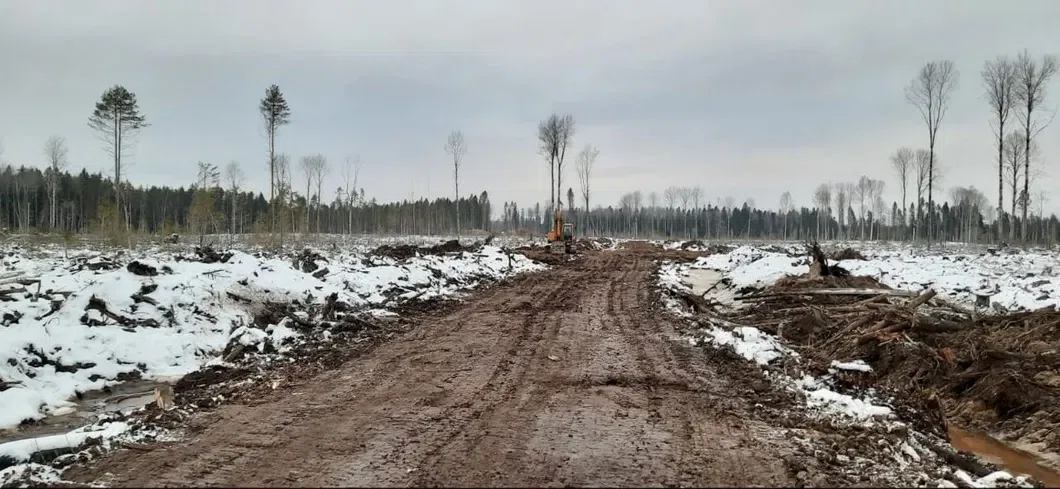
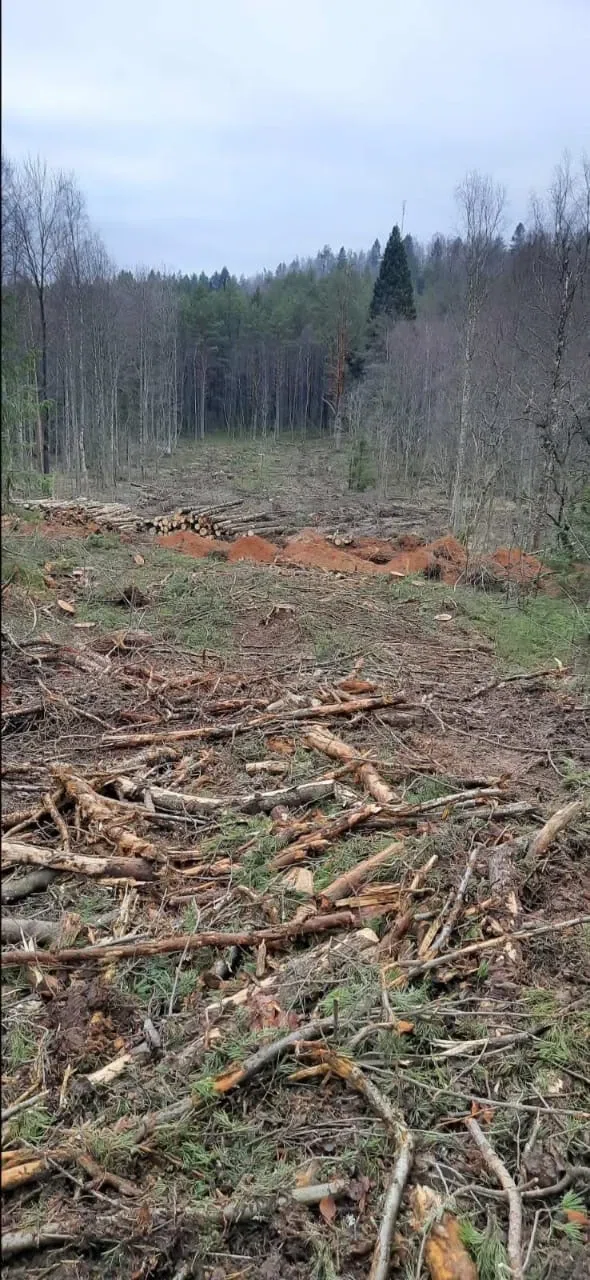
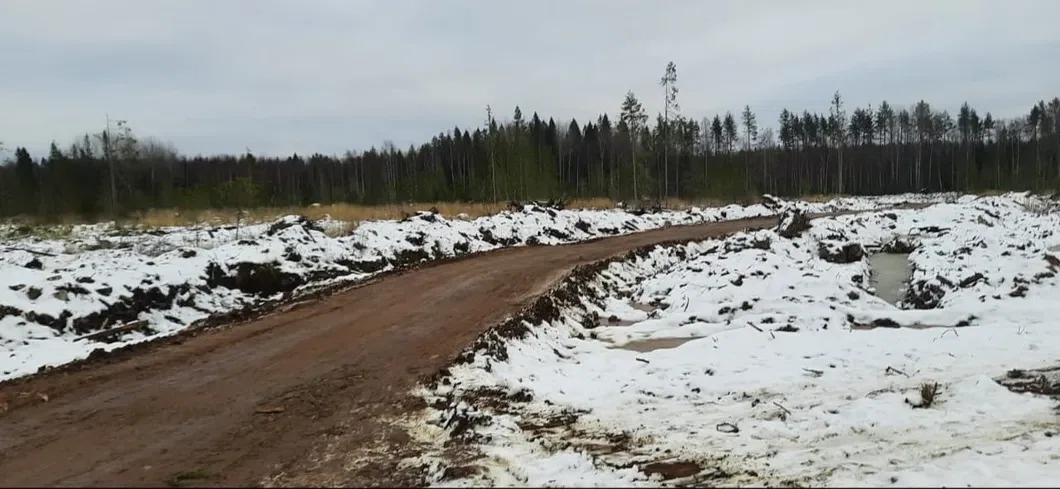
“Since 2018, continuous cutting has been underway,” says the Ryboretsky deputy Timm. - They chopped six hundred meters from residential buildings. By the last winter, 10 hectares were cut down, they asked the chapter what was happening, she replies that she knows nothing. ”
At a meeting with the initiative group, Valery Puchkov and his counterparty - the director of Zenit LLC Vyacheslav Ivanov - unanimously claimed: this is all illegal cutters, from them, they say, Doc Kalevala will save the Veps forests, because it is interested in sustainable forestry - there will be nothing to chop otherwise. True, in Ryboretsky, many claim that they saw in the selmag of cutters in the uniform of Zenit, with the emblem of the enterprise. In the afternoon and at night, forest trucks are coming past.
Appeal
From a statement to the environmental prosecutor's office of the chairman of the Council of Veterans of the Ryboretsky settlement Anatoly Klimov:
“The harvesting of wood on the territory of the traditional residence of the indigenous people (Vepsov) creates a danger to the environment, as well as for the life and health of the living population. The forest massif serves as a barrier from stone dust and noise, which arise when developing a stone in quarries located next to settlements. The original environment for the Veps is primarily forest and ponds. Since ancient times, the indigenous people have been engaged in fishing, as well as the collection of mushrooms and berries. This is of great importance for intra -family consumption. In the village, even the territory of the local cemetery fell out of another river under the cutting of forest. ”
“I understand that the level of trust is small, but you understand that everything designated on the map will not be cut for a continuous!” - Trying to convince Valery Puchkov of the locals. “We have a maximum of 390 hectares of continuous logging,” Peter Prudnikov argued the head of the Doc Kalevala Forestry Department. But when Vadim Karabinsky asks him why residents, instead of a thousand words, simply will not show a project for developing forests-a 10-year cutting plan, he will hear a cynical answer:
"Why do you think that you have the right to do so?"
"Why don't we have?" - Vadim will be surprised.
“Contact lawyers, they will explain to you,” Puchkov reacts calmly.
Peter Prudnikov adds: "Contact the owner - to the Ministry of Natural Resources."
We turned. At the request of Novaya Gazeta, the Ministry of Natural Resources and Ecology of the Republic of Karelia refused, referring to the fact that the project is the intellectual property of Kalevala.
What a comfortable formula! A kind of protected intellectual property or that cooler-a commercial secret-you can declare, for example, the design volume of hydrogen sulfide emissions at some plant. Or calculations exhausted ore reserves in a mine that feeds an entire city. And the meaning of these beautiful words is one thing - this is not a servile thing, to discuss that the master will do it to do. 400 million taxes ... But the Veps has never been serfs.
"Doc Kalevala" has a certificate of FSC Forest Board of Trustees. This is the International Non -profit Association of representatives of environmental and social organizations, sellers of timber, forest corporations, certification organizations. Sheleval, shelter deputies threatened Kalevale that they would achieve a certificate. It implies compliance with the company's rights. The other day, from one of the members of the Association, the heads of the Veps settlements have already come a request. The potential buyer of wood is interested in whether the foresters' rights of the indigenous people are violated by the foresters, whether the company has conflicts with local residents. The response from Sheltozer did not drag on, it states that with residents the issue of forest development was not discussed, as well as issues of conducting traditional crafts in the forest zone, and in the neighboring Ryboretsky settlement, where continuous cuts are underway, the conflict with the tenant is aggravated. By the way, the similar actions of the local public and ecologists a few years ago forced IKEA to abandon wood, which was cut down for a furniture concern in the north of Karelia.
The Council of the Settlement intends to put the issue of forest use to the local referendum, if the Dok Kalevala does not take into account the proposals and requirements of the initiative group.