
Translated material
Back in the Polka?
How the filmmakers and their films in the USSR crossed out

Censorship and Soviet cinema are peers. The first Soviet document on the introduction of cinema cinema dates from February 15, 1918. Stalin only developed and improved the Lenin Testament "Conterrevolutionary and immoral films should not take place." The main improvement concerned the counter-authors-they should also be deleted: from the profession, from the credits and a control shot-from life.
Surround
Experts believe that there were no formal “resolutions” of lists. The work of party, state and safety of organs was carried out constantly, subcutaneously and pointwise. But the main thing is in various forms. For example, non -removal.
Suppose the “funnels” come and take into the exile of the ingenious Nikolai Erdman and his co -authorship Vladimir a mass directly on the set of “funny guys” in Gagra. And in the favorite comedy of Stalin (they say, he laughed to tears) there were no names at all ... until the new circulation of the film in 1961.
During the filming of the Volga-Volga under the choir “Eh, it’s more dirty! We’ll tighten more friendly! " The operator and co -author of the director Alexandrov, Vladimir Nielsen, were arrested and shot, and his assistant Boris Petrov suddenly began to appear as the film operator.
But what about the paintings beloved by the authorities, where the popular, although repressed artists Zoya Fedorova and Tatyana Okunevskaya were shot?
The flour of doubts of small film facilities was allowed at the level of the Politburo:
“Pictures do not prohibit! Cut the exiles from the credits! "
“Surround” for Soviet officials is a sacred act. A person or a film was silent, declared non -existent. About them in the pagan era of a tyrant-bud can not only write, but even publicly interested in their fate.
So there were shelf films and their unfortunate parents-authors. Temporarily or forever excommunicated. And the “regiment” grew and safely existed until perestroika.
Buried alive
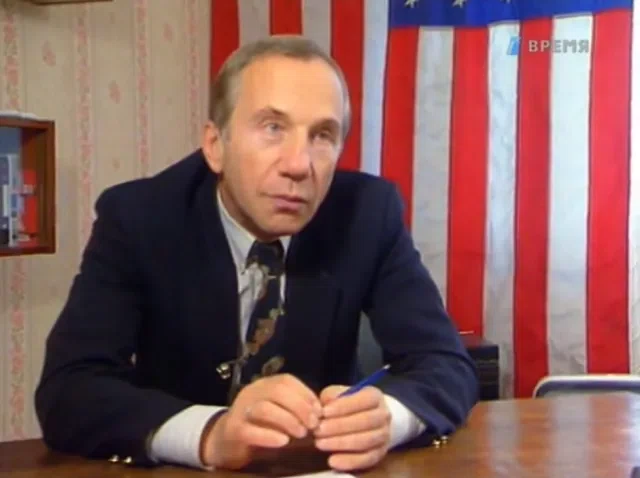
Not only repressed, but also “left”, such as Savely Kramarov, Boris Sichkin, were not mentioned. It happened, and the cinema itself was removed from the rental and TV, and the artist was cut out of the credits. In the state fund, I perfectly remember countless boxes with cards: the withdrawn fund (these are temporarily hidden programs, for example, classic concerts with emigrating orchestraants) and a written -off fund (cassettes were recommended for new records on top of the old ones, including unique ones. Outstanding Mravinsky concerts were erased).
In the State Film Fund, prohibited films, like cards on them, were stored separately. Even scientists did not know about them. For example, filmmakers for a long time believed that the luxurious innovative comedy "New Moscow" Alexander Medvedkin was not preserved. Yes, and the director of the avant-garde himself, after the exile of the film, was noticeably fading, filled mainly documentary paintings like “Peace Vietnam” or “Beijing-Alarm of Humanity”. “New Moscow” was pardoned and returned to the “General Fund” of the movie archiva only in the late 80s.
Familia was stored under the heading "Secret".
In the manuscript version of the Vishnevsky directory about forbidden films, it was written: "I did not come out." On the cards it was marked: "Do not give out." The state security organs inspired the next initiative: for each film it was necessary to make “mounting sheets” of films (sequential description). The names of the repressed filmmakers who became "enemies of the people" are lured in them. This is a guide to action: it means that the names disappear from the credits.
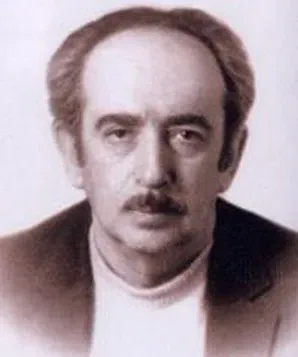
Sometimes I had to sacrifice the picture itself. The dear “faithful friends”, “on seven winds”, “running along the waves” were removed from the “current fund” for 15 years. All because of the seditious author of the script, Alexander Galich, who in 1971 was expelled from all “creative unions”, brought to the third heart attack and disability, practically forced to emigrate.
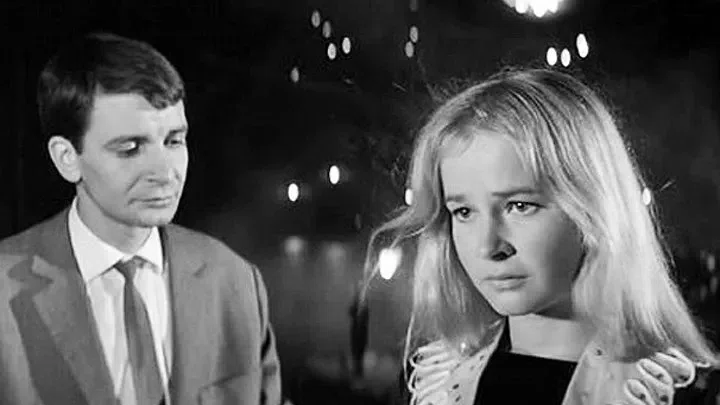
The expulsion from the film and television and television nets served as a symbol of public flogging and an indicative example.
Plywood
In the reference books of the cinema archive of those times not to find the most tender painting "Goodbye, boys!" Prisoner of the Gulag Mikhail Kalik, stories about lyrics and physicists “Lebedev against Lebedev” by the front -line soldier Henry Gabay. Why were such harmless pictures punished? Why were the authors of breakthrough, talented works “History of Asi Klyachina” or “Andrey Rublev”?
Andrei Konchalovsky believes that the whole thing is in the texture is too real: “From the Soviet films of those years, literacy, who came as an inheritance of the 30s. Plywood scenery, "normal portrait light" according to Hollywood canons. We called this "plywood."
That is, aesthetic disagreements were equated with political?
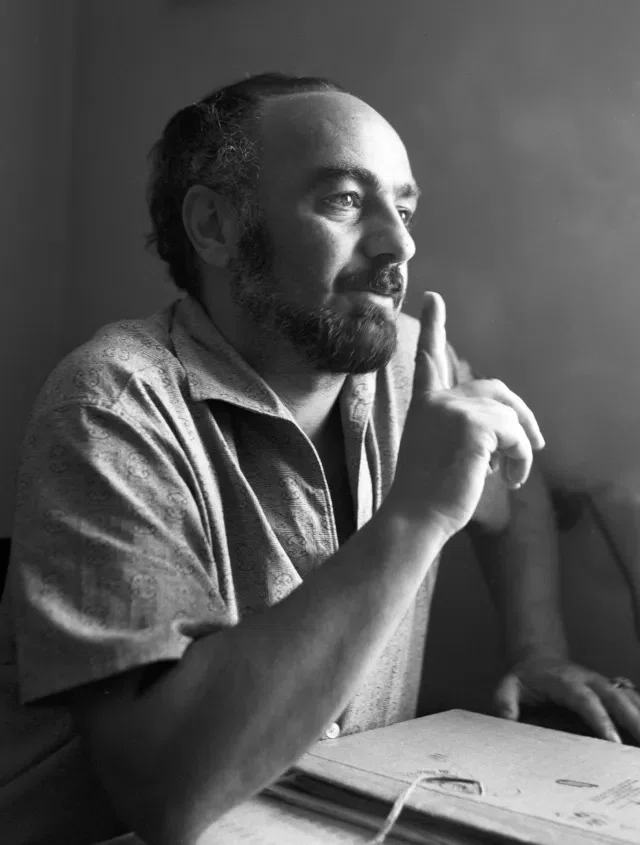
A symbolic death and prison was punished for self -will. “Shadows of forgotten ancestors” brought Glory to Parajanov and ... aroused the vigilance of organs. But the accusations of “sympathy for Ukrainian nationalism” were only a screen. The independence, freedom, the unacceptable internal freedom of the “Juroric artist”, who speaks, lives, and shoots as he pleased, outraged. Yes, he went crazy! He was afraid of like fire, and for four years hid behind bars, where
He was so puffed that Parajanov decided to try suicide. From prison the director rescued the whole world.
They tried not to mention the name of Herman after the ban on the “surgery“ Happy New Year! ” Formally for "degerization." But Herman believed that he was banned simply “for everything”: “For Bykov, for“ abstract humanism ”. For pity for people in cruel, monstrous circumstances, they showed weakness and surrendered. ” I think that today Herman would not have missed the Military Historical Society “Harmful Picture”. Not patriotic. And only in the Lenfilm buffet, as Alexei Yuryevich told me, his, disgraced, scared, colleagues - in respect - missed in line. The Lenfilm buffet restored the true hierarchies.
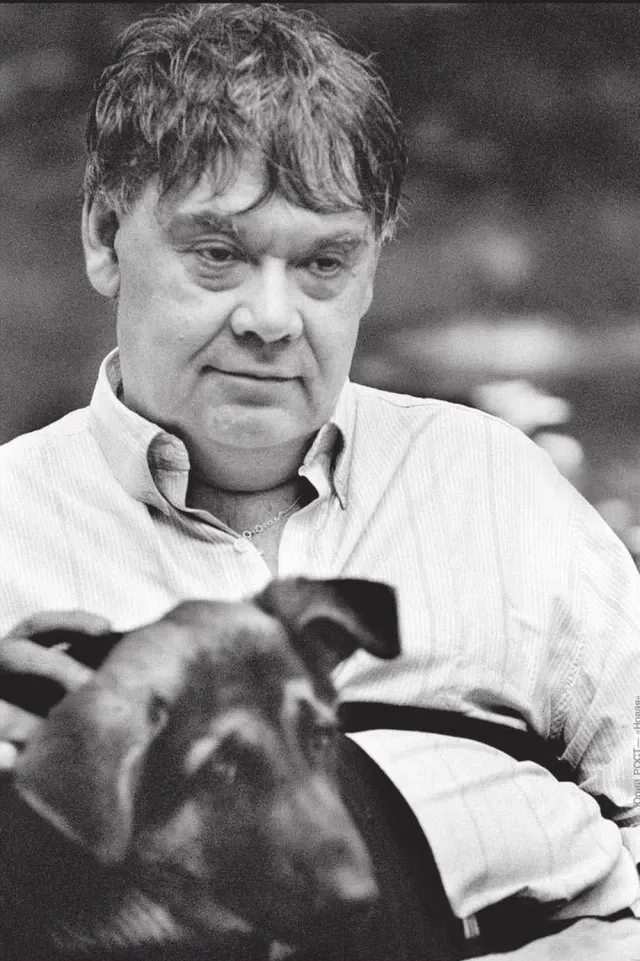
Just imagine, entire armies of censors worked without lingering their hands, fighting with rebellious authors. Sometimes it seems that there were more filmmakers. When they tormented “long wires” and director Kira Muratov,
In the “Enthrust to eliminate the shortcomings of the film” 26 (!) Man, led by the director of the Odessa film studio, were involved.
So what was so outraged in films about a lamock dreaming of love, an unhappy mother, a sophisticated believer of a communist? Aesthetic disagreements? Feeling of unacceptable truth? They just had an animal scent on “not their own”, “alien”, “a conspiracy“ not so ”, brazenly displayed by the talent of upstarts that did not look at the authorities.
With the "stepson" Goskino, who fell into these unspoken lists, did not want to deal. The directors, breaking their foreheads, pulled them out, pierced Bykov, Vysotsky, Yursky ... They were in bad account at the authorities. Sometimes it did not work. And the role of Meyerhold, intended for Rolana Bykov in the film “Gori, Gori, My Star”, Alexander Mitta gave to Oleg Tabakov, who played paraphrase martyr Eisenstein.
But the most obvious example of a “sentenced and alive” system is the “commissioner”. For the creation of a grandiose myth, poetry “from blood and dirt”, the words of Grossman and music by Schnita - his author Alexander Askoldov was judged, worked out, excluded twice from the party, fired for professional receipt with a yellow ticket, and came with searches. But unlike many, the ascolds were not inferior. He turned out to be the last unbending communist: he was not silent, at all meetings he fought for the picture, proved his case, realizing that if he surrendered, the film would be robbed to a lamppost and in this form would be released “into people”. The director became Persona Non Grata, and neither Gerasimov, nor alla, nor bass, no matter how they beat, could help. He made under an alien surname a custom dock about inflatable structures, short films, two documentaries about KamAZ (he arrived there to a worker). And with sleepless nights he shifted mentally the “commissar”, his only picture.
And now everything is returning. The search for the enemy, resentification - syndrome of flawed aggressiveness - the heroization of the past. The screen in unison with the line of the party and government appeals to unanimity and exploits at the cost of life. And the filmmakers who dared to their position are obstructed and persecuted. And, as before, it is important not to even punish, you need a pagan gesture, the stroke of the invisible red pencil on the resolution: "Look at me!" And the rebellious, “not such” can be stunned into a conditional coffin ... until the next thaw.
True, Moloch is uncomfortable during digital technologies. It is not easy to “ban” the most popular actresses in the Youtube, Instagram and Tiktok era. Yes, and video services and channels like TNT, of course, their exile will cause damage.
And after all, it always went to the most gifted.
If you re -read these conditional lists, a collective portrait of sparkling talents will be formed, as if they chose the best, without which the story of our cinema would be completely different. Gray.
Rolan Bykov, Vladimir Vysotsky, Sergey Yursky, Inna Churikova, Ekaterina Savinova, Yana Troyanova, Julia Aug, and now also Varvara Shmykova, Alexander Bortich ...
The author thanks for the help in the preparation of the material of the chief art critic of the State Film Fund Evgeny Margolit
From the editorial office
Black lists of history. How the authorities are digging a hole for itself, and talents - moves to fans
Such an old shameful story: black lists, about which they spoke immediately after the events of January 23. Whoever their compilers studied - the Spanish jealousrs of faith or the Soviet experts in linguistics - the stupidity of the venture has long been confirmed by history. Everyone who made up such columns or columns, everyone who carefully brought new names and logs was defeated. The empires fell, the executioners were dispelled, states based on fear are cursed and forgotten.
So why again?
For the sake of petty readiness to take money - for cinema, performance, museum, project? The pillars of the state, they are the servants of the people, are still holding on simple logic: for budget money it is necessary to praise the budgetary. If we give you, so you give us? Something in this is irreparably backward, feudal. Doomed, that is. And grimly petty.
We can only guess who is nervous that I rushed to put pressure on the unhappy orders: to cut the sides from the TNT product, Shmykova’s page from the QIM website, not to give it, “these people are defaming their homeland for American money” - under the jubilant cries of garbage specialtherapists. Previously, the lists were sent to the first departments of the Soviet offices, now they hang in the clouds. Electronic.
We have one homeland. We should not explain to us that it is equal to the state. We will not believe it.
And do not be afraid. It's time to remember what Russian prose was holding when you went to the camps: do not believe, do not be afraid, do not ask. And to paraphrase the Leo of Tolstoy: they scare us, but we are not scared.
Department of Culture
How the lines of Alexander Galich will respond to today's strangers of all talented and living
The “black lists” of the 80s led to an unprecedented surge and heyday of underground music. So it will be now if the security forces take up protest artists
Artemy Troitsky: “I got into the next“ black list ”. When they intimidate their underpants, it is always funny "
Julia Aug: "Now my colleagues - Sasha Bortich, Jan Irteniev, Vyatya Shmykov, Maxim Vitorgan - intimidate, it is impossible to be silent about it." VIDEO